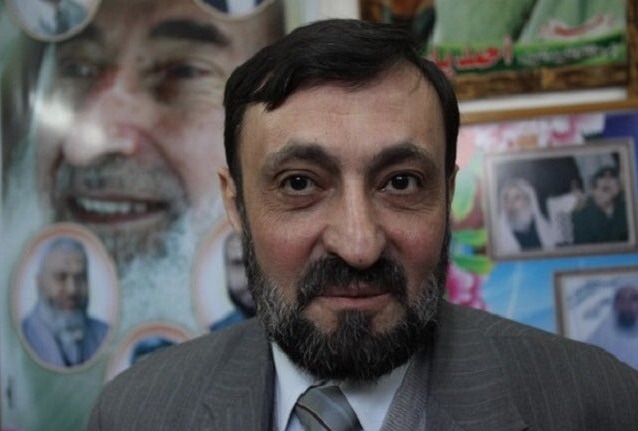
It has long been known that the Palestinian Authority (PA) funnels money to terrorists and their families as a financial incentive for terrorism, and now the exact figures for 2017 are known thanks to a report from Israel’s Defense Ministry.
According to the Jerusalem Post, the Defense Ministry found that the PA paid terrorists and their families over $347 million in 2017. The minimum they provide is $580 per month for a terrorist sentenced to 3-5 years in prison. That number increases to $2,900 if a terrorist is sentenced to 20-35 years in prison. A terrorist earns extra money if they are married with children and if they reside in Israel.
By comparison, the average Israeli citizen earns $2,700 per month and the average Palestinian earns $580 per months, thereby showing that the PA is dangling money to entice Palestinians into committing acts of terror against Jews.
“The minute the amount of the payment is decided according to the severity of the crime and the length of the sentence – in other words, whoever murders and is sentenced to life in prison gets much more – that is funding terrorist attacks against Israeli citizens,” Israeli Defense Minister Avigdor Lieberman told the Foreign Affairs and Defense Committee. “There is nothing that better illustrates the PA’s support for terrorism. We must stop this.”
To combat the PA’s funding of terrorism, Israel’s Defense Ministry is proposing a bill that would allow ministers to deduct tax revenue Israel provides to the PA based on how much the PA paid terrorists.
The official figures provided by the Defense Ministry isn’t too far off from The Algemeiner’s estimation that the PA paid $355 million to terrorists in 2017.
In December, the House of Representatives passed the Taylor Force Act, which states that the U.S. will cease funding the PA so long as they continue to provide funding to terrorists. The bill is expected to pass the Senate and President Trump will likely sign it if it reaches his desk.
Fatah Central Committee member Azzam Al-Ahmed recently declared that the PA would continue to fund terrorists and their families in spite of the threat of the U.S. threats of ending funding to the PA.
A group of Jewish students in Vienna were fined on Monday for displaying an Israeli flag during a pro-Palestinian protest on December 8.
According to Antonia Yamin, a reporter for Kan, the fine amounted to 100 Euros for each of the three students because the Vienna police determined that they “behaved insensibly, violated public order and created a provocation” for waving Israeli flags at a rally that featured chants of “Death to the Jews.”
Three Jewish students received a 100-euro fine from Vienna police after waving an Israeli flags at a pro-Palestinian demonstration in which "Death to the Jews" was shouted. The reason for the fine: "You behaved insensibly, violated public order and created a provocation."
— Antonia Yamin אנטוניה ימין (@antonia_yamin) January 9, 2018
One of the students, Matthias F., told Vice that they unfurled the Israeli flags in response to anti-Semitic slogans being chanted, which included chants of another intifada, “Death to Israel” and accusing the Jewish state of being child murderers. In response to the flags, a few of the protesters attacked the students, yet the police reacted by taking in the students for questioning and confiscating the flag while allowing the attackers to remain at the protest.
“Our data was taken while the police overwhelmed us with snide and malicious comments: ‘We should have left you out there,’ ‘What do you think, what they do to you, if they catch you,’ ‘Are you really dumb?’ and so on,” said Matthias.
Matthias added that it was “incredible” that they faced a fine or two days in jail for simply displaying a flag.
“The injunction states that it has “caused considerable displeasure” among the protesters and does not even mention what this displeasure was – that we were attacked,” said Matthias. “Now we want to get legal help and object to the injunction. It can not be that anti-Semitic slogans can be shouted without punishment and the punishment of an Israeli flag should be punished.”
Matthias also said that he would not display an Israeli flag at an upcoming pro-Palestinian protest because it would be a “lose-lose situation.”
In 2014 and 2015, there were also pro-Palestinian protests in Vienna where anti-Semitic chants were spewed, including chants of “Kill the Jews!”
A top Hamas leader shot himself in the head on Tuesday and is now currently in critical condition.
According to Hamas’ spokesman, Imad al-Alami, one of the founders of the terror organization, was “inspecting his” firearm and it accidentally discharged. However, Ynet News is claiming that it’s possible that al-Alami’s gunshot wound stemmed from a suicide attempt following a cancer diagnosis or an assassination attempt.
Regardless, Al-Alami has been treated at the Shifa Hospital in Gaza for the gunshot wound. Ynet is reporting that al-Alami is “likely dead” from the wound.
Al-Alami is infamous for avoiding media attention and doesn’t have any social media accounts. His record of terrorism includes being arrested by Israeli authorities for incitement in 1988 and having close ties with the Iranian regime and Hezbollah leader Hassan Nasrallah. Consequently, al-Alami is one of six Hamas members designated as terrorists by the State Department as terrorists and had his financial assets frozen by the British government.
The senior Hamas leader mostly worked out of Syria until 2012; he suffered from leg injuries under mysterious circumstances during the 2014 Israel-Hamas conflict and was reportedly chosen to lead Hamas in Gaza in November 2016.
Prior to al-Alami’s gunshot wound, there have been other reportedinstances of Hamas terrorists being injured or killed from accidental gunshot wounds, explosions or tunnel collapses.
A new report is stating that the United Nations Children’s Fund (UNICEF) will be blacklisting the Israel Defense Forces (IDF) based on information fed to them from various anti-Israel organizations.
According to Fox News, UNICEF is funneling anti-Israel propaganda to the U.N. secretary-general in an attempt to put the IDF on a list of organizations that includes al-Qaeda and ISIS that violate the rights of children, a move that could result in sanctions.
The Fox News report highlighted writings from NGO Monitor stating that UNICEF provides “legitimacy to false and distorted claims made by the NGOs, which are fed through a UNICEF database to a variety of U.N. publications.”
“These publications do not note that the accusations originate with unqualified and partial activists, some from groups with alleged ties to terror organizations, or that they were not verified by credible independent bodies,” wrote NGO Monitor.
NGO Monitor pointed to the Popular Front for the Liberation of Palestine (PFLP), which is designated as a terror organization by the State Department, and the Defense for Children-International Palestine, as examples of radically anti-Israel organizations that UNICEF receives its information from.
UNICEF disputed the notion that they were being given slanted information.
“The monitoring and reporting process is led by a working group, which brings together U.N. agencies and international, Israeli and Palestinian NGOs,” UNICEF’s spokesperson told Fox News. “These organizations are selected based on their ability to regularly provide accurate, reliable, impartial and objective data on children affected by armed conflict.”
According to U.N. Watch, UNICEF was one of 16 signatory U.N. agencies on a document stating that the U.N. would provide the Palestinians with at least $18 million for “legal recourse” against Israel.
“I got accepted to the Leipzig University,” Eshchar Gichon, 25, enthusiastically announced at the start of the interview at a Berlin café.
His acceptance into Leipzig University—in this case its veterinary school—is particularly significant for Gichon. It’s part of the closing of a family circle that has just begun.
Leipzig University is the alma mater of Gichon’s great-grandfather, Emanuel Goldberg, who was one of the city’s most prominent professors, a pioneer in the field of optics, photography and information technology as head of the photographic department of the Royal Academy of Graphic Arts and Bookcraft (Leipzig Academy of Fine Arts). But after the war, his legacy was written out of Saxon history, in Leipzig and later in Dresden, where he served as the founding director of Zeiss-Ikon, a leading camera manufacturer under his leadership. Had he stayed, he might have become the “Steve Jobs” or “Bill Gates” of Germany.
“We grew up on stories on him being the director of Zeiss Ikon and all the regular facts about how he was basically a genius,” Gichon said. Gichon moved to Berlin two years ago to study, redeeming benefits of German citizenship due him by virtue of his German lineage. He didn’t expect to be involved in a renaissance of his great-grandfather’s legacy.
Goldberg’s ideas, gadgets, equipment, and inventions were recently on display at “Emanuel Goldberg: The Architect of Knowledge,” an exhibition that opened last March at the Technische Sammlungen Dresden, the site of the former Zeiss-Ikon headquarters. His inventions include a “search engine” (his “statistical machine”–a Google forerunner), and a portable video camera (his “Kinamo”–a FlipCam forerunner).
The process of rediscovery was triggered by Emanuel Goldberg and His Knowledge Machine, a 2006 biography written by Berkeley professor, Michael Buckland.
“It’s hard now to explain how thoroughly Goldberg had disappeared,” Buckland said via e-mail. “From being internationally famous to being almost totally erased outside of Israel. I found doing detective work on Goldberg fascinating in many different ways: he had a most interesting and adventurous life; he did clever things; there is much human interest in his story. Not only was the accepted history of information retrieval seriously incomplete without him, but there was an ethical consideration. He deserved to be remembered, not forgotten.”
Goldberg’s was the classic success-story of a self-made man. Born in Czarist Russia in 1881, Jewish quotas at Russian universities prompted him to leave and study and eventually teach in Leipzig. In 1917, he moved to Dresden, the camera capital of Germany, to eventually found Zeiss Ikon.
In 1933, Nazi stormtroopers marched into the Zeiss Ikon offices armed with pistols and abducted him. Zeiss Ikon negotiated his release and demoted him to the company’s Paris branch. In 1936, the company “bought him out” by having him sign a “non-competition” agreement barring him from competitive activity. His successor was a Nazi, and Zeiss Ikon gradually declined since.
Goldberg rejected an offer to work in the United States alongside Kenneth Mees, the respected founder of the famous Kodak Research Laboratory, to instead move to Palestine in 1937, applying his R&D skills to developing military tools—like compasses and binoculars–to assist the British against the Nazis and later, the Haganah. Goldberg died in Israel in 1970, an Israel Prize Laureate recognized for his contributions in founding ElOp, the optics branch of Elbit, Israel’s publicly traded electronics defense company.
It was only until the 250th anniversary celebrations of Leipzig’s Academy of Fine Arts that Goldberg’s story got retold in the city. As part of a school contest, students were challenged to do research projects on the school’s past professors. Student René Patzwaldt chose Goldberg and contacted his progeny in Israel.
“He did this by sending my grandmother a message on Facebook,” Gichon recalled. “My grandmother had a Facebook account, and he sent a message. We saw the message three months after he sent it. My cousin checked the account and saw the message, and that’s when everything started. We invited him to Israel, he interviewed my grandmother, my grandmother showed him some artifacts of Emanuel Goldberg, and he wrote the project. His project won the competition.”
The Academy of Fine Arts joined forces with Berlin’s Technical University to assemble the exhibition with the Technische Sammlungen Dresden. According to the museum’s director, Roland Schwarz, the exhibition constituted the first time that Zeiss contributed financially to the museum. The exhibition marks a major turning point for Dresden. In 1995, when Buckland first visited the museum for research, the senior staff hadn’t even heard of him.
“If he would’ve continued, we would’ve said the inventor of the computer was Emanuel Goldberg,” said Schwarz from the exhibition grounds.
The exhibition closed in late September, and Schwarz is not sure if it will travel in the near future. Israeli museums he contacted did not express interest. Goldberg’s children (including Gichon’s grandmother, Chava) passed away less than two years before the exhibition opening.
Eshchar Gichon, Emanuel Goldberg’s great grandson
“Luckily, the family decided to transfer the estate of Emanual Goldberg to the museum collection,” Schwarz said. These include his beloved metal lathe that he took to Paris and later to his workshop in Tel Aviv. The 5th floor of the museum will be named after Goldberg, and a section about him will be included in the permanent exhibition.
From the exhibition floor, the house Goldberg designed and built could be seen from the window, near the city’s cable car, and the human story of success and tragedy interests Gichon more than his intellectual achievements. He visited the house on the invitation of its owner and together they are working to install a “stolper steiner” commemorating him.
“We always said, if he would’ve stayed, he probably would’ve been world-famous,” Gichon said. “He would’ve risen high up in the company, and my uncles always said he would’ve won a Nobel Prize.”
This article was originally published in German in the Juedische Rundschau. Orit Arfa is an American-Israeli journalist based in Berlin. Her latest novel, Underskin, is a modern German-Israeli love story whose male protagonist is from Dresden. www.oritarfa.net
Whistler Blackcomb Whistler Blackcomb’s Peak 2 Peak Gondola is the longest, highest lift in the world, and joins the two mountains: Whistler and Blackcomb. It is the crown jewel of the longest continuous lift system in the world. Photo by Brian Webb
Are you dreaming of snow?
Are you ready for skiing at the Best in the West? I loved skiing last year at four Vail Resorts on my EpicPass. I am excited for my first ever visit to Whistler Blackcomb this season now that it is part of the Vail family.
Last year I loved being part of Expedition Kirkwood Women’s clinic and my bucket list experience of getting snowed in! I loved the clinic and skiing three days at Kirkwood.
Heavenly was my next mountain to explore. I loved my day of skiing which started on the Heavenly Village Gondola and included skiing in both Nevada and California. I have never skied in two states in one day before. The views of Lake Tahoe were mesmerizing. I wanted to stop at every turn and take more photos.
Last season, I rode up the gondola with Coach Toby at Northstar California Resort. With her, I skied the many neighborhoods of Northstar’s intermediate terrain including Mt. Pluto, Martis Camp, Parks and Pipes, the Backside and Northwest Territory. It was wonderful weather and snow for my first day at Northstar, which also included a VIP champagne tōst experience!
Park City Mountain is the place where I have spent the most time skiing. I love knowing the mountain so well and having my favorite runs. I have enjoyed the addition of the Canyons Village area that has now made Park City Mountain the largest ski resort in the United States with over 348 runs and 7,300 acres of terrain. I love that there is new terrain to discover with my same ticket and the Epic Pass. I was honored to ski with the National Ability Center last year and write about it for Sierra Magazine, USA Today 10best and Ski Utah.
Magnetic is Whistler Blackcomb’s first feature-length ski movie, and all the epic terrain featured is shot entirely in bounds. Stan Rey during the filming of Magnetic on Tigers Terrace overlooking the Peak Chair. Photo by Paul Morrison for Whistler Blackcomb
I am ready for my first day on the slopes at the largest ski resort in North America. At Heavenly last year, I skied in two states on one day. This year I will ski in another country for the first time. I have heard that there is so much to do both on and off the slopes and I cannot wait to return to Vancouver as part of my visit to Canada and Whistler Blackcomb.
What are you dreaming of?
Enjoy this video below that I made in partnership with Park City Vail Resorts and National Ability Center. Make a plan for 2018 to make your dreams come true!
The cosmetic industry is ever-changing, bringing us more advanced aesthetic enhancements backed with extensive scientific research. As times go by, treatments become more affordable and people more acceptive of the possibilities hidden behind the procedures. With new technologies, results became more subtle and yet noticeable, while the recovery period got cut down significantly. Wondering what 2018 has in the bag for us? Here are the top cosmetic treatment trends that lie ahead.
Micro-botox Will Take the World by Storm
In the last couple of years, we have seen the trend of treating wrinkles before they even appear. Prevention-oriented patients have already discovered the magic of micro-botox and we will surely see this treatment skyrocket this year, particularly in Europe. Micro-botox isn’t used only to prevent or reduce lines. It can also do wonders for enlarged pores, given the fact it targets sweat and oil glands, as well as specific facial muscles. It tightens the skin, boosts its radiance, and makes it look smoother and dewy. Micro-botox might also be a great solution for getting rid of acne. Neurotoxins are injected in smaller dosage and more superficially, which is why micro-botox is also known as intradermal botox. An average treatment is about half an hour long. The results are visible after a week and last up to 4 months.
Liposuction Remains Popular
Developed in the late 70’, liposuction has come a long way. It is one of the most popular treatments used to eliminate excessive fat that usually accumulates in the abdomen area, thighs, or waist. The technology has advanced and today, one can choose between many different types of liposuctions.
For example, Australia is one of the first countries in the world that supported the development of tumescent liposuction, brought by the cosmetic surgeon specialist Dr. Lanzer. Tumescent fluid prepares the fat by using a diluted local anesthetic, so there is less pain while the excessive fluids get effectively removed. The antibacterial components prevent infections. Fat is removed through the process of suction (tiny incisions are made), instead of the old way of directly cutting it, which makes the healing process faster and the overall results better. Other liposuction treatments include laser lipo, lip sculpture, ultrasound liposuction, etc.
In-depth Skin Care
Further evolution in skin care formulas will certainly continue, and so will the interest of consumers to try out new technologies. Probiotic skin products are slowly being introduced with carefully crafted beauty ingredients that improve levels of healthy bacteria in the skin. In addition to high-tech formulas, organic and all-round-natural prestige products will sweep us off our feet, offering a healthier alternative to other brands that potentially contain harmful chemicals. A bit weirder treatments called “vampire facials” became a trend thanks to celebrities, and they will gain more popularity in 2018. Non-invasive anti-age and various laser treatments won’t fall behind, as they are becoming more budget-friendly.
Non-surgical Nose Corrections
Rhinoplasty can now be performed without the surgery and the painful recovery period. The procedure is done within around 30 minutes or less, and most importantly – the downtime period is significantly shortened compared to the traditional rhinoplasty. Using specific injection (contains calcium and cellulose), any bumps or imperfections are easily resolved, and the wanted appearance and symmetry achieved. The procedure takes one’s nose more straight and appealing: the nose “blends” into the face once the proportions are restored. Depending on the type of filler used, results can last up to two years.
Exciting cosmetic treatment trends lie ahead in 2018! Of course, beauty is a more complex concept that cannot be brought down just to our physique. But looking good contributes to feeling good. Invest some time in pampering or get rid of the imperfections that make you feel self-conscious. Just remember to do it for yourself and to feel more comfortable in your own skin – never for someone else.