In the black night / the river runs cold / slowly passing me by / over formerly sharp edged stones / worn smooth by centuries of churning / as if through earthy veins / and I Jacob, alone / shiver and wait / to meet my brother / and daylight.
Will there be war? / And will the angels carry my soul / up the ladder / leaving my blood / to soak the ground?
A presence!? / And I struggle / as if in my mother’s womb / and my dreams.
We played together as children / my brother Esau and me / as innocents / and I confess tonight / how I wronged him / and wrenched from him his birthright / as this Being has done to me / between my thighs.
I was so young / driven by ego and need / blinded by ambition / my mother’s dreams / and my father’s silence.
I so craved to be first born / adored by my father / to assume his place when he died / that my name be remembered / and define a people.
How Esau suffered and wailed / and I didn’t care; / Whatever his dreams / they were nothing to me / my heart was hard / his life be damned!
I’ve learned that Esau and I / each alone / is a palga gufa / half a soul / without the other / torn away / as two souls separated at creation / seeking reunification in a great spiritual sea / the yin missing the yang / the dark and light never touching / the mind divorced from body / the soul in exile / without a beating bleating heart / and no access to the thirty-two paths / to carry us up the ladder / and through the spheres.
It’s come to this / To struggle again / To live or die.
Tonight / I’m ready for death / or submission.
Compassionate One / protect Esau and your servant / my brother and me / as one / and return us to each other.
El na r’fa na lanu! / Grant us peace and rest / I’m very tired.
This poem was composed by Rabbi John L. Rosove and was originally published in the CCAR Journal: Reform Jewish Quarterly, Spring, 2010, pages 113-115
Two generations of students at the Jewish Theological Seminary of America (JTS) are mourning the passing on Nov. 24 of a challenging and beloved teacher, Rabbi Neil Gillman.
Beginning with his arrival from Montreal in the mid-1950s, Gillman was a commanding presence in the seminary community for over half a century. He was ordained by JTS in 1960 and earned his doctorate in philosophy from Columbia University in 1975.
He served as dean of the JTS Rabbinical School in the 1970s, during a period of transition when JTS debated women’s ordination, which it initiated in 1985. He was an early advocate for egalitarianism, and continued to teach and model an inclusive vision of Jewish thought and practice throughout his life.
Gillman also was a historian of JTS and Conservative Judaism, publishing a volume on the topic in 1993 and working with a committee to articulate the philosophy of Conservative Judaism in the 1988 volume “Emet V’Emunah.” He also wrote several volumes on how to define and justify belief in God through radical questions and sound philosophical considerations. His 1997 book, “The Death of Death,” examined Jewish beliefs about life after death.
You did not have to be an academic to understand his books. Gillman was forever the teacher in his writing, explaining difficult concepts in clear, down-to-earth language.
Gillman’s students will remember him most for the way he challenged them to think deeply about Jewish beliefs and practices and to create a Jewish theology of their own. They didn’t mind when he pointed out weaknesses in the way they were thinking because they knew that he cared deeply for them.
They also will remember lovingly the shock that Gillman evinced when a student said something that he found questionable or downright wrong — and how he would then prod the student into defending his or her particular belief rather than abandoning it. Gillman single-handedly transformed the education of future rabbis, educators and lay leaders from a passive study of other people’s thought into an exciting and significant struggle with one’s own. He did so with warmth, humor, wide erudition, analytic precision and genuine concern for his students.
I first met Neil Gillman at Camp Ramah in Wisconsin, where he taught me how to chant Eikhah, the Book of Lamentations, when I was 13. A year later, his wife, Sarah, taught me the first midrashic texts that I had ever seen.
Gillman later played a critical role in my life, persuading me to accept a fellowship and study for a doctorate in philosophy at Columbia while I was in rabbinical school at JTS.
He challenged them to think deeply about Jewish beliefs.
Subsequently, because we shared a deep love of both Judaism and of the philosophical questions that could either undermine it entirely or strengthen it significantly, we became frequent intellectual sparring partners, and I shall miss that immensely. One example: When I was working on the second edition of my book “Conservative Judaism: Our Ancestors to Our Descendants,” he and I spent many long-distance phone calls debating Abraham Joshua Heschel’s theology of revelation. As a result, I changed the way I categorized Heschel’s approach in the book — although, to this day, I’m not sure that Gillman was right about that!
We both wrote books on religious epistemology — the question of how we can know that our religious beliefs are true. Mine emerged directly from the world of analytic philosophy, while his included the insights of scholars of religious anthropology. It is through him that all of his readers, including me, learned to appreciate the role of religious stories (“myths”) and ritual practices in shaping what one believes and trusts.
We loved critiquing each other’s work, often with playful expressions of surprise that the other person could say or write such a thing.
We all will make Rabbi Gillman’s memory a blessing if we follow his lead in so deeply caring for one another and for our Jewish heritage that we are not afraid to question both, thus making our relationships and our Judaism truly matters of all our heart, all our soul and all our might.
Rabbi Elliot N. Dorff is rector and Sol & Anne Dorff Distinguished Service Professor in Philosophy at American Jewish University.
Thursday, Nov. 16, in Jerusalem is a day that I will never forget.
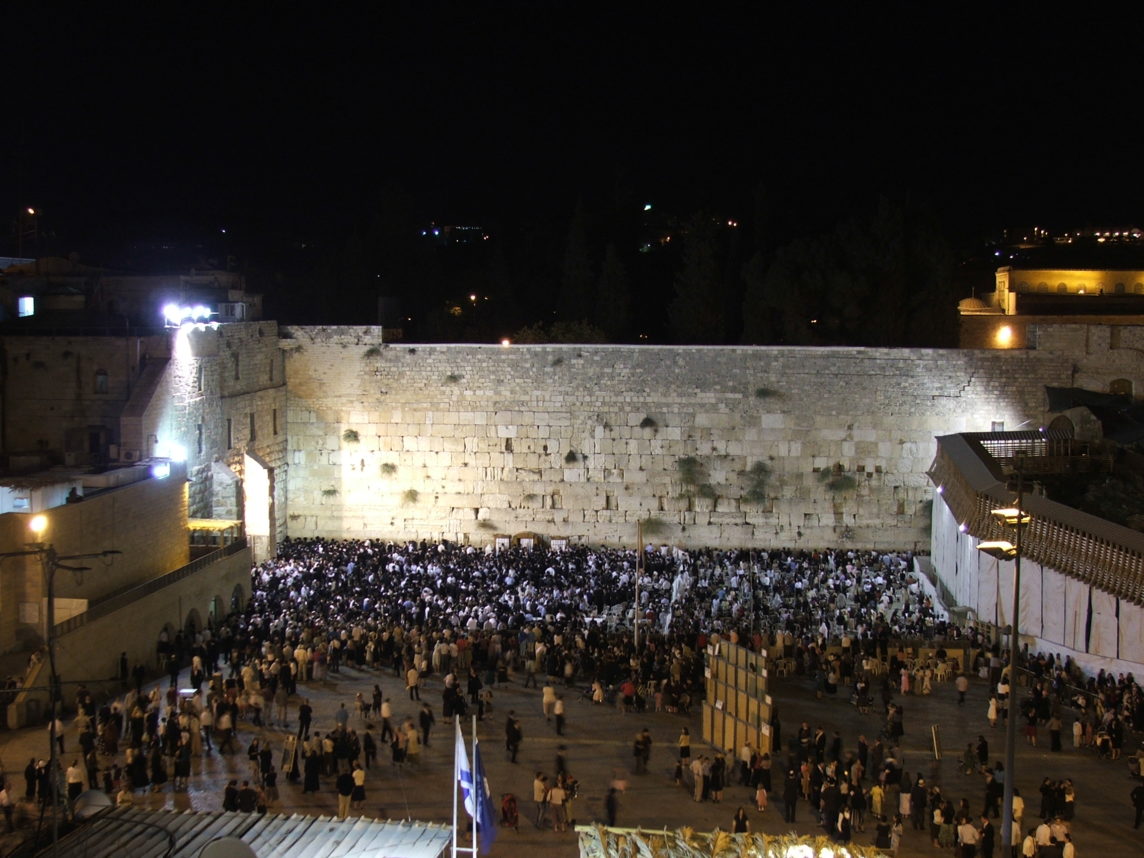
The day began with a moving prayer service at Robinson’s Arch, the egalitarian prayer space, celebrating the ordination that evening of the 100th Reform rabbi at Hebrew Union College-Jewish Institute of Religion’s (HUC-JIR) Jerusalem campus. I was finishing a 10-day trip to Poland and Israel sponsored by HUC-JIR in celebration of the historic event.
As a member of HUC-JIR’s board of governors and as a proud Jewish American and Reform Jew, I had a wide range of experiences on the trip that elicited wonder as well as deep concern.
The Robinson’s Arch service was meaningfully led by two women and included a series of female Torah readers. What happened next has been written about extensively, as well as recorded: the encounter between our group and the police at the Kotel.
Unbeknownst to me, the Reform leaders at the Kotel that day had planned to enter the public plaza at the Western Wall carrying eight Torah scrolls and conduct a brief Torah service. Under the Kotel’s rules — enforced by a government-funded nonprofit headed by the Kotel’s Orthodox chief rabbi — it’s forbidden to bring Torahs into the public plaza from the outside. Additionally, the separation of men and women is strictly enforced in the prayer spaces.
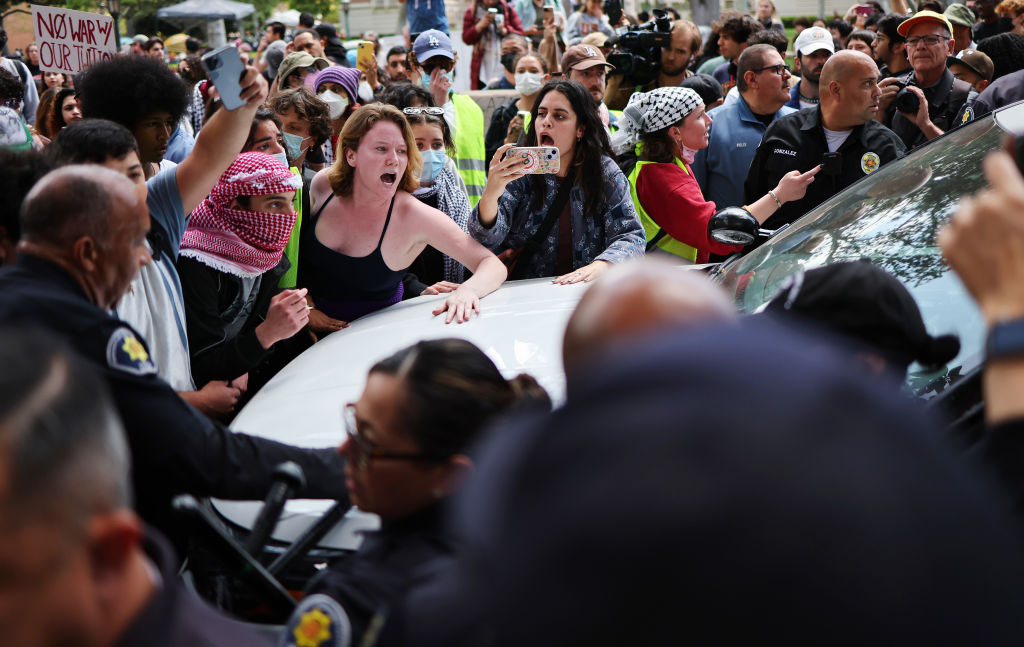
In what some describe as an act of civil disobedience, the people carrying the eight Torahs marched toward the metal detectors at the entrance of the plaza. The confrontation, at times quite violent, occurred as the Torah holders forcibly entered the Kotel plaza despite the resistance of the police and several Charedim. In the past, I have witnessed the Women of the Wall Rosh Chodesh services, at which women praying faced similar resistance, but I have never experienced anything like what unfolded that morning at the Wall.
From the stories I have read and the videos I have seen, our group has been hailed as heroes, standing up to the Orthodox to insist that all Jews, not just Orthodox Jews, have the right to pray freely at the Wall. While I fully support a mixed-gender and trans-denominational prayer space at the Kotel, I simply cannot condone an unnecessary provocation, which will have a lasting effect in North America and Israel and in how the progressive Jewish community in North America views Israel. In my conversations with many Israelis, they show little interest in the Wall and don’t understand why it is so important to Diaspora Jews.
I know that I am in a small minority within the Reform Movement in North America on this matter — possibly a minority of one. Many of our HUC-JIR students who are spending the year in Israel were there, and some were subjected to physical and emotional violence. How this will influence their view of Israel will emerge in the coming months and years. My fear is that this will be chalked up to being simply a part of the “Israel experience.”
I have never experienced anything like what unfolded that morning at the Wall.
I am a firm believer that Israel is for Israelis, a country where I am not a citizen. After speaking with many Israelis, I have learned that what is important to them are social issues — income inequality, civil marriage, civil divorce and a host of other matters that Diaspora Jews also support. Not the Wall.
I never believed the Israeli government would honor the agreement for an egalitarian worship space at the Kotel, and I thought that all the rejoicing when it was announced was both premature and self-deceiving. Having now experienced this event firsthand, I am more convinced than ever that pressing for equal worship at the Kotel is not worth risking bodily harm. I think North American progressive Jews are fooling themselves into thinking that this most recent demonstration will further the cause of establishing equality of worship at the Wall. I hope I’m proven wrong.
Jay Geller, a Los Angeles lawyer, is on the board of governors of Hebrew Union College-Jewish Institute of Religion. These opinions are his and do not represent those of HUC-JIR.
When Polish Jew Raphael Lemkin proposed a new law to prevent “acts of barbarity” at a law conference in Madrid in October 1933, he included “acts of extermination” against ethnic, religious and social groups. He included in his definition massacres, pogroms, economic destruction and acts of humiliation.
Adolf Hitler had become chancellor of Germany earlier that year. Lemkin saw the writing on the wall for the Jews and wanted the legal tools to stop what he saw could well happen.
By 1943, Lemkin’s own parents had been murdered in Poland. He also came up with a name for what was happening to the Jews: “genocide,” the destruction of a people.
He was not the only Jew to understand that what the Nazis were doing ultimately would lead to the Jews’ destruction. Recently, I bought a book from an antiquarian bookseller titled “The Yellow Spot: The Destruction of Europe’s Jews.” It appeared to be about the Holocaust but was published in 1936, six years before the “Final Solution.” How did the authors know what the outcome would be?
The book listed the many restrictions Germany had imposed on its Jews. The only logical conclusion was that the Jews would not survive in Europe. It’s a familiar list: restrictions on conducting business, restrictions on travel, citizenship laws that defined marriage, ID cards indicating ethnic and religious backgrounds. Jews were barred from attending school, restricted from holding government positions, forbidden to worship.
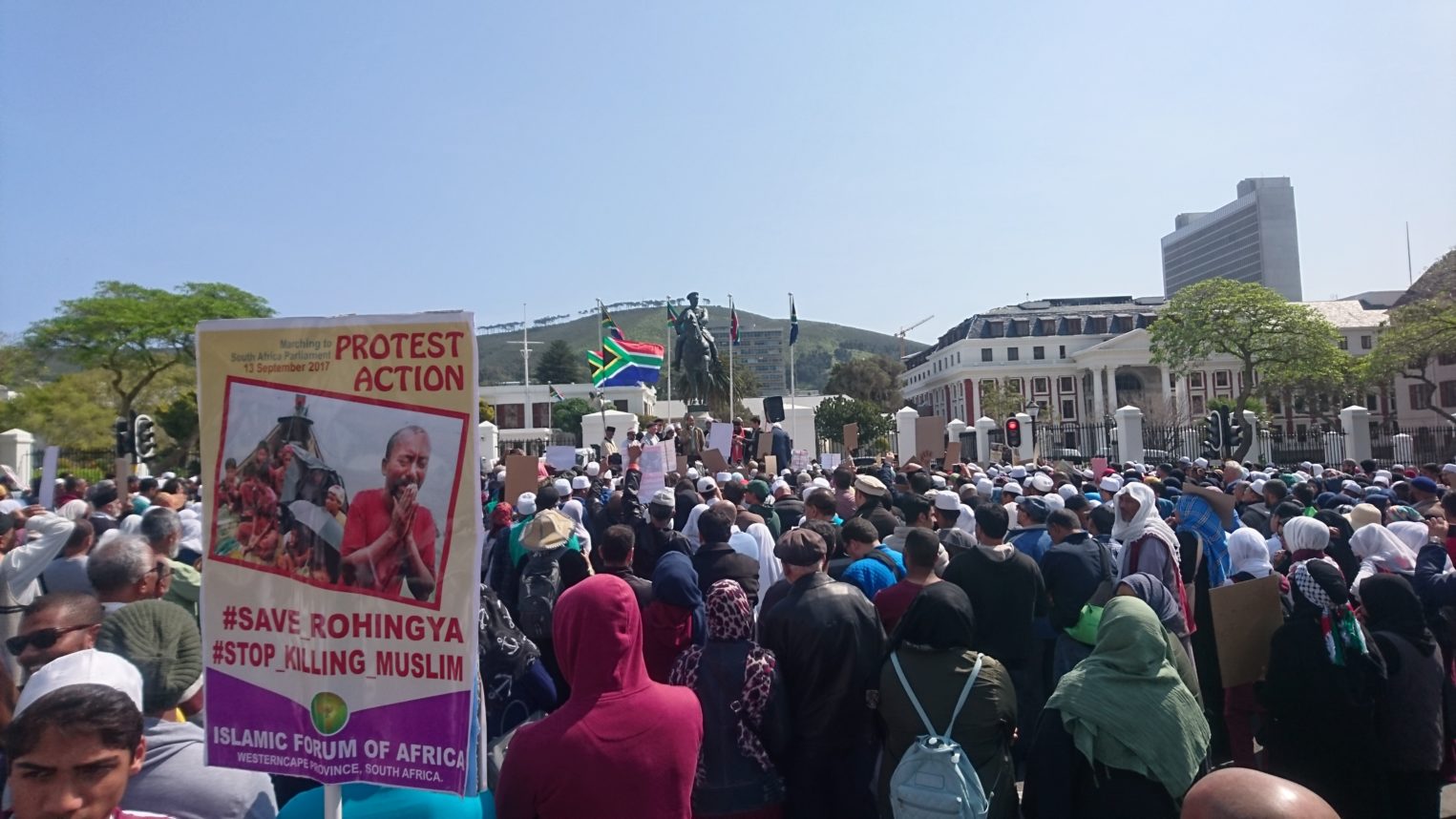
Bring the same list into 2017 and add restrictions on cellphone ownership, and it could be referring to Rohingya Muslims living in Myanmar.
The reports we have heard in our interviews are all too familiar.
I recently spent time interviewing Rohingya refugees who had fled genocidal violence in Myanmar. Their testimonies will be added to the USC Shoah Foundation’s archive of witnesses to genocide, the repository founded by Steven Spielberg in 1994 to document Holocaust survivors. The reports we have heard in our initial interviews with the Rohingya are all too familiar.
Over the past four decades, there have been several waves of Rohingya refugees fleeing for their lives. That is not surprising, since their exclusion is baked into the Myanmar constitution. A people who are barred from citizenship have no rights. They are a religious Muslim minority in a hostile Buddhist environment. Government, military, police and religious leaders all agree that Rohingya are a bad thing, but for no apparent reason.
The Rohingya keep to themselves, practice their religion in peace, keep their traditions and don’t return violence with violence. They speak in a unique dialect that the majority in Myanmar do not understand. They often live in separate villages. This placid people are hated for no apparent reason.
I had hoped the refugees would tell us that they had heard about violence in other towns and then fled the country to be sure. But that is not the case. Myanmar’s military, local police and Buddhist nationalists chased them from their burning homes, shooting many in the back as they scrambled into the forests.
In November 1938, Herschel Grynszpan, then just 17, took matters into his own hands on behalf of the Jewish people and shot Ernst vom Rath at the German Embassy in Paris. The next day, Germany unleashed a nationwide pogrom against the Jews, their homes and their property. We know it now as Kristallnacht — the Night of Broken Glass.
Kristallnacht was not a reprisal — it was violence waiting to happen. On Aug. 25 of this year, a small number of Rohingya activists reportedly attacked a number of police outposts. Myanmar authorities used that as a pretext to let loose an organized genocidal assault on the Rohingya — burning houses, looting property, destroying madrasas, raping women and murdering in village after village.
Raphael Lemkin understood that genocide was a series of acts calculated to erode, exclude and dehumanize people, until killing them all becomes the only — and final — solution. Most Rohingya have survived for now, but they experience the daily pain of living through genocide in slow motion.
It’s incumbent on us to alert elected officials to the plight of the Rohingya. Without international intervention, they likely will become the next genocide victims. As Paula Lebovics, a Los Angeles Holocaust survivor, often reminds me, silence is not an option.
Stephen D. Smith is the Finci-Viterbi Executive Director of the USC Shoah Foundation.
“Then he said, ‘Let me go, for dawn is breaking.’ But he answered, ‘I will not let you go, unless you bless me.’ Said the other, ‘What is your name?’ He replied, ‘Jacob.’ Said he, ‘Your name shall no longer be Jacob, but Israel, for you have striven with beings divine and human, and have prevailed.’”
Rabbi Nicole Guzik Sinai Temple
In “Alice’s Adventures in Wonderland,” the Caterpillar stares at Alice and asks, “Who … are … you?” And Alice replies, “I hardly know. At least I know who I was when I got up this morning, but I think I must have been changed several times since then.”
Alice echoes what many of us feel daily: We think we know who we are and then life throws us a curveball — a new job or the loss of a job, a different role in the family, a birth, a death, an illness. We are faced with strange journeys and sometimes we can hardly remember who we are at all.
Think of the names or descriptive phrases that once typified your character: once single, now married with children? Once married and now single with children out of the house? Student, now boss or business owner? Retiree looking for renewed purpose? Brand new parent? Recent mourner? Our names morph with every season. Who we are is a constant question, one that often leaves us mystified and reaching toward the heavens for direction and guidance.
Jacob’s name is changed to Israel, the one who struggles with God. Perhaps the Torah is reminding us that we are like Jacob: waking up with the dawn, finding ourselves on uncharted paths, destiny unknown. And although we may struggle in determining who we are and what names are in our future, like Jacob, we know, we struggle — with God. Whatever our name, whoever we are, God is with us. We are not alone.
Rabbi Joshua Katzan Ziegler School of Rabbinic Studies
Much contemporary spirituality seems to be driven by radical self-acceptance and listening to our “inner voice.” This is problematic because we have multiple, opposing inner voices. Is it God we’re hearing, or is it Narcissus?
Narcissus’ voice yearns to be heard and known. God’s voice urges us to hear, discover and transform — whatever the cost. One says, “Don’t you know who I am? Know me as I am!” God’s is a “listening voice” and craves to hear the hints and whispers that would guide us to becoming more refined souls, regardless of the challenges to getting there.
Jacob/Israel is the paradigm for this model of spirituality. Jacob became Israel not by radically accepting himself as he was. He prevailed because he determined that spiritual growth depended on not letting go of the challenge, of the pain and struggle to grow beyond his familiar identity. And this is our spiritual task: to be guided by the voices outside of ourselves that urge a different and more refined self to emerge, and then to grab on and not let go.
Hereafter in the Torah we hear reference to both names: Jacob and Israel. This teaches that transformation is not necessarily permanent. New growth is not as deeply rooted as our nature. Empowerment, healing and even wisdom can be fleeting. Dedicating ourselves to a path, a practice and a community whose collective voice expects us to live up to our hard-earned, renewed names is what makes us — and keeps us — Israel.
Rabbi Shlomo Einhorn Yeshivat Yavneh
Rav Sholom Schwadron, the great storyteller of Jerusalem, once shared a tale of a farm boy who had never been to the city arriving there one day. He’s excited by everything he sees: the lights, the hustle and bustle, the sounds and the cars. He’s never seen any of this. It’s amazing. All of a sudden, he notices a long line outside of a building. He decides to get in line and follow it through. The people in line start going inside, one-by-one. They pay somebody at the front who gives them a ticket and they walk into a room.
The farm boy sits down in the dark room, where everybody is staring at the wall. What appears on the wall? It’s the yetzer hara, the evil inclination. He loves it. He can’t get enough. He’s looking at it and it’s the most beautiful thing he has ever seen. It’s incredible. He wants more of it. He asks, “Why are we looking at it in the dark?” Quickly, he runs to the back, he turns on the light and suddenly it’s gone.
What is this analogy all about? Jacob was battling the darkest of himself — the yetzer hara, the evil inclination. Do you know how you beat your demons? You find out what the source is. Where does it come from? Why do I have this struggle? Why do I have this problem? What is in my past that is making me think and feel this way? What’s your name? When he asked, “What’s your name?” he wasn’t just seeking a random detail about an angel; he was trying to find out about the angel’s identity: Who are you? At your essence, what are you about? That’s why the angel freaked out. That’s why the angel couldn’t handle it. The angel asked, “What are you asking me? Stop!” Because he knew the moment Jacob finds out what this is all about, there is no more battle. It’s over.
Rabbi Zoë Klein Miles Temple Isaiah
The name Yisrael (spelled in Hebrew Yud-Sin-Reish-Alef-Lamed) is an acronym of the first letters of our matriarchs’ and patriarchs’ names. Yud for Isaac and Jacob (Yaakov), Sin for Sarah, Reish for Rachel and Rebecca, Alef for Abraham, and Lamed for Leah. The name “Israel” carries not only Jacob’s striving, but the journeys of all of our ancestors, along with the belief that these journeys will lead to prevailing good.
The word for “name” in Hebrew is shem, and these letters are the center of the Hebrew word neshama, soul. God is often referred to simply as HaShem, which means “The Name.” In Hebrew, Moses’ name, Moshe, is HaShem backward. The second book of the Torah is Exodus, or Shemot in Hebrew, which means “Names.” The third book is Leviticus, or Vayikra in Hebrew, which means “God called.”
There is the name given to us by our parents, but then there is our “calling,” which we discover on our own, at the center of our soul. We do not know, for example, what Moses’ parents named him. The name we know honors the act of mercy shown him by Pharaoh’s daughter. Jacob’s new name honors his triumph over the night angel. What are you called, and what is your calling? Are you defined by your traumas or can you redefine yourself by mercies? Jacob is asked, “What is your name?” We strive to answer: “What is our calling?”
Rabbi Marc D. Angel Institute for Jewish Ideas and Ideals
Supreme Court Justice Robert Jackson took leave from the court to serve as the United States’ chief prosecutor at the Nuremberg trials of Nazi war criminals. He wrote that “the most odious of all oppressions are those which mask as justice.” He understood that the atrocities of the Nazis were all purported to be “legal.” Laws were passed depriving Jews of all rights. Laws were passed to round up, imprison and murder Jews. Moral people should have denounced such “laws” and should have resisted the “legal system.”
There are groups of anti-Israel and anti-Semitic people who seek to undermine Israel; they insidiously pose as being interested in human rights, as guardians of international law. Yet they operate with malice toward Israel and perpetrate the vilest propaganda against her. They support boycotts of Israel. They constantly rebuke Israel for any real or imagined shortcoming. For these people, justice is not just at all. Rather, they pervert justice to further their own unjust and immoral goals.
A midrash identifies Jacob’s antagonist as the angel of Esau dressed in the garb of a rabbinic scholar. This alludes to hypocrites who put on the external features of righteousness. They can be more dangerous than those who openly declare their hostility. Justice Jackson wrote of “the most odious of all oppressions” that mask as justice. We might add that among the most odious of human beings are those who have the wickedness of Esau but who wear the mask of piety and innocence.
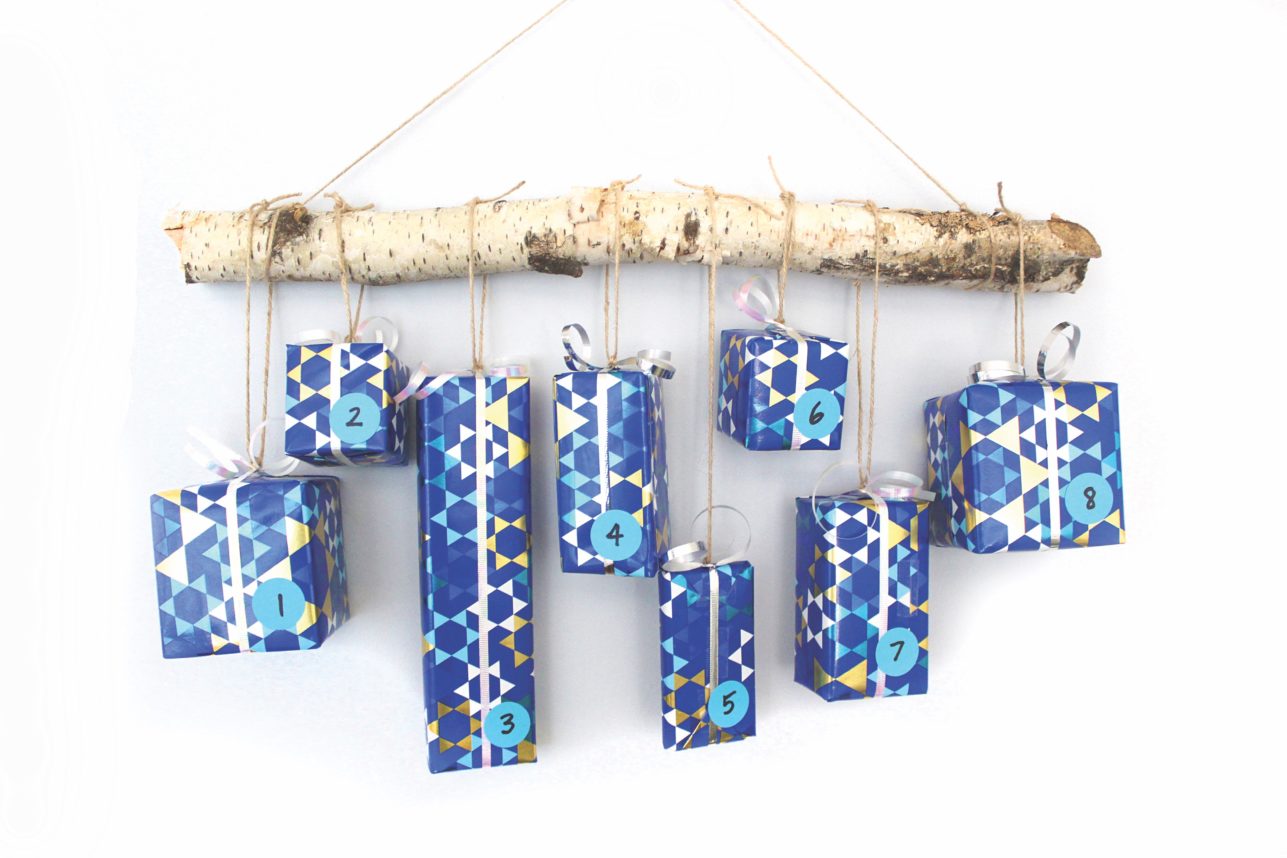
How much do we love Hanukkah? Let us count the ways with this festive Hanukkah countdown branch. Eight little wrapped boxes hang from the branch, and each night of Hanukkah one of the gifts gets to be opened. It’s true what they say — good things come in small packages.
What you’ll need:
8 small boxes with gifts inside
Wrapping paper
Tape
Ribbon
Branch, about 18 inches long
String
Paper
Pen
Glue stick
1.
1. Gather eight small gift boxes. I bought these at The Container Store, but you can also look in your closets and repurpose any packaging you may find.
2.
2. Place a gift in each box, and wrap the boxes.
3.
3. Tie a ribbon vertically around each gift box. The ribbon is more than decorative — it will hold the string that is tied to the branch.
4.
4. Find a branch that is about 18 inches long. You can cut one from your yard or purchase one from a crafts store. You also can use a dowel, long ruler or even a hanger. Tie a piece of string to each end for hanging.
5.
5. Tie a piece of string around the ribbon on each box. Then hang the gift boxes on the branch with the string, spacing them evenly.
6.
6. Write a number on each box, from one to eight. You can write directly on the package, or write the numbers on paper that you then glue to the box.
Jonathan Fong is the author of “Walls That Wow,” “Flowers That Wow” and “Parties That Wow,” and host of “Style With a Smile” on YouTube. You can see more of his do-it-yourself projects at jonathanfongstyle.com.
The Angel City Chorale (ACC) performs its 24th annual holiday concert and singalong. The concert will feature the world premiere of “Hanukkah Lullaby,” an original piece by ACC founder and artistic director Sue Fink and ACC choir member and songwriter Denny Wynbrandt. The work explores what it means to remain resilient during difficult times. Enjoy seasonal compositions and fully orchestrated holiday classics set to contemporary pop, R&B and a cappella music. 7 p.m. Also Dec. 3. at 7 p.m. $35 (adults), $32 (seniors 60 and older), $27 (children 5–12). Immanuel Presbyterian Church, 3300 Wilshire Blvd., Los Angeles. (310) 943-9231. angelcitychorale.org.
HADAG NAHASH
Funky hip-hop grooves combined with flavors of rock, reggae and Middle Eastern music separate Hadag Nahash from the crowded Israeli music scene. The group features a full electric band, turntables, samples and lyrics about ending corruption and racism in Israeli society. It performs at American Jewish University with Mizrahi artist Hanan Ben Ari. 8 p.m. $45-$75. American Jewish University, Gindi Auditorium, 15600 Mulholland Drive, Los Angeles. (818) 483-8818. teevtix.com.
“THE MUSIC MAN”
The Jewish Women’s Repertory Company, musical theater performed exclusively by women and for women, presents Meredith Willson’s Tony-winning musical, “The Music Man.” , For women only. A portion of the proceeds benefit the Jewish Family Service of Los Angeles’ Family Violence Project. 8 p.m. Also Dec. 3 at 1:30 p.m. and 6:30 p.m. Presale: $25 (mezzanine), $30 (orchestra), $35 (center orchestra). Door: $30 (mezzanine), $35 (orchestra), $40 (center orchestra). Nate Holden Performing Arts Center, 4718 W. Washington Blvd., Los Angeles. (310) 997-0598. jewishwomenstheater.com.
SUN DEC 3
LEARN LA
Rabbi Hershel SchachterRabbi Shay Schachter
Join Rabbis Hershel Schachter, Shay Schachter, Moshe Hauer, Zev Wiener, David Fohrman, Steven Pruzansky and Shlomo Einhorn as they discuss the role that Torah plays in our lives at the Orthodox Union’s West Coast Torah Convention. Also scheduled to speak at the conference are Michal Horowitz, Lou Shapiro, Charlie Harary, Geri Wiener and Racheli Luftglass. Free. 8:45 a.m. breakfast; Sessions run from 9:15 a.m. to 11:15 a.m. Baby-sitting available for children ages 1-4. Sponsored by Orthodox Union West Coast. Beth Jacob Congregation, 9030 W. Olympic Blvd., Los Angeles. (310) 229-9000, ext. 201. ou.org.
“THE GRADUATE” SCREENING AND DISCUSSION WITH AUTHOR
American Jewish University celebrates 50 years since the release of Mike Nichols’ groundbreaking 1967 comedy, starring Dustin Hoffman as a disillusioned college graduate who is seduced by Mrs. Robinson and falls for her daughter, all to the sounds of Simon & Garfunkel. Beverly Gray, author of “Seduced by Mrs. Robinson: How ‘The Graduate’ Became the Touchstone of a Generation,” participates in a post-screening discussion. Gray’s book places the movie in a historical context, offers a look into the making of the iconic film and explains why it has had an impact on popular culture. 3 p.m. $12 (reserved), $18 (premium). American Jewish University, 15600 Mulholland Drive, Los Angeles. (310) 476-9777. wcce.aju.edu.
“1917: A TURNING POINT IN AMERICAN JEWISH HISTORY”
Hasia Diner, a professor of American-Jewish history at New York University, discusses the impact America’s entry into World War I had on American Jews, most of whom rallied to the nation’s cause. Organized by the Jewish Genealogical Society of the Conejo Valley and Ventura County. 1:30 p.m. Free. Temple Adat Elohim, 2420 E. Hillcrest Drive, Thousand Oaks. (805) 497-7101. adatelohim.org.
“A NIGHT OF MIRACLES”
The Los Angeles Jewish Symphony performs a musical mashup of old and new Hanukkah music at Wilshire Boulevard Temple’s Koreatown campus. Actors Philip Casnoff and Roxanne Hart deliver readings of stories of modern Jewish miracles. Artist Karen Hart performs her acclaimed “Judah and His Maccabees: A Hanukkah Gospel Story.” A jelly doughnut reception follows. Suitable for all ages. 4 p.m. Free (RSVP appreciated). Wilshire Boulevard Temple, Glazer Campus, 3663 Wilshire Blvd., Los Angeles. (213) 388-2401. wbtla.org/miracles
WORLD KINDERTRANSPORT DAY
The event marks the anniversary of the first Kindertransport arrival in England carrying children fleeing the Holocaust. Speakers will honor those who worked to make the Kindertransport possible, including Holocaust rescuer Varian Fry, as well ats volunteers who work today in refugee camps in Turkey and Greece. Light refreshments will be served. 7 p.m. Free. Colony Theater, 555 . Third St., Burbank. kindertransport.org/events.aspx.
MON DEC 4
AUTHOR LAURA ROSENZWEIG
Laura Rosenzweig will talk at Stephen Wise Temple about her book, “Hollywood’s Spies: The Undercover Surveillance of Nazis in Los Angeles,” which tells the long-untold story of American-Jewish resistance to Nazism during the 1930s and the role that Jewish Hollywood played in combatting this threat to democracy. From 1934 to 1941, Louis B. Mayer, Jack Warner and the other Jewish executives of Hollywood secretly paid private investigators to infiltrate Nazi groups operating in Los Angeles. For seven years, Hollywood’s spies infiltrated the German-American Bund and its nativist, Nazi-influenced allies, reporting on seditious plots and collusion with the German government. 7:30 p.m. $15 for Stephen Wise members, $20 nonmembers. Stephen Wise Temple, 15500 Stephen S. Wise Drive, Los Angeles. (888) 380-9473. wisela.org.
YIDDISH ZING ALONG
Yiddish folksinger Cindy Paley turns Encino into the old country as she performs old and new Yiddish folk songs at Valley Beth Shalom. Clarinetist Zinovy Soro, violinist Miamon Miller, accordionist Isaac Sadigursky and guitarist and vocalist Menachem Mirski accompany Paley. Song sheets and refreshments provided. 7 p.m. $18. Valley Beth Shalom, 15739 Ventura Blvd., Encino. (213) 389-8880. cindy-vbs.brownpapertickets.com.
TUE DEC 5
“WISH YOU WEREN’T HERE”
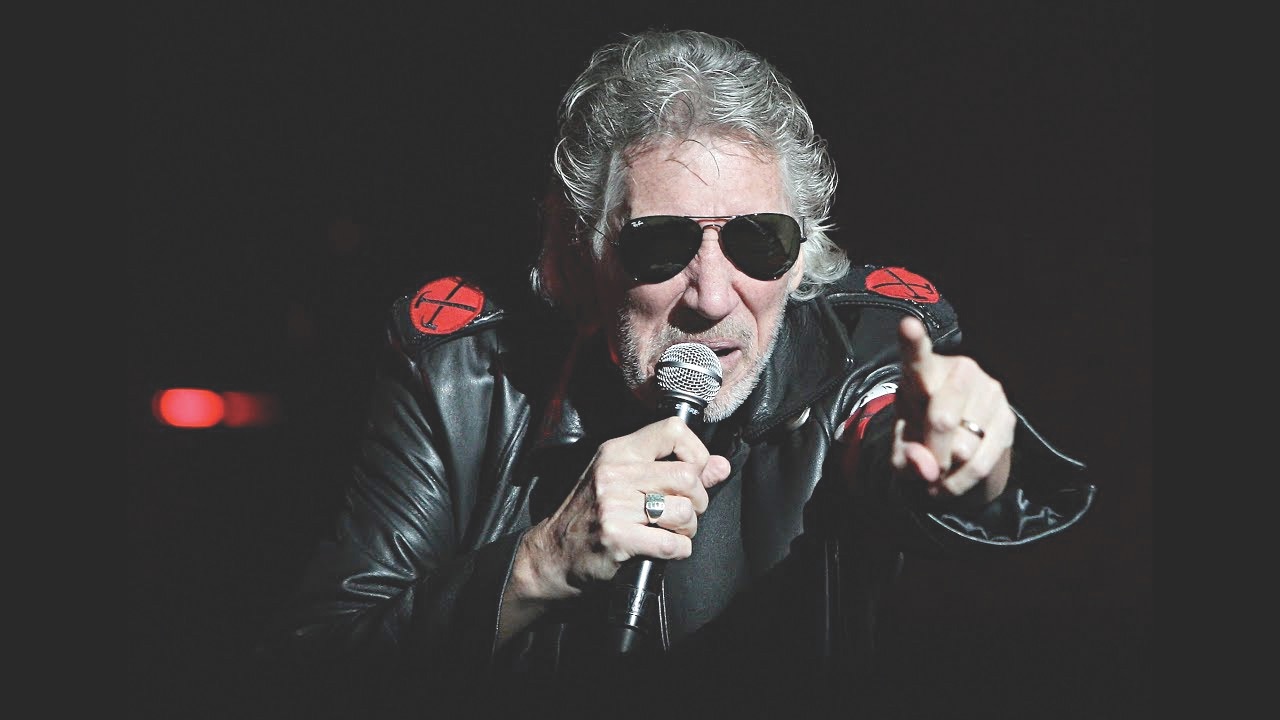
In a new documentary, investigative journalist Ian Halperin examines former Pink Floyd member and anti-Israel activist Roger Waters, a supporter of the Boycott, Divestment and Sanctions movement against Israel. Waters has called on artists from Radiohead to Nick Cave to participate in a cultural boycott against Israel. Borrowing its title from the Pink Floyd classic “Wish You Were Here,” the film places Waters’ actions in the context of the rise of global anti-Semitism. The filmmaker participates in a post-screening discussion and Q-and-A with entertainment industry community members, including Spirit Music Group CEO and Creative Community for Peace co-founder David Renzer, Electronic Arts Music Group executive Steve Schnur and attorney David Lande. Film producer Richard Trank moderates the panel. 7 p.m. $10. Museum of Tolerance, 9786 W. Pico Blvd., Los Angeles. creativecommunityforpeace.com/wish-you-werent-here.
WED DEC 6
DIPLOMAT RON PROSOR
Ron Prosor, one of Israel’s most distinguished diplomats, talks with Rabbi David Woznica on a wide range of topics of interest to Israel and Jewish people outside of Israel: the United States and the international community; the inner workings of the world of diplomacy; and some of his most memorable moments on the world stage. Prosor served as vice president of the United Nations’ General Assembly, chair of the U.N. Human Rights Committee, Israel’s ambassador to the United Kingdom, and director-general of Israel’s foreign ministry. Free. Registration required. 6:45 p.m. reception, 7:15 p.m. program. Stephen Wise Temple, 15500 Stephen S. Wise Drive, Los Angeles. (888) 380-9473. wisela.org.
“HOW DID BARACK OBAMA CREATE HIMSELF?”
Barack Obama was president of the United States for eight years, and the broad outlines of his story — his Hawaiian birth, his fatherless childhood, his education at elite institutions, his work as a community organizer and politician in Chicago — are now familiar elements of American history. David J. Garrow, the Pulitzer Prize-winning author of “Rising Star: The Making of Barack Obama,” discusses with Warren Olney how Obama retains a remarkable mystique and can seem unknowable. Free (RSVP required). 6:30 p.m. (check-in). 7:30 p.m. National Center for the Preservation of Democracy, 111 N. Central Ave., Los Angeles. zocalopublicsquare.org.
THU DEC 7
“THE SUPREME COURT: WHAT’S NEXT? AN INSIDER’S VIEW”
George Washington University law professor Jeffrey Rosen, president and CEO of the National Constitution Center in Philadelphia and a regular commentator on National Public Radio, will discuss the U.S. Supreme Court, the death of Justice Antonin Scalia, then-President Barack Obama’s nominee Merrick Garland, and the recent nomination and confirmation of Neil Gorsuch. Presented by One Day University. Registration required. $69. 7 p.m. Wilshire Ebell Theatre, 4401 W. Eighth St., Los Angeles. (800) 300-3438. onedayu.com.
RITA RUDNER AT PEPPERDINE
Rita Rudner. Photo courtesy of Jeff Abraham
Stand-up comedian and best-selling author Rita Rudner often alludes to her Jewish upbringing in her act. Don’t miss an evening with the funny lady who claims to have the longest-running solo comedy show in Las Vegas history. 8 p.m. $40-$75. Smothers Theatre, Pepperdine University, 24255 Pacific Coast Highway, Malibu. (310) 506-4522. arts.pepperdine.edu/events/rita-rudner.htm.
Back in the days, middle-class families did not have to struggle financially as the economic situation enabled comfortable lives even in cases there was only one provider for the whole household. Today, we are witnessing a crisis where two paychecks are insufficient to cover all the expenses. Making ends meet is definitely taking the toll on Americans: according to the research conducted by the Federal Reserve Board, 47% of the respondents said they do not have an emergency fund of as little as $400. This is definitely a reason for red alert. But there is more than one thing burdening the middle class.
Expenses Grow, Wages Don’t Keep up
Back in the sixties, the country focused on prosperity, while now – it is all about surviving through the financial insecurities. The main problem is that wages either stay the same or grow only on nominal base, which means that, once they are adjusted for inflation – their buying power drops down. The question of federal minimum wage is specifically problematic since it is dependable on the current government and parties. At the moment, it is $7.25 per hour, while 58% of the surveyed Americans believe it should be at least double ($15) to cover basic life needs. Back in 2015, The Economist argued that taken in mind the U.S. national income, minimum hourly pay should be at least $12. On the other hand, expenses such as college tuition fees or medical care have grown.
The Problem of Debt
Another challenge middle-class families are facing is the absence of any financial safety net. While in the past, households could rely on savings for rainy days, today’s families are living from paycheck to paycheck, and it’s still not enough. Whether it is the credit card debt or an interest they cannot get out of, it is hard for families to get back on track. It usually revolves around seeking instant solutions (e.g. payday lendings or different types of creditors) and then making a bigger problem in the future. This is why many families seek out for payday loan help in an attempt to consolidate their debt and start fresh. Not having a stable budget is a problem by itself, but debts are the weights dragging the middle-class down to the bottom.
Work Landscape Isn’t Promising
Many Americans would love to obtain a full-time job that brings them a decent amount of money and career satisfaction. This is particularly true for younger generations, such as Millennials. This generation chooses part-time employment willingly since they don’t wish to commit to a full-time career doing something they don’t love. According to Time, Millennials use part-time jobs simply as financial survival until they figure out a way to pursue a profession they want and get well paid for it. In any case, this behavior is causing an economic disruption.
Lack of Savings
Given the fact they are overwhelmed with living costs, middle-class Americans find it hard to save money for the future. The household saving rate decreased to 3.10 percent in September and high-level debt plays its role here. This means an alarming number of citizens do not have a retirement plan. Low income combined with poor consumer habits lead to having no financial security in the future. It could be that households don’t have a defined budget or they take care of expenses as they come. The inability to see a broader picture and prioritize comes as a direct consequence of stress and burnout due to working too much for too little.
Despite what you may think, the economic pressure is not put only on American families but is a truly global phenomenon. From the current perspective, it seems that middle class has to find its own methods of savvy financial management – whether it’s by extreme savings measures or seeking new job opportunities.