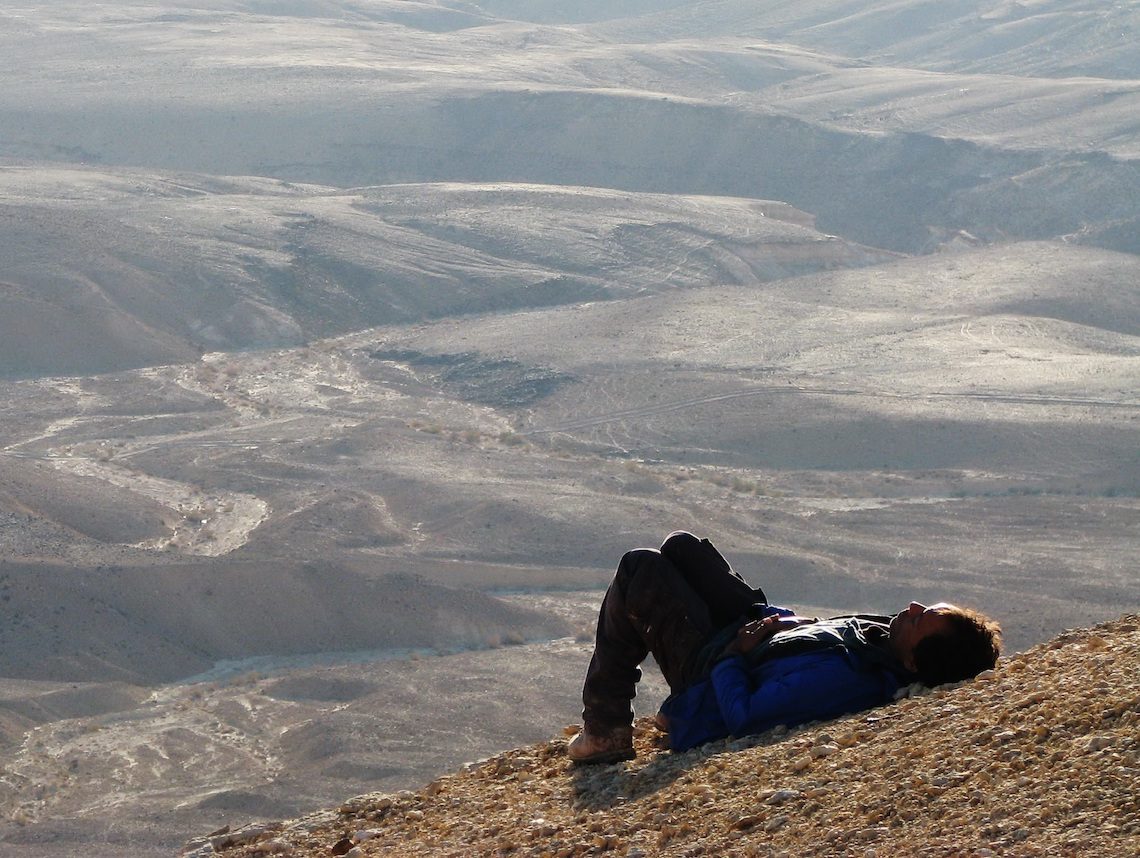
Episode 38 – Traveling the Holy Land with Gal Mor
Episode 38 – Traveling the Holy Land with Gal Mor Read More »
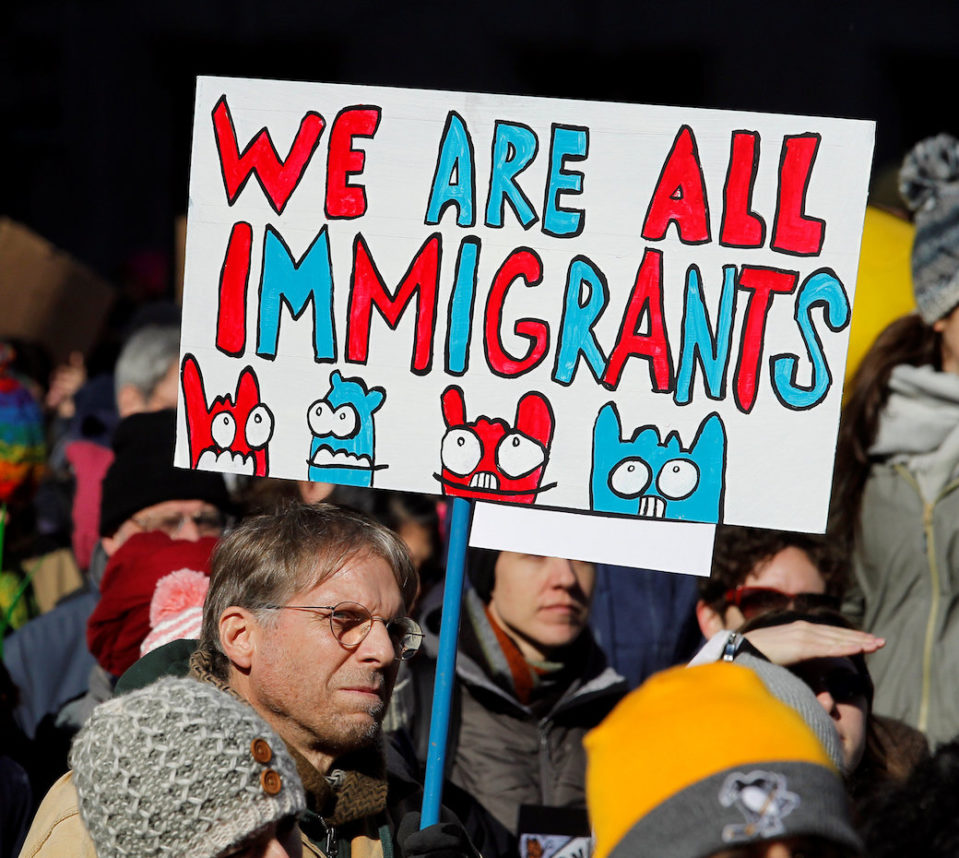
In recent weeks, President Donald Trump has adopted an increasingly sympathetic tone toward the young undocumented immigrants — known as Dreamers — who have been granted renewable two-year protection from deportation under former President Barack Obama’s administration program called Deferred Action for Childhood Arrivals, or DACA. Trump has promised to “show great heart” in dealing with these “incredible kids” and has encouraged them to “rest easy.” Homeland Security Secretary John Kelly has likewise characterized DACA as “a commitment” by the government that must be honored.
While such statements are encouraging, recent incidents have called into question whether Immigration and Customs Enforcement agents are hearing the same message. In February, our client — a young father and two-time DACA recipient named Daniel Ramirez Medina — was swept up during a raid targeting another individual and detained without justification for more than six weeks. Federal agents also recently detained a 22-year-old Dreamer in Mississippi after she publicly criticized the government, and summarily deported a 23-year-old California man with a cognitive disability despite the fact that twice he had been granted protection under DACA.
The government established DACA in 2012 in recognition of the special circumstances surrounding “young people who were brought to this country as children and know only this country as home.” To qualify for DACA, eligible individuals are required to pay a substantial fee, provide the government with highly sensitive personal information and pass a rigorous background check. Understanding that many Dreamers might be reluctant to voluntarily come forward, the government coaxed these young people out of the shadows by promising that they would be free from arrest, detention and deportation as long as they played by the rules, and by assuring them that any information they disclosed would not be used for immigration enforcement purposes.
The government’s arrest and detention of Ramirez represents a clear breach of these promises. Although federal agents initially suggested that Ramirez was a gang member, the government quickly abandoned that allegation, and now asserts only that he supposedly “hangs out” with gang members — a charge he vigorously denies, and which is not grounds for revoking DACA. And rather than acknowledge that it made a mistake in arresting him, the government summarily stripped Ramirez of his DACA status, locked him up, and is seeking to have him deported, despite the fact that he has passed multiple DHS background checks and is not accused of any crime.
Given these extraordinary circumstances, our legal team filed a habeas corpus petition and several emergency motions seeking to have Ramirez released from custody. Rather than defend its conduct, the government sought to evade judicial review by arguing that the court lacked jurisdiction to consider the matter, adopting a position at odds with the Constitution and hundreds of years of well-settled law. Thankfully, our team was able to secure Ramirez’s release on bond after the government was forced to admit that there is no evidence he poses any risk to public safety.
Last month, our team filed a new complaint against the government. In addition to reinstatement of Ramirez’s DACA status and work authorization, we are seeking a judicial declaration that DACA cannot be revoked — and Dreamers cannot be arrested, detained or deported — without basic procedural safeguards such as notice and an opportunity to be heard. Fundamental fairness and the due process rights enshrined in the Constitution require no less.
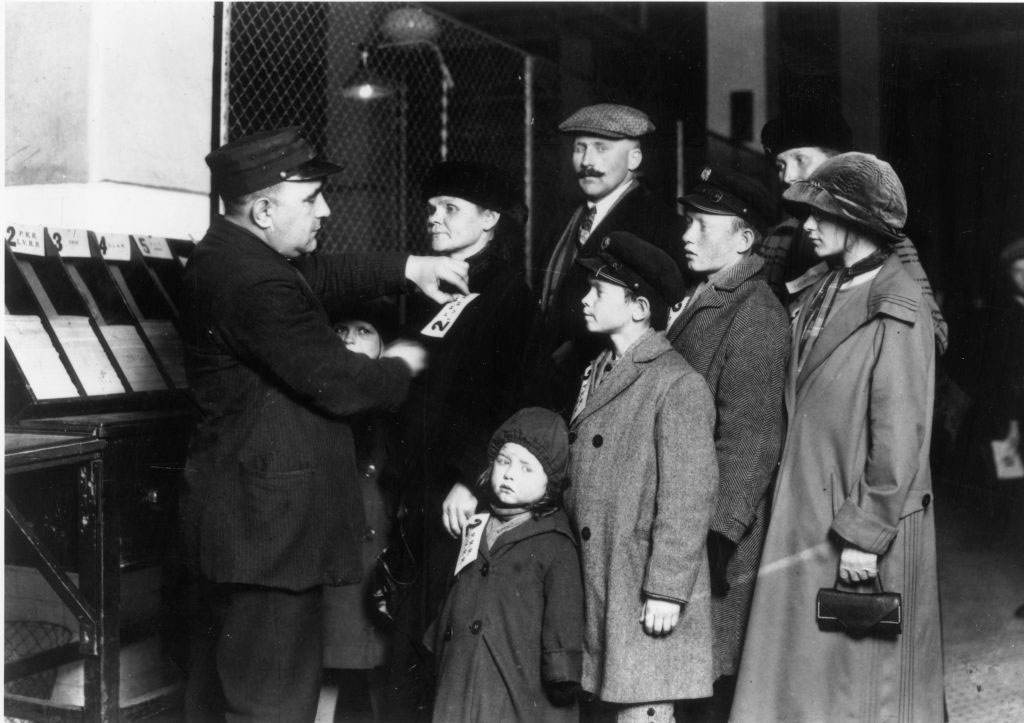
Treating Dreamers and other undocumented immigrants with fairness and compassion also is consistent with Jewish values. More than any other commandment, and no fewer than 36 times, the Torah teaches us that we must act compassionately toward the “strangers” who live among us because we “were strangers in the Land of Egypt.” Citing this commandment and the great rabbis of the Talmud, the Jewish Theological Seminary explained earlier this year that “there is no religious obligation more central to Judaism than the protection of refugees and immigrants.”
Beyond its moral dimensions and constitutional significance, honoring the DACA promise has important implications for our society. In addition to its essential humanitarian benefits, DACA has helped unleash the potential of nearly 800,000 young people who have long called our country home. It has enabled them to attend universities, open bank accounts, start businesses, buy homes and cars, and — for Luis Cortes Romero, one of my co-counsels in the Ramirez case — graduate from law school and pass the bar exam. The right-leaning Cato Institute has estimated that DACA will add $280 billion to the U.S. economy over the next decade.
As the Obama administration acknowledged in establishing DACA, the program does not create any substantive rights or entitle Dreamers to permanent lawful status, as only Congress can grant those privileges. But the government did promise these young people that they would be entitled to basic protections if they came out of the shadows and played by the rules. As Americans and as Jews, we should do everything in our power to ensure that our government continues to honor that promise.
JESSE GABRIEL is a senior associate at the law firm of Gibson Dunn & Crutcher LLP and serves on the board of directors of The Jewish Federation of Greater Los Angeles.
Give ‘dreamers’ the protection they were promised Read More »
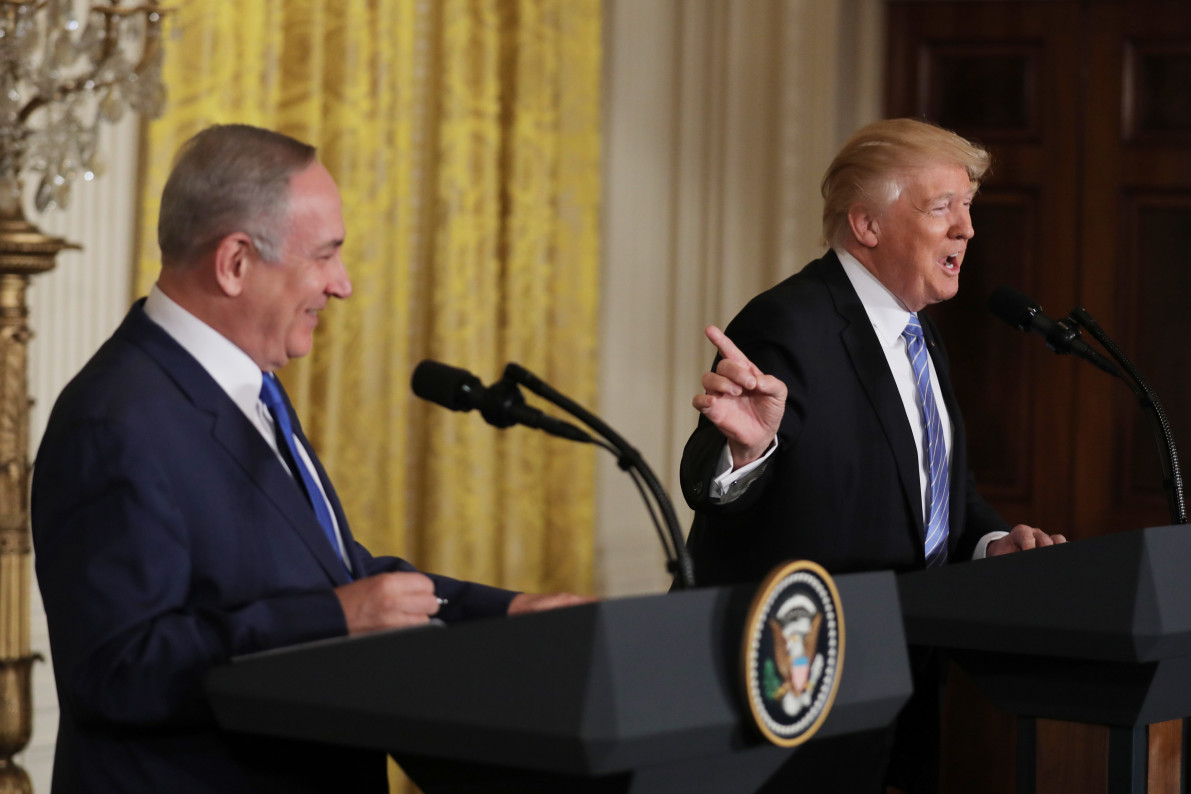
Momentum is building toward resumption of the dormant Middle East peace process. The efforts by presidential envoy Jason Greenblatt, the successful visit of Palestinian President Mahmoud Abbas to the White House last week, and President Donald Trump’s trip to Saudi Arabia, Israel and the West Bank all signal that, for now, the Trump administration is serious about promoting peace. Can it succeed where others have failed?
Optimists believe things could be different this time around. An alignment of interests between Israel and key Arab Sunni states seeking to contain Iran’s regional ambitions and to confront Islamic extremism has made these countries ready to embrace ways to put the Israeli-Palestinian conflict behind them. Pessimists warn, however, that except for the new U.S. administration, not much has changed.
Prime Minister Benjamin Netanyahu’s move to curb settlement construction in the West Bank is a
welcome start, but Israel could be encouraged
to do more to rein in settlement expansion.
The truth is probably in the middle. A changing regional setting coupled with a renewed interest in the conflict on the part of an unconventional U.S. president could open a window of opportunity. But rather than overpromising to achieve the ultimate deal, a promise that would likely backfire, the administration could take concrete steps that might pave the way toward resumption of an earnest peace process. Here are four steps that could help get there:
• The president could state a clear vision, while setting realistic benchmarks, and remain committed for the long haul. Speaking generally about “peace” and implying indifference between the two-state and one-state options may suffice for first meetings, but the Trump administration could articulate that in the absence of another feasible option, it is committed to a two-state solution that allows the peaceful existence of a Jewish democratic Israel alongside a demilitarized Palestinian state.
But promising to end the conflict in an unrealistic time frame could dim the chances for success. In this part of the world, when it’s all or nothing, it usually is nothing. It would make more sense to move forward with concrete measures and achievable goals to gradually help set the stage for a two-state solution.
In addition, Greenblatt is perceived in the region as directly executing the president’s wishes. This credibility could be crucial for regional leaders.
• Second, the administration could promote a three-pronged approach combining bilateral, multilateral and unilateral processes. Traditionally, the U.S. role in Israeli-Palestinian peace efforts focused on bringing the two sides to the negotiation table hoping that with a little help, they would reach a peace deal. Focusing solely on a bilateral approach has not worked before and it is unlikely to work now.
In parallel to resuming peace talks between Israelis and Palestinians, the U.S. could promote a multilateral approach by bringing in the Arab Sunni states to help back the Palestinians and incentivize Israel. Unilateral independent steps could include pushing Israeli and Palestinian leaders on issues that are hard for them politically at home.
Prime Minister Benjamin Netanyahu’s move to curb settlement construction in the West Bank is a welcome start, but Israel could be encouraged to do more to rein in settlement expansion.
While too sensitive to push for during a highly publicized hunger strike of Palestinian inmates in Israeli prisons, the Palestinian Authority (PA) could be prodded to stop generously paying prisoners convicted of terrorism. This could send an important signal to Israel and to the world that the Palestinians are serious about peace.
• Third, the U.S. could continue efforts to stabilize the Gaza Strip, while at the same time seeking to help strengthen the PA. The Gaza Strip is on the verge of collapse and the winds of war are blowing again between Israel and Hamas. This administration has been following the footsteps of its predecessor in an attempt to stabilize Gaza. Building on these efforts, Trump could use his leverage to coordinate with Israel and push the Gulf States — maybe during his visit to Saudi Arabia before he heads to Israel — to follow through on their pledges to help stabilize Gaza.
Efforts also could focus on providing Gaza’s residents with clean drinking water, proper sanitation, a regular supply of electricity and improved freedom of movement for people and goods. It is crucial, though, that efforts in Gaza do not bolster Hamas at the expense of the PA.
Trump gave a much needed boost to the weak PA by meeting with Abbas, calling it an “honor,” tweeting about the meeting and not asking Abbas publicly to make any compromises.
• Finally, the administration could sign the waiver forestalling the relocation of the U.S. embassy to Jerusalem. Moving the embassy from Tel Aviv to Jerusalem so close to the 50th anniversary of the 1967 Six-Day War could shatter any chance of peace and risk plunging Jerusalem and the whole region into turmoil.
Such steps may not bring about the ultimate deal. Despite regional dynamics and a new energy from the White House there are still plenty of obstacles to an Israeli-Palestinian peace agreement. Without a clear, consistent plan that delivers quick, tangible results to both Israelis and Palestinians and helps restore trust between the two sides, the newly created window opportunity to addressing this conflict will close again.
Shira Efron is a policy researcher at the nonprofit, nonpartisan Rand Corp., a special adviser on Israel with Rand’s Center for Middle East Public Policy and a professor at the Pardee Rand Graduate School.
Toward a renewed Middle East peace process Read More »
More than a decade later, renowned lawyer Robert Shapiro still can’t seem to get a distinctive ringing out of his head.
“The phone rang and rang and rang. It seemed to ring a little too long. It was a little too early,” Shapiro told a crowd on May 8. “Then we got the call that no parent would ever want to get.”
The October 2005 phone call was regarding Shapiro’s son Brent, a 25-year-old college undergrad who was contemplating law school. A recovering drug addict, Brent relapsed in the early hours of that morning at a party. He was buried just over a day later.
An overflow crowd of nearly 300 people, mostly observant Jews, at YULA Girls High School listened to Shapiro and other speakers during a program called “We Need to Talk About Prevention.”
The drug and mental health awareness event was organized by the Aleph Institute, a Florida-based Jewish nonprofit, which runs Project Tikvah — “tikvah” meaning “hope” in Hebrew — a program that advocates for alternative sentencing options and interventions for struggling Jewish youth and those in prison.
The Aleph Institute, which has offices in Los Angeles, was awarded a 2016 Cutting Edge Grant of $250,000 from the Jewish Community Foundation of Los Angeles for its Project Tikvah proposal.

The event featured mental health professionals, heads of treatment centers and former addicts discussing the prevalence of substance abuse and mental health issues, particularly among youth in the city’s observant Jewish community. It was repeatedly mentioned by speakers that many in observant and Orthodox circles are hesitant to address substance abuse and mental health concerns for fear of judgment and stained reputations.
Aleph Institute Vice President Jimmy Delshad, a former Beverly Hills mayor, who is Iranian-American, told the Journal that he thinks the city’s Persian-Jewish community is “sweeping the issue under the ‘Persian rug.’ ”
Ari Stark, vice president of operations for Destinations, a company that operates teen treatment centers in California and Nevada, cited statistics to illustrate the seriousness of the issue. He said East Coast Orthodox communities have experienced 75 suicides in the past year, all attributable to either drug or alcohol abuse and mental health issues. Each case involved an individual under the age of 35, he said.
“We as a community are not immune,” he said. Stark added that in his work at his company’s teen treatment centers, he has dealt with students from most of the city’s yeshivas and elite Jewish day schools.
Josh Harvey, 32, grew up a Jewish day school poster boy in West Los Angeles. The product of an observant Jewish household, he attended Pressman Academy of Temple Beth Am, a Pico-Robertson-area day school. As a teen, he turned to substance abuse and began to sell drugs. He spent years in and out of treatment and jail.
Now, sporting stylish glasses and ornate tattoos on his arms, he’s four years clean and sober and working as an addiction counselor at a Los Angeles recovery center. Harvey applauded the efforts of the program organizers to raise awareness in the Jewish community.
“We need to know that even Jews can be addicts,” he said. “I can’t believe that the Jewish community would hold such an educational event. It’s so positive for our community to acknowledge that addiction exists and we need to treat it. We need to be aware of it. We need to make families aware of it. We need to make communities aware of it because this is a problem that isn’t going away.”
According to Leah Perl, Project Tikvah’s associate director, the aim of the event was to initiate a difficult, ongoing dialogue.
“Los Angeles is ready to start tearing down the stigma and shame associated with mental illness and drug addiction,” she said. “By ignoring it, we’re losing kids. This is happening within our own community. You can’t teach people everything in one event, but you can start the conversation.”
Dr. Ron Nagle, a Beverly Hills pediatrician, emphasized the need to monitor drug use in the home. He poured dozens of Tylenol pills into a tin cup, showing how many it might take to induce an overdose. He then took just two of them, meant to represent common prescription painkillers such as Oxycontin or Vicodin, and said, “That’s all it might take.”
Shapiro, well known as one of O.J. Simpson’s defense lawyers when the former football star faced murder charges, established in 2006 the Brent Shapiro Foundation, an organization dedicated to creating awareness about addiction diseases and finding ways to help halt their spread. He left the audience with one final plea for increased attention to what he repeatedly referred to as an epidemic.
“If there is a problem, don’t run away from it; face it head on and do the best you can to get the help you need,” he said. “And if there’s not a problem, do everything you can to prevent one.”
Renowned lawyer Shapiro brings substance abuse awareness to Jewish community Read More »
Israel’s Education Ministry gave Dorit Rabinyan a gift in late 2015 by banning her book “Gader Haya” from the list of required reading for high school literature classes.
The ministry reasoned that the book threatened “the identity and the heritage of students in every sector,” because it portrayed a love story between an Israeli Jew and a Palestinian Muslim. Those identities, the ministry insisted, are best kept “separate.”
“Young people of adolescent age don’t have the systemic view that includes considerations involving maintaining the national-ethnic identity of the people and the significance of miscegenation,” the ministry said in a statement.
What foolishness.
Telling young people what they can’t do only makes them want to do it more. The Israeli public responded voraciously by buying the book. It topped best-seller lists, sold out within days and made international headlines.
Although the book is a work of fiction, it is based on the author’s sad, true love story, which most certainly broke her heart but barely dented her Zionism.
“I really gained so much of my Zionist patriotic identity due to getting close with my partners on the other side,” Rabinyan told me during her American book tour last week. Her novel recently was published in English under the title “All the Rivers.”
“My choice to believe in the future of harmony and coexistence comes from a reconfirmation of my position as a believer that this piece of earth between the ’67 line and the shore of the Mediterranean should be Jewish,” she said. “A Jewish democratic state with a neighboring Palestinian democratic state. Never had this loyalty been validated with such truthful discussion and debate than when I was looking [at the conflict] through the eyes of the one I aspired to live in harmony with.”
Before she fell in love with real-life Hassan (in the book, “Hilmi”), Rabinyan said her peace activism “was all sterile, paper, slogans, shouting out in the same demonstrations for 30 years.”
It wasn’t until the ultimate confrontation with The Other — in the bedroom — that her political position, “Jews and Arabs refuse to be enemies” was “tested to its core.”
“[I had] to acknowledge how much we have in common, how similar we are,” she said. “There’s a saying from [comedian] Sarah Silverman that I love: She says, ‘What’s the difference between Israelis and Palestinians? They’re all brown and noisy.’ ”
It’s a quaint idea, but it shows the limits of humor. According to Uri Ram, one of Israel’s leading sociologists and the president of the Israeli Sociological Association, an Israeli-Palestinian love affair represents a transgression of the highest order.
“This is the major taboo,” Ram wrote to me in an email.
It’s so taboo, it almost never happens. So few statistics exist regarding this rare phenomenon, the lack of any established pattern or trend makes it an irrelevant field of study.
“The type of relationship described in the book is not only difficult to imagine and a cultural taboo, it is also physically impossible to maintain,” another Israeli sociologist — this one asked not to be named, citing trepidation in discussing this subject — wrote in an email. “Palestinians from the territories are not permitted entry into Israel and Israelis cannot visit the Palestinian Authority, either, so there’s an actual physical and legal barrier there.”
An Israeli-Palestinian romance “could only happen in an ‘extra-terrestrial’ setting like New York,” — as is the case in Rabinyan’s life and work — “where both sides can disconnect themselves from the norms and social mores of both their societies,” the sociologist added.
Perhaps that’s why Israeli-Palestinian romance has captivated the artistic imagination, flourishing in art and literature — including A.B. Yehoshua’s 1977 book, “The Lover.” The theme is particularly prevalent in Israeli theater. According to the Palestine-Israel Journal, this type of art is perhaps “a metaphor for the desire for conciliation; for there is nothing like a ‘love story’ to represent a yearned-for peace.”
In reality, this love is seen as nothing but betrayal.
“Israel is not a liberal democracy, but an ‘ethnocracy,’ ” Ram explained. “[It] bases its dominant Jewish nationalism on an ethnic model of citizenship based on blood, compared with the model of territorial citizenship. Intermarriages [or inter-relationships] are not considered as a private deviation from norms, but rather as a transgression of the boundaries of the national community.
“They are considered a treason of Zionism.”
Imam Abdullah Antepli, the founding director of Duke University’s Center for Muslim Life and a senior fellow of Jewish-Muslim relations at the Shalom Hartman Institute, agreed that interfaith relationships pose a threat to traditional tribal orders. But there is a special place in hell for those that occur within an ongoing and violent political conflict.
“Interfaith marriages of all kinds undermine the basic human desire for continuity and survival of a tradition,” Antepli told me, “but especially if that fear is in the context of a political war.”
As a proponent of interfaith dialogue between Jews and Muslims, Antepli frequently experiences condemnation by members of the pro-Palestinian community.
“My ‘sin’ is that I engage and talk to Zionist Jews, [and that] I’d like to create a space where pro-Palestinian and pro-Israeli Jews can have a conversation,” he said. “Imagine going beyond this action and falling in love with that Zionist. Imagine trying to raise children.”
Falling in love with your ‘enemy’ is the ultimate treachery. “One of the ways you can betray your own people the worst is [to] fall in love with the people who hurt your people.”
Beyond the political stalemate, intermarriage is forbidden in Jewish religious law, and civil marriage does not exist in Israel, making intermarriage legally impossible. But within Islamic law, Antepli told me, there is flexibility — even encouragement — regarding intermarriage between Muslims and members of the other Abrahamic, monotheistic faiths.
Historically, Muslims harbored less cultural anxiety over intermarriage than Jews, because they often were a powerful majority in the regions where they lived. Jews, on the other hand, were minorities who often experienced intense hostility from their host cultures and depended on in-group marriage to survive.
American Muslims, however, find themselves in a different position today. As a minority in the U.S., the community is beginning to grapple with cultural anxieties about assimilation.
“The day after the Pew study came out about American Jews, [showing the high] rate of intermarriage among non-Orthodox Jewish communities, there were nine voice messages at my office from Muslims around the country, telling me, ‘Imam Abdullah, you seem to know something about Jews and Judaism — tell us how we will not end up like the Jews!’”
Sometimes, cultural norms and religious law can diverge. According to the Quran, it is “kosher” for a Muslim man to marry a Jewish woman, just as Islam’s prophet, Muhammad, did.
“He used romance, family ties and tribal relationships in a very sophisticated and successful way,” Antepli said. “But only after violent conflict ended.
“With the existing bleeding wound of the Israeli-Palestinian conflict, and no viable solution on the horizon, I think it’s very difficult to bring our communities there. [Intermarriage is] way too far for even the most progressive, inclusive, peace-loving Muslims and Jews.”
Danielle Berrin is senior writer and columnist at the Jewish Journal.
In Israel, a love considered ‘treason’ Read More »
President Donald Trump will interview former Connecticut Sen. Joe Lieberman for the position of FBI director, which opened with the firing of James Comey.
White House press secretary Sean Spicer said Trump would meet with Lieberman on Wednesday afternoon.
Lieberman was the Democratic nominee for vice president in 2000, becoming the first Jewish candidate to place on a national party ticket. He campaigned for Trump’s opponent, Hillary Clinton, in 2016 after endorsing Republican presidential nominee John McCain in 2008. Lieberman switched to being an independent in 2006.
In addition to Lieberman, Trump is also interviewing for the vacant post acting director Andrew McCabe, former Oklahoma Gov. Frank Keating and former FBI official Richard McFeely, Spicer said Wednesday.
Trump fired Comey last week, with aides citing the director’s missteps in an investigation into Clinton’s handling of classified emails. The firing also came as Comey was leading investigations into allegations that the Trump campaign and transition team had inappropriate contacts with Russia.
Trump to interview Joe Lieberman for FBI director Read More »
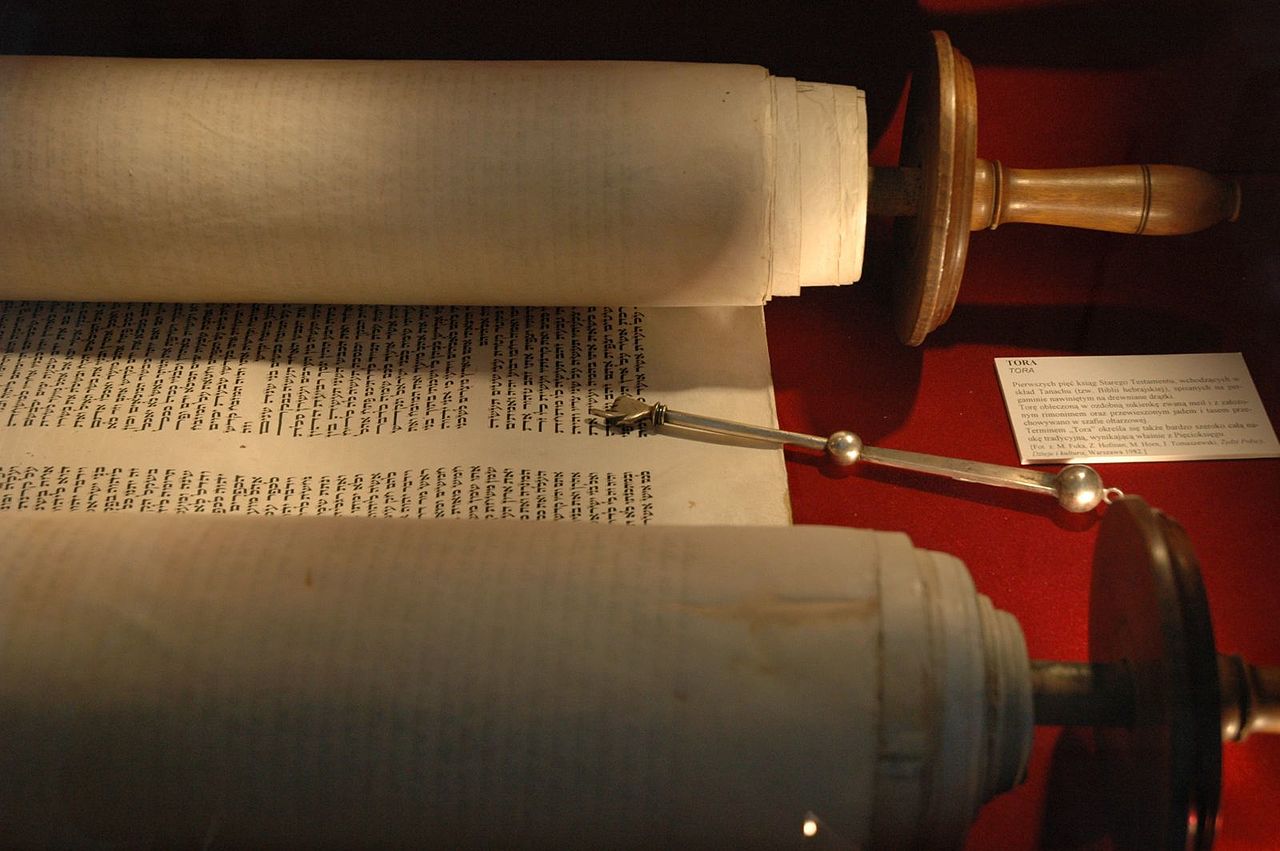
Parashat Behar-Bechukotai (Leviticus 25:1-27:34)
In this week’s Torah portion, it is written: I broke the pegs of your yoke and led you upright. (Leviticus 26:13).
On this verse, Rabbi Dov Ber of Mezeritch (one of the early leaders of Chasidism) commented: “An animal walks with its face to the earth, for earthiness and materiality is all that it knows. Man walks upright, for man was born to gaze upon and aspire to the heavens.”
In the ancient threefold priestly blessing, there are two mentions of God’s face. When I think of the first mention, “May God’s Face shine upon you and be gracious to you,” I think of that face shining like a sun, radiant and coaxing you to grow, drying your tears and painting your world gold. It is incomprehensibly grand, and yet, even from that royal height, that face is looking at you! With favor!
In the second mention, “May God’s Face lift up to you, and grant you peace,” I imagine that face small, such that you have to look down, searching the earth, amid the tiny things, the building blocks of our biosphere, and from that place of the itty-bitty, that place of single-celled life and tiny blinks of hope, from there the face lifts up to you, because you are grand and a wonder to behold!
In most of our prayers and theology, we focus on the first face, the face of the heavens. When I wrote this prayer, “Prayer for a Cure for Cancer,” I wrote it to the smaller face.I wrote it facing the earth, addressing earthiness and physicality, calling upon the God of small things, for the same God who took us out of Egypt amid signs and wonders also mended our sandals all along that long journey.
Prayer for a Cure for Cancer
We are sometimes mistaken
when we fear that which is big.
Godzilla, King Kong
Asteroid, Armageddon
At least we can see it when it comes.
We are sometimes mistaken
when we fear that which is big.
Change, birth,
death, love.
At least we can throw our arms wide around it.
God of big things,
God of great deeds,
God of the drama of the Exodus,
the parting of the seas,
the fire on the mountain,
the creation out of nothing,
we are wonderstruck by You,
dazzled by big things.
But are You not also the God of the small,
God of the turning leaf,
God of the grain of sand,
God of the passing shadow,
God of the rotting fruit?
I address You now
as God of the small,
because sometimes we are mistaken
when we fear that which is big,
when that which is most frightening of all
is small,
the size of a melanomic cell,
the size of a metastatic pinpoint,
the size of a golf ball,
the size of a grapefruit
growing where there is no tree.
That immutable danger
that makes us victims of our own
soft tissue, lymphnodes, and blood,
that devastating fear
that stalks us out of passing shadows,
out of the mist of pesticide,
tar, benzene, p.c.b. toxicities,
out of the glow of gamma-rays, x-rays, ultraviolet rays, aluminum foil,
out of the silicone, the tobacco, the skin of an apple,
the high saturated fats, the low fiber,
the vegetable hair dyes,
out of nothing,
out of nothing.
You are good at that God,
Creation out of nothing.
I pray to You now, God of small things,
God of miracles-barely-perceived
by the naked, mortal eye,
I pray to You now, God of small things,
for a spontaneous global
remission.
For erasure of that word that lurks darkly
behind our words.
When Moses’ sister was struck
Moses spoke five small words to You.
El na rafa na la.
God please heal her please.
You answered, and You healed her.
Whether you are looking down or looking up, whether your world has narrowed with constraints of health and age, or your world has widened with possibility, may you feel the warmth of God’s smile upon you, and may the pegs of your yoke be broken that you may walk upright, with dignity, and gaze upon and aspire to the heavens.
Praying to God’s Smaller Face: Parashat Behar-Bechukotai Read More »
“Estelle L. Schultz, who was born two years before women had the right to vote, marked her absentee ballot for the first female president, Hillary Clinton.”
That’s how it started — with a brief Facebook post in October of a 96-year-old Maryland woman holding her absentee ballot and flashing a big smile.
Before long, there was a website, iwaited96years.com, dedicated to hopeful female Clinton supporters who were born before Aug. 18, 1920 — when the 19th Amendment, which granted women the right to vote, was ratified. It featured their stories, 186 of them in all.
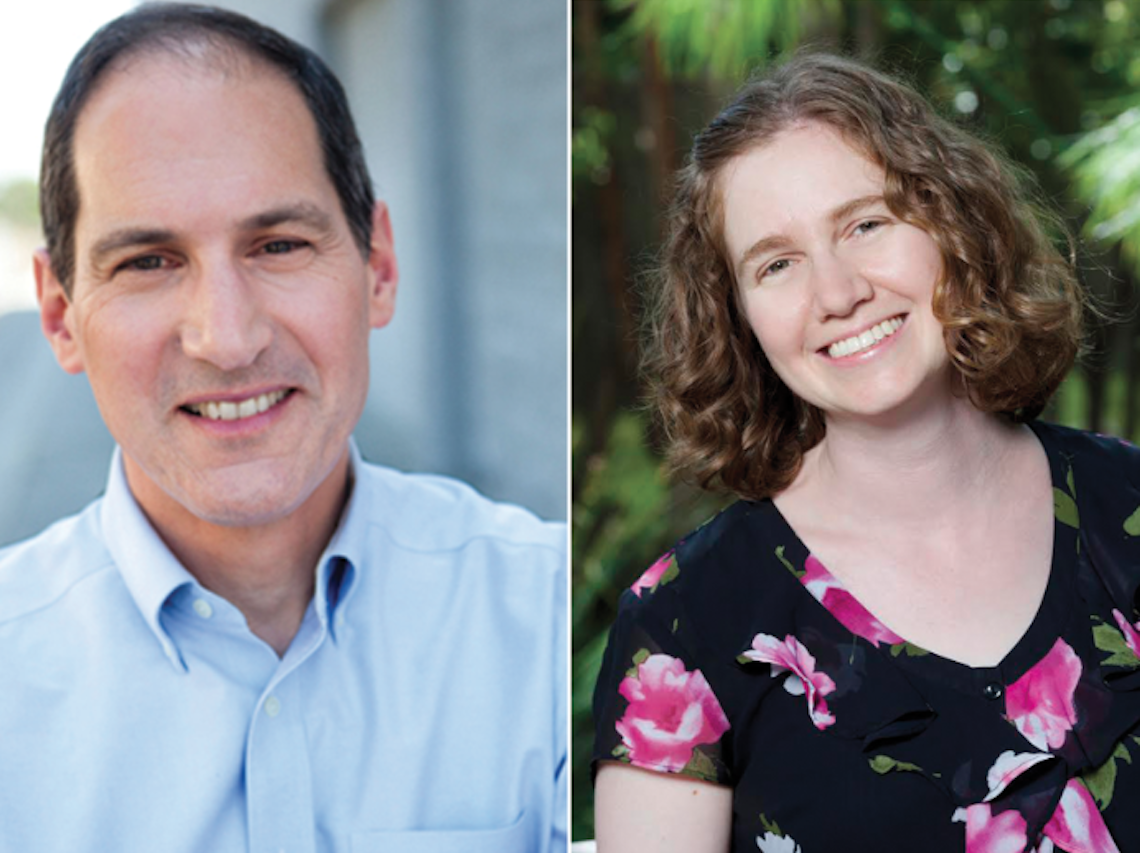
Then came the jolt of Nov. 8 and the question of what happens next. For the website’s prime collaborators, Sarah Bunin Benor — the granddaughter of Schultz who made the initial Facebook post at the request of her mother, Roberta Benor — and Tom Fields-Meyer, it was time to get past the initial shock and sting of Clinton’s loss and circle back to the women they featured for advice. The results were independently published last month in a book called “We the Resilient: Wisdom for America from Women Born Before Suffrage.”
“I didn’t realize when I posted it how intense it would be, how it would really change my life for six months,” said Bunin Benor, 42, an associate professor of contemporary Jewish studies at Hebrew Union College-Jewish Institute of Religion in Los Angeles.
Fifty-five of the women who appeared on the website responded to some or all of the authors’ questions, which included: When in your life have you experienced personal disappointment, tragedy or unexpected loss? How were you able to overcome those setbacks? When in your lifetime was this country at its best?
Their responses, as well as pictures of their current and younger selves, are featured in the book, whose title was inspired by artwork designed by Los Angeles artist Ernesto Yerena for a protest campaign called We the People. Yerena passed out thousands of his posters featuring Granny Helen Red Feather, a Lakota elder, along with the words, “We the resilient have been here before,” at the Los Angeles Women’s March. Former U.S. Senator Barbara Boxer wrote the book’s foreword.
Though the contributors come from a variety of backgrounds, many spoke of similar issues, such as losing parents, spouses, siblings and children. The importance of education, friends and hard work were common themes, along with stories of subtle and not-so-subtle sexism.
“When I graduated from Florida State College for Women, I applied and was accepted to the Duke University School of Medicine,” wrote Katherine Blood Hoffman, 102, of Tallahassee, Fla. “Duke required that I sign a waiver promising not to marry while in their medical school. I wasn’t even engaged, but I refused to sign because Duke didn’t require the same promise from men. Instead, I chose to enter Columbia University, where I earned a Master of Arts degree in Chemistry.”
Bunin Benor connected with Fields-Meyer, 54, a journalist and author, after he became one of the hundreds to immediately like her original Facebook post. They had known each other for about eight years, both being members at IKAR and Temple Beth Am and living in the same Mid-City neighborhood.
The two talked about collaborating on a project during a break at Yom Kippur services at IKAR and launched the website with the help of Fields-Meyer’s wife, Rabbi Shawn Fields-Meyer, who has experience in the area. Roberta Benor corresponded with those who submitted pictures and text to the website.
Project participants expressing high hopes about a potential Clinton administration included Madeline Rosenberg, 101, of Hartsdale, N.Y., who died in April, (“Women are getting where they belong!”) and Primetta Giacopini, 100, of San Jose (“It’s about time we got a woman in there! The men have had plenty of time and have just screwed things up”).
Kveller, a Jewish parenting website, did a brief story about the site. BuzzFeed was next. From there, things snowballed. There was coverage in dozens of publications around the country as well as from newspapers in Spain, the Netherlands and India. Fields-Meyer credits all the interest to the “inspiring and optimistic moment in this otherwise rancorous election season.”
As Election Day neared, more and more submissions from nonagenarian and centenarian women came in, including 20 or so from women in their early 90s who were too young. The women born after the cutoff date were, however, highlighted on Facebook.
Only a few of the women featured in “We the Resilient” are Jewish. Still, Fields-Meyer said, given Judaism’s reverence for older people and the wisdom they bring, “In a lot of ways, I feel this project had a Jewish soul and message, a message that it’s really important to listen to these people from previous generations.”
Being featured in the book meant a lot to the participants.
“I’m rather proud,” Rose Kaufman, 103, of Santa Monica, told the Journal. “I’ve seen a lot and I’ve been active with the League of Women Voters, among other things. I think we always have to be hopeful. In other words, we can’t give up.”
These women are among those who shared their aspirations about the possibility of having a female president in “We the Resilient.”
Estelle Liebow Schultz, 98

Rockville, Md.
“Recently, I was diagnosed with a serious heart condition and am now in home hospice. I am following this campaign carefully, and I decided that I would like to live long enough to see the election of our first woman president. When I was marking my absentee ballot for Hillary Clinton, it occurred to me that this wish is even more poignant, because I was born in 1918, two years before women achieved the right to vote. To see such an accomplishment in my lifetime is momentous. I encourage all of my fellow nonagenarians to follow me in marking your ballot with a sense of pride in a life long-lived and a country making history.”
Madeline Rosenberg, 101
Hartsdale, N.Y. (died in April)
“It is exciting to vote in this election. Women are getting where they belong.”
Primetta Giacopini, 100

San Jose
“It’s about time we got a woman in there! The men have had plenty of time and have just screwed things up.”
Wisdom of the aged offers hope to Clinton voters Read More »
“Estelle L. Schultz, who was born two years before women had the right to vote, marked her absentee ballot for the first female president, Hillary Clinton.”
That’s how it started — with a brief Facebook post in October of a 96-year-old Maryland woman holding her absentee ballot and flashing a big smile.
Before long, there was a website, iwaited96years.com, dedicated to hopeful female Clinton supporters who were born before Aug. 18, 1920 — when the 19th Amendment, which granted women the right to vote, was ratified. It featured their stories, 186 of them in all.
Then came the jolt of Nov. 8 and the question of what happens next. For the website’s prime collaborators, Sarah Bunin Benor — the granddaughter of Schultz who made the initial Facebook post at the request of her mother, Roberta Benor — and Tom Fields-Meyer, it was time to get past the initial shock and sting of Clinton’s loss and circle back to the women they featured for advice. The results were independently published last month in a book called “We the Resilient: Wisdom for America from Women Born Before Suffrage.”
“I didn’t realize when I posted it how intense it would be, how it would really change my life for six months,” said Bunin Benor, 42, an associate professor of contemporary Jewish studies at Hebrew Union College-Jewish Institute of Religion in Los Angeles.
Fifty-five of the women who appeared on the website responded to some or all of the authors’ questions, which included: When in your life have you experienced personal disappointment, tragedy or unexpected loss? How were you able to overcome those setbacks? When in your lifetime was this country at its best?
Their responses, as well as pictures of their current and younger selves, are featured in the book, whose title was inspired by artwork designed by Los Angeles artist Ernesto Yerena for a protest campaign called We the People. Yerena passed out thousands of his posters featuring Granny Helen Red Feather, a Lakota elder, along with the words, “We the resilient have been here before,” at the Los Angeles Women’s March. Former U.S. Senator Barbara Boxer wrote the book’s foreword.
Though the contributors come from a variety of backgrounds, many spoke of similar issues, such as losing parents, spouses, siblings and children. The importance of education, friends and hard work were common themes, along with stories of subtle and not-so-subtle sexism.
“When I graduated from Florida State College for Women, I applied and was accepted to the Duke University School of Medicine,” wrote Katherine Blood Hoffman, 102, of Tallahassee, Fla. “Duke required that I sign a waiver promising not to marry while in their medical school. I wasn’t even engaged, but I refused to sign because Duke didn’t require the same promise from men. Instead, I chose to enter Columbia University, where I earned a Master of Arts degree in Chemistry.”
Bunin Benor connected with Fields-Meyer, 54, a journalist and author, after he became one of the hundreds to immediately like her original Facebook post. They had known each other for about eight years, both being members at IKAR and Temple Beth Am and living in the same Mid-City neighborhood.
The two talked about collaborating on a project during a break at Yom Kippur services at IKAR and launched the website with the help of Fields-Meyer’s wife, Rabbi Shawn Fields-Meyer, who has experience in the area. Roberta Benor corresponded with those who submitted pictures and text to the website.
Project participants expressing high hopes about a potential Clinton administration included Madeline Rosenberg, 101, of Hartsdale, N.Y., who died in April, (“Women are getting where they belong!”) and Primetta Giacopini, 100, of San Jose (“It’s about time we got a woman in there! The men have had plenty of time and have just screwed things up”).
Kveller, a Jewish parenting website, did a brief story about the site. BuzzFeed was next. From there, things snowballed. There was coverage in dozens of publications around the country as well as from newspapers in Spain, the Netherlands and India. Fields-Meyer credits all the interest to the “inspiring and optimistic moment in this otherwise rancorous election season.”
As Election Day neared, more and more submissions from nonagenarian and centenarian women came in, including 20 or so from women in their early 90s who were too young. The women born after the cutoff date were, however, highlighted on Facebook.
Only a few of the women featured in “We the Resilient” are Jewish. Still, Fields-Meyer said, given Judaism’s reverence for older people and the wisdom they bring, “In a lot of ways, I feel this project had a Jewish soul and message, a message that it’s really important to listen to these people from previous generations.”
Being featured in the book meant a lot to the participants.
“I’m rather proud,” Rose Kaufman, 103, of Santa Monica, told the Journal. “I’ve seen a lot and I’ve been active with the League of Women Voters, among other things. I think we always have to be hopeful. In other words, we can’t give up.”
Wisdom of the aged offers hope to Clinton voters Read More »

In the final days of his life, Curt Lowens, Sharon Farber and I sang a song that Curt recalled often during his hospital stay. His voice became a soft melodic whisper, sharing a fragment of a song that held the three of us close to heart. From the Rodgers and Hammerstein musical “Carousel,” he sang gently :
“When you walk through a storm, hold your head up high, and don’t be afraid of the dark….walk on, walk on….”
Now, more than a week since Curt’s passing on May 8 at age 91, these words remind me of the strength and courage with which he lived his life and faced its ending.
Born in what is now Olsztyn, Poland, in 1925 as Kurt Loewenstein, he was an actor, Holocaust survivor, hero, resistance man on the ground when only a boy, British officer, son, husband, brother, uncle, friend, artist, and man of culture and the arts.
I met Curt in late 2011 at the start of The Righteous Conversations Project, which connects teens and young adults to Holocaust survivors through oral histories that inspire collaborative art projects, photography and filmmaking. Marie Kaufman, then-president of the Child Survivors of the Holocaust, made the shidduch, saying he was a special person with an adventurous spirit who would contribute to our nascent venture. It was our hope to build community between the rising generation of young women and men and our elders who had survived the Shoah and had so much to teach.
Curt was open from the start and participated in our filmmaking programs with a zest that grew from his lifetime in film, television and theater. He was beloved by his teachers and students, and he brought a wry wit, grace and elegance to every interaction.
He eschewed modern technology in favor of conversation and engagement, sharing his stories of a childhood in Germany interrupted by the Nazi reign, the serendipity that led him to hiding, his efforts with three resistance workers tending more than 100 children in hiding across the Netherlands, and his saving two American servicemen whose plane was shot down.
Curt was beloved in the community of organizations dedicated to preserving Holocaust memory and he contributed to all of them, with a special connection to the Rodgers Center at Chapman University, to which he entrusted precious artifacts of his history. His voice and presence animated the work at the USC Shoah Foundation, the United States Holocaust Memorial Museum, the Los Angeles Museum of the Holocaust, Remember Us, the Righteous Conversations Project and Yad Vashem. The history he shared stands as a testament to a life of sacrifice, risk, ingenuity and, above all, moral clarity.
But it was his life in the arts that captured his heart, the life he chose after he left business school, much to his father’s chagrin. As a student in New York City, Curt met his wife, actress Katherine Guilford, and they spent almost 50 years together until her death last December.
He made his acting debut in 1951, in a Broadway performance of “Stalag 17,” in which he played a Nazi guard. In the 1963 Broadway version of “The Deputy,” he played Dr. Josef Mengele. He has 125 movie and television acting credits, according to IMDb.
Curt was a graceful man who lived modestly and with dignity in an apartment that evoked the contours of a cultured European life. He is survived by his older brother Henry, as well as an extended family of nieces and nephews, and great-nieces and nephews.
A private funeral service will be held in early June in accordance with Curt’s wishes. A public memorial service is being planned under the direction of Sharon Farber. The family is requesting donations in his memory be sent to Remember Us, 1112 Montana Ave., Santa Monica, Calif., 90403.
SAMARA HUTMAN is co-founder and director of The Righteous Conversations Project.
Curt Lowens, Holocaust survivor, actor, 91 Read More »