fbpx

May 1, 2017

Hamas reportedly will remove goal of destroying Israel from new policy document

Hamas will remove its goal of destroying Israel from a new policy document.

The Palestinian terrorist organization’s document is expected to be released Monday, Reuters reported, citing Gulf Arab sources. It will also drop Hamas’ association with the Muslim Brotherhood.

The new statement of policy is believed to be designed to improve relations with Gulf Arab States and Egypt. Most Arab Gulf states consider the Muslim Brotherhood to be a terrorist organization; most Western countries have similarly labeled Hamas.

Hamas reportedly also will agree to a “transitional” Palestinian state along the 1967 borders. The document will still deny Israel’s right to exist and call for “armed struggle” against Israel, Reuters reported.

Hamas has controlled the Gaza Strip since 2007. Its 1988 charter calls for Israel’s destruction.

The document is being released two days before Palestinian Authority President Mahmoud Abbas is scheduled to meet President Donald Trump at the White House.

Hamas reportedly will remove goal of destroying Israel from new policy document Read More »

Palestinian boy, 6, won’t get compensation for attack attributed to Jewish arsonists

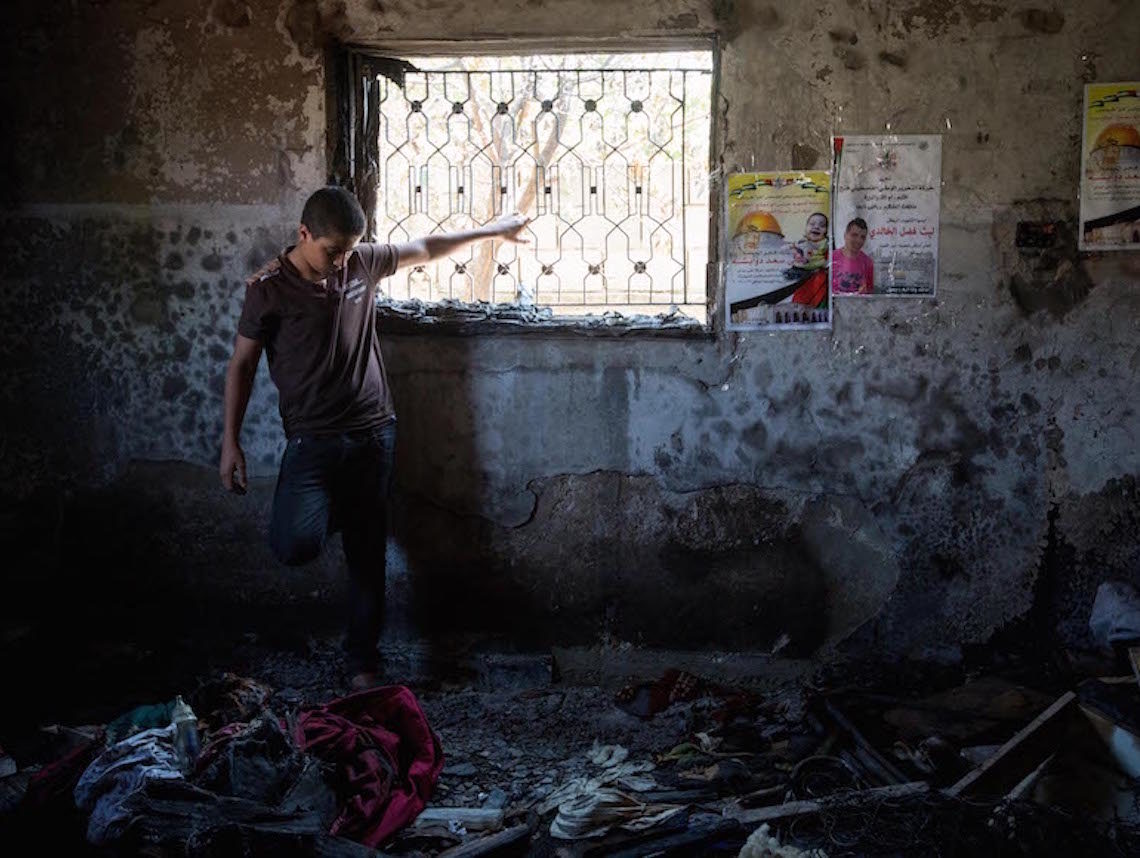
A 6-year-old Palestinian boy whose parents and brother were killed in an arson attack on their West Bank home is not eligible for compensation given to terror victims, Israel’s defense minister said.

Avigdor Lieberman offered the official response in a letter Sunday to Arab Joint List lawmaker Yousef Jabareen, who had asked why the child, Ahmed Dawabshe, had not received money from the state.

Liberman said the boy, who is in the care of his grandparents, does not qualify as a terror victim, that the law does not apply to Palestinians and that there was no request on file for such compensation.

Right-wing Jewish extremists were indicted in the July 2015 firebombing in the Palestinian village of Duma in the northern West Bank.

Jabareen said the family will take the issue of compensation to court.

Palestinian boy, 6, won’t get compensation for attack attributed to Jewish arsonists Read More »

THE CIRCLE *Movie Review*

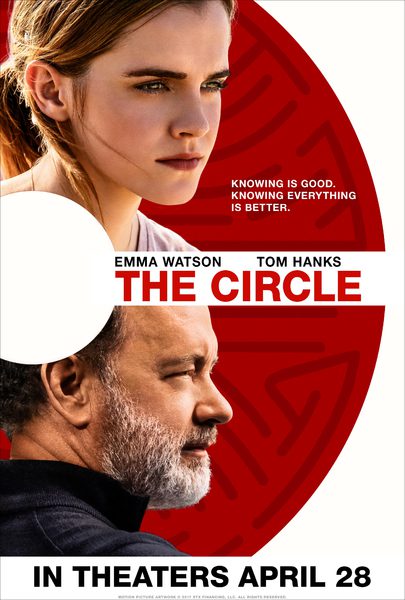
The Circle is based on the 2013 Dave Eggers novel of the same name.  When Mae (Emma Watson) begins working at the technology giant the Circle, she doesn’t quite believe it’s as amazing as her co-workers claim.  As she becomes more ensconced in life at the Circle, she begins to believe the company’s claims.  At the Circle’s helm is Tom Hanks, an ideal casting that capitalizes on his Every Man persona.  While we as an audience have been conditioned to trust his every word, the trust is at odds with the movie’s message.

Voyeurism and technology are the core of The Circle.  These themes have long been the subject of dystopian novels as well as Hollywood fiction.  When we’re watched, are we at our best or at our worst?  Mae thinks she behaves better knowing she’s under constant observation from the Circle’s ever-present wireless cameras. What is it that makes the concept of observation both a threat and a judge?

In a world–our world–where technology allows for a shared experience, the concept of not sharing equates to keeping secrets.  And secrets are lies.  That’s Mae’s mantra from the moment she, too, begins to buy what the Circle is selling.

For more about The Circle and other movies with similar themes, take a look below:

—>Keep in touch with Zoe Hewitt on social media @RealZoeHewitt on Twitter and Instagram.  Looking for the direct link to the video?  Click here.


THE CIRCLE *Movie Review* Read More »

Expired And Inspired

Vibrancy of the Deathbed Confession (Vidui) by Jean B. Berman

Vibrancy of the Deathbed Confession (Vidui), based on Learnings from Gamliel Course 4: Nechama (Comfort) by Jean Berman

Raised in a household with Jewish ethical, social, and intellectual values but little prayer of any kind, all my life I have bristled at prayers that ask the Holy One for favors or repent of sins.

In my 60’s, I find myself being drawn into the heart of Judaism. I identify not as simply a Jewish person but as part of the Jewish people. Part of my journey includes searching for meaning behind the words, including those I react unfavorably to and traditions that repulse me. I am coming to value our tradition more, and I am learning to listen deeply within to catch glimpses of understanding and to open to experiences that seems foreign or antithetical to me.

Vidui

I have always found the concept of vidui challenging. I have come in contact with teachings that have brought some understanding in the moment but little that stayed with me or substantially changed my experience of the Al Cheyt on Yom Kippur. As I began to say daily prayers a few years ago, I picked those that had resonance for me, and Ashamnu was not one I chose. I did not look forward to learning about the deathbed confession (vidui), thinking it was a depressing thing to say at the threshold of moving from the visible world into the invisible one. Having been present at a number of deaths, I have intuitively offered a supportive, silent presence or sang songs that brought comfort. I could not imagine myself encouraging a goses, someone in the process of actively dying, to speak these words.

A Change

My heart opened while reading alternative forms of the vidui authored or collected by Alison Jordan (website https://sites.google.com/site/viduivariations/). Reading language that was meaningful to me, learning that a deathbed vidui can help one to unburden, let go and feel forgiven, my perspective changed. Writing my own deathbed vidui brought me a sense of deep peace and of being gathered into the Beloved.  A daily reciting brings the feel of my death close, and heightens my joy in being alive.

As Judaism has adapted over the ages to be relevant to people where they are, I now have an age-old ritual made new again that blesses me and gives me another meaningful way to bring blessing to those I serve.

Jean Berman speaks and leads workshops on Honor and Comfort: The Jewish Way of Death and Mourning, Care of the Newly Dead – An Inquiry into Intuition and Tradition, and How Death Enhances Life: Heightening our Awareness. She enjoys walks in nature, kayaking and playing ukulele, and lives on Peaks Island, Maine. She is a graduate of the Gamliel Institute, and a Board member of Kavod v’Nichum.

Jean B. Berman


___________

KAVOD v’NICHUM CONFERENCE

Early registration for the 15th North American Chevrah Kadisha and Jewish Cemetery Conference, June 18-20, in San Rafael, California, has been extended for one week to May 8.

Our conference will have intensive workshops on Introduction to Taharah, Infection Control, Communicating about difficult Taharot, Modifying Taharah, Taharah Stories as well as exploring traditional Taharah liturgy, Navigating Taharah Liturgy – A Play, and Taharah liturgy in Maavar Yabbok.

We’ll have an exciting series of workshops on Jewish cemetery issues, including Green Cemeteries, Cremation, Perpetual Care Fund Investments, Record Keeping and Acquiring New Cemetery Property.

What’s different this year is an evolving theme – expanding the work of the Chevrah Kadisha and the Jewish Cemetery by encouraging conversation about end of life plans with the Conversation Project; end of life decision-making with Dr. Jessica Zitter, and communicating about how we die with Dr. Dawn Gross.

There’s much more – see our Preliminary conference program.

Let us know if you are interested in home hospitality.

Consider a Sunday morning pre-conference field trip to Gan Yarok – an environmentally conscious Jewish Green Cemetery.

Sunday afternoon from 2-5 Sam Salkin, Executive Director of Sinai Memorial Chapel, will facilitate an intensive session on starting & managing a community funeral home. Let us know if you are interested in this session. Attendance is by advance reservation only.

Tuesday afternoon after the conference Sinai Memorial Chapel will facilitate a tour of Gan Shalom Cemetery, a Jewish cemetery with an interfaith section. Again, let us know if you are interested – Attendance by advance reservation only.

Register for the conference now. The early rate has been extended for just one week to May 8.

We have negotiated a great hotel rate with Embassy Suites by Hilton. Please don’t wait to make your reservations. We also have home hospitality options. Contact us for information or to request home hospitality. 410-733-3700, info@jewish-funerals.org

Questions? Email info@jewish-funerals.org or call 410-733-3700.

______________

TASTE OF GAMLIEL

In 2017, Kavod v’Nichum and the Gamliel Institute are again sponsoring a six-part “Taste of Gamliel” webinar series. This year’s topic is From Here to Eternity: Jewish Views on Sickness and Dying.

Each 90 minute session is presented by a different scholar.

The May 21st session is being taught by Rabbi Elliot Dorff, well known author, teacher, and scholar.  

Taste of Gamliel Webinars for this year are scheduled on January 22, February 19, March 19, April 23, May 21, and June 25. The instructors this year are: Dr. Dan Fendel, Rabbi Dayle Friedman, Rabbi Sara Paasche-Orlow, Rabbi Richard Address, Rabbi Elliot Dorff, and Dr. Laurie Zoloth.

This series of Webinar sessions is free, with a suggested minimum donation of $36 for all six sessions. These online sessions begin at 5 PM PDST (GMT-7); 8 PM EDST (GMT-4).

Those registered will be sent the information on how to connect to the sessions, and will also receive information on how to access the recordings of all six sessions.

The link to register is: http://jewish-funerals.givezooks.com/events/taste-of-gamliel-2017.

More info – Call us at 410-733-3700 or email info@jewish-funerals.org.    

Click the link to register and for more information. We’ll send you the directions to join the webinar no less than 12 hours before the session.

________________________

GAMLIEL INSTITUTE COURSES

UPCOMING COURSE

Gamliel Institute will be offering course 2, Chevrah Kadisha: Taharah & Shmirah, online, afternoons/evenings, in the Fall semester starting September 5th, 2017.

CLASSES

The course will meet on twelve Tuesdays (the day will be adjusted in those weeks with Jewish holidays during this course). There will be an orientation session on Monday, September 4th, 2017.  Register or contact us for more information.

REGISTRATION

You can register for any Gamliel Institute course online at jewish-funerals.org/gamreg. A full description of all of the courses is found there.

For more information, visit the Gamliel Institute website, or at the Kavod v’Nichum website. Please contact us for information or assistance. or call 410-733-3700.

____________________

DONATIONS

Donations are always needed and most welcome to support the work of Kavod v’Nichum and the Gamliel Institute, helping us to bring you the conference, offer community trainings, provide scholarships to students, refurbish and update course materials, expand our teaching, support programs such as Taste of Gamliel, provide and add to online resources, encourage and support communities in establishing, training, and improving their Chevrah Kadisha, and assist with many other programs and activities.

You can donate online at http://jewish-funerals.org/gamliel-institute-financial-support or by snail mail to: either Kavod v’Nichum, or to The Gamliel Institute, c/o David Zinner, Executive Director, Kavod v’Nichum, 8112 Sea Water Path, Columbia, MD  21045. Kavod v’Nichum [and the Gamliel Institute] is a recognized and registered 501(c)(3) organizations, and donations may be tax-deductible to the full extent provided by law. Call 410-733-3700 if you have any questions or want to know more about supporting Kavod v’Nichum or the Gamliel Institute.

You can also become a member (Individual or Group) of Kavod v’Nichum to help support our work. Click here (http://www.jewish-funerals.org/money/).

___________

MORE INFORMATION

If you would like to receive the periodic Kavod v’Nichum Newsletter by email, or be added to the Kavod v’Nichum Chevrah Kadisha & Jewish Cemetery email discussion list, please be in touch and let us know at info@jewish-funerals.org.

You can also be sent an email link to the Expired And Inspired blog each week by sending a message requesting to be added to the distribution list to j.blair@jewish-funerals.org.

Be sure to check out the Kavod V’Nichum website at www.jewish-funerals.org, and for information on the Gamliel Institute and student work in this field also visit the Gamliel.Institute website.

RECEIVE NOTICES WHEN THIS BLOG IS UPDATED!

Sign up on our Facebook Group page: just search for and LIKE Chevra Kadisha sponsored by Kavod vNichum, or follow our Twitter feed @chevra_kadisha.

____________________

SUBMISSIONS ALWAYS WELCOME

If you have an idea for an entry you would like to submit to this blog, please be in touch. Email J.blair@jewish-funerals.org. We are always interested in original materials that would be of interest to our readers, relating to the broad topics surrounding the continuum of Jewish preparation, planning, rituals, rites, customs, practices, activities, and celebrations approaching the end of life, at the time of death, during the funeral, in the grief and mourning process, and in comforting those dying and those mourning, as well as the actions and work of those who address those needs, including those serving in Bikkur Cholim, Caring Committees, the Chevrah Kadisha, as Shomrim, funeral providers, in funeral homes and mortuaries, and operators and maintainers of cemeteries.

_____________________

Vibrancy of the Deathbed Confession (Vidui) by Jean B. Berman Read More »

Loving Israel when it’s no longer as young and attractive

Two weeks ago I turned 49. A birthday, but one that feels redundant. The big Fifty is coming in a year, and 49 is the one I had to endure on the way to the real celebration – or lamentation – of a new era. Tomorrow, Israel will be 69, and an effort is needed to make this occasion special – even though we already know that next year, when the big Seventy comes, the celebration will be probably more special.

I spent the week before Yom HaAztmaut – Israel’s Independence Day – on the road, traveling between Detroit, Chicago, Ann Arbor, and New York. I spent it talking to groups of Jews and to individual Jews. I spent it talking about many things, Israel included. One conversation I had was with David Shtulman, the outgoing executive director of the Jewish Federation in Ann Arbor, Michigan. I owe him credit for an observation he made that I found useful: In our discussion of the relations between American Jews and Israel, and in our fear that Jews are distancing from Israel, we keep focusing on young Jews. Shtulman suggested that we ought to look more carefully at older Jews. That we open our eyes to look at these Jews who we know used to love Israel – and still want to love Israel – and are often sad that they can no longer feel towards Israel the way they did twenty, or thirty, or forty, or fifty years ago.

It is true. A sense of sadness, of longing, often creeps in when I have a conversation with Jewish Americans about Israel. A sense of longing for the younger, more attractive Israel. A sense of longing for the Israel they fell in love with many years ago. Maybe in 1948, when it was established. Maybe, more commonly, when it was almost twenty, and had a great victorious war against its enemies fifty years ago, in 1967.

In fact, not just Jewish Americans convey such sentiment. Jewish Israelis do too. A famous Israeli song – not quite new – begins with the words “they say things were happier here before I was born” and goes on to recount several exciting details of early Zionism. “A Hebrew watcher on a white horse in a dark night. Near the sea of Galilee [Joseph] Trumpeldor was a hero.” Maybe it is all gone now, the song continues. “Maybe it is all gone.”

And indeed, a lot of it is gone. Israel is no longer a tightknit community of a few hundred thousand or even a few million people. I was almost shocked to learn this past weekend that even the eight million I had in mind as the updated number of Israelis is no longer valid. We are getting closer, much closer, to nine million (8.6 million is the updated number). It is hard to have intimate relations with nine million Israelis. And it is hard to retain a sense of freshness and excitement at the age of sixty-nine.

Israel does not owe anyone – not American Jews, nor Israeli Jews – a constant supply of excitement. In fact, Israel ought to seek some normalcy. It ought to strive to provide Israelis with a boring routine of normalcy. But normalcy and routine and an older age have a price. They all make it harder to get excited, to be emotional about a country.

It is harder when we think about a beloved country as it is when we think about a beloved spouse. In order to keep loving our partners when the relationship become a welcome routine, we are told to work on the relationship. We are told to apply whatever means available to us – romantic dinners, weekends spent together, buying flowers, buying chocolate, complimenting each other, putting the phone away for a conversation. Just Google it, and you’ll find a plethora of such advice. Advice such as giving “a moment (or more) of your full attention and presence every single day.” Advice such as “expressions of gratitude for this special person’s presence in your life.”

That’s good advice, even if it is somewhat tacky. It is good for having a better relationship with a spouse or a partner, but it is also useful as one thinks about one’s relationship with a country – with Israel. Working on the relationship becomes important as the years pass, as the early excitement of a new relationship wanes, as the wheels of time erode the passions of adolescence. Israel is no longer a blushing youth. It is no longer a tantalizing novelty. It is no longer a hard-to-believe reality. It stands before us – lovers of Israel – at sixty-nine. Not yet old, but no longer young. Not yet wrinkly, but no longer tight.

Yes, the big Seventy is coming next year, but this does not mean that we can casually skip, or neglect the 69th birthday. In fact, it is better if we give “a moment (or more)” of our full attention to the presence of Israel “every single day.” It is better if we do not forget to express “gratitude for this special” country’s “presence” in our life. Israel’s Independence Day, Yom HaAtzmaut, is our Valentine’s Day for loving Israel. We ought to make a special effort on Valentine’s Day – and then every other day – to keep loving a country, to love it even more than ever, at 69.


Loving Israel when it’s no longer as young and attractive Read More »