fbpx

April 18, 2017

Jewish woman sues Daily Stormer founder for invasion of privacy and emotional distress

A Montana Jewish woman, backed by the Southern Poverty Law Center, is suing a neo-Nazi white supremacist for launching a harassment campaign against her and her family.

Tanya Gersh, announcing her lawsuit Tuesday against Andrew Anglin, the founder of the Daily Stormer website, said in a conference call that she has lost income and has suffered because of the attacks unleashed on her after Anglin posted her personal information on his neo-Nazi website in December.

“We got terrorized,” she said, describing multiple death threats, including photoshopped pictures of her and her 12-year old son being murdered by Nazis, and phone calls that included gun shots.

“I’m no longer working, I’m in trauma therapy twice a week, I’m losing my hair,” she said. “I’m having anxieties I never had before. Most importantly I’m never feeling safe.”

At times during the call organized by the SPLC, a hate groups watchdog, she broke down.

The federal lawsuit seeks compensation for Gersh’s losses and punitive damages and cites Montana state and federal laws protecting individuals from the invasion of privacy and from “intentionally inflicting emotional distress,” according to an SPLC release. It does not list damages, but in the conference call, Richard Cohen, the SPLC president, said: “We’re going to also seek a very, very substantial monetary damage award to punish Anglin.”

Anglin launched the campaign against Gersh after Sherry Spencer, the Whitefish, Montana-based mother of another white supremacist, Richard Spencer, posted an article on Medium accusing Gersh of threatening her with harassment if she did not sell the commercial building she owns in the town. Richard Spencer spends time in Whitefish, and there was talk at the time of staging protests outside the building.

Gersh, a realtor, contends that Sherry Spencer initiated contact, seeking to sell her building to head off the protests and to calm the town roiled by the rising profile of her son, who garnered media attention for his support of the presidential candidacy of Donald Trump.

Nothing in the email exchanges Sherry Spencer attached to her Medium post suggests Gersh was trying to coerce Spencer; instead, Gersh’s tone is deferential and sympathetic, and she says she is cutting her commission to the lowest percentage possible in order to facilitate the sale.

Anglin, on Dec. 16, a day after Sherry Spencer’s claims appeared on Medium, posted a screed titled “Jews Targeting Richard Spencer’s Mother for Harassment and Extortion – TAKE ACTION!” He included Gersh’s home address and phone, her husband’s business contact information, and the Twitter handle of her 12-year old son, whom he referred to in abusive terms.

“Please call her and tell her what you think,” Anglin said. “And hey – if you’re in the area, maybe you should stop by and tell her in person what you think of her actions.”

Referring to Gersh’s son, Anglin advised his readers to “hit up” the boy’s Twitter account. “Tell them (sic) what you think of his whore mother’s vicious attack on the community of Whitefish,” Anglin wrote.

Anglin, in a subsequent post three days later, accused the “lying Jew media” of distorting his original post, citing liberal news websites that reported that he had called on his followers to harass Gersh and had posted her home address.

He said he “purposefully” left out home addresses, although the address he included is listed as the Gersh residence, and insisted, “I called for people to express their feelings about these threats and this harassment and extortion to the people responsible – and somehow I’m the threatener and harasser!”

JTA asked Daily Stormer over Twitter if it had any comment. There was no reply.

Jewish woman sues Daily Stormer founder for invasion of privacy and emotional distress Read More »

Did Ivanka Trump skip Easter at the White House because she’s Jewish?

Covering the White House Easter Egg Roll live, CNN reporter John Berman noted that Ivanka Trump was not in attendance. Maybe, he speculated, it was because she’s Jewish.

“I saw Tiffany Trump just there before. Not Ivanka or Jared Kushner. Of course, Ivanka Trump is Jewish,” he said during Monday’s festivities. “I don’t know if she’s taking part in the Easter egg roll on the south lawn or not.”

The Newsbusters website pointed out Berman’s comment Monday and criticized what it called his “bizarre conspiracy theory” for why Trump, President Donald Trump’s daughter, and husband Kushner were not there.

But not so fast. The political news website Politico reported Sunday that Ivanka Trump and Kushner, both top White House aides, “were spending Passover at the Four Seasons Whistler resort in Canada. It was their second ski trip in the past month.”

Monday was the seventh day Passover. So the Trumps may very well have still been on the bunny hill.

Does that count as a Jewish motive for missing Easter?

The president’s grandchildren were at the Easter Egg Roll, according to The New York Times. But the newspaper does not specify which of the eight youngsters were spotted or whether Ivanka Trump’s three offspring were among them.

If Trump did skip out on the Easter Egg Roll for some Passover powder, it was clearly not out of any Jewish aversion to the Christian holiday. On Monday, she tweeted Easter greetings and a happy birthday wish to her son, who was born on Easter.

Did Ivanka Trump skip Easter at the White House because she’s Jewish? Read More »

Netanyahu pokes fun as his changing hair color in Twitter video

Israeli Prime Minister Benjamin Netanyahu poked fun at his changing hair color in a video clip posted on his Twitter feed.

In recent weeks Netanyahu has come under scrutiny in the Israeli media over his hair color, which went from gray, to dark gray, to brown.

In the 32-second clip released on Sunday, Netanyahu and his wife, Sara, are seen enjoying the scenery during a trip to the Galilee in northern Israel.

“Just look at how beautiful it is here in the nature of the Galilee. Everything is wonderful. It is all blossoming and beautiful. It is all green, and a bit brown, and I am not talking about the color of my hair, okay?” Netanyahu says as his wife laughs.

He continues:  “By the way, they say that brown is the new gray. But I assure you, if you wait a few weeks, the old gray will return.”

Netanyahu pokes fun as his changing hair color in Twitter video Read More »

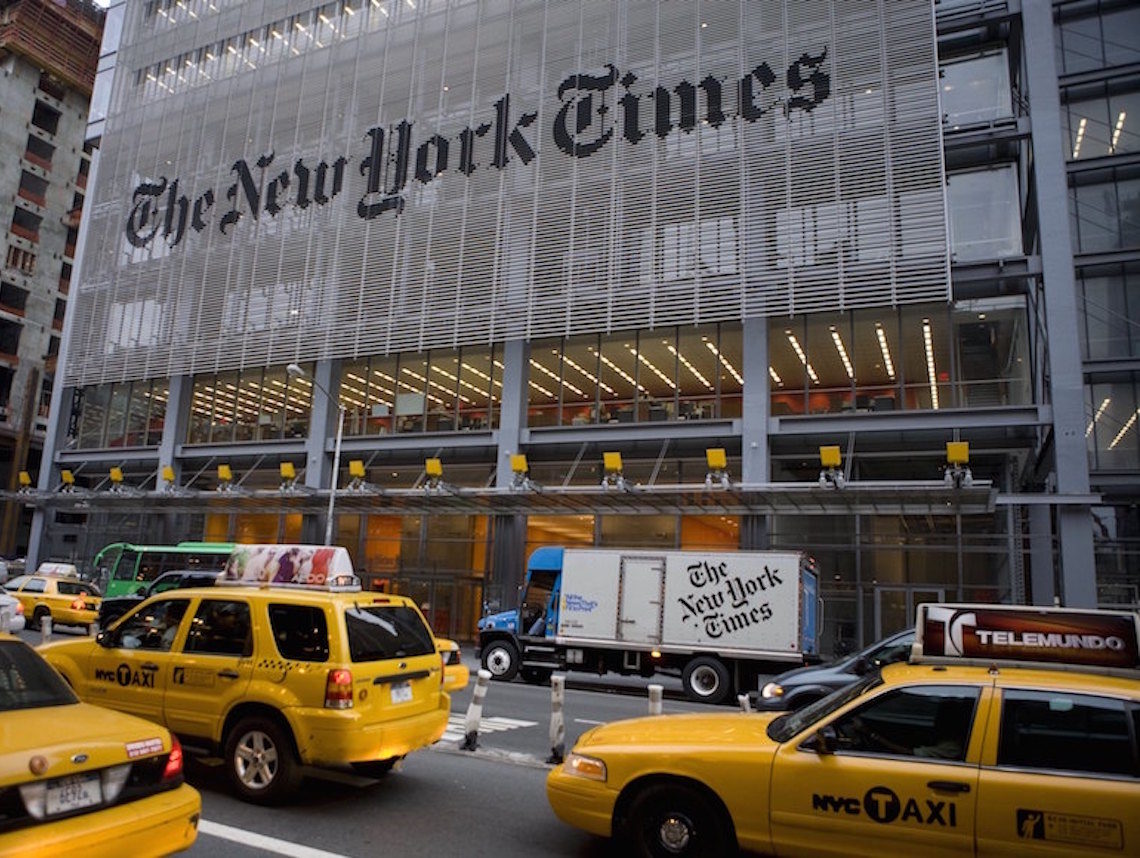
NY Times public editor raps paper for omitting Palestinian writer’s terrorist past

The public editor of The New York Times took the newspaper to task for failing to identify Palestinian leader Marwan Barghouti as a convicted murderer of Israeli Jews.

Liz Spayd responded Tuesday to criticism of the newspaper for publishing Sunday an Op-Ed by Barghouti identifying him only as “a Palestinian leader and parliamentarian.” Nearly a day later, an editor’s note appended to the end of the article clarified that Barghouti is serving a lengthy prison term after being convicted in an Israeli court of five counts of murder and membership in a terrorist organization.

The publication of the Op-Ed, titled “Why we are on hunger strike in Israel’s prisons” explained the launch of a hunger strike Monday by hundreds of Palestinians jailed in Israel seeking more favorable conditions.

Failure to “more fully identify the biography and credentials of authors, especially details that help people make judgments about the opinions they’re reading,” Spayd wrote, “risks the credibility of the author and the Op-Ed pages.”

“In this case, I’m pleased to see the editors responding to the complaints, and moving to correct the issue rather than resist it. Hopefully, it’s a sign that fuller disclosure will become regular practice.”

The newspaper was slammed by Israeli leaders and U.S. Jewish groups for its failure to mention Barghouti’s terrorist activities and conviction for murder.

NY Times public editor raps paper for omitting Palestinian writer’s terrorist past Read More »

Trump’s Jewish groupies should be nervous

The near-messianic belief in President Donald Trump held by certain pro-Israel Jews dates to the campaign, when he seemed an unshakable friend to the Jewish state, especially compared to Hillary Clinton. But the president already has reversed himself on China, North Korea, Syria, Russia and NATO. Trump’s dizzying abandonment of once-unshakable positions raises the question of whether Israel will be the next ally he decides to pass over.

In fact, the Trump administration already has sent mixed signals that should worry hard-line Zionists. During the campaign, Trump firmly supported the West Bank settlement project, but in April he said expanding settlements “does not help advance peace.” His promises to move the Israeli embassy to Jerusalem have been downgraded to getting what Vice President Mike Pence calls “serious consideration.”

Though the many Orthodox and other conservative pro-Israel supporters of the president expect the embassy to move, they should be cautious. The man whose considerable ego is built on dealmaking has called Middle East peace “the ultimate deal” — and that means compromise. In his book “The Art of the Deal,” Trump boasted of aiming very high, but “sometimes I settle for less than I sought.” Another of his principles is to “never get too attached to one deal or one approach.”

West Bank settlers and their financial and political backers in the Diaspora see every one of their positions as inalienable. They will inevitably find any Trump-style deal regarding Israel thoroughly dispiriting.

Those confident that Trump’s commitment to right-skewing positions on Israel won’t share the fate of his promises to stay out of Syria and label China a currency manipulator point to his bedrock Evangelical support and the role of Jewish family members Jared Kushner and Ivanka Trump. Neither is a slam dunk.

So far, evangelicals have followed (the steadfastly pro-life) Trump more than the other way around – most prominently on gay rights. The Family Research Council and similar groups muted their disappointment when Trump didn’t issue an anti-gay executive order and reappointed an Obama administration gay-rights diplomat. Evangelical Zionist fervor could similarly wane should the president waver on Israel.

Regarding Kushner and his wife Ivanka, true believers on the right may be overly enamored with their own extremist belief that anyone with a more accommodating position toward Palestinians is necessarily anti-Israel.

Trump’s Jewish daughter and son-in-law have never identified with the most religiously and politically conservative segments of Orthodox Judaism. The rabbi responsible for the very fact they are a Jewish family is famously on the more accommodating side of Orthodoxy, and three years ago, the school associated with their Upper East Side synagogue invited a prominent Muslim critic of Israel to speak. While the invitation was later rescinded, the controversy would be unthinkable at nearly all other Orthodox schools and congregations.

It’s true that Kushner has been close to Israeli Prime Minister Benjamin Netanyahu for many years, but Netanyahu himself is suspect in right-leaning Zionist quarters for his support of a two-state solution and supposed excessive friendliness with Palestinian leaders. As for settlements, The New York Times says Kushner’s thinking “is not well understood.”

We may be facing a “Nixon goes to China” moment for both Kushner and Trump. That expression refers to President Richard Nixon’s 1972 China trip normalizing relations between the United States and the world’s most populous country At the time, Democrats would suffer political disaster for de-escalating tensions with the communist behemoth. But as a Republican with impeccable anti-communist credentials, Nixon was able to take that bold but important step.

The Likudniks who celebrated Kushner’s appointment as Middle East envoy were reading the wrong tea leaves. What use is a negotiator who could never budge? Trump’s thinking may very well be: if even Kushner is willing to pressure Israel to make concessions on settlements, Jerusalem, and Palestinian sovereignty, the administration will appear to be an honest and fair broker.

As a resident of Jerusalem, dual citizen of the United States and Israel, and center-right Zionist, I pray the administration vigorously defends the security of the State of Israel. But recent world events underscore what I told my pro-Israel friends when I told them I was voting for Clinton. Her pro-Israel credentials may have been suspect, but her stability and predictability were better for America – and, ultimately, Israel – than a president whose positions change radically as he learns on the job and discovers that being a president is a lot harder and less fun than being a candidate.


David Benkof is a columnist for the Daily Caller, where this essay first appeared. Follow him on Twitter (@DavidBenkof) and Muckrack.com/DavidBenkof, or E-mail him at DavidBenkof@gmail.com.

Trump’s Jewish groupies should be nervous Read More »

Is it just me?

For months I’ve returned home each day and turned on “Hardball” to hear Chris Matthews aggressively address the latest Trump outrages. I used to listen regularly to David Axelrod on the Axe-Files dissect journalistic and political phenomenon, to Jon Favreau, Dan Pfeiffer, Jon Lovett, and Tommy Vietor on Pod Save America (formerly Saving It 1600 before Hillary lost) give the inside scoop on the most recent DC political machinations, and to NPR report what the Trump administration is doing. I have always read the NY Times, Wall Street Journal, LA Times, Politico, and Huffington Post. But increasingly, I am feeling so listless and deflated that I can’t seem to muster my righteous indignation enough to tune in regularly and read and listen to the news. I do check in from time to time, but not the way I used to.

Is it just me, or are you feeling the same way – exhausted, listless, and perhaps despairing?

We Jews just celebrated Pesach (a needed lift – I have to say), and I was relieved that at our Family Seder we stayed clear of the most contentious political issues because my family and friends feel burnt out as I do.

The larger challenge, of course, is what does this all mean for us and our democracy?

Does it mean that we’ve now left the building and are leaving Trump to do to the country what he has done to so many victims over the years?

I certainly hope not.

I know two things:

First, as the Chinese curse reminds us, we are living in interesting times, and there’s no telling what’s coming next. We have to gird ourselves and toughen up over the long haul.

Second, our democratic institutions are still strong, despite what Trump, Mitchell, Ryan, and many right-wing extremists are attempting to do, and there are many inspired servant-leaders in politics who are taking on Trump and Co.

In the meantime, we who are so exhausted need to remember that voting matters, supporting candidates we believe in matters and advocating for social justice reform, the environment, human rights, women’s rights, LGBTQ rights, diplomacy, reason, and common decency matter.


Is it just me? Read More »

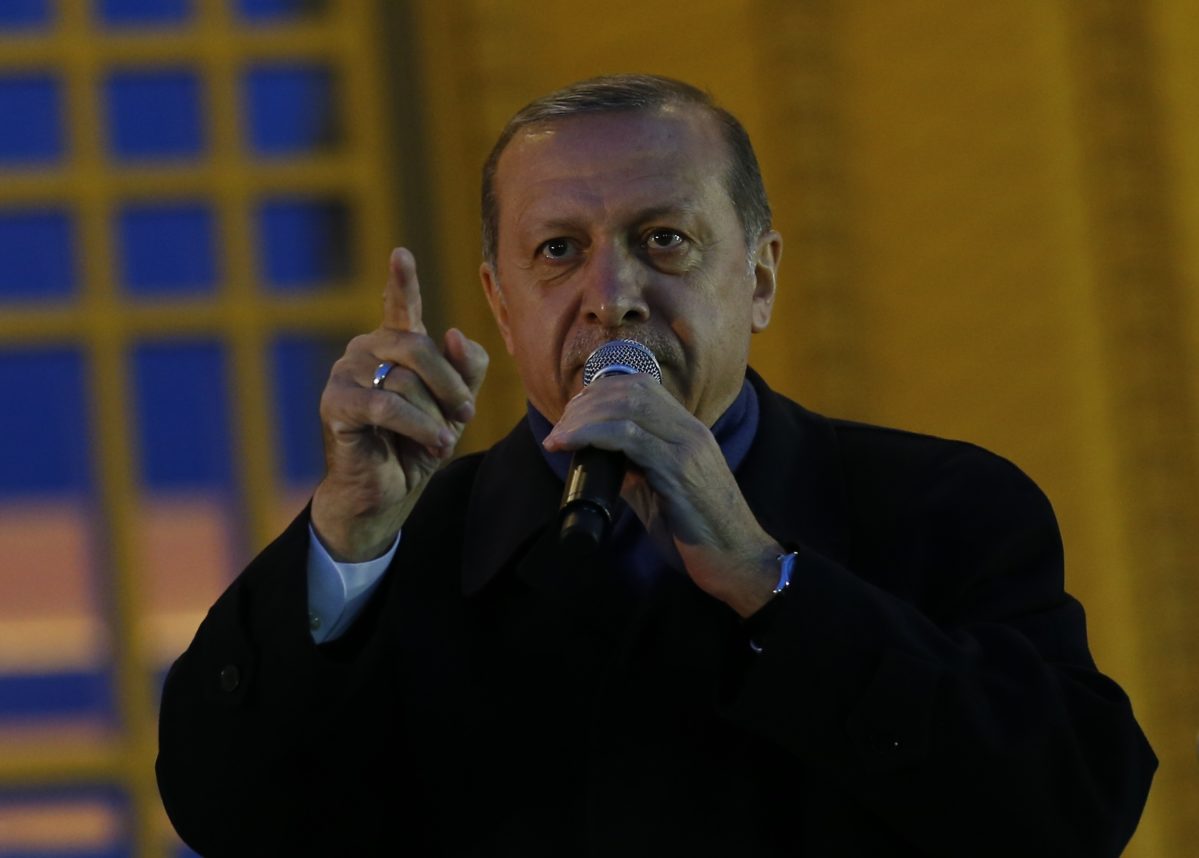
Why is Trump strict with Assad but not with Erdogan?

As we watch a new American administration crafting its foreign policy, we are reminded that the world is a complicated place and that defining one’s policy towards it can be a complicated exercise. Look at what the Trump administration has done in three arenas in the last two weeks:

It bombed Syria, signaling that the US is going to intervene in certain places, even if there is no obvious immediate American interest at stake.

It pushed the envelope in North Korea, showing that the US is willing to be bolder in dealing with one of its most persistent and dangerous enemies (but how bolder, and in what way, is not yet clear).

It congratulated Turkey’s Recep Tayyip Erdogan on his narrow and controversial victory in a referendum that gives him unparalleled powers to rule his country.

What do we learn about Trump from these three events?

First of all, we learn – or should be reminded – that everything in this world is interconnected. Turkey is needed if Syria is to be tamed. North Korea is a Syrian ally and provided it with the material to attempt to build a nuclear bomb. The Trump administration is making its first steps on the world stage and seems growingly aware of this fact. There are ideological inconsistencies that emerge as moves are made in such a world, but they are both inevitable and necessary.

Take, for example, the issue of intervention in the internal affairs of other countries. In Syria, Trump intervened. In Turkey, where the results of a referendum threaten to further erode the democratic character of the country, he chooses to be silent. The Europeans responded to the vote in Turkey with disappointment and even outrage – but the US President made a congratulatory phone call to Erdogan.

The Russians are more consistent than Trump in such cases. As a rule, they oppose intervention in the internal affairs of other countries (of course, they intervene when it suits them). The Europeans are also more consistent: they want to educate everyone (but are unwilling to do much about it except talking). The question is for Trump: why be strict with Syria’s Assad and not with Turkey’s Erdogan?

One possible answer is that Trump acts impulsively and without strategic reasons. He was moved by what he “saw on TV,” as Steve Coll writes in the New Yorker. But Coll himself counts more possible reasons. “One limited rationale might be that Syria’s conflict has eroded global treaties banning the use of chemical arms.” Put another way: Erdogan’s affair is truly “internal” – it concerns Turkey alone. And Trump does not feel any need to lecture Erdogan on the value of democracy.

The US wants Turkey’s cooperation on certain matters and is not interested in the country’s domestic situation as long as it has this cooperation. Assad’s behavior is different. True, what Assad does is part of an internal battle for superiority within Syria. But the use of chemical weapons has impact on foreign affairs. It breaks a taboo that is necessary for other countries and actors to think twice before they use such weapons (hence, the miserable comment by Sean Spicer on Hitler). Of course, the outrageous behavior of North Korea is even less “domestic” in nature. Thus, the Trump administration is not inconsistent in its decision to tackle it.

But there are also other ways of looking at these three actions. For example, we might consider the feasibility of action – and Trump’s pragmatic calculation – for each of them. Why bomb Syria? Because the US can do it without having to pay a serious price for it. This was precise, limited, well-targeted.

Why accept Erdogan’s victory without much hesitation? Because there’s nothing of value the US can do about it. The Europeans will protest and cry, but this seems to have little effect on Erdogan and Turkey’s voters. The US, in this case, is keeping its eye on the ball: Turkey is needed to fight ISIS and tame Syria. There is no value in picking a fight with it. Not until it does things that shake the international order.

And what about North Korea? Well, Trump’s policy in North Korea is still a mystery. He talks tough, because he can and, more importantly, because he hopes that this will help him convince the Chinese that it is time for them to be more active in calming their problematic neighbor. Calming, but not much more than that. Getting rid of the regime in North Korea or disarming its nuclear capabilities are not realistic goals at the moment.

As Ian Buruma explains in the Atlantic, “China is the only power with any influence in North Korea, but the last thing Beijing wants is for its communist neighbor to collapse. The Kim regime may be annoying, but a united Korea filled with U.S. military bases would be worse, not to mention the potential refugee crisis on China’s borders.”

What do we learn from all this?

First, Trump’s foreign policy is less confusing than some newspapers want you to think. There are confusing statements here and there, and lack of coordination, but the overall policy is not inconsistent and can be easily explained.

Second, Trump does not feel committed to always following the script that he carved during his campaign – but also that his policy is going to resemble many of the things that he talked about as a candidate.

Third, Trump as a foreign policy leader currently has two instinctive postures, the brutal warrior and the deal maker. He is not an educator, he is not a policy wonk, he is not an ideologue, he does not belong to a school of thought. He is the president who’s willing to use the Tomahawk when you stand in his way and who’s willing to cut a deal when you’re ready to negotiate.

Why is Trump strict with Assad but not with Erdogan? Read More »