fbpx

April 7, 2017

The bitter truth: A Sephardic reflection on maror

Can the simple arrangement of the Passover seder plate reflect a deeper message? In the Sephardic tradition, the answer is a resounding yes.

Unlike the standard Ashkenazi version sold in Judaica stores or printed in most haggadot, the Sephardic custom is to place maror — the bitter herbs — at the very center of the seder plate. This follows the arrangement of the “Ari,” Rabbi Isaac Luria, the 16th century mystic from Safed.

While this custom is not really discussed by any Sephardic authorities, it is interesting to note that in his “Hazon Ovadia” commentary to the haggadah, Rav Ovadia Yosef, the former Sephardic Chief Rabbi of Israel, remarks that Maimonides lists the “three things one must say the night of the seder” as “Pesach, maror and matzah.” This order differs from the standard “Pesach, matzah and maror” text, in that it places maror before unleavened bread, and, once again, places maror at the center.

Placing bitterness at the center of the Passover experience makes sense: Throughout Jewish history, bitterness has played a formative role in our story, our texts and our dialogue. In our own unique way, we have come to embrace bitterness and to own it as a definitive part of the Jewish hard drive.

The Jewish experience is as much about bitterness as it is about celebration, and while that might seem like a paradox to many, Jews understand that life is lived between a laugh and a tear. Thus, on the very night when we celebrate our freedom from slavery, we have no problem embracing bitterness and recognizing its ongoing presence and centrality in our collective story.

The Sephardic custom of centralizing the maror helps us tell our larger story. By placing maror in the middle, we allow ourselves to expand the haggadah to include our bitter experiences beyond Egypt. We remember the Babylonians and Romans, our inquisitions, expulsions and pogroms under the cross of Christianity, and the episodes of jihad against us under the crescent of Islam. The bitter herbs include Auschwitz and Treblinka, and they also allow for reflection on the contemporary resurgence of anti-Semitism.

All of these experiences have stood at the center of our journey as a people. While this seems painful, Judaism does not shy away from the bitter truth of our history. Only by telling these stories can we contemplate their lessons as they affect us today. There is no better night to do so than Passover, a night when we are commanded to conduct a meaningful symposium through telling stories.

Placing bitterness at the center of the Passover experience makes sense: Throughout Jewish
history, bitterness has played a formative role in our story, our texts and our dialogue.

While we recount our own collective bitter experiences, we also place maror at the center so that we remember the bitter suffering of others. Centralizing maror reminds us to not persecute strangers, immigrants or refugees, “because we were strangers in Egypt.” While gazing upon the maror at the center of the seder plate, we see the bitterness of Cambodia, Rwanda, Bosnia, Darfur and modern-day Syria. We feel the pain of orphans, widows and all of the weakest members of our society.

Our own maror does not create bitterness toward others; quite the contrary, it sensitizes us to the suffering of others, and calls upon us to step in on their behalf. On Passover, we centralize the maror of others alongside our own. Their maror becomes ours.

Bitterness takes on different shapes and forms. It’s not always about persecution. For example, even though the bitterness of slavery precedes the sweetness of freedom in the Passover narrative, we shouldn’t forget what comes next. It turns out that the Israelites’ first moments of freedom are defined by a different kind of bitterness: “Moses led Israel away from the Red Sea, and they went out into the desert of Shur; they walked for three days in the desert but did not find water. They came to Marah, but they could not drink water from Marah because it was bitter; therefore, it was named Marah” (Exodus 15:22-23). So our freedom gave birth to a bitter experience — and it certainly wasn’t the last one in the Bible.

This paradigm has followed us into our modern-day experiences. The Holocaust preceded the creation of Israel, and while Israel marked a new era of Jewish independence, it also gave birth to a new set of bitter realities, which have held center court in today’s headlines. These new “bitter herbs” include fierce debates over war and terrorism in Israel, deep political and social divisions within Israeli society and growing political alienation between Israel and Diaspora Jewry. Our internal divisions over religious issues, the Palestinian question and current U.S. politics are no less bitter than our fears of Iran and Hamas.

So on Passover, as these debates often take center stage, we ask: “Maror zeh?” — “These bitter herbs that we eat, what do they recall?” The Sephardic custom of placing maror at the center of the plate arguably makes this the most important of all questions asked during the seder.


RABBI DANIEL BOUSKILA is the international director of the Sephardic Educational Center.

The bitter truth: A Sephardic reflection on maror Read More »

How complicated is Syria? Trump just helped ISIS

We like our problems clean and direct. Good versus evil. Good fights evil. Good wins.

The Syrian regime of President Assad is evil. Its use of chemical weapons to murder children was barbaric. It makes sense to not let him get away with it. So, you can argue that President Trump was right to order missile strikes against the regime.

This satisfying moral action, however, should not make us dumb down a complicated conflict. The dominant reality of the Syrian conflict today is that it represents evil vs evil. You can get rid of one evil only to see something worse replace it.

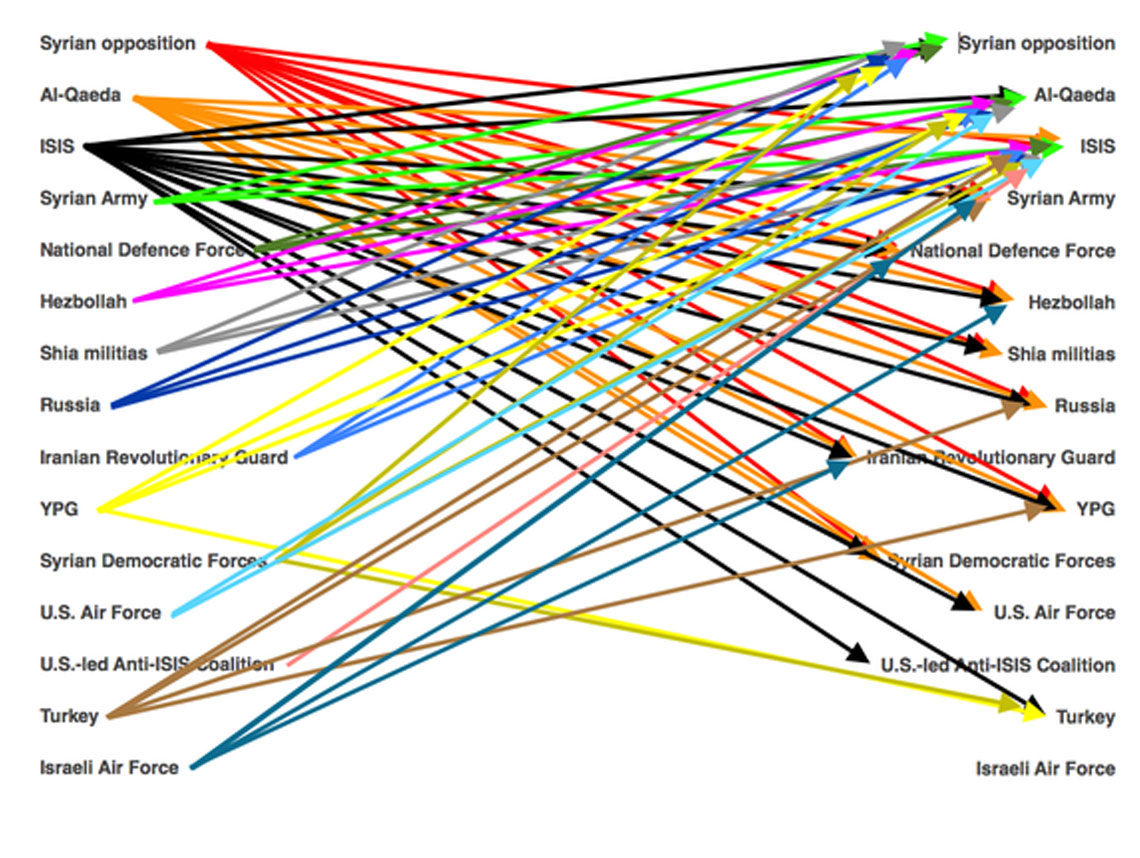
On one side of the conflict, you have the Assad regime, supported by Iran, Russia and Hezbollah. A few years ago, Assad was on life support. Now, with his strong partners, he’s made a comeback.

On the other side of the conflict are anti-regime rebel groups who fight each other as much as they fight the Assad regime.

The largest is ISIS, with 25,000 to 80,000 fighters. ISIS has become the enemy par excellence in the Western world. Trump has talked incessantly about destroying them. Now consider this: By striking Assad, Trump ended up helping ISIS. Complicated enough?

Besides ISIS, there are groups like Al-Nusra Front (15,000 to 20,000 fighters), Jaysh al-Islam (17,000 to 25,000), Ahrar ash-Sham (10,000 to 20,000), Asala wa-al-Tanmiya (13,000), Jaysh al-Fatah (10,000), Sham Legion (4,000) and Ajnad al-Sham Islamic Union (3,000).

In the middle of this jungle is the Free Syrian Army, with 100,000 fighters, which was started by former Syrian officers. Everyone seems to fight them.

Geography further complicates the picture. The country has been heavily splintered. Different groups have different power bases. Of course, the more land you can conquer the more power you have.

In the North is the Kurdish group, which is another story altogether, because Kurds are known to be more moderate. But Turkey hates the Kurds. Just as Iran and Syria are supporting the Assad regime, countries like Saudi Arabia and Turkey are supporting their own rebel groups.

The point is this: Syria has become a complete, violent mess. When it comes to the most likely winners in this conflict, the choice has become evil versus evil. The good people of Syria who initially rose up against Assad, and the militias they organized, have been slowly crushed.

As much as it may satisfy us to punish Assad for using chemical weapons, it’s important to keep our eye on the whole picture. What can America do? At this point, not much. Six years ago, when the more moderate rebel forces were stronger, we could have given them military assistance and established no-fly zones. Would it have worked? Who knows? There’s no certainty when so many violent forces are at play.

What we do know today is that extremist groups have the upper hand pretty much everywhere and that Russia has established its own military presence. That limits our options. On the humanitarian front, we can certainly help establish safe zones to assist the millions of refugees. We can even order the occasional pinprick attack to show we’re still here and we have our limits, and the use of chemical weapons is one of them.

But let’s be real. There are no good options. The Syrian fire has gotten too big to simply suffocate. Yes, let’s stay vigilant. Let’s make sure things don’t get too out of hand and spill over into other countries (like Israel). But as vexed as I am to say this, when evil fights evil, sometimes the best option is to let them fight it out, and to help ensure no one wins.

As Daniel Pipes writes, “Iranian- and Russian-backed Shi’ite pro-government jihadis are best kept busy fighting Saudi-, Qatar-, and Turkish-backed anti-government Sunni jihadis; because Kurds, however appealing, are not contenders for control of the whole of Syria; and because Americans have no stomach for another Middle Eastern war.”

Trump can go on about how attacking Assad is a “vital U.S. interest,” but who’s he kidding? Is he ready to invite the head of ISIS to the White House for peace talks?


David Suissa is president of TRIBE Media Corp./Jewish Journal and can be reached at davids@jewishjournal.com.

How complicated is Syria? Trump just helped ISIS Read More »

As time goes by, centenarians savor life together

When Morrie and Betty Markoff talk about their marriage, they hold hands, laugh and finish each other’s sentences. They behave as affectionately as newlyweds.

Which clearly they are not. Morrie is 103; Betty is 100. They have been married for 78 years.

Many factors contributed to their long marriage, they said, but one of them played the biggest role.

“We’re just lucky,” Morrie said.

They met in 1938 at a mutual friend’s wedding party in the Bronx, N.Y. Morrie was seated between Betty and Rose, a pretty girl with long nails.

“Next to her, I thought I had no hope,” Betty said. “The competition was rough.”

Morrie, who at the time worked as a machinist in Philadelphia, was “adorable, tall, with dark,  curly hair.” 

After the party, he drove Betty home to College Point in Queens. Along the way, his car broke down, and he repaired it effortlessly, leaving a deep impression on his date.

“He fixed it quickly, with no complaints,” she said.

Her girlfriends didn’t believe the machinist was “marriage material” and a good match for Betty.

“They were wrong,” Morrie said, laughing.

Their courtship didn’t last long. Morrie moved to Los Angeles, where he had been offered a better-paying job. When he arrived in L.A., he purchased bus fare from New York to Los Angeles for $35 and asked Betty if she wanted to join him.

“I guess that was his marriage proposal,” she said.

About 10 months after their first date, Morrie went “shopping for a rabbi” in Los Angeles and found someone who charged only $25 to perform a wedding ceremony. At Woolworth’s, the couple purchased wedding bands made of fake gold for 10 cents.

When the rabbi wished for their marriage to be as pure as the gold in their rings, they glanced at each other and smiled. The next day, they headed to Tijuana for a two-day honeymoon.

Despite his training as a machinist, Morrie found a job selling vacuum cleaners. He later opened his own air conditioner and appliance company; Betty was a stay-at-home mom, raising their two children.

Throughout their long life together, the Markoffs said they never felt bored, always finding a new book to read or a new place to visit.

The couple’s passion for traveling took them to many places, including Europe and Latin America, with each trip well-documented, by Betty in her journals and by Morrie with his camera.

In the early 1950s, they traveled to Moscow and Leningrad (now called by its original name, St. Petersburg). As a member of the Communist Party USA, Morrie was curious to visit the Soviet Union. But after spending a month in Russia, he grew disillusioned with Soviet-style socialism.

“Someone told me that even a rabbi in our synagogue was a KGB agent,” he said.

Betty grew up in a middle-class family in Queens, where she moved with her family from Toronto when she was 10. Morrie grew up in East Harlem, where he became a shoeshine boy at the age of 8 to help his family.

Later, he discovered a passion for sculpting scrap metal. Many of his creations were inspired by people and places he had encountered decades earlier.

One of them was a sculpture of a shoeshine boy who polished the shoes of a man who had given him two nickels —  one for service, the other as tip. Another sculpture depicted chess players in Griffith Park, a scene he encountered many times during hiking trips.   

Those artworks were on display a few years ago, among Morrie’s paintings and photographs, at the Red Pipe Gallery in Chinatown at an exhibition commemorating his 100th birthday.

Today, the couple live in a one-bedroom condo with a panoramic view of the downtown Los Angeles skyline, as well as The Broad museum and Walt Disney Concert Hall. Besides photos of the couple’s two children, five grandchildren and two great-grandchildren, Morrie’s metal sculptures and photographs decorate the shelves, and Betty’s travel journals line up along the wall in their bedroom.

For their longevity, Betty credits good nutrition. Since her youth, she has cooked balanced meals that included protein, vegetables and salads. But Morrie believes there is more to it.

“Many people had a good diet and passed away,” he said. “We are just lucky.”

After nearly eight decades together, the Markoffs said their marriage wasn’t always a smooth ride.

“Don’t get deceived; we had our battles,” Betty said.

Relationships require work, she said, and the two always have strived to maintain patience and appreciation for each other.

“We always respected each other, no matter what,” Morrie said.

It’s important to agree to disagree, he said, and move on when facing a major quarrel.

Still, despite his deep feelings for Betty and a long life together, he prefers to avoid the word “love” because it’s possessive and not lasting.

“I prefer to use the term ‘caring,’ ” he said, “I would care about her even if we were divorced.”

As time goes by, centenarians savor life together Read More »

Why Israelis are happy about Trump’s missile strike — and why they should be wary

Israel’s government and pundits are unabashedly pleased by the missile strike ordered by President Donald Trump early Friday on the Syrian airfield from where Tuesday’s deadly chemical attack is believed to have been launched.

Prime Minister Benjamin Netanyahu put out a statement out at 6 a.m. local time – unusually early – just to make clear he “fully supports” the strike.

“In both word and action, President Trump sent a strong and clear message today that the use and spread of chemical weapons will not be tolerated,” he said.

Trump ordered the launch of 59 Tomahawk missiles on the airfield in northern Syria believed to be where a sarin attack that killed at least 72 civilians, including many children. The missile attack, Syria said in reports that could not be confirmed, killed nine civilians – including four children – and six troops, and caused extensive damage.

Here are some reasons why Israelis are backing the strike – and some reasons why it might not be so simple.

The moral imperative

Images of children gassed a few hundred miles north of Israel hits close to home for a country where the helplessness that Jews faced against the Nazi genocide remains a defining national characteristic.

“There was a genuinely strongly felt moral issue, and that was something that Israelis felt across the political spectrum when the pictures emerged of people killed in the chemical attack, given the Jewish people’s history of being gassed in the Holocaust,” said Daniel Shapiro, who until January was the U.S. ambassador to Israel and still lives there.

Israelis in just days have raised hundreds of thousands of shekels for the victims; fundraisers have explicitly invoked Holocaust imagery.

“No Jew can stay silent as children are being gassed in the streets of Syria,” IsraelGives says on its web page.

The sheriff is back in town.

Israelis were frustrated by the Obama administration’s hesitancy in confronting Assad.

In 2013, President Barack Obama said the use of chemical weapons would trigger an attack. But when Syria crossed the line, instead of launching an attack, Obama coordinated a deal with Russia under which Syria would divest itself of its chemical weaponry. It now appears clear to the United States and its allies that Syria’s divestment was more fraud than fact.

Trump while campaigning for the presidency appeared to want an even further retreat. His sole conceptualization of Syrian President Bashar Assad until last week was as an ally in combating Islamic State terrorists, an embrace that Obama, however feckless his chemical weapons retreat was, forcefully rejected. Trump officials said last week that they were ready to reverse stated Obama administration policy that any resolution to the Syria conflict must include the removal of Assad.

That worried Israelis – most prominently Defense Minister Avigdor Liberman – who were concerned that a resurgent Assad would allow Israel’s deadliest enemies, Iran and its Lebanese proxy, Hezbollah, a foothold on Israel’s border with Syria.

Trump over the last three days did a 180 on Assad – “My attitude toward Syria and Assad has changed very much,” the president said the day after the chemical attack — and so, commensurately, have Israelis warmed to Trump.

“American leadership is once again credible,” Maj. Gen. Amos Gilad, until last year the director of policy at the Israeli Defense Ministry, told Israel Radio. “When you use nerve gas against a civilian population, the message is clear.”

Netanyahu in his praise for Trump said the message should resonate as far as Iran and North Korea. The prime minister and his government continue to see the 2015 nuclear deal Obama negotiated with Iran, trading sanctions relief for a rollback of Iran’s nuclear program, as a license for Iran and its proxies to continue its regional interventionism.

Israel “hopes that this message of resolve in the face of the Assad regime’s horrific actions will resonate not only in Damascus but in Tehran, Pyongyang and elsewhere,” Netanyahu said.

Andrew Tabler, a fellow at the Washington Institute for Near East Policy who spent years in Syria, said in a media call that the chief concern for Israel and America’s Sunni Arab allies was what was “baked into” the nuclear deal: “That Iran could use rump governments in Iraq and Syria to shoot people into the region into submission” while the principal U.S. concern was sustaining the Iran deal.

What’s not predictable

1. Do Israeli jets still get to take out potential threats without triggering a Russian response?

An ally of the Assad regime, Russia was furious at the missile attack and suspended its “deconfliction” agreement with the United States – one under which the two nations give each other prior notice of any military action, particularly from the air, so there’s no risk of an inadvertent clash.

Russia has a similar arrangement with Israel; does that go by the wayside? Israel as recently as last month sent jets into Syria to stop the smuggling of Syrian arms to Hezbollah.

Gilad, speaking on Israel Radio, said he was confident that Russia would continue to allow Israel to act.

“I don’t think there’s any threat on Israeli action as long as it in the defense of Israel’s interests,” he said.

2. Is Israel more of a target than before?

Israel’s most potent threat is Hezbollah, which has positioned tens of thousands of missiles throughout Lebanon since the last Hezbollah-Israel war in 2006. Israeli brass believes Hezbollah could be positioning itself for another Israel war, if only as a pretext to draw attention away from Syria, where its alliance with Iran and the Assad regime has taken hits.

Hezbollah called the missile strike an “idiotic” action that was “in service” to Israel and predicted that it would increase tension.

3. Russia’s mad? But wait, we like Russia.

Netanyahu has gone to great lengths to cultivate Russia, in part because Israel sees Russia as the likeliest agent to broker a final status deal that would keep Iran and Hezbollah as far as possible from Syria’s southwest, where Israel’s border is.

He endured a tongue lashing on Thursday from Russian President Vladimir Putin just for intimating that Syria is responsible for the chemical attack. (Russia insists there is no proof yet.)

The closeness of Trump and his team to Russia – in Washington, increasingly seen as a burden, as it engenders a string of scandals – is seen as a plus in Israel, where it was hoped Trump would leverage his friendship with Putin as a means of containing Assad, Hezbollah and Iran.

“Israel still sees Trump as a dealmaker with Russia, and they want to know if Trump drives a wedge between Russia and Iran-Hezbollah-Syria,” David Makovsky, the Ziegler distinguished fellow at the Washington Institute, said in an interview.

4. That Sunni alliance thing … it’s complicated

The conventional wisdom in Washington after the attack is that Trump has revivified the U.S. profile in Israel among the United States’ Sunni Arab allies.

Except as much as Assad is despised among Sunni Arabs, both for his belonging to the secretive Alawite sect and his alliance with Shiite actors like Iran and Hezbollah, direct U.S. intervention is not necessarily popular.

Critically, Egypt – whose leader, Abdel Fattah al-Sisi, just this week lavished praise on Trump – was less than enthusiastic about the strike.

“Egypt affirms the importance of sparing Syria and the Middle East the dangers of crisis escalation in order to preserve the safety of the nations that comprise it,” its Foreign Ministry said Friday, according to Al-Ahram. “We see the necessity for swift action to end the armed conflict in Syria to preserve the lives of the Syrian people through a commitment by all Syrian parties for an immediate cease-fire and a return to negotiations under the aegis of the United Nations.”

Egyptian unhappiness could hamper Netanyahu’s bid to use Egypt as a conduit to new peace deals with other moderate Arab states.

“Sisi sees Assad rightly or wrongly as part of the battle against Islamic extremism,” said Shapiro, who is now a senior visiting fellow at the Institute for National Security Studies in Israel.

“There’s also the more traditional Egyptian value of not wanting to see any foreign intervention in an Arab state lest it be directed at Egypt,” he said. “And Egypt has in recent months gone a bit closer to the Russians, and Russians have participated in counter ISIS operations in western Egypt. That creates some potential tensions between Egypt and its strategic partner Israel and Sisi and his new friend Donald Trump.”

5. It’s open-ended – which means, duh, we don’t know how it will end.

Tabler cautioned against seeing long-term consequences because of a single strike; no one knows yet where Trump will take U.S. involvement.

“This strike is not the same as the invasion of Iraq in 2003,” he said.

Israel initially was supportive of the U.S. action in Iraq, but soon grew apprehensive as the Bush administration neglected increasing threats from Iran and its war radicalized Sunni Arabs in the region.

Secretary of State Rex Tillerson suggested that the strike was a one-off.

“I would not in any way attempt to extrapolate that to a change in our policy or our posture relative to our military activities in Syria today,” he said in a media availability.

That did not assuage concerns among Democrats and even some Republicans in Congress, who called for consultations with Congress ahead of any further action.

“Our prior interventions in this region have done nothing to make us safer, and Syria will be no different,” said Sen. Rand Paul, R-Ky.

Sen. Bernie Sanders, I-Vt., said on Twitter: “I’m deeply concerned the strike in Syria could lead the U.S. back into the quagmire of long-term military engagement in the Middle East.”

Why Israelis are happy about Trump’s missile strike — and why they should be wary Read More »

Moving & Shaking: Simon Wiesenthal Center/Museum of Tolerance 2017 National Tribute Dinner

The Simon Wiesenthal Center/Museum of Tolerance 2017 National Tribute Dinner drew prominent guests and speakers to celebrate the center’s 40th year, including Barbra Streisand, Jerusalem Mayor Nir Barkat and former DreamWorks Animation CEO Jeffrey Katzenberg.

But the name that jumped off the evening’s program was the emcee, O’Shea Jackson, also known as Ice Cube from the rap group N.W.A.

“I know I may not be the most obvious host for tonight’s events,” he said onstage at the April 5 dinner. “But we’re not living in obvious times.”

“Recent events have only made nights like tonight and this museum’s purpose more important,” he added.

The black-tie event filled the 1,300-seat ballroom at the Beverly Hilton, raising a record $2.65 million for the center — half a million dollars more than it has raised at similar past events, according to Larry Mizel, chairman of the Wiesenthal Center’s board of trustees.

The evening honored Ron Meyer, vice chairman of NBCUniversal, with the center’s 2017 Humanitarian Award.

Ron Meyer and Barbra Streisand. Photo by Alex J. Berliner/ ABImages

Meanwhile, the center’s dean and founder, Rabbi Marvin Hier, presented a posthumous Medal of Valor to former Israeli President Shimon Peres and Roddie Edmonds, a U.S. army officer and prisoner of war who saved 200 American Jewish soldiers during World War II by refusing to give them up to his Nazi captors.

Reverend Johnnie Moore, who has helped rescue dozens of Christians from the Islamic State in Iraq and Syria, also received a Medal of Valor.

The dinner also drew politicians and government officials, including Israeli Consul General Sam Grundwerg, former Los Angeles Mayor Antonio Villaraigosa, California Insurance Commissioner Dave Jones, State Senator Jeff Stone, and State Assemblymembers Dante Acosta and Laura Friedman. Other celebrity attendees included Michael Douglas, Tobey Maguire and AnnaLynne McCord.

From left Rabbi Meyer H. May, Ice Cube, Rabbi Marvin Hier, and Rabbi Abraham Cooper, SWC Associate Dean. Photo by Alex J. Berliner/ ABImages

Taking the stage to introduce Meyer, Streisand took aim at the Trump administration, saying the president “uses the bully pulpit to simply bully, offering no ideals and aspirations.”

“We must heed the warning signs of the past echoing in the discourse and the politics of the present,” she said, “for history has shown us the horrors of quiet whispers when we must all be shouting from the rooftops to say: Never again.”

Moving & Shaking: Simon Wiesenthal Center/Museum of Tolerance 2017 National Tribute Dinner Read More »

Daily Kickoff: SCOOP — White House to host Seder | Reaction to US strikes against Assad | Wynes for Congress? | Yitz Applbaum’s Passover Wine Picks

Have our people email your people. Share this sign up link with your friends

EXCLUSIVE — KEEPING TRADITION: Sources at the White House tell us that the Trump administration is planning to continue the tradition set by President Obama of hosting a Seder at the White House this coming Monday night. The sources did not yet know whether Trump or Kushner would participate and noted that it is still in the planning process. They explained that Trump’s participation is very much up in the air due to the situation in Syria. [JewishInsider]

GAME CHANGE: “U.S. strikes Syrian military airfield in first direct assault on Bashar al-Assad’s government” by Dan Lamothe, Missy Ryan and Thomas Gibbons-Neff: “The U.S. military launched 59 cruise missiles at a Syrian military airfield late on Thursday, in the first direct American assault on the government of President Bashar al-Assad since that country’s civil war began six years ago. The operation, which the Trump administration authorized in retaliation for a chemical attack killing scores of civilians this week, dramatically expands U.S. military involvement in Syria and exposes the United States to heightened risk of direct confrontation with Russia and Iran, both backing Assad in his attempt to crush his opposition.” [WashPost; Guardian]

JI READERS REACTION — Elliott Abrams tells us: “Every US ally, starting with Israel, must be gratified to see the President act. The message to Putin, Kim in North Korea, China’s President Xi in Florida with Trump, Ayatollah Khamenei in Tehran, and of course Assad is that they cannot take Trump for granted. He will not analyze endlessly and then decide that there are always too many risks, so he has very much complicated their lives now. That’s a very good thing for our security, as is reinforcement of the century-old rule that chemical warfare is a crime that will be punished. If you read the briefing by National Security Advisor McMaster and Secretary of State Tillerson last night, you get the sense that serious people are coming to the fore in this new administration. Yes, this was a very small action we took in Syria, but it was one Trump’s predecessor would not take. This small, one time action will reverberate loudly around the world.” 

Abe Foxman emails us…“POTUS did the right thing. It is finally a significant gesture on behalf the innocent victims of hate. If only it had happened against Auschwitz or Treblinka. This act will not put an end to all the hate and death. But it is a welcome message and hopefully a new beginning.”

Daniel Shapiro: “Many Qs remain, but on balance, Trump’s decision to strike Syrian air fields associated with the CW attack was correct and well-executed.” [Twitter]

Bret Stephens: “President Trump has done the right thing and I salute him for it. Now destroy the Assad regime for good.” [Twitter

ON THE HILL YESTERDAY — The Senate Foreign Relations Committee passed a resolution that condemns the Assad regime for launching the grisly strike. The resolution was introduced by Senators Ben Cardin (D-MD) and Bob Corker (R-TN). Senator Rand Paul (R-KY) declined to vote in favor of the resolution and recorded his vote as present. At the same time, leading Senate Democrats Ben Cardin (D-MD) and Chris Murphy (D-CT) have warned the President about proceeding with a military response in Syria without first receiving approval from Congress, as former President Barack Obama requested in 2013 after Assad previously used chemical weapons against its own people. [JewishInsider] • Rand Paul: Trump needs Congress to authorize military action in Syria [TheHill]

Rep. Tulsi Gabbard: “It angers and saddens me that President Trump has taken the advice of war hawks and escalated our illegal regime change war to overthrow the Syrian government. This escalation is short-sighted and will lead to more dead civilians, more refugees, the strengthening of al-Qaeda and other terrorists, and a possible nuclear war between the United States and Russia.” [BusinessInsider]

“Israel’s former chief rabbi says a Holocaust is happening in Syria” by Ruth Eglash: “Of course, this is a ‘shoah’ of the Syrian people and it did not start today. For the past six years since they have been living in a Holocaust,” said [former chief rabbi Yisrael Meir] Lau, using the Hebrew word for Holocaust. [WashPost]

KAFE KNESSET — by Tal Shalev and JPost’s Lahav Harkov: Most of the opposition was united with the coalition in praising Trump, with a Twitter parade of compliments. Isaac Herzog tweeted that the Tomahawk missile attack sends “an important message against the Butcher from Damascus, at a perfect time and perfect place.” Yair Lapid went with: “Better late than never. There are times when use of force is the moral act.” Still, some warned against rejoicing so vocally, such as Zionist Union’s always contrarian leadership candidate Erel Margalit, who said the public celebrations are “unnecessary and dangerous to Israel, and can push us into a complicated military confrontation. Israel can support a justified attack even without public statements.”

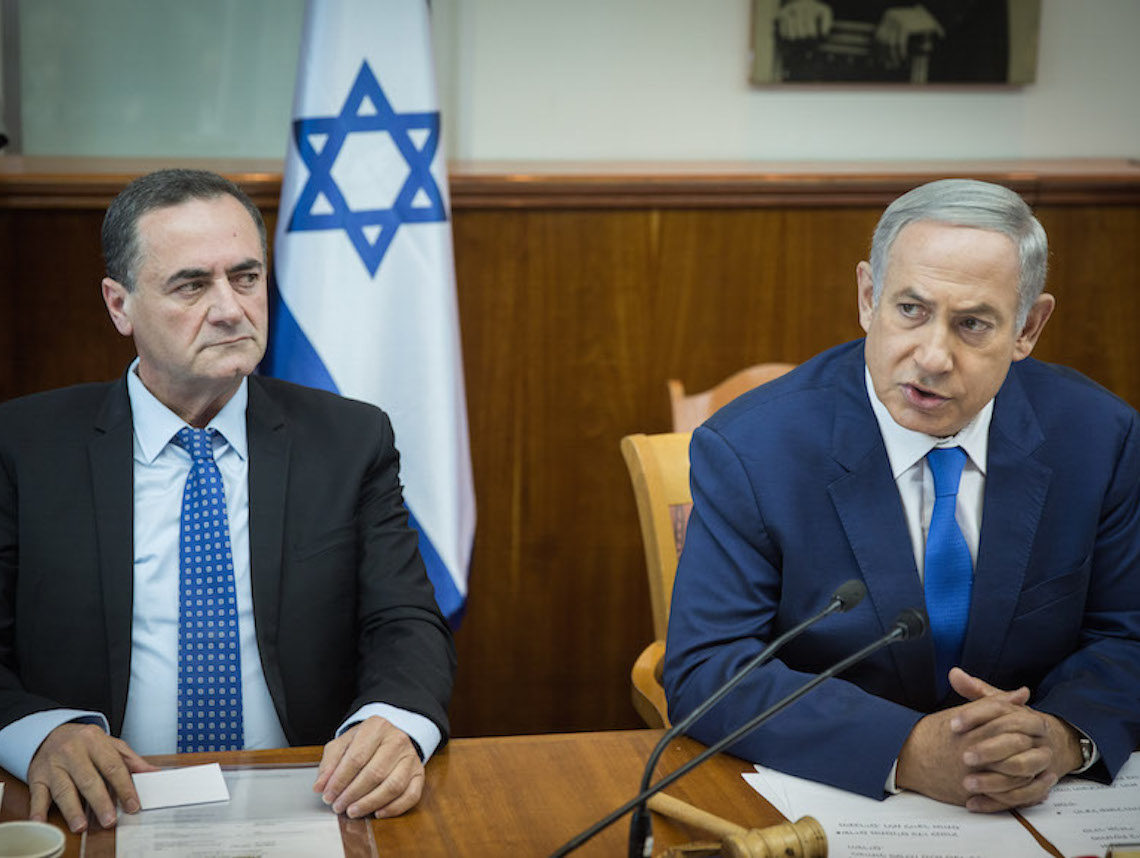
Intelligence Minister Yisrael Katz (Likud) told Kafe Knesset: “The American attack sends a clear message to Assad and Khamenei that if they cross red lines, they will pay a heavy price. It’s also a signal to Russia of a new American policy and new rules for conducting a dialogue with the superpower over Syria and the Middle East. The Trump policy of reacting and initiating is going to replace the Obama policy of leading from behind, which failed and led to a significant strengthening of Iran and its regional proxies.”

According to Katz, the US operation brought back the Arab confidence and trust in the US leadership, and increases the potential for creating and strengthening a “regional security axis, which includes Israel, to stop Iran and push it out of the region. The most important thing for Israel,” Katz added, “is US support for preventing a territorial connection between Iran and Lebanon, through Iraq and Syria, which could create an increased missile threat to Israel and reestablish the northern front that will threaten Israel and require constant alertness.” Read today’s entire Kafe Knesset here [JewishInsider]

GIFT OR NOT? “Moscow surprisingly says west Jerusalem is Israel’s capital” by Herb Keinon: “The statement issued by the Russian Foreign Ministry reads, “We reaffirm our commitment to the UN-approved principles for a Palestinian-Israeli settlement, which include the status of East Jerusalem as the capital of the future Palestinian state. At the same time, we must state that in this context we view West Jerusalem as the capital of Israel.” This is a sharp shift in Russian policy, which until now has formally held that Jerusalem should eventually be under a permanent international regime… Russia’s ambassador to Israel will meet with Foreign Ministry officials in the coming days to discuss Moscow’s decision and its ramifications.” [JPost] • Israel ‘studying’ Russian statement on Jerusalem recognition [Ynet

MORE from el-Sisi’s meeting with Jewish leaders in DC… During the meeting, according to two attendees, the Egyptian President questioned why people are surprised about Russia’s increased role in the Middle East since the prior White House decided to abandon its leadership role in the region. “If you leave a void someone will come in and fill that gap,” el-Sisi emphatically said. We’re told former Obama administration official Dennis Ross replied, ‘You’re correct, we did.’

PALACE INTRIGUE: “Steve Bannon Calls Jared Kushner a ‘Cuck’ and ‘Globalist’ Behind His Back” by Asawin Suebsaeng: “It’s been an “open secret” that Bannon and Kushner often clash “face-to-face,” according to senior officials… “[Steve] recently vented to us about Jared being a ‘globalist’ and a ‘cuck’…He actually said ‘cuck,’ as in “cuckservative,’” the administration official told The Daily Beast… “Globalist” is a term typically used by nationalist, pro-Trump right-wingers against political opponents; however, the term has also come under fire for at times carrying anti-Semitic tones. (Kushner is Jewish.)… One senior Trump aide said that Bannon was also frustrated with Kushner “continuing to bring in Zeke Emanuel to discuss health care options,” for instance… “Steve thinks Jared is worse than a Democrat, basically,” another official close to Bannon said.” [DailyBeast

“Kushner and Bannon Battle for the Soul of the Trump White House” by Rosie Gray: “Six top aides sat in on Trump’s interview with The New York Times this week, including Cohn, but Bannon was not listed among them… “I think he is in trouble,” said another source with knowledge of the internal workings of the White House. “I think Jared is moving on him… I’m sure Jared and Ivanka are very embarrassed by Steve’s politics,” the source with inside knowledge of the White House said… Clearly Jared wants the President to be a more mainstream political figure.”” [TheAtlantic; WashPost]

“In Battle for Trump’s Heart and Mind, It’s Bannon vs. Kushner” by Maggie Haberman, Jeremy Peters and Peter Baker: “At different moments, Mr. Trump has given conflicting impressions of his preferences. He has privately scorned the coverage of Mr. Kushner’s recent high-profile trip to Iraq, according to two people who spoke with him, and questioned the need for his son-in-law’s newly created office to overhaul the government. At other points, he has been dismissive of Mr. Bannon, curtly telling him he is not needed at this meeting or that… On foreign policy, Mr. Kushner is more inclined toward intervention in the Middle East while Mr. Bannon would prefer that the United States remain as uncommitted as possible.” [NYTimes]

President Trump is considering a broad shakeup of his White House that could include the replacement of White House Chief of Staff Reince Priebus and the departure of chief strategist Steve Bannon. [Axios]

REPORT: “Kushner Omitted Meeting With Russians on Security Clearance Forms” by Jo Becker and Matthew Rosenberg: “The omissions, which Mr. Kushner’s lawyer called an error, are particularly sensitive given the congressional and F.B.I. investigations into contacts between Russian officials and Trump associates.” [NYT]

King Abdullah speaks to The Washington Post about his efforts to revive the peace process — by Lally Weymouth: “Q. When you met President Trump before, you told him that moving the U.S. Embassy from Tel Aviv to Jerusalem would be disastrous in the region? A. I was asked about this, and my response was there is going to be a fallout if it is not part of something more comprehensive. The president said, “Look, I am very keen to move the Israelis and Palestinians forward and to find a peace process that actually works, and let’s all work on this together.” … Q. Wasn’t it right after your conversation that Trump encouraged Israel to freeze settlements? A. I think people are giving me way too much credit. They are saying that I had something to do with it. I don’t know if I did. I just expressed my views.” [WashPost

“Dershowitz details chat about Israel with President at his estate” by Annie Linskey: “Trump “clearly had subjects he wanted to talk about. It was his agenda,” Dershowitz said. “He told me he thought in the Middle East, they are ready for a deal.” Trump explained that he’d spoken to Palestinian leader Mahmoud Abbas and sensed that he was ready for a peace deal, Dershowitz said. “I responded by saying, ‘the Palestinians say that to every new president,’ ” Dershowitz said… “He said ‘Now I think they’re really ready,’ ” Dershowitz added. “I said, ‘You have to test them. … You have to test them, it’s not enough to just hear ‘they’re ready.’ “He shook his head in apparent agreement,” Dershowitz said. Dershowitz said Trump made it clear he was aware that the former professor is “very friendly” with Netanyahu… “The president said, ‘I know you know Jared from Harvard. Be in touch with him.”” [Boston Globe]

“Let’s Keep Israel a Bipartisan Issue” — Congressman Josh Gottheimer writes… “Recently, I was asked to sign onto a letter affirming the importance of the two-state solution, which I support. The problem was that it was signed almost exclusively by Democrats. Even by today’s standards, a letter signed by 189 Democrats and only 2 Republicans can’t be considered bipartisan. So, while I agree with much of the letter’s content, I couldn’t bring myself to sign it. We need to go the extra mile to work with members of both parties to keep the partisanship out.” [JewishLinkNJ]

TOP-OP: “If Palestinians are serious about peace, ‘martyr’ violence should not pay” by David Makovsky, Ghaith al-Omari and Lia Weiner: “Difficult as it may be politically, such a move is necessary in order to signal to the United States that the Palestinian side can make difficult decisions in the pursuit of peace. Focusing on this issue during the upcoming Trump-Abbas meeting could put the shaky U.S.-Palestinian relations on sounder footing with a new administration. It is also necessary in order to begin rebuilding trust with Israel — just as Israel should be required to make its own difficult decisions to show seriousness and mend trust.” [WashPost]

SPOTLIGHT: “Operation seduction: Lapid captures Israel’s mainstream support” by Mazal Mualem: “In stark contradiction to this careful attitude, there is the divisive language he uses about the left. This is the formula that his American Jewish adviser Mark Melman put together for him, and it is proving effective.” [Al-Monitor]

2018 WATCH: “Billionaire J.B. Pritzker announces run for Illinois governor” by Aamer Madhani: “Pritzker, who served as co-chairman of Hillary Clinton’s 2008 campaign for the White House, will join a crowded Democratic field seeking the nomination… Pritzker’s sister, Penny, served as Commerce secretary in President Obama’s administration. He also founded the Pritzker Group, a private investment firm, and the Chicago tech incubator 1871. Pritzker formally announced his campaign in a rally on Chicago’s South Side surrounded by family and supporters, calling Rauner a “local partner” of President Trump.” [USAToday

WORD ON THE STREET — Jeremy Wynes is set to announce a run for Congress: Wynes, the Midwest Regional Director for the Republican Jewish Coalition and formerly AIPAC’s Midwest Political Director, is exploring a run against Democratic Rep. Brad Schneider for Illinois’ 10th congressional district. Wynes was seen making the rounds at this year’s AIPAC Policy Conference and has met with NRCC. When reached for comment, Wynes told us: “The 10th District deserves a representative who can actually get things done – someone with their own voice and new ideas who isn’t afraid to lead. I’ve gotten a lot of encouragement from friends on both sides of the aisle who think I fit that description. So I’m strongly considering running, but right now I plan to enjoy Passover with my family and make a final decision soon after the holiday.”

** Good Friday Morning! Enjoying the Daily Kickoff? Please share us with your friends & tell them to sign up at [JI]. Have a tip, scoop, or op-ed? We’d love to hear from you. Anything from hard news and punditry to the lighter stuff, including event coverage, job transitions, or even special birthdays, is much appreciated. Email Editor@JewishInsider.com **

BUSINESS BRIEFS: Israel Aerospace Industries signs near $2 billion missile deal with India [Reuters]  David Cordish Says He Isn’t Worried About MGM National Harbor Competition [WBAL] • 5 Lessons Entrepreneurs Worldwide Can Learn From Israeli Culture [Entrepreneur] • 23andMe, Inc. Granted First FDA Authorization to Market Direct-to-Consumer Genetic Health Risk Reports [Newswire]

“Who paid the American-Israeli bomb hoaxer? Jewish teen had Bitcoin account worth millions” by Josh Robbins: “Israeli police say that the Israeli-American teenager suspected of making hundreds of bomb threats against Jewish community centres (JCCs) in the US has a Bitcoin account worth millions of shekels. The discovery raises suspicions that the 18-year-old was paid by a third party… Today (6 April) police extended his detention for a third time.” [IBTimes]

HOLLYWOOD: “Ron Meyer Honored With Simon Wiesenthal Center Humanitarian Award at Politically Charged Gala” by Lawrence Yee: “Jeffrey Katzenberg, who has co-chaired the tribute dinner 25 times, [said], “In recent times, forces have been released in our country — and around the world — that are intolerant and intolerable.” … While others talked broadly about the current cultural climate, Barbra Streisand — who presented Meyer with the Humanitarian Award — specifically called out Donald Trump’s administration. “We are living under an administration that deliberately omitted Jews from its Holocaust Remembrance Day statement. We are living with a president that, in his own words, wants to ban a specific religion. All this while the president praises authoritarian leaders and calls our free press the enemy of the people. This is a president who uses words calibrated to incite the beast in people, not the best in people.”” [Variety]  

“How Oslo Dramatizes the 1993 Israeli-Palestinian Peace Talks” by Marie Brenner: “A phone call, in fact, launches Oslo, J. T. Rogers’s electrifying three-hour drama, opening in April at Lincoln Center’s Vivian Beaumont after a critically acclaimed Off Broadway run last year. The setup is irresistible: the fraught behind-the-headlines negotiations 25 years ago when representatives of the Palestinian Liberation Organization and Israel secretly met in Norway and battled their way to the 1993 Oslo peace accords. How did this byzantine insider’s story come to the stage? A chance meeting on the playground of their daughters’ school started the friendship between director Bartlett Sher and Norway’s U.N. ambassador, Mona Juul, and her husband, the sociologist Terje Rød-Larsen. In time, the largely unknown history of Juul’s and Larsen’s roles as clandestine go-betweens came to light.” [VanityFair]

PROFILE: “Meet the 19-Year-Old Israeli Designer Making Gorgeously Grown–Up Clothes” by Rebecca Stadlen: “Glancing at Maya Reik’s Instagram feed—with its elegant black-and-white portraits, Art Deco influences, and close-ups of intricately embroidered silk kimonos—you’d never guess that the sophisticated, well-traveled woman behind the page is a 19-year-old high school dropout. The self-taught Israeli designer, born and raised in the coastal village of Beit Yanai, founded her Tel Aviv-based line, Marei 1998, less than two years ago, and since then has designed two collections; assembled a bicontinental team; set up production at the same Italian factories that work with The Row, Gucci, and Stella McCartney; and presented during Milan fashion week—accomplishments that would be impressive even for someone twice her age.” [VogueMagazine]

WINE OF THE WEEK — Passover Edition — by Yitz Applbaum: I am often asked which wines I recommend for the “four cups” on Seder Night. Over the past several years I believe that I have come up with a reasonable solution to avoid the paralysis that comes from the paradox of choice: I actually drink 8 cups! For the traditional four cups, I drink very good mid-priced Israeli wines (after all, the Exodus from Egypt had Israel as its destination). Here are a couple of suggestions: 1. Flam Classico 2. Gvaot Petit Verdot 3. Barkan Altitude 4. Har Odem Volcanic Shiraz

To dive deeper into the mood of Magid, and to better enjoy the great friends and family we are with, I enjoy four additional cups to match each of the traditional cups. For these wines, I tend to go a bit higher-end because with the traditional four, we need to drink most of the cup rather promptly, and for the second four, we can take our time and savor the wine. A few recommendations for the higher end: 1. Matar CB 2. Yarden Rom 3. Segal Unfiltered 4. BenHaim Grand Reserve Cab

WEEKEND BIRTHDAYS — FRIDAY: Co-author of Politico Playbook — the indispensable morning newsletter for the political class — and most frequent hat tipper to Jewish Insider’s birthday editors, Daniel Lippman turns 27… Political activist and former US military analyst who in 1971 released the Pentagon Papers, a top-secret Pentagon study of the Vietnam War, to The New York Times and other newspapers, Daniel Ellsberg turns 86… Professor of philosophy at Vanderbilt University, Marilyn Ann Friedman turns 72… President of Yale University (1993-2013), now CEO of Coursera, an education-focused technology company, Rick Levin turns 70… Born in Haifa, a professor at the Pennsylvania State University since 1981, folklorist, ethnologist, historian, educator and author, Simon J. Bronner turns 63… NYC socialite and founder of Pretentious Pocket, a silk pocket square business, Justin Ross Lee turns 34… Professional golfer who joined the PGA Tour in 2015 when he won Rookie of the Year, won his first PGA Tour event in 2016 at the FedEx St. Jude Classic near Memphis, Daniel Berger turns 24… Jane Sobo David Farahi

SATURDAY: Comedian known for his nightclub performances in Las Vegas, Shecky Greene (born Fred Sheldon Greenfield) turns 91… Pulitzer Prize-winning investigative journalist and political writer, longtime contributor to The New Yorker magazine on national security matters, Seymour Myron “Sy” Hersh turns 80… French actor who has appeared in over 60 movies during a career spanning five decades, Jean Benguigui turns 73… Bassist for the rock band Grand Funk Railroad, Melvin George “Mel” Schacher turns 66… Russian-born businessman and philanthropist, emigrated to Israel in 1972, appointed in 2005 as President of the Congress of Jewish Religious Communities of Russia, Arcadi Aleksandrovich Gaydamak turns 65… Member of the National Assembly of Quebec since 2014, previously executive director of the Quebec region of the Canadian Jewish Congress (1998-2004), David Birnbaum turns 61… President of Wesleyan University since 2007, previously president of California College of the Arts, known as a historian, curator, author and public advocate for liberal education, Michael S. Roth turns 60… Member of Knesset since 2015 (Likud), chair of the Knesset’s important House Committee and chair of the governing coalition, David Bitan turns 57… Television journalist, political director for NBC News and moderator of NBC’s Meet the Press, Charles David “Chuck” Todd turns 45… Professional baseball pitcher who played briefly for the Milwaukee Brewers and currently works as a coach in the Pittsburgh Pirates organization, Matthew Lee “Matt” Ford turns 36… Israeli actor, entertainer, model and TV host, Ofer Shechter turns 36… NYC-based head of investor relations for the Israeli Ministry of Finance, focused on global debt capital markets, Jason Reinin turns 35… Television personality and entertainer, best known for starring on the first season of the reality TV series Beauty and the Geek, Richard Rubin turns 34… Musician, singer, songwriter, radio personality and the lead vocalist and guitarist of the indie rock band Vampire Weekend, Ezra Michael Koenig turns 33… Dan Smith of UN Watch, Tamid and AmEx fame… Jeffrey Kramer… Janet Goldstein (h/t Playbook)…

SUNDAY: President of CNN Worldwide since 2013, Jeffrey Adam “Jeff” Zucker turns 52… Retired singer-songwriter, satirist, and mathematician, Thomas Andrew “Tom” Lehrer turns 89… President of the Duberstein Group, a government relations and lobbying firm in Washington, and a prominent Democratic Party activist, Michael S. Berman turns 78… Retired fighter pilot and brigadier general in the Israeli Air Force, credited with 7.5 enemy fighter jets shot down, listed in the Guinness Book of World Records as the oldest-ever and longest serving combat pilot, Uri Gil turns 74… EVP of real estate and business development at nationwide homebuilder KB Home, vice-chair of the Jewish Federation of Greater Los Angeles, previously a partner at Sidley & Austin, Albert Zane Praw turns 69… Rhode Island resident Gail T. Kritz turns 65… Fashion designer for his own world-wide chain of eponymous stores, previously creative director for Louis Vuitton (1997-2014), Marc Jacobs turns 54… Visual artist, performance artist and co-founder of the arts ensemble Processional Arts Workshop, known for his creation of the large-scale puppet performance works, Alex Kahn turns 50… Attorney, author, political commentator, movie critic and blogger, Debbie Schlussel turns 48… VP at the Marino Organization, a NYC-based strategic communications firm, previously an advisor to New York governors Spitzer and Paterson, Ross M. Wallenstein turns 39… Actress and writer best known as the model for the RGX body spray commercials, Rachel Sarah Specter turns 37… Israeli actress who has appeared in Israeli films, Italian films and US television programs, Moran Atias turns 36… San Francisco-based private equity analyst at Bertram Capital, Soraya Hoberman turns 26… Jonathan Bollag… Lester Garfinkel… Herbert Levine

Gratuity not included. We love receiving news tips but we also gladly accept tax deductible tips. 100% of your donation will go directly towards improving Jewish Insider. Thanks! [PayPal]

Daily Kickoff: SCOOP — White House to host Seder | Reaction to US strikes against Assad | Wynes for Congress? | Yitz Applbaum’s Passover Wine Picks Read More »

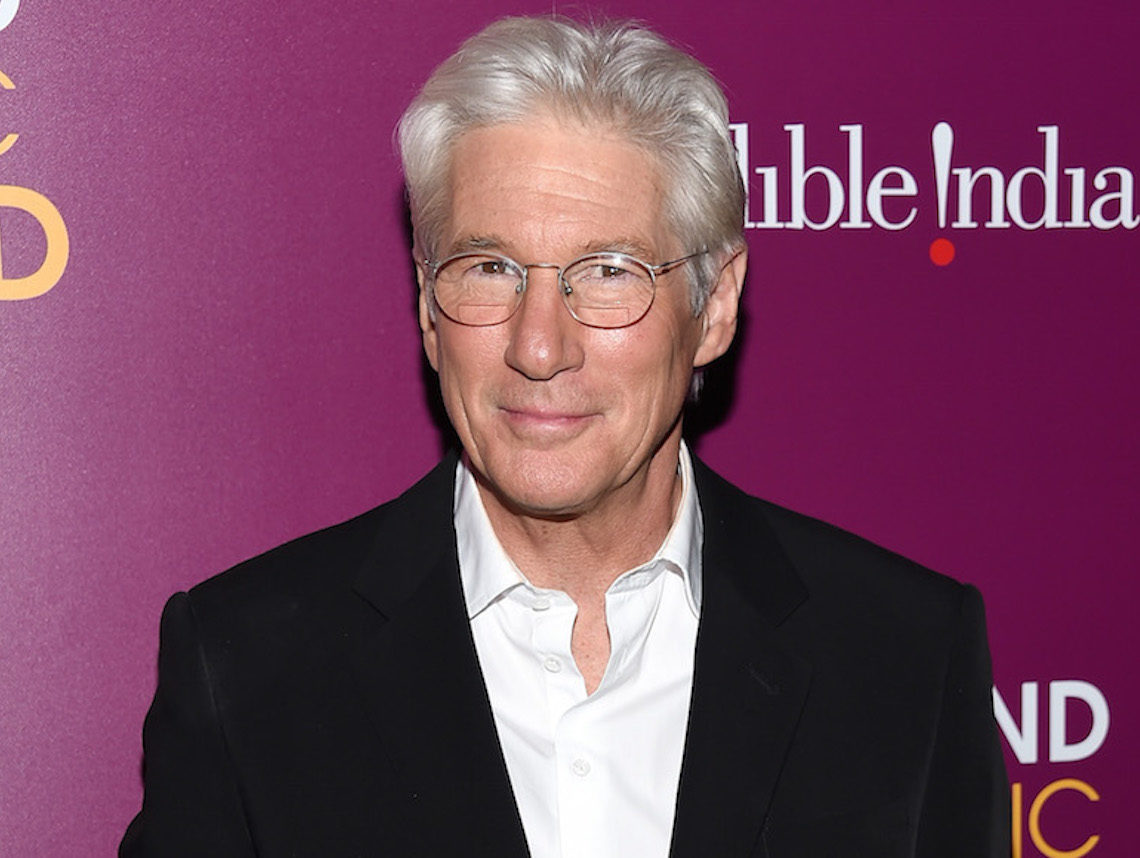
Richard Gere: ‘The occupation is destroying everyone’

Richard Gere’s recent visit to Israel left him with a less-than-rosy picture of the political situation there.

“As we all knew, the occupation is destroying everyone,” Gere said, following a visit to the Jewish state to promote his latest movie, “Norman: The Moderate Rise and Tragic Fall of a New York Fixer.”

In the film, which is directed by Israeli Joseph Cedar, Gere plays a Jewish fixer who befriends an up-and-coming Israeli politician.

The 67-year-old actor, who is a practicing Buddhist, lamented the impact of the occupation on both Palestinians and Israelis in an interview with The Associated Press published Thursday.

“The Palestinians are becoming more depressed and desperate and with that desperation, most likely, there’s going to be more violence. Because they have no other way of expressing themselves,” Gere said.

“On the Israeli side, you see what’s happening to these young soldiers, and they’re doing things that they don’t want to do, they’re seeing things that they shouldn’t see. And the violence that’s coming from the Israeli side is something that’s destroying Jewish soul – which is by nature incredibly compassionate and forgiving and nurturing,” he continued. “So I see both sides, both cultures, being destroyed in this process. And I don’t see leaders on either side who are speaking the will and the needs of their people.”

Gere also had some harsh criticism for President Donald Trump, slamming him for talk about moving the U.S. Embassy to Jerusalem from Tel Aviv nd for choosing David Friedman — a supporter of Israeli settlements who has expressed doubts about the two-state-solution — to serve as envoy to the Jewish state.

“He’s winging it in a completely incompetent way from the beginning,” Gere said of Trump’s Israel policy.

This isn’t the first time Gere has slammed Israeli policies. In a recent Haaretz interview, the actor said “[t]here’s no defense of this occupation.”

“Settlements are such an absurd provocation and, certainly in the international sense, completely illegal — and they are certainly not part of the program of someone who wants a genuine peace process,” Gere told Haaretz.

Watch excerpts from Gere’s interview with The Associated Press below:

Richard Gere: ‘The occupation is destroying everyone’ Read More »

Senate confirms Trump pick Neil Gorsuch as Supreme Court Justice

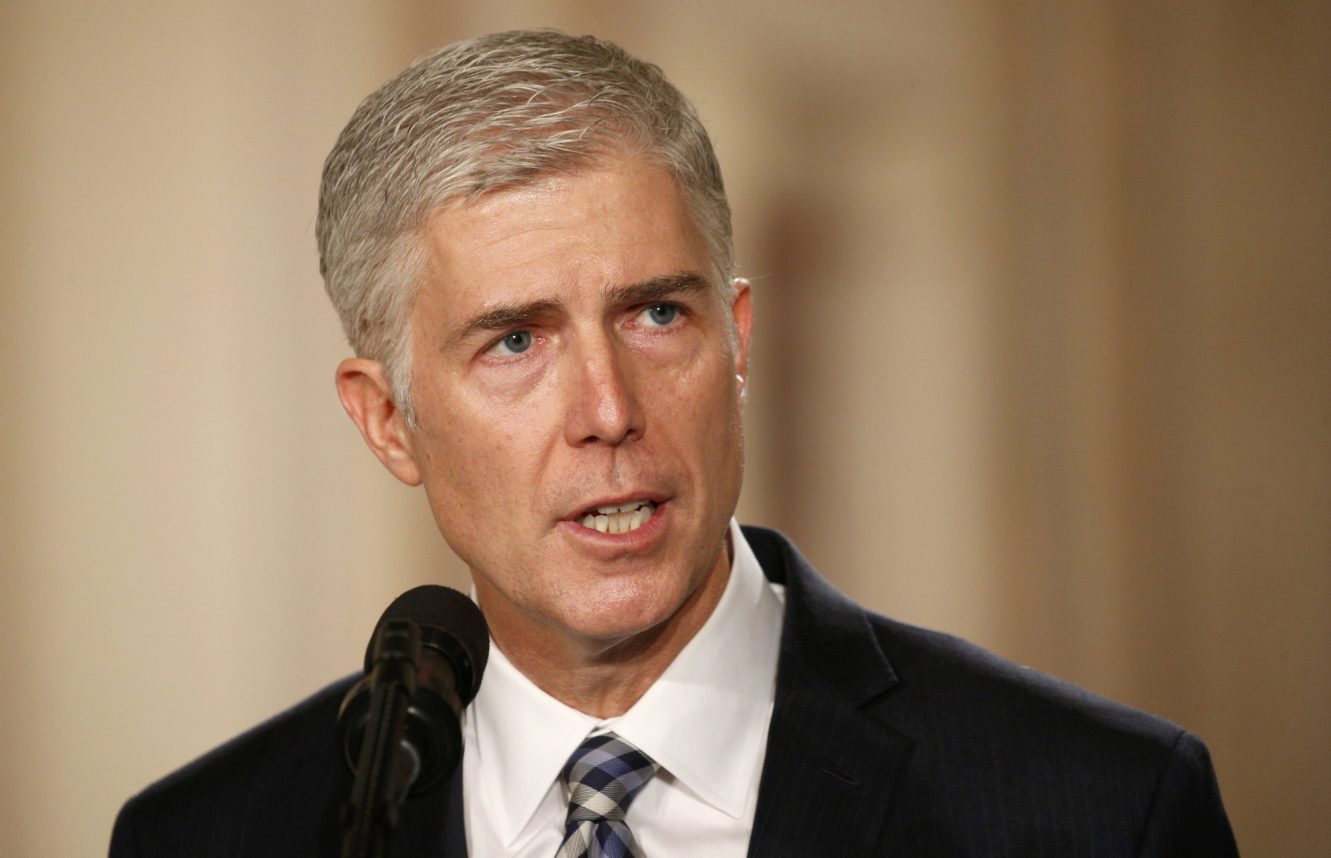
The Senate confirmed President Donald Trump’s Supreme Court Nominee Judge Neil Gorsuch.

Jewish groups reacted along ideological lines to Friday’s confirmation, which came after Republicans invoked the “nuclear option” allowing them to lower the threshold of Senate votes needed for Gorsuch’s nomination to a simple majority of 51. Gorsuch had initially failed to garner the 60 votes normally required following a Democratic filibuster on Thursday.

Trump’s nomination in January of Gorsuch, who is known to favor protections of religious belief in the public square and for business owners, elicited mixed reactions from Jewish groups.

The Reform movement said in January that it was “greatly troubled” by his record, citing concerns about his stances on civil rights, separation of church and state, religious freedom, women’s rights and LGBTQ rights. Meanwhile an Orthodox Union official described Gorsuch’s record as “encouraging” and said his rulings “show a jurisprudential approach that venerates religious conscience and pluralism in American society.”

Following Gorsuch’s confirmation, the social justice group Bend the Arc Jewish Action said the Senate had “made a serious and deeply troubling error” in invoking the nuclear option.

“This vote, which is yet another example of the Republican willingness to undermine critical democratic institutions  in support of Donald Trump’s radical agenda, will mean new threats to workers’ rights, reproductive rights, LGBTQ rights and the rights of all Americans,” the group’s CEO, Stosh Cotler said in a Friday statement.

Senate confirms Trump pick Neil Gorsuch as Supreme Court Justice Read More »

Israeli minister: Syria strike repositioned America as regional leader

Adding to Prime Minister Benjamin Netanyahu’s praise for the U.S. missile strikes on a Syrian army base, a senior Israeli Cabinet minister said it “restored America’s regional leadership in a big way.”

Yisrael Katz, the intelligence minister and a member of the Cabinet’s defense forum, spoke Friday with Army Radio about the U.S. strike the previous night in which dozens of guided missiles were launched at an army base of forces loyal to President Bashar Assad. Earlier this week, his military was accused of using chemical weapons in attacking rebel-held areas.

“There are things that only the No. 1 superpower in the world can do,” Katz said. “In contrast to the failed policy of leading from behind, which led to Iran’s entrenchment, the United States has restored America’s regional leadership in a big way in the Middle East.”

Also Friday, Netanyahu praised President Donald Trump in a statement that said Trump, “in both word and action,” had “sent a strong and clear message today that the use and spread of chemical weapons will not be tolerated. Israel fully supports President Trump’s decision.”

Israel, Netanyahu added, “hopes that this message of resolve in the face of the Assad regime’s horrific actions will resonate not only in Damascus, but in Tehran, Pyongyang and elsewhere.”

U.S. defense officials “updated Israel in real time” about the strike, Katz also said.

Earlier this week, Russian President Vladimir Putin called Netanyahu to protest the Israeli leader’s condemnation of the alleged use of chemical weapons in Syria. Putin said the allegation was unproven and that Netanyahu should have waited for an international investigation before commenting.

Avi Dichter, a former head of the Shin Bet, Israel’s security agency, told Army Radio on Friday that the disagreement did not signify a deterioration of relations with Russia.

“There are understandings in place” despite rhetoric intended for the media, he said.

Russia last year joined Iran’s military intervention in Syria in favor of Assad, who has lost control of approximately 75 percent of the internationally recognized territory of Syria since the eruption of a civil war in 2011 that has led to the deaths of hundreds of thousands of people.

Former President Barack Obama, who spearheaded an international agreement offering Iran sanctions relief in exchange for a scaling back of elements of its nuclear program, had described the use of chemical weapons in Syria as a red line following previous attacks. Obama’s critics accused him of failing to enforce that red line.

According to the international media, Israel has carried out a number of military strikes in Syria before and during the civil war, primarily to keep advanced weapons from being moved or reaching Hezbollah, the pro-Iranian militia that is based in southern Lebanon and is committed to fighting Israel.

Israeli minister: Syria strike repositioned America as regional leader Read More »