fbpx

March 27, 2017

Bipartisan bill would boost penalties for anti-Semitic bomb threats

A bipartisan bill would increase the federal penalty for bomb threats and other threats of violence against religious institutions and ensure such acts can be prosecuted as a hate crime.

The bipartisan Combating Anti-Semitism Act of 2017, introduced Monday by Reps. David Kustoff, R-Tenn., and Derek Kilmer, D-Wash., comes after over 150 bomb threat hoaxes were called into Jewish community centers starting in January. Although a Jewish teenager with dual Israeli-American citizenship was charged last week in the bulk of those threats, both sponsors focused on their impact on the dozens of JCCs and their clientele.

“The rise in threats at religious community centers is deeply disturbing and makes it clear that existing federal laws do not suitably deter these acts of hate,” Kustoff, who is Jewish, added in a statement. “Religious tolerance is the bedrock on which our great nation was founded. We must defend the individual liberties of our neighbors of all faiths and protect places of worship, and I am proud to introduce this bipartisan legislation that addresses the issue head on.”

Added Kilmer: “No American should be made a target because of his or her faith. Sadly, religious community centers across the country have increasingly had to lock down their facilities and call in bomb squads.”

The statement noted that JCCs were forced to evacuate as result of the threats, and families using Hebrew schools and early childhood education programs “have been forced to choose between their safety and their faith community.”

This bipartisan legislation would amend the Church Arson Prevention Act enacted in 1996 to ensure that individuals who make bomb threats and other “credible threats” of violence based on the religious nature of the target can be prosecuted for committing a hate crime.

The current law limits the consequences for “credible threats” to misdemeanor charges. The new law would create a penalty of up to five years in prison if such threats lead to damage or destruction of property.

Co-sponsoring the bill are Reps. Ted Poe, R-Tenn.; Ted Deutch, D-Fla.; Cathy McMorris Rodgers, R-Wash., and Joseph  Kennedy III, D-Mass.

Bipartisan bill would boost penalties for anti-Semitic bomb threats Read More »

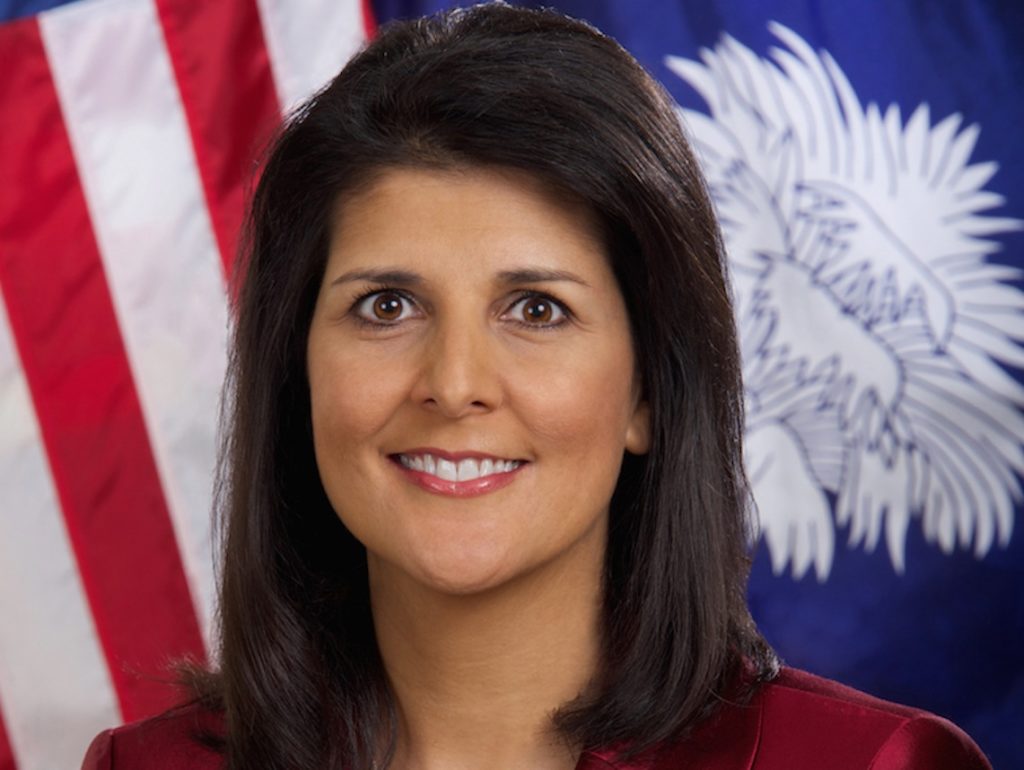
Nikki Haley: Trump will not allow through U.N. resolutions condemning Israel

WASHINGTON (JTA) – The Trump administration will not allow a repeat of last year’s United Nations Security Council Resolution condemning Israel for its settlements, the ambassador to the body, Nikki Haley, told AIPAC.

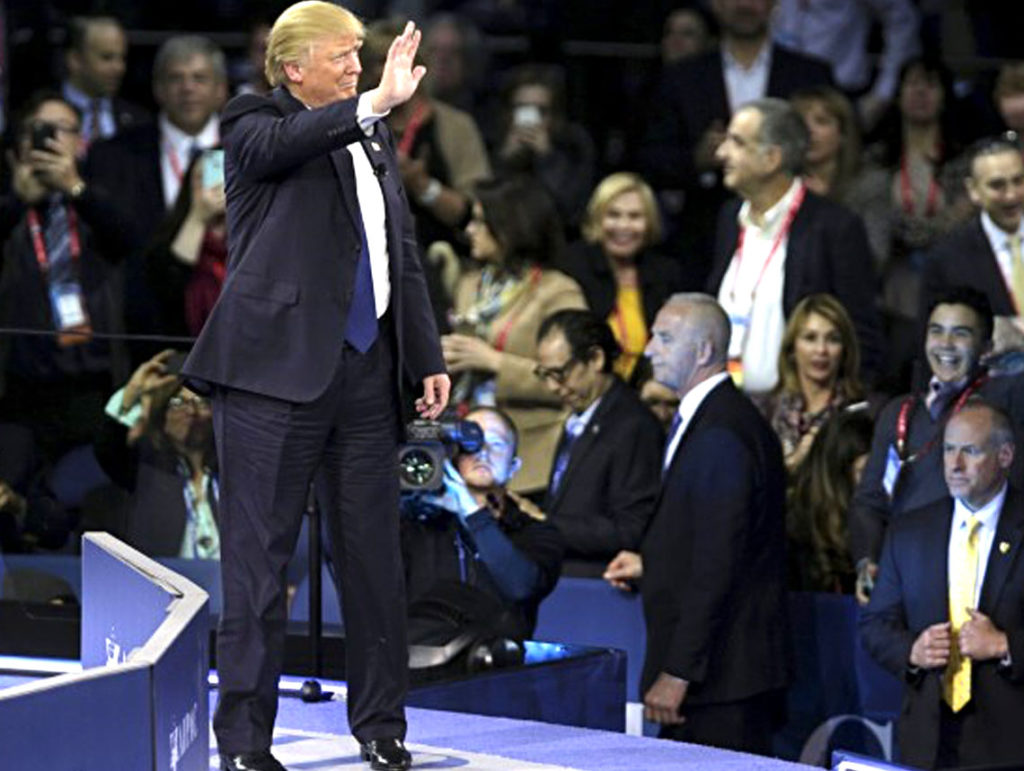
“Never again [will we] do what we saw with resolution 2334 and make anyone question our support” for Israel, Haley said Monday at the annual American Israel Public Affairs Committee conference, where she earned the warmest reception of all of this year’s speakers, with an extended standing ovation.

The Obama administration allowed through the anti-settlements resolutions in December as one of its last acts, triggering bitter recriminations from Israel’s government.

Haley described her determination to help steer the course of the United Nations and its agencies from anti-Israel bias, noting her intervention keeping Salam Fayyad, the former Palestinian prime minister, from becoming the body’s envoy to Libya, and in getting U.N. Secretary General Antonio Guterres to withdraw a U.N. affiliate’s report likening Israel to an apartheid state.

Haley was one of a number of speakers at AIPAC who drew a sharp contrast at the conference between President Donald Trump’s administration and his predecessor, President Barack Obama.

“We had just done something that showed the United States at its weakest ever,” she said of the resolution.

AIPAC has striven to promote bipartisanship as a theme this conference, seeking to heal wounds with Democrats opened over divisions with Obama over settlements and the Iran nuclear deal.

Republican speakers have not been able to resist digs at Obama.

“What I wanted to make sure of was that the United States was leading again,” said Haley. “I wear high heels, it’s not for a fashion statement, it’s because if I see something wrong I will kick it every single time.”

Paul Ryan, the U.S. House of Representatives speaker, also spoke Monday evening, saying Obama had “damaged trust” with Israel. “President Donald Trump’s commitment to Israel is sacrosanct,” he said.

Ryan described the Iran nuclear deal, which swapped sanctions relief for Iran’s rollback of its nuclear program, as an “unmitigated disaster” but – like Vice President Mike Pence, who spoke Sunday – stopped short of proposing dismantling the deal, as Republicans consistently had during last year’s campaign. Instead, he endorsed AIPAC-backed bipartisan legislation that would increase non-nuclear-related sanctions on Iran for testing nuclear missiles and backing terrorism and other disruptive activity.

The top two foreign operations officials in the House struck a bipartisan note, appearing together Monday to back AIPAC’s bid to stop President Donald Trump’s proposed cuts to foreign assistance.

Reps. Kay Granger, R-Texas, a moderate Republican who is the chairwoman of the foreign operations subcommittee of the Appropriations Committee, and Rep. Nita Lowey, the ranking Democrat on the subcommittee and on the committee, have worked together on foreign assistance for years.

Without naming Trump, they said his proposal to slash foreign assistance funding by almost a third – even while preserving present levels of assistance for Israel – would harm U.S. interests.

“Foreign assistance supports a crucial role in national security,” Granger said, “and makes up just a small portion of the national budget, less than one percent.”

Added Lowey: “The United States gets a major payoff.”

AIPAC says the broader foreign assistance package advances U.S. leadership, better enabling Israel’s ally to defend it in international forums and to open doors for Israel in countries that might otherwise be wary of ties.

Foreign aid came up again later in the evening when Rep. Steny Hoyer, D-Md., the minority whip, joined Rep. Kevin McCarthy, R-Calif., the majority leader, to deliver what has become the standard declaration at AIPAC conferences of bipartisan support for Israel by House leadership.

The leaders spoke of working closely on Israel, including their leading tours of Israel for House freshmen, sponsored by the American Israel Education Foundation, an Aipac affiliate.

Arne Christenson, who manages public policy for AIPAC, asked both leaders to comment on overall foreign aid. McCarthy, a conservative who was among the first congressional leaders to back Trump last year, avoided an answer, focusing only on the need for assistance to Israel.

Hoyer, like Lowey and Granger, argued that foreign assistance is a means of securing U.S. leadership in the world, but also argued that diminishing foreign assistance while maintaining current levels of assistance for Israel, as Trump has proposed, would be counterproductive for Israel.

“To the extent that Israel (aid) is a larger and larger focus, it will raise controversy,” he said.

Nikki Haley: Trump will not allow through U.N. resolutions condemning Israel Read More »

AIPAC and the meaning of love

How do we show our love for the things we hold dear?

How do we express this love when things get complicated?

Israel is a complicated country. Despite all of its amazing accomplishments in the face of relentless hostility, despite its courage, its resiliency, its vibrant culture, it still manages to attract serious opposition and even anger among many American Jews who claim to love the Jewish state. The key reason for this anger is well-known: Israel’s inability to make peace with the Palestinians.

Over the past 48 hours, I’ve seen two radically different approaches to loving Israel.

The first is the love I felt at the AIPAC Policy Conference, where 18,000 people came to network, listen to speeches, learn more about Israel, present their ideas, lobby Congress, and, essentially, find a safe space to show their love for the Jewish state.

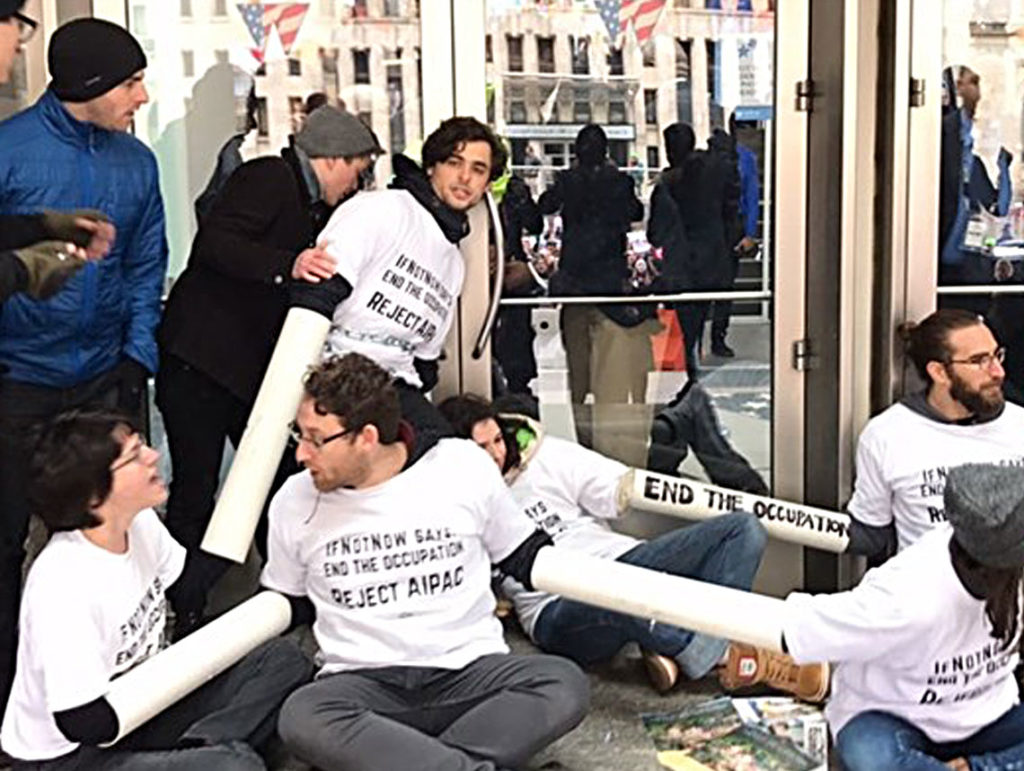
Outside the main conference hall, I saw a whole other approach –demonstrators on the street, many of them angry, protesting AIPAC’s support of Israel.

In an ideal world, I’m sure these demonstrators would like nothing better than to see AIPAC join their protest against Israel. In fact, I’m sure they’d love to see all Jewish organizations follow their approach and bash Israel for failing to make peace with the Palestinians.

For the protestors, this failure is all-consuming. Yes, the conflict is complicated. Yes, the Palestinians have refused several offers in the past to end the occupation. Yes, Israel has made its share of mistakes. Yes, right now, with the region in violent turmoil, it could be disastrous for everybody — including the Palestinians — if Israel abandoned the West Bank and terror groups would walk in and wreak more havoc.

Yes, but.

A failure is still a failure. The bottom line for these anti-AIPAC demonstrators is that Israel has failed to make peace with the Palestinians, and that is simply unacceptable.

My question for the demonstrators, then, is this: Since you claim to be pro-Israel, how else do you show your love for Israel besides protest?

I get the tough love thing. I get that you want Israel to do as you wish, because it would be better for Israel and the Palestinians. I get that you’re tired of waiting. I get all that, and I also get that protest is a great Jewish value and that it’s part of the Jewish tradition.

I’m just curious: Is this your only way of engaging with Israel?

I’m especially interested because, when I love someone who does something I think is wrong, I always make sure to remind them how much I love them, how I value the things they do right, and how I value our relationship. For their own good, I will show some “tough,” but I always show some “love.”

I’ve seen your “tough” on Israel, but where are you hiding the love?

Are you looking for a safe space?

AIPAC and the meaning of love Read More »

Blamer-in-chief

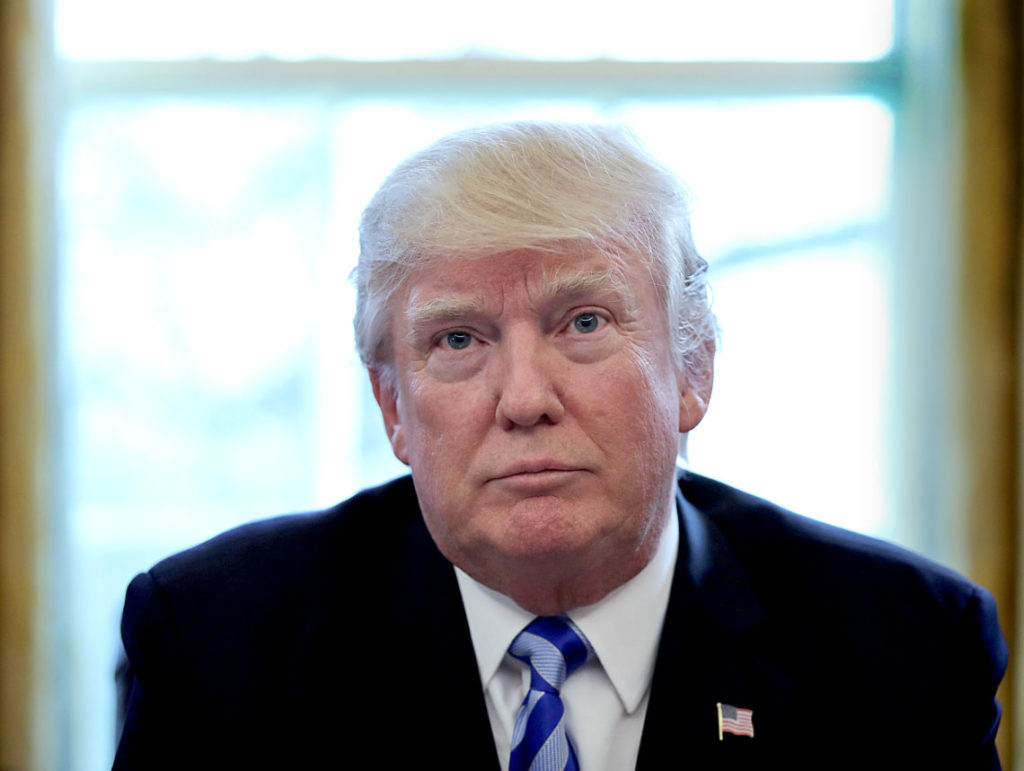
“I blame myself — it was my fault, and I take full responsibility for it,” Donald Trump said, not once, ever, in his entire life.

Here’s what else the president didn’t say about the rout and ruin of repeal and replace: “I was clueless about health care policy. Instead of reading my briefing books or even my own bill, I played golf. I bullshitted my way through every meeting and phone call. And when it was explained to me that this dumpster fire of a bill would break my promise that everybody’s going to be taken care of much better than they are now, which was a huge applause line, by the way, I threw my own voters under the bus.”  

In the wake of his Waterloo, instead of manning up, Trump blamed Democrats for not voting to strip health insurance from 24 million people, not voting to cut Medicaid by $880 billion in order to cut taxes by $883 billion and not voting to obliterate the signature legislative accomplishment of the Barack Obama years. “Look,” he complained with crocodile bafflement to The New York Times, “we got no Democratic votes. We got none, zero.” Yet not once had Trump or Speaker of the House Paul Ryan asked a single Democrat what it would take to get them to support a health care bill. “The good news,” Trump said, seeing the sunny side of the catastrophe he predicts is coming, is that the Democrats “now own Obamacare.” Don’t blame me — it’ll be their fault when it explodes, not mine.

Trump blamed Republicans, too. The morning of Friday, March 24, when the bill was still in play, he tweeted that if the Freedom Caucus stops his plan, they would be allowing Planned Parenthood to continue. That afternoon, amid the wreckage, Trump told The Washington Post’s Robert Costa that he was just an innocent bystander. “There are years of problems, great hatred and distrust” in the Republican Party, “and, you know, I came into the middle of it.”

White House aides, bravely speaking without attribution, blamed Ryan for snookering the rookie-in-chief into tackling Obamacare before tax reform. Trump himself told Costa, “I don’t blame Paul.” He repeated it: “I don’t blame Paul.” Then again: “I don’t blame Paul at all.” The laddie doth protest too much, methinks. By tweet time Saturday morning, clairvoyantly touting Jeanine Pirro’s Saturday night Fox News show, Trump had found a surrogate to stick the knife in Ryan without his fingerprints on it. “This is not on President Trump,” Pirro said, avowing that “no one expected a businessman,” “a complete outsider,” to understand “the complicated ins and outs of Washington.” No, it’s on Ryan, she said. Ryan must step down.

Blame precedes politics. In Western civilization’s genesis story, Adam blamed Eve for tempting him, and he blamed God for Eve. But America’s genesis story contains a noble, if apocryphal, counter-narrative: When George Washington’s father asked him who chopped down the cherry tree, the future father of his country didn’t blame someone else — he copped to it. That’s the legacy Harry Truman claimed when put “The buck stops here” sign on his Oval Office desk.

But Trump is the consummate blame artist, a buck-passer on a sociopathic scale. He kicked off his campaign by blaming Mexico for sending us rapists and stealing our jobs. He blamed Hillary Clinton for founding the birther movement. He blamed Obama for founding ISIS. He blamed Obama’s Labor Department for publishing a “phony” unemployment rate. He blamed 3 million illegal voters for his losing the popular vote to Clinton. He blamed the botched raid on Yemen on U.S. generals. When U.S. District Judge James Robart ruled against his Muslim travel ban, he blamed Robart for future terrorism: “If something happens, blame him and the court system.” He blamed “fake news” for treating Michael Flynn, “a wonderful man” whom he fired as his national security adviser, “very, very unfairly.” He blamed Obama for wiretapping Trump Tower. He made his spokesman blame British intelligence for carrying that out. When GCHQ called that a crock, Trump played artful dodger: “All we did was quote … a very talented lawyer on Fox. And so you shouldn’t be talking to me, you should be talking to Fox.”

Obamacare is imperfect but fixable. But Trump wants to bomb it, not improve it. He wants to light the fuse and then blame Democrats for exploding it. Trump could shore up the insurance exchanges that cover 10 million Americans by marketing them when enrollment opens again in November — but I bet he won’t. He could instruct government lawyers to appeal a lawsuit halting federal subsidies for co-payments and deductibles of low-income enrollees that House Republicans won last year — but I bet he won’t. On the other hand, he has the power to narrow the essential benefits Obamacare requires insurers to provide by, say, limiting prescription drug coverage and lowering the number of visits allowed for mental health treatment or physical therapy — and I bet he will.

Will Trump get away with it? He’s spent a lifetime banging his highchair and blaming the dog for his mess. No wonder he calls the free press fake news; no wonder he calls citizen activists paid protesters. You call someone who gets away with blaming others “unaccountable.” You know what the antonym of that is? Impeachable.

Blamer-in-chief Read More »

‘Switched at Birth’ gets an interfaith marriage dilemma just right

“Switched at Birth” has broken the mold for a show that some might have dismissed as a teen drama.

The series, which premiered on ABC Family (now Freeform) in 2011, is about how two families handle the discovery that their two teenage daughters, Bay Kennish (Vanessa Marano) and Daphne Vasquez (Katie Leclerc), were — as you might have guessed — switched at birth.

But part of what makes the series unique is that Daphne is deaf — and the show often explores deaf culture. “Switched at Birth” employs many deaf actors, and once filmed an entire episode in American Sign Language, with no sound save background noise. The show is trailblazing in other ways, such as how it handled a campus rape case in what one critic called a “realistically messy and fraught” manner.

Now, in its 100th episode, the show has turned its attention to interfaith marriage, as a Jewish mom and Christian father debate what religion to raise their child.

First, a little backstory: At the end of last season, Toby (Lucas Grabeel), the biological son of the Kennishes, and Lily (Rachel Shenton), a British teacher fluent in ASL, had a child, Carlton, born with Down Syndrome. They move to England to be closer to her family, but this season, they returned to Kansas City and had an impromptu wedding.

Since Lily is Jewish, they had a huppah and an interfaith ceremony.

Katherine (Lea Thompson) lets her son Toby know that she wants to schedule a baptism for Carlton. At first, Toby is indifferent, but because it’s important to his mother, he goes along with her plan, and thinks Lily will too, since she isn’t very religious. When Toby brings it up to Lily, she says, “I thought we agreed not to raise him as anything. We’ll just do the fun stuff like holidays.” Toby replies, “We had a blended wedding ceremony and that worked. So Carlton can be both religions, Jewish and Christian.” Lily points out that you can’t be both if you’re baptized.

This is already territory that is seldom explored on television, where interfaith marriage is frequently played for laughs (“The Big Bang Theory,” “The Nanny”) or presents dilemmas no bigger than whether to celebrate Christmas or Hannukah (“The O.C.”)  — which often ends up with an agreement to observe both without even a discussion of what it means to practice two faiths. Seldom do shows address the hard questions that interfaith couples must grapple with, especially when kids are involved.

One scene especially shows how delicately the writers handle the conversations: Hoping to convince Lily to agree to the baptism, Katherine invites her minister to explain the details of the ritual. It backfires. “I just sat there growing more and more uncomfortable. Hearing that reverend say ‘Christ’ a million times, I have never felt more Jewish in my life,” Lily tells Toby afterwards.

Even though she isn’t religious, Lily realizes Judaism is an important part of her identity and she wants that for her son as well. “Jews are defined by being other than. Not Christian. For me you’re either Jewish different from the rest of the world and proud of it or you’re not. And I’m Jewish,” she says.

Even with multiple major story lines to juggle, the writers bring nuance and depth to scenes like these, as when Lily perfectly explains the cultural bond Jews feel towards each other: “We have our own history. Our own language. Our own food. Our own sense of humor. And everyone who is Jewish is bonded by that and I want my son to be in that little circle with me.”

Toby and his parents eventually come to terms with Lily raising Carlton Jewish. but they acknowledge they have a lot of learning to do. Toby says he will be taking some classes in Judaism, and Katherine responds that she will also. Hopefully the series will show them learning more about Judaism before it comes to a close.

The show’s creator Lizzy Weiss, who is Jewish, tweeted, “I am pleased we got to discuss how marriage and parenthood can change your relationship to religion, even culturally.” For that, we applaud her.

‘Switched at Birth’ gets an interfaith marriage dilemma just right Read More »

Spicer: Trump was right not to jump to conclusions about JCC bomb threats

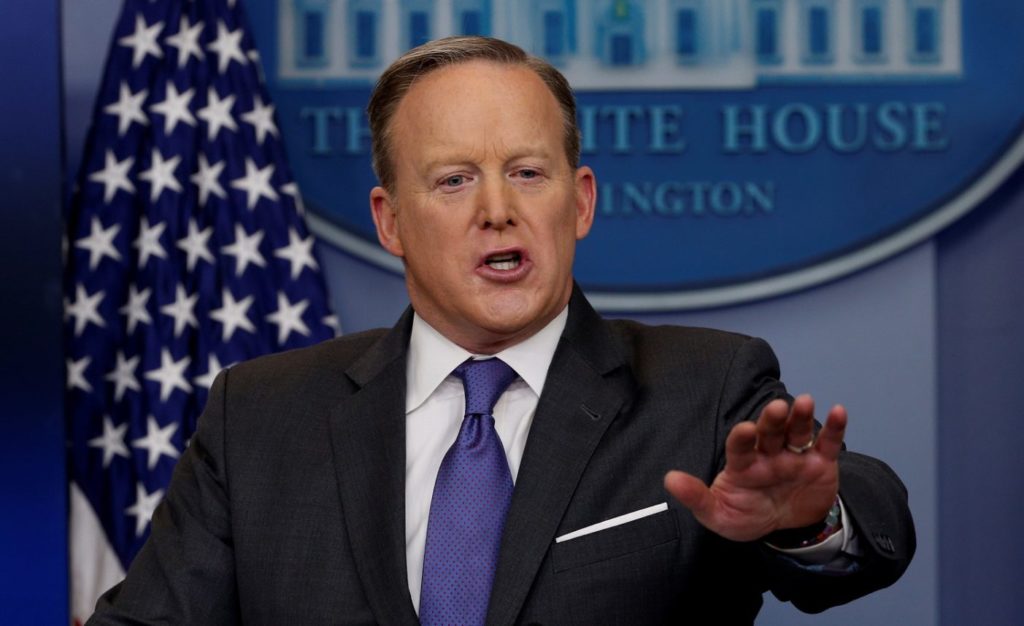
White House Press Secretary Sean Spicer said President Donald Trump had been right not to jump to conclusions about anti-Semitic threats following the arrest last week of an Israeli-American teen on suspicion of making over 100 bomb threats against U.S. Jewish sites.

“We saw these threats coming into Jewish community centers, and there was an immediate jump to criticize folks on the right, and to denounce people on the right and ask them to condemn them, and it turns out that in fact it wasn’t someone on the right,” Spicer said Monday at a media briefing. “The president from the get-go had said ‘I bet you it’s not someone [on the right]’ and he was right.”

Spicer added that “people on the left” who had blamed the right for the threats had not been held accountable.

“In that particular case, we saw that the president was right and that this rush to judgment by a lot of folks on the left was wrong, and none of them have been held to account on that,” Spicer said.

Last week, an Israeli-American teen was arrested in southern Israel on suspicion of carrying out bomb threats on Jewish institutions in the United States. The 19-year-old, Michael Kaydar, reportedly used advanced technology and voice-altering equipment to call in the threats to more than 100 JCCs, Jewish day schools and other Jewish institutions in the United States.

Many Jewish groups had blamed white supremacists, emboldened by Trump’s campaign, for the bomb threats that plagued Jewish institutions since the beginning of this year. In February, the president reportedly saidthat the threats against Jewish communal institutions may be a false flag “to make others look bad.”

Also in February, when asked about the bomb threats, Trump shouted down a Jewish reporter who asked him about what he planned to do to address the intensification of incidents.

“Some of that anger is caused by people on the other side,” he then told another reporter at the news conference. “It will be by people on the other side to anger people like you.”

Spicer: Trump was right not to jump to conclusions about JCC bomb threats Read More »

Panel at AIPAC Blasts Trump’s Proposed Foreign Aid Cuts

WASHINGTON – At an AIPAC panel on Sunday, the highlighted speakers assailed the Trump Administration for its massive reductions in the proposed foreign aid budget. Retired General Charles Walk asserted, “I have never heard of a general officer” who doesn’t support foreign assistance.

The speakers also noted that American aid to Israel’s neighbors who have maintained peace treaties with the Jewish state such as Jordan and Egypt significantly benefits Jerusalem. “The assistance we give to others for instance Jordan is in Israel’s interest as well,” noted Lindsay Plack, Director of Government Relations at the US Global Leadership Coalition (USGLC). The US assistance to Amman following the refugee spillover from the Syrian war “ensures that the Jordanian economy doesn’t crumble under the stress of all those refugees coming in,” she added.

Speaking in Tokyo, Secretary of State Rex Tillerson told reporters on March 16, “The level of spending that the State Department has been undertaking in the past.. is simply not sustainable.” The top US diplomat added, “We are going to construct a way forward that allows us to be much more effective, much more efficient, and be able to do a lot with fewer dollars.”

“I guarantee it, if we were to cut half of this foreign aid budget it would probably translate into some huge number of US engagements around the world,” Walk noted at one of the few hundred breakout sessions AIPAC has organized at its annual Policy Conference.

Last month, over 120 retired generals signed a letter pushing back against the White House’s plan to slash aid to USAID and the State Department as “critical to preventing conflict and reducing the need to put our men and women in uniform in harm’s way.”

“The threats that we face, frankly it became most clear after 9/11, they can’t be solved with the military alone,” Plack said. “When America leads, it’s good for Israel. When we pull back, that is not good for Israel.”  

AIPAC has stressed the importance of maintaining the State Department’s budget by showcasing Defense Secretary General Mattis’ remarks on video screens throughout the convention center: “If you don’t fund the State Department fully, then I need to buy more ammunition ultimately.”

As assistance to the UN viewed controversially in some circles, Plask pointed to the important work of UNHCR, the international organization’s refugee agency. “They are on the front lines of the refugee crisis and Syrian civil war, so our small investment allows them to be on the front lines instead of us.”

With dramatic reductions to foreign aid across the world while maintaining $3.8 billion annually to Israel, some pro-Israel advocates worry about the perception of foreign aid to the Jewish state among the American public. When USGLC was established 20 years ago, AIPAC was a founding member.

“The foreign aid bill has long been one of AIPAC’s highest priorities and it helps ensure that the country has the resources to lead in the world,” noted AIPAC official Dan Granot at the end of the panel urging the attendees to preserve a robust global foreign assistance and implicitly lobby against the Trump Administration’s cuts. “Tuesday morning, when you all go to the Hill, remember you are not only advocating for Israel’s aid but also to ensure US leadership around the world.”

Panel at AIPAC Blasts Trump’s Proposed Foreign Aid Cuts Read More »

Senate committee to question Jared Kushner over Russia ties

The Senate Intelligence Committee will question Jared Kushner, President Donald Trump’s son-in-law and an adviser, over his ties to Russian officials.

The committee is looking into meetings that Kushner had with Russia’s ambassador to the U.S., Sergey Kislyak, in December during the transition at Trump Tower in New York. The meetings included Michael Flynn, who stepped down as Trump’s national security adviser over his contacts with Russian officials, including Kislyak, The New York Times reported, citing unnamed government officials. Kushner reportedly also arranged a second meeting between Flynn and Kislyak.

Kushner also will face questioning about an unreported meeting he had with the head of a Russian state-owned bank that was under sanctions enacted by the Obama administration over Russia’s annexation of Crimea.

White House spokesman Hope Hicks confirmed the meetings to The New York Times.

Hicks also told the newspaper that Kushner was willing to talk to the committee about the meetings, saying, “He isn’t trying to hide anything.”

The arranging of the meeting with the Russian banker came at the same time that American intelligence determined that Russian spies ordered by President Vladimir Putin had attempted to sway the U.S. election in favor of Trump, the newspaper reported.

Kushner is the person closest to the president to be questioned in the investigations and the only one currently serving in the White House, according to the Times.

Committee chair Sen. Richard Burr, R-N.C., and Sen. Mark Warner, D-Va., the committee’s vice chairman, said in a statement that “Mr. Kushner has volunteered to be interviewed as part of the committee’s investigation into the Russian activities surrounding the 2016 election.”

Meanwhile, the White House announced Sunday night, after a report appeared in the Washington Post, that Kushner would lead a new White House office that would streamline the government, using ideas borrowed from the business world.

The White House Office of Innovation is being given the authority to overhaul government bureaucracy. The initiative was to be formally announced on Monday.

“All Americans, regardless of their political views, can recognize that government stagnation has hindered our ability to properly function, often creating widespread congestion and leading to cost overruns and delays,” read a statement issued by the White House on Sunday in Trump’s name. “I promised the American people I would produce results, and apply my  ‘ahead of schedule, under budget’ mentality to the government.”

Kushner, who is Jewish, told the Washington Post on Sunday: “The government should be run like a great American company. Our hope is that we can achieve successes and efficiencies for our customers, who are the citizens.”

Senate committee to question Jared Kushner over Russia ties Read More »

LIFE Movie Review

LIFE is the type of movie that gives you faith in Hollywood.  The term “popcorn flick” is generally derogatory and expecting good acting from one is usually a pipe dream.  LIFE, however, takes that stereotype and turns it on its head.

Daniel Espinosa directs an excellent cast led by Ryan Reynolds, Jake Gyllenhaal and Rebecca Ferguson.  Together, they prove a suspenseful alien movie may be well made and fun.

Often, these movies create character backstories with the express purpose of generating sympathy before killing off a character.  What LIFE does well is keep this device from becoming overly manipulative.  The story is clearly not in the character’s backgrounds, but the action on screen.  By keeping the backstory simple, it doesn’t detract from the real reason for buying a ticket: two hours of entertainment.

Casting Jake Gyllenhaal was a coups for LIFE, giving it indie film credibility to help elevate it from becoming “just” another alien movie.  Gyllenhaal garnered an Oscar nomination for his role in BROKEBACK MOUNTAIN and is known for selecting roles in interesting projects.

Ryan Reynolds, too, earned new respect with last year’s success of DEADPOOL, a character he worked to bring to the big screen for years.

Hiroyuki Sanada has won two awards from the Japanese Academy, the equivalent of the American Oscars.

In short, this cast served as more than place holders that absolutely anyone could have filled, as is frequently the case in this genre.  LIFE managed to transition from being a [derogatory] “popcorn flick” to a genuinely good suspense movie.  Perhaps, in fact, to the surprise of all involved.

For more about LIFE, take a look below:

—>Looking for the direct link to the video?  Click here.

LIFE Movie Review Read More »

Attack against soldier in the West Bank foiled

JERUSALEM (JTA) — An attack against an Israeli soldier near a West Bank checkpoint was prevented.

The alleged assailant was wielding a screwdriver as he approached a soldier at the Shomron Regional Brigade junction, also known as the Huwwara checkpoint, near Nablus in the northern West Bank.

Other solders subdued the alleged assailant and detained him, according to the IDF.

The junction is a popular hitchhiking post.

Attack against soldier in the West Bank foiled Read More »