fbpx

March 2, 2017

Why I’m protesting the protests of March 8

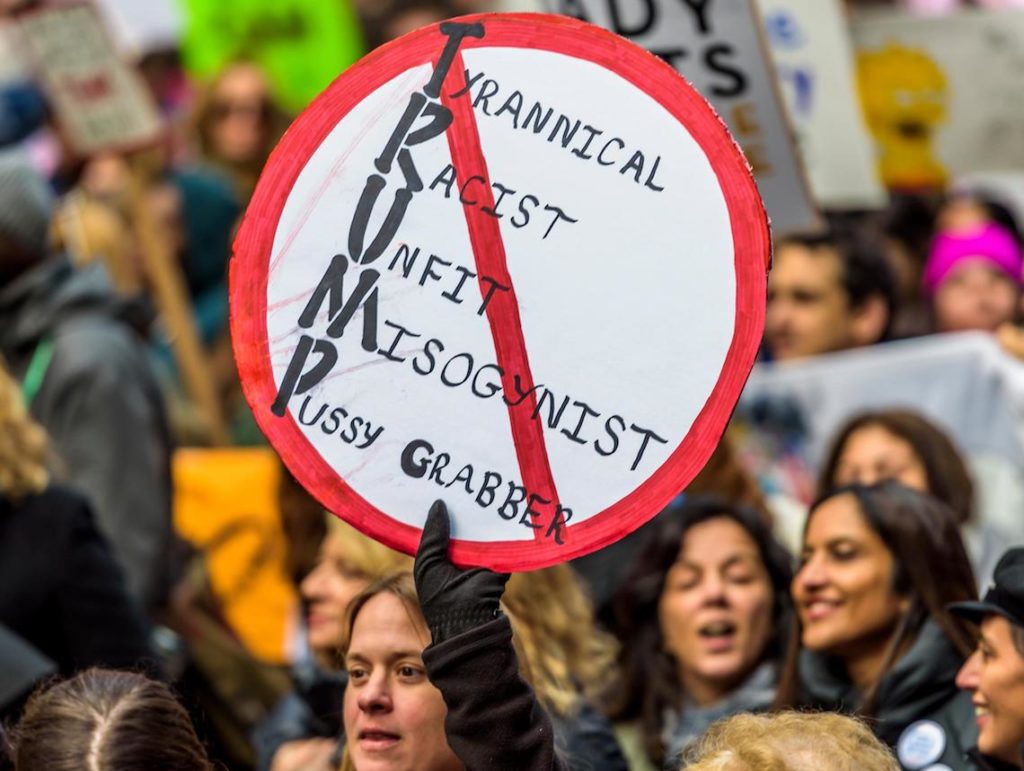
Apparently, the election of Donald Trump has awakened a major feminist protest movement in America, first with the massive marches of Jan. 21 and now with “a day of strike” planned for March 8.

In a type of manifesto published on The Guardian titled, “Women of America: we’re going on strike. Join us so Trump will see our power,” eight protest leaders assert that “it is not enough to oppose Trump and his aggressively misogynistic, homophobic, transphobic and racist policies.” Women’s conditions in America, they write, “have steadily deteriorated over the last 30 years,” because “lean in feminism and other variants of corporate feminism have failed the overwhelming majority of us.”

What I found especially striking in the manifesto is the sense of global solidarity: “The kind of feminism we seek is already emerging internationally, in struggles around the globe… Together they herald a new international feminist movement with an expanded agenda.”

So, why do I feel like protesting this day of protest? Because of its hypocrisy.

While the March 8 organizers claim to care for women around the world, there is no mention in the manifesto of arguably the most severe crisis facing women today: The continuing oppression of Muslim women throughout Muslim-majority countries.

It’s not as if the organizers are not aware of this oppression. Groups like Amnesty International (AI) have been covering it for years. In a previous column calling attention to this suffering, I wrote about Kajal Khdir in Iraq, who, according to AI, was “tortured and mutilated; family members cut off part of her nose and told her she would be killed after the birth of her child.” Her crime? She was accused of adultery by her husband’s family.

I also brought up Hannah Koroma from Sierra Leone, who was “genitally mutilated at the age of ten as a rite of passage.” According to AI, “the ritual was performed with a blunt penknife and Hanna was denied any anesthetic or antibiotics during and after the procedure.”

These are hardly isolated incidents—they are rooted in cultures that routinely tolerate the suppression of women. According to a 2013 Pew report on Muslim-majority countries, “In 20 of the 23 countries where the question was asked, at least half of Muslims believe a wife must obey her spouse.”

In the same study, the majority of Muslims in countries like Pakistan, Indonesia, Malaysia, Egypt, Jordan and Iraq believe that a woman should not have the right to divorce her husband.

None of this “aggressive misogyny” made it into the manifesto for March 8. Why? I’ve heard several explanations. One, going after Muslim countries is a form of asserting “white privilege” or “white supremacy,” a major no-no in leftist circles. Two, any criticism of Islamic societies can open you up to charges of racism or Islamophobia. And three, since much of the criticism for Islamic oppression comes from people on the right, leftist organizers are loath to do anything that might help them.

These are the women I worry about the most—the ones who don’t have the freedom to march or protest.

To be honest, I’m not very moved by explanations. What really moves me is suffering—real, horrible suffering. It so happens that a lot of this suffering is happening to women in male-dominated, Muslim-majority countries. That’s not my choice, it’s a fact.

Of course, if you’re planning a popular protest movement, it’s hardly risky or courageous to target someone like President Trump in America. It would take a lot more courage to march at the United Nations and protest the theocratic dictators who sanction the routine abuse of women.

My liberal friends love to say that “it’s not either/or.” Well, why do I never see them protest at the United Nations in support of oppressed women in Muslim-majority countries?

And why are they not protesting the fact that one of the March 8 organizers, Rasmea Yousef Odeh, is a convicted terrorist?

Odeh was convicted in Israel in 1970 for her part in two terrorist bombings, one of which killed two students while they were shopping for groceries. After spending 10 years in an Israeli prison for her crime, she became a U.S. citizen in 2004 by lying about her past. Her case will go on trial this Spring.

Maybe she’s hoping that her work organizing the protests will gain her leniency with the judge.

She ought to know that millions of suffering women around the world can never count on such leniency. These are the women I worry about the most—the ones who don’t have the freedom to march or protest.

Who’s writing manifestos for these women?


David Suissa is president of TRIBE Media Corp./Jewish Journal and can be reached at davids@jewishjournal.com.

Why I’m protesting the protests of March 8 Read More »
David Rubinger, Israeli photographer who took iconic photo of soldiers at Western Wall, dies

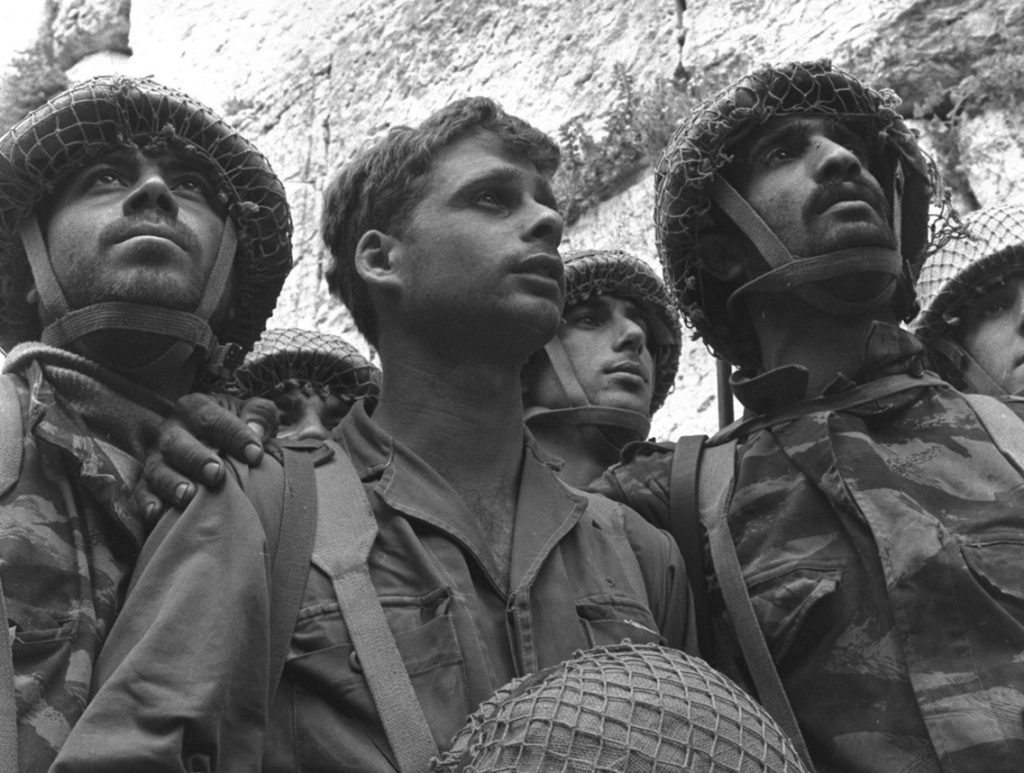
David Rubinger, the Israeli photographer who took the iconic photo of Israeli paratroopers standing in front of the Western Wall after its capture in the Six-Day War, has died.

Rubinger, whose photos chronicled much of the history of the Jewish state, died Thursday. He was 92.

Rubinger was awarded the Israel Prize for his body of work in 1997, the first photographer to receive the award. He reportedly took 500,000 photos of Israeli people and events during his career.

An immigrant to Israel from Austria, he arrived in Israel in 1939 at 15 and fought in 1944 with the Jewish Brigade, a military division of the British army led by British-Jewish officers in Europe.

He began his career as a photojournalist in 1955 with the daily HaOlam Hazeh and then for Yediot Acharonot. He was also Time-Life’s main photographer in Israel for five decades, beginning in 1954. He also served as the Knesset’s official photographer for 30 years.

The photo at the Western Wall was taken on June 7, 1967, after paratroopers pushed into the Old City of Jerusalem and reached the narrow space between the Western Wall and the houses that faced it at the time. Rubinger maintained that the photo wasn’t successful from an artistic perspective but that its wide distribution has made it famous.

His own favorite work, he told interviewer Yossi Klein Halevi in 2007, depicted a blind boy who arrived as a new immigrant in Israel in the 1950s stroking a relief map of Israel.

“I call it, ‘Seeing the Homeland,’” Rubinger told Halevi.

Israeli President Reuven Rivlin eulogized Rubinger in a statement.

“There are those who write the pages of history, and there are those who illustrate them through their camera’s lens,” Rivlin said. “Through his photography, David eternalized history as it will be forever etched in our memories. His work will always be felt as it is seen in the eyes of the paratroopers as they looked upon the Western Wall, and in the expressions on the faces of the leaders of Israel, which he captured during the highest of highs and lowest of lows.”

David Rubinger, Israeli photographer who took iconic photo of soldiers at Western Wall, dies Read More »

A letter to JFNA regarding Richard Sandler’s recent comments on David Friedman

Three and a half months ago, following the announced appointment of Steven Bannon as chief strategist and senior counselor to the president, thousands of Jews began contacting the Jewish Federations of North America (JFNA), and their local affiliates asking them to condemn the appointment.

In the end, local Jewish Federations and Jewish Community Relations Councils representing a wide spectrum of sizes and geographic diversity, came out forcefully to say that individuals who empower white nationalists should not have a place in the White House.

JFNA offered no formal public response.

In private, JFNA Board Chair Richard Sandler, and other senior level JFNA professionals claimed that their hands were tied due to JFNA’s strict policy to be non-partisan and to not make statements on political appointments. This policy was succinctly articulated by Mark Gurvis, JFNA’s Executive Vice President, in an internal memo to local federation professionals seeking guidance on how to respond to the popular outcry. He reminded them, “as a national organization it has not been our practice to make statements about specific appointments, and recognizing that there are thousands more coming we are not going to start now.” He continued, “JFNA has a process, in which all Federations are invited to participate, through which we develop our public policy priorities. We will be monitoring the new Administration and Congress, as we have in the past, through the lens of our established priorities, and actively advocating on behalf of our agenda.”

Though this policy offers no solace to those of us who believe that Mr. Bannon countenances white nationalism, it nonetheless is intellectually coherent, and potentially “good for the Jews.” That is, if JFNA leadership is deemed to be too political or speaks out too loudly, perhaps they could be shutout of the decision making process for the next four years, or risk the federal grants and contracts that help to underwrite many of our community’s key priorities.

However, despite the apparent existence of this long standing strict policy to maintain silence on political appointees, this past Sunday, at the Jewish Agency Board of Governors winter meeting, JFNA Board Chair Richard Sandler publicly voiced his support for David Friedman to be the U.S. Envoy to Israel. For those of us with short memories, this is the same David Friedman who called the ADL “a bunch of morons,” called the Jewish senate minority leader a “sycophantic minion” for the president’s “blatant anti-Semitism,“ and called progressive zionist activists “worse than capos.”

In a follow up email sent to local federation executives and the JFNA board the next morning (following news reports of his statement), Sandler explained that the remarks, “reflected my personal view, based upon my analysis of the situation and my personal contact with Mr. Friedman. They were not meant to offend anyone, but rather encourage discussion.” To my knowledge, neither Mr. Sandler, nor any JFNA staff shared this statement more widely than the few professionals and laity privy to the initial email, nor did they attempt to correct any of the news articles that trumpeted this endorsement in their name.

Frankly, this clarification letter raises more questions than it answers. Why has the JFNA and Mr. Sandler not actively corrected these apparently erroneous news articles insinuating JFNA’s support for Mr. Friedman? Does Mr. Sandler really believe someone who calls other Jews “worse than kapos” is a “good representative” for our community? Does the JFNA professional staff or board believe that it is ok for its representatives to express a personal view, based upon one’s analysis of a situation in order to encourage discussion on any topic? Put another way, if Mr. Sandler were to have voiced support for BDS initiatives to end Israel’s military presence in the areas of Judea & Samaria that are currently not annexed by Israel, would that have also been ok?

Already there’s been a backlash. I have heard from colleagues involved in Federation Young Leadership initiatives that they are completely demoralized and are considering putting their time, money and energy elsewhere. A former past president of the Jewish Federation of Greater Seattle has announced that her gift to them this year is dependent on their refusal to pay dues to JFNA, and she will be advocating for others to do the same. Local federation and community relations council professionals are having to deal with the fallout from angry constituents and other ethnic and faith community partners.

I do not question Richard Sandler’s commitment to our community. As a volunteer and contributor to my local federation I am both aware and so thoroughly appreciative of the time and financial contribution that he has committed to the well being of the Jewish people. But I do question his judgement, and the judgement of the rest of the JFNA leadership who have remained publicly silent in this apparent breach of protocol and policy.

Perhaps though, all this is fitting with Purim upon us in just a few short days. As Mordecai reminds Esther in the Megillah – “if you do not stand up in this crisis, relief and deliverance will come to the Jews from another quarter.” I hope that like Esther, Richard Sandler and the rest of the JFNA leadership will guide us through these troubling times, but if not we too will find relief elsewhere.

A letter to JFNA regarding Richard Sandler’s recent comments on David Friedman Read More »

From denier to devout: amazing transformation?

Is it possible for a onetime rabid anti-Semite to be sincere in becoming an observant Jew? That’s one of the questions posed by “Keep Quiet,” a new documentary about a Hungarian Holocaust denier who undergoes just such a metamorphosis.

“The anti-Semitism in Hungary is ingrained in this country’s psyche,” said the film’s producer, Alex Holder. “The genesis of anti-Jewish legislation is [in] Hungary. The Nazis themselves remarked on the Hungarian people being overjoyed to help in the murder of Hungarian Jewry. I do not suggest or imply that all Hungarians are anti-Semitic, but there is no doubt that stereotypical concepts of Jews are still discussed literally today.”

Holder’s documentary, which opens March 3 in the Los Angeles area, traces the emotional, political and spiritual journey of Csanád Szegedi, who, while a university student in 2003, helped establish Hungary’s extremist, right-wing Jobbik party, which espouses such mantras as “law and order,” “taxes for the multinationals,” and “Hungary for the Hungarians.” Szegedi eventually became the party’s vice president, and in 2007, formed the Hungarian Guard, a military-type group, now banned, that was modeled after the World War II pro-Nazi party known as the Arrow Cross. In 2009, he was elected to the European Parliament as a Jobbik representative.

Then, in 2012, at the height of his power and popularity, Szegedi was forced to confront an unbelievable reality: A rival right-wing activist, Zoltan Ambrus, charged that Szegedi — who had written an autobiography claiming his father could trace his pure Hungarian ancestry back 1,000 years — was Jewish on his mother’s side of the family.

In the film, Szegedi at first dismisses the accusation, only to have his maternal grandmother admit that her family is Jewish and that she had been deported to Auschwitz. She then rolls up her sleeve and, for the first time, shows her grandson the tattoo from the camp. She says that, out of fear, she had decided to “keep quiet” about her Jewish heritage.

Holder, who is Jewish, said the grandmother’s decision was not unusual.

“The incontrovertible belief in a future Holocaust by those who survived the concentration camps caused them to erase any aspect of their religion,” Holder said. “Indeed, many converted to other religions, baptized their children and never spoke of their experiences. I by no means disagree with this approach. How could I? However, it is this mindset which affected me viscerally. No person or people should ever fear persecution. If I could choose one lesson for a person to take away from this film, it will be to stand up and be heard.”

Once his lineage becomes public, Szegedi is expelled from Jobbik and, for a time, is utterly lost. The film follows him as he begins to embrace his newly discovered identity with the same fervor that once drove him to promote Jobbik’s ideology. He contacts the leader of the Orthodox community in Budapest, Rabbi Boruch Oberlander, who becomes his mentor as he steeps himself in Judaism. Szegedi starts taking religious instruction, attending services, observing the Sabbath, studying Hebrew and the Talmud, even getting circumcised. He also makes a pilgrimage to Auschwitz in the company of a survivor, who recounts the horrors of her internment.

Alhough he has seemingly thrown himself wholeheartedly into the faith, many Jews who attend his speaking engagements reject him with overt hostility because of his past and challenge his sincerity.

“I don’t think that Csanád himself knows how sincere he is,” Holder said. “Csanád is a young man, confused and wanting. He desperately craves attention and will go to extremes to achieve it. To him, a circumcision at age 33 is less of an issue than actually saying ‘sorry.’ ”

The film’s co-director, Sam Blair, said viewers need to allow for some ambivalence in their reading of Szegedi.

“One of the things I hope the film illustrates is that we are all complex, our identities are complex, our political and social histories are complex,” Blair said. “Csanád was guilty of boiling his identity down to that of a ‘pure’ Hungarian, and is perhaps then also guilty of going completely the other way and trying to understand himself purely as an Orthodox Jew. I think that Csanád’s biggest step forward is that he begins to allow shades of gray into his understanding of himself, and so we should do the same for him simply because I think it’s too complicated a situation to be fixed in our reading of him.

“I also think the way the film illustrates the circular nature of history touches on something much wider and something incredibly troubling,” Blair continued. “It’s not simply that we repeat the mistakes of the past, but also that, if not dealt with, repressed pain is passed on and can find its way out in very destructive ways. It is not a coincidence that within three generations, a grandson began to re-enact the horrors that tormented his beloved grandmother’s life 60 years earlier.”

Blair added that the film must be open-ended and raise more questions than it answers.

“We wanted the film to provoke discussion in an audience, to be a film that was debated and chewed over once it had ended,” he said. “The pleasure of attending screenings and Q-and-As has been that it has done exactly that. Reactions to the film have come in many forms, and we have seen every emotion. People get angry, people cry, people think it’s absurd — and all those responses are totally valid.

“I just hope the conversations around the themes in the film can continue, as we seem to need them now as much as we ever have.”

“Keep Quiet” will be shown March 3-9 at the Laemmle Music Hall 3 in Beverly Hills and the Laemmle Town Center 5 in Encino.

From denier to devout: amazing transformation? Read More »

Israel denies tourist visa to Human Rights Watch staffer

Israel has denied a tourist visa to an American employee of Human Rights Watch days after denying his application for a work visa, citing the NGO’s alleged anti-Israel bias.

Omar Shakir, the new Israel and Palestine director for Human Rights Watch, a leading nongovernmental organization, reported in an emailed statement Thursday and on Facebook that the Interior Ministry had denied his request to enter Israel on March 5 for a 10-day visit.

A letter from the Border Control Department of the Population and Immigration Authority noted the Foreign Ministry’s response when Shakir requested a work visa in denying the application: “For some time now, this organization’s public actions and reports have focused on politics in service of Palestinian propaganda while falsely raising the banner of ‘human rights,’ and therefore recommended denying the application.”

Iain Levine, the program director for Human Rights Watch, said it was “deeply troubling that Israeli officials, despite promises to the contrary, have denied Human Rights Watch’s country director a visa to enter Israel.”

“Blocking access for human rights workers impedes our ability to document abuses by all sides and to engage the Israeli and Palestinian authorities and partners to improve the human rights situation for all,” he said.

After Shakir had been denied a work visa on Feb. 21, an Israeli official said he could apply for a tourist visa, implying that it would be granted. Shakir has 45 days to file an appeal.

Israel denies tourist visa to Human Rights Watch staffer Read More »

2 U of Missouri students arrested in harassment of Jewish student

Two University of Missouri students were arrested for alleged anti-Semitic intimidation of a Jewish student.

Campus police arrested Erich Eastman 18, and Noah Rogers, 19, both of Columbia, Missouri, earlier this week. They were released after each posting $1,500 bail.

According to the alleged victim, Eastman and Rogers have been harassing him for six months, including with anti-Semitic notes and comments.

The university’s interim chancellor, Hank Foley, in an email sent Tuesday to students and other members of the campus community said the two students’ “behavior is abhorrent and antithetical to our core value of respect. It simply will not be tolerated,” the student newspaper the Columbia Missourian reported.

The Boone County Prosecutor’s Office has opened a criminal case against Eastman and Rogers, who are also facing possible expulsion from the university.

2 U of Missouri students arrested in harassment of Jewish student Read More »

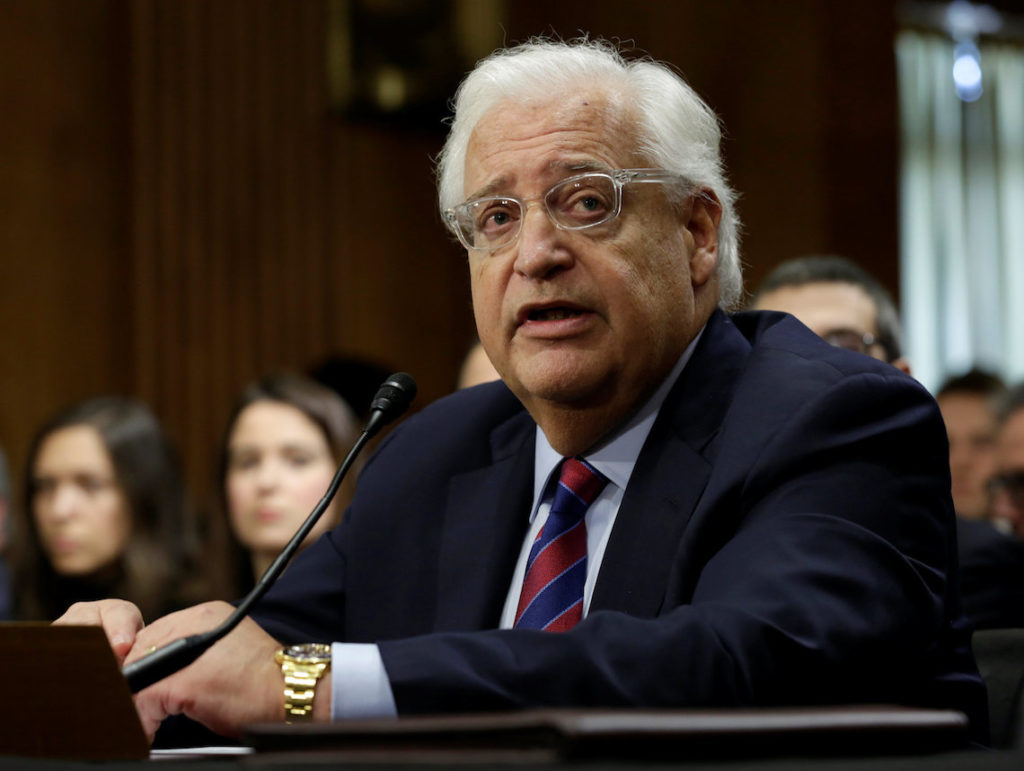
Bernie Sanders asks envoy nominee David Friedman whether some funds for Israel should go to Gaza

Sen. Bernie Sanders asked David Friedman, President Donald Trump’s nominee to be ambassador to Israel, whether he would back using funds earmarked for assistance to Israel to help rebuild the Gaza Strip.

Sanders in a letter he handed Friedman after they met Wednesday also asked whether he thinks the tax-exempt status of groups that fundraise for settlers should be reviewed. JTA obtained a copy of the letter on Thursday.

The questions in the letter are significant as they suggest the path forward for Israel policy among progressive Democrats.

Sanders has emerged as a de facto leader of progressives following his insurgent but unsuccessful campaign last year for the Democratic presidential nomination. In perhaps the best-received speech over the weekend at the annual conference of J Street, the liberal Middle East policy group, Sanders pushed the theme that pro-Israel Jews need not hesitate to criticize Israeli government policies.

His letter outlines three questions for Friedman: whether he supports a two-state outcome to the Israeli-Palestinian conflict; the appropriateness of an ambassador having deep involvement in the settler movement as a fundraiser and advocate, as Friedman does; and regarding Israeli assistance.

Two states has long been Democratic policy and for 15 years was official U.S. policy until Trump retreated into agnosticism on the issue when he met last month with Israeli Prime Minister Benjamin Netanyahu.

The second two points, however, venture into areas that Democrats have yet to embrace.

“As ambassador, would you take steps to end the flow of donations to illegal settlements, perhaps by supporting the re-examination [of] their tax-exempt status?” Sanders asked.

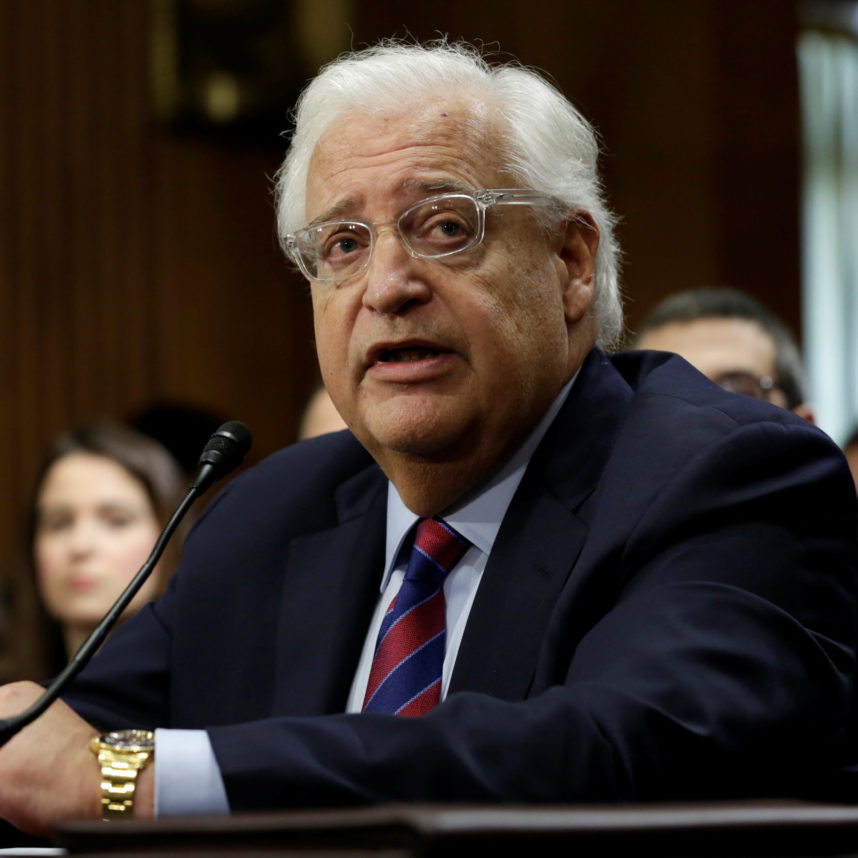
David Friedman. Photo by Yuri Gripas/Reuters

J Street has advocated for withdrawing tax-exempt status for groups that fundraise for settlements. Other pro-Israel groups – including some of J Street’s allies on the left – oppose the position, in part because it could trigger far-reaching consequences for all nonprofits on the left and right while turning tax-exempt status into a political battlefield.

Sanders also asked Friedman whether “a portion” of the $38 billion in defense aid to Israel over the next 10 years under an agreement signed last year by former President Barack Obama “should be directed toward measures that would facilitate a much greater flow of humanitarian and reconstruction materials” to Gaza.

Aid to Israel in Congress and the pro-Israel community has been sacrosanct, and no president has seriously proposed cutting it since Gerald Ford in the mid-1970s. Subsequent presidents used short delays in delivery of assistance and the amount that the United States guarantees Israel’s loans as means of leveraging pressure on Israel, but assistance has been untouched.

Sanders cast the proposal in part as one that would help secure Gaza by stabilizing the strip. But it comes at a time that Republicans in Congress are proposing cutting assistance to the Palestinians as a means of pressuring them into direct talks with Israel and pushing the Palestinian Authority to end subsidies for the families of jailed or killed terrorists.

Friedman, a longtime lawyer to Trump, did not reply to a request for comment. His ambassadorship is controversial in Congress and in the Jewish community because of his past involvement with settlers, and because of the rhetoric he has used to describe Jews who disagree with him.

Bernie Sanders asks envoy nominee David Friedman whether some funds for Israel should go to Gaza Read More »

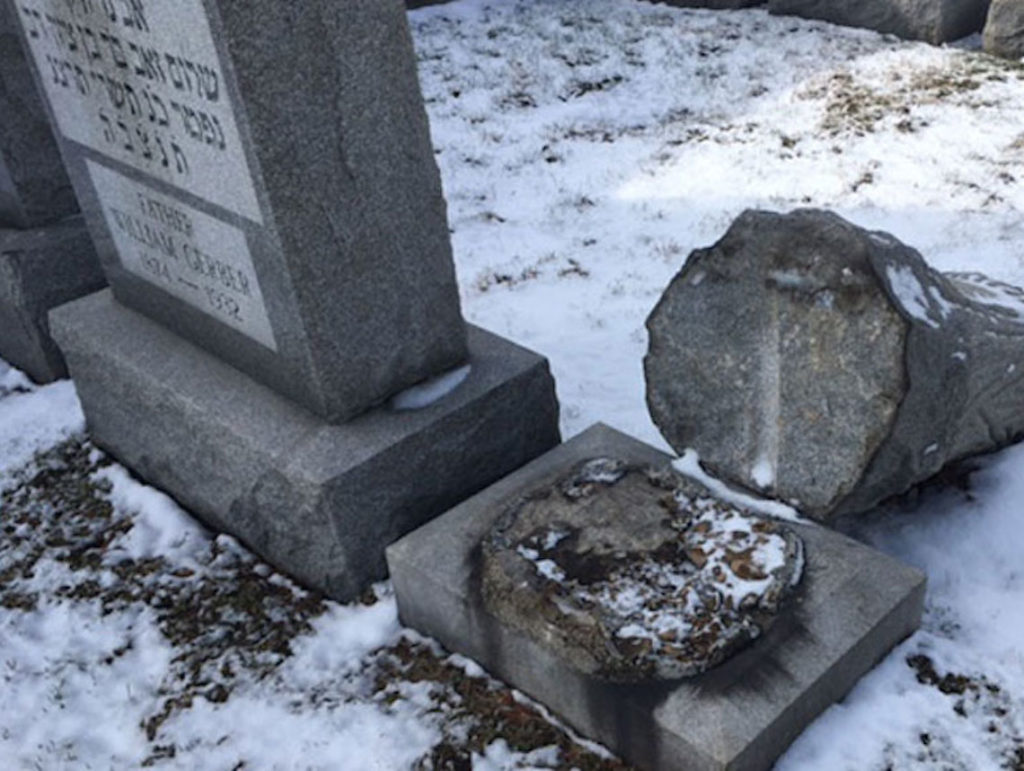
Jewish cemetery vandalized in Rochester, NY — third incident in US in less than 2 weeks

A Jewish cemetery in Rochester, New York, was vandalized, the third such incident in the United States in less than two weeks.

Five headstones were found toppled Thursday morning at the Waad Hakolel Cemetery, also known as the Stone Road Cemetery, in the city in western New York, according to News 10 NBC WHEC.

The president of the nonprofit managing the cemetery said he did not want to call the incident a hate crime or anti-Semitism.

“I don’t want to label it a hate crime. I don’t think there’s any proof of that. I don’t want to label it anti-Semitism. I don’t think there’s any proof of that,” said Michael Phillips, president of the Britton Road Association, according to The Rochester Democrat and Chronicle.

Police were awaiting notice from the cemetery before commencing an investigation, News 10 NBC WHEC reported.

The last two weeks saw vandalism at Jewish cemeteries in Philadelphia and St. Louis, as well as two more waves of bomb threats called into Jewish community centers, schools and institutions across the country, representing the fourth and fifth waves of such harassment this year.

Jewish cemetery vandalized in Rochester, NY — third incident in US in less than 2 weeks Read More »

Foxman: New approach needed to new phenomenon of anti-Semitism

President Donald Trump’s statement condemning a rash of anti-Semitic attacks, bombs threats at Jewish Community Centers, and the desecration of Jewish cemeteries across the nations, at the start of his first address to a joint session of Congress on Tuesday was welcomed by Jewish American leaders as a meaningful response.

[This story originally appeared on jewishinsider.com]

“That he chose to focus on fighting anti-Semitism and hate (at the start of his address), we really welcome that,” Jonathan Greenblatt, CEO of the Anti-Defamation Leauqu (ADL),  said in an interview with CNN on Wednesday. “That was a notable change from what we have seen. It was incredibly meaningful.”

Leaders of the Conference of Presidents of Major Organizations,  Stephen Greenberg and Malcolm Hoenlein, said in a statement, “By reaffirming America’s strong commitment to speaking out against hate, President Trump sent an important message of support to the American Jewish community at a very difficult time and set an example for other political, religious and civic leaders to follow.”

Now that the President issued that much-needed clear and unequivocal statement, former ADL National Director Abe Foxman thinks the Jewish community should move on and focus on working with law enforcement authorities to apprehend the culprits and design strategies to protect the community from anti-Semitic attacks and threats.

In an interview with Jewish Insider, Foxman suggested that this new phenomenon requires a new approach. “We have to fight it from the outside and the inside,” he asserted. “The outside is to get the political, moral, religious, and civic leadership, to condemn it and making it unacceptable. And number two is law enforcement. Law enforcement needs to take it seriously – to utilize all law enforcement techniques and institutions to combat it. And when you arrest a culprit, to make sure that the punishment is serious and not just a slap on the wrist.”

According to Foxman, it’s not the job of President Trump to come up with a plan. “His job is to condemn it and speak out. I don’t think it’s his job, though he has to fight prejudice, period.”

The former ADL head, who now serves as Director of Center for the Study of Anti-Semitism at the Museum of Jewish Heritage, further cautioned Jewish American organizations not to exaggerate the threat. “Our responsibility is to make sure that while we take it seriously, it doesn’t intimidate Jews from wanting to be Jews,” Foxman stressed.” Because, God forbid if we make it more of a threat than it is, the result will be that Jews will not want to be Jewish.” 

“The Jews, after every tragedy, stood up, brushed themselves off and reaffirmed their desire to continue to be Jews. And that’s the secret of Jewish survival,” he explained. “And therefore, here too, we face every single day when we talk about the dangers to our community centers, to our cemeteries, that is not, God forbid, undermining that commitment of Jews to continue to want to be Jews.” 

Foxman: New approach needed to new phenomenon of anti-Semitism Read More »

Calendar: March 3-9, 2017

SAT | MARCH 4

UNPLUG L.A.

Join Reboot and Open Temple for an “Unplugged Party” in celebration of Reboot’s National Day of Unplugging. Your phone will be checked at the door. Step off the grid to listen to live music, play board games, visit the analog photo booth, and more. Event dedicated to the late Levi Felix, founder of Digital Detox and Camp Grounded; $3 of each ticket will be donated to Camp Grounded in his memory. 21 and older. 7 p.m. $18; tickets available at eventbrite.com. Electric Lodge, 1416 Electric Ave., Venice. nationaldayofunplugging.com.

A TOAST TO HEROES

Honor a group of 10 young Israel Defense Forces (IDF) soldiers visiting Los Angeles who have been wounded in combat. Food, drinks and an open-bar after-party with a DJ spinning until midnight. All proceeds go to Lev Chayal’s program for wounded IDF soldiers. Black-tie attire. 8 p.m. VIP reception; 9 p.m. cocktails and buffet. $180 for individual reservations; $100 for young professionals ages 21 to 35. Tickets available at eventbrite.com. Venue TBA. levchayal.com.

SUN | MARCH 5

ALONG THE GOLDENEH LINE: JEWISH LIFE AND HERITAGE OF NORTHEAST L.A. AND THE SAN GABRIEL VALLEY

A chartered bus will take riders alongside the Metro Gold Line into the San Gabriel Valley on a tour that will focus on the area’s unique Jewish heritage and its contemporary community life. Wear comfortable walking shoes — the tour includes two miles on foot. Instructors include Stephen Sass, president of the Jewish Historical Society of Southern California since 1989, and Jeremy Sunderland, who is on the board of directors for the Jewish Historical Society of Southern California. Space is limited. Lunch on your own. 9 a.m. $58. American Jewish University, 15600 Mulholland Drive, Los Angeles. (310) 476-9777. wcce.aju.edu.

NEFESH B’NEFESH ISRAEL ALIYAH FAIR

The ninth annual Nefesh B’Nefesh Israel Aliyah Fair offers the opportunity to gather aliyah information under one roof. Professionals will discuss financial planning and budgeting, choosing a community, building a strategic job search plan, navigating the health care system, buying or renting a home in Israel, and more. 10 a.m. for retirees and empty nesters; noon for students and young professionals. Free. Shalhevet High School, 910 S. Fairfax Ave., Los Angeles. nbn.org.

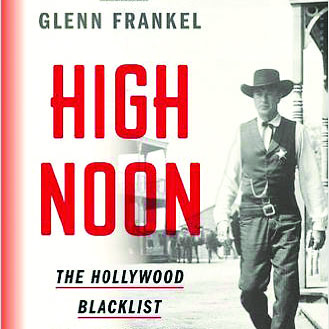
“HIGH NOON: THE HOLLYWOOD BLACKLIST AND THE MAKING OF AN AMERICAN CLASSIC”

cal-hign-noon“High Noon” is more than a Western; it is also a story about the Hollywood blacklist. Pulitzer Prize-winning journalist Glenn Frankel will discuss his book about  screenwriter Carl Foreman, producer Stanley Kramer, director Fred Zinnemann and actor Gary Cooper, and how their creative partnership was influenced — and crushed — by political repression and agendas. Book signing to follow presentation. 2 p.m. $14; $10 for students and seniors; $6 for children; free for members. Autry Museum of the American West, 4700 Western Heritage Way, Los Angeles.
THE LOS ANGELES BALALAIKA ORCHESTRA

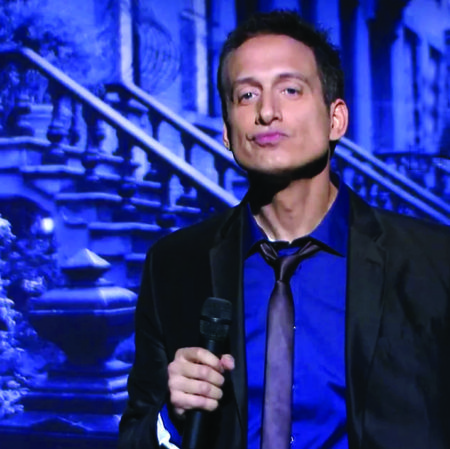
The Los Angeles Balalaika Orchestra presents its 22nd annual concert, featuring the voice of Mark Goldenberg, cantor at Young Israel of Century City. 3 p.m. $35-$45. Herbert Zipper Hall, 200 S. Grand Ave., Los Angeles. (626) 483-2731. balalaikala.com.

“VISIONS FOR A SHARED SOCIETY: THE ‘TRIBES’ OF ISRAEL”

Elana Stein Hain, director of leadership education at the Shalom Hartman Institute of North America, will discuss the core values of some of the “tribes” that compose Israel today, and how a divided people build a shared society. Part of the Synagogue Collaborative Lecture Series. 4 p.m. $20. (Post-lecture dinner and discussion extra; RSVP only.) Temple Beth Am, 1039 S. La Cienega Blvd., Los Angeles. shalomhartman.org/LAcollaborative.

“LABSCAPES: VIEWS THROUGH THE MICROSCOPE”

“Labscapes” presents vivid images from the mysterious and usually unseen wonders that exist under the powerful lenses of the microscopes of some of the world’s most renowned researchers at Technion — Israel Institute of Technology. A special presentation by students will be followed by the grand opening. RSVP requested: jose@ats.org or (310) 254-9899. 5 p.m. presentation; 6 p.m. reception and exhibit. Through March 27. Museum of Tolerance, 9786 W. Pico Blvd., Los Angeles. ats.org/labscapes.

MAYA AVRAHAM

Before joining The Idan Raichel Project, Maya Avraham was a widely sought-after backup singer for Israeli superstars such as Eyal Golan, Sarit Hadad and Shlomi Shabat. She will sing some of The Idan Raichel Project’s greatest hits as well as her own songs. 7 p.m. Tickets start at $35. Gindi Auditorium at American Jewish University, 15600 Mulholland Drive, Los Angeles. (310) 476-9777. wcce.aju.edu.

“FROM SHTETL TO STARDOM: JEWS AND HOLLYWOOD”

This panel discussion features Vince Brook of the UCLA School of Theater, Film and Television; David Isaacs, TV scriptwriter, producer and Emmy winner; Shaina Hammerman, Jewish film, literature, religion and cultural historian; Josh Moss, visiting assistant professor of film and media studies at UC Santa Barbara; and Ross Melnick, associate professor of film and media studies at UCSB. 6:15 p.m. dessert reception; 7 p.m. panel. Free. RSVP by March 3 at wbtla.org/shtetl or (424) 208-8932. Wilshire Boulevard Temple, Irmas Campus, 11661 W. Olympic Blvd., Los Angeles. (213) 388-2401.

TUES | MARCH 7

GOOGLE FOR GENEALOGISTS

Learn how to use Google Earth and Google Maps to gather information about where your ancestors lived, and how to educate yourself and meet other like-minded individuals (and perhaps relatives) using Google’s social media. Mary Kathryn Kozy, who has been researching her family history for more than 35 years, will speak at this meeting of the Jewish Genealogy Society of the Conejo Valley and Ventura County. 7 p.m. Free. Temple Adat Elohim, 2420 E. Hillcrest, Thousand Oaks. (818) 889-6616. jgscv.org.

THURS | MARCH 9

ELON GOLD

cal-elon-goldComedian, writer and actor Elon Gold kicks off the Purim weekend with a night of comedy, drinks and a DJ. Also featuring Alex Edelman. 8 p.m. $40. Saban Theatre, 8440 Wilshire Blvd., Beverly Hills. (888) 645-5006. sabanconcerts.com.

“THE AUSCHWITZ VOLUNTEER”

Explore the ethical and religious implications of the Holocaust at this event. Wine and cheese reception will be followed by a multimedia program and discussion about the Polish underground’s mission that sent officer Witold Polecki into Auschwitz to gain intelligence and build resistance among the prisoners. 7:30 p.m. $8. Burton Sperber Jewish Community Library at American Jewish University, 15600 Mulholland Drive, Los Angeles. (310) 440-1572. wcce.aju.edu.

Calendar: March 3-9, 2017 Read More »