fbpx

February 17, 2017

The Black Cat: Resistance Then and Now

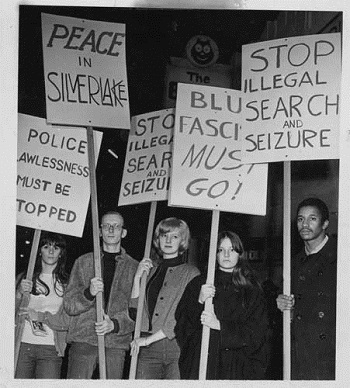
The Motzei Tu B’Shevat moon shined down on the Black Cat Tavern in Silverlake as the week began. Hundreds of picketers lined the sidewalk carrying signs that read “End Illegal Entrapment,” “Peace in Silverlake,” and “Blue Fascism Must Go.” The signs were re-creations in honor of a much more dangerous picket line held 50 years previous on this very spot.

That picket, two years before the Stonewall Rebellion, marked the emergence of today’s gay/LGBTQ civil rights movement. Silverlake residents staged a peaceful protest after a police raid bloodied the floor of the Black Cat, then a gay bar. On New Year’s Eve 1966/7, plainclothes police officers, who had infiltrated the party, battered then arrested people who had come to celebrate. The raid left people with broken bones, ruptured organs and bleeding wounds. Two of the arrestees, Charles Talley (embodied Saturday night by brilliant writer and performance artist Michael Kearns) and Benny Baker, appealed their convictions based on 14th Amendment guarantees of equal protection under the law. The Supreme Court declined to hear their case and so, for a three-second kiss (the duration was attested to by the police officers who had made the arrest) the two men were forced to register as sex offenders.

Weeks later, on February 11, 1967, some of the first modern gay activists picketed the bar. They made every effort to keep things peaceful and legal—always walking, not loitering, keeping to the sidewalk, not letting one piece of litter touch the ground. Alexei Romanoff (no relation to the unlamented Czar—in fact a Jewish immigrant from Ukraine), who had helped to organize the event, remembers just what an act of extraordinary courage was performed by every single picketer: “Three months before these raids, there was an anti-Vietnam War protest on the Sunset Strip. It was met with violence. The police beat up the protesters, it was violent. Straight people wanted to do something about police brutality. Mexicans were getting beaten up, blacks were getting beaten up, anti-war protesters, the hippies were getting beaten up.” (Thirsty in L.A., June 12, 2015).

What stunningly brave people those early protesters were. Romanoff reminds us that, in 1967, homosexuality was considered by many “enlightened” people to be an illness-the less enlightened regarded gay people to be acceptable outlets for whatever violent bullying impulses they wished to follow. To publically walk a picket line in defense of gay rights—to be the lawyer who went to court on behalf of gay people—was to risk shunning, financial ruin, and brutal violence.

50 years later, the picket line was reenacted. Many of the signs were copied from photographs of the originals, but there were new signs as well marking this gathering as a manifestation of today’s resistance: “Love Trumps Hate,” and “You Build a Wall, We’ll Tear it Down,” and some referred to other historical protests, “Silence = Death.” This time, the police, including two openly gay officers, were there as allies. The rally, organized by Silverlake residents (including Wes Joe, the widower of my late Shabbat chavruta Avram Chill, Z”L) was supported and assisted by openly gay City Council Member Mitch O’Farrell and by Mayor Eric Garcetti. (I run into our mayor in all the best places; at the bar mitzvah of his Chief of Staff’s son, where he took an Aliyah, at the Islamic Center of Southern California where he offered solidarity in the face of the imminent travel ban and other attacks, and here at a queer rally, where he spoke along with our openly gay City Controller Ron Galperin (who happens to be a great cantorial soloist and who stood with his husband, Rabbi Zach Shapiro of Temple Akiba). I hope that our mayor, whom I sense to be a profoundly decent man, paid close attention to those young people who chanted at him, “We’re the voice of the new generation; we are sick of gentrification!” May this second term be the one in which he builds on last year’s ballot measures to take on our housing crisis full throttle.

Openly gay actor Wilson Cruz reminded us that while we celebrate our victories and acknowledge our allies, we have work ahead of us that must be faced. He reminded us that, as praiseworthy as a the LAPD support for our rally is—and it does represent an amazing transformation—as a movement, we are still obliged to address the mass incarceration of men of color in our country. Speaker after speaker spoke to the fact that, for the LGBTQ movement, intersectional politics just must means facing reality. When we talk about persons of color, about women—about Jews—we are talking about a group in which we are included.

As we coalesce for a long-term effort on behalf of immigrants, working people, people of color, women, LGBTQ people—and religious minorities, including Jews as well as Muslims—we can take strength from the extraordinary bravery of those people who marched quietly, in dignity, risking everything for what they knew was right. They were not only resisting brutality, they were standing up for love and justice and, yes, for morality.

On that day, Alexei Romanoff, the Jewish immigrant was joined by Tak Yamamoto, an American who, along with his Japanese immigrant family had spent most of World War II in a concentration camp devised by our government. These were people who knew first-hand what they were risking and they understood that declining to protest would be much more dangerous. May they be our teachers in the days and months and years ahead.

The Black Cat: Resistance Then and Now Read More »
Reform movement opposes David Friedman as US envoy to Israel

The Reform movement became the largest Jewish body to oppose the nomination of David Friedman as United States ambassador to Israel.
The Reform movement became the largest Jewish body to oppose the nomination of David Friedman as United States ambassador to Israel.

In a statement released Friday, one day after the launch of Senate hearings to confirm Friedman, Union for Reform Judaism President Rabbi Rick Jacobs released a statement saying Friedman is “the wrong person for this essential job at this critical time.”

The statement says President Donald Trump’s longtime bankruptcy lawyer lacks the qualifications for the position, noting he has never been involved in professional foreign policy issues “other than as a zealous partisan and financial supporter of settlement activity.”

Friedman serves as president of American Friends of Bet El Institutions, which supports a large West Bank settlement. He has expressed skepticism about the two-state solution and harsh criticism of left-wing pro-Israel groups in a series of op-eds in Arutz Sheva, a news site serving Israel’s settlement movement.

“Mr. Friedman’s views on key issues suggest he will not be able to play a constructive role,” said the URJ statement, which was signed by the leaders of its main clergy as well as congregational and membership bodies. “The U.S. Ambassador to Israel has the important responsibility of advising, shaping, and helping implement the President’s foreign policy goals. Indeed, it appears that Mr. Friedman’s extreme views on key issues related to the two-state solution, Israel’s borders, settlements, and the location of the U.S. Embassy are already reflected in the White House. Such positions are detrimental to peace and a strong U.S.-Israel relationship.”

The statement also made note of Thursday’s confirmation hearing, during which Friedman said there was “no excuse” for his past rhetoric targeting liberal Jews, and which was interrupted at least three times by protesters.

“Just as we are critical of Mr. Friedman’s lack of diplomatic temperament, we wish to distance ourselves from the protesters who repeatedly interrupted his hearing,” the URJ statement said.

The Reform movement, representing the largest and most liberal of the major denominations, has long been a proponent of a two-state solution. It has never opposed a nomination for the ambassadorship.

Friedman’s nomination has already divided Jewish groups along ideological lines, with centrist and left-leaning groups expressing concerns and right-leaning groups urging his confirmation.

On Friday, following the release of a letter from five former U.S. ambassadors to Israel urging the Senate to reject Friedman’s nomination, the Zionist Organization of America released a long statement accusing the former envoys of being “hostile to Israel.”

The five signatories – Thomas Pickering, Daniel Kurtzer, Edward Walker, Jr., James Cunningham and William Harrop – damaged U.S.-Israel relations and exacerbated the situation in the Middle East,” the ZOA said in its statement.
In a statement released Friday, one day after the launch of Senate hearings to confirm Friedman, Union for Reform Judaism President Rabbi Rick Jacobs released a statement saying Friedman is “the wrong person for this essential job at this critical time.”

The statement says President Donald Trump’s longtime bankruptcy lawyer lacks the qualifications for the position, noting he has never been involved in professional foreign policy issues “other than as a zealous partisan and financial supporter of settlement activity.”

Friedman serves as president of American Friends of Bet El Institutions, which supports a large West Bank settlement. He has expressed skepticism about the two-state solution and harsh criticism of left-wing pro-Israel groups in a series of op-eds in Arutz Sheva, a news site serving Israel’s settlement movement.

“Mr. Friedman’s views on key issues suggest he will not be able to play a constructive role,” said the URJ statement, which was signed by the leaders of its main clergy as well as congregational and membership bodies. “The U.S. Ambassador to Israel has the important responsibility of advising, shaping, and helping implement the President’s foreign policy goals. Indeed, it appears that Mr. Friedman’s extreme views on key issues related to the two-state solution, Israel’s borders, settlements, and the location of the U.S. Embassy are already reflected in the White House. Such positions are detrimental to peace and a strong U.S.-Israel relationship.”

The statement also made note of Thursday’s confirmation hearing, during which Friedman said there was “no excuse” for his past rhetoric targeting liberal Jews, and which was interrupted at least three times by protesters.

“Just as we are critical of Mr. Friedman’s lack of diplomatic temperament, we wish to distance ourselves from the protesters who repeatedly interrupted his hearing,” the URJ statement said.

The Reform movement, representing the largest and most liberal of the major denominations, has long been a proponent of a two-state solution. It has never opposed a nomination for the ambassadorship.

Friedman’s nomination has already divided Jewish groups along ideological lines, with centrist and left-leaning groups expressing concerns and right-leaning groups urging his confirmation.

On Friday, following the release of a letter from five former U.S. ambassadors to Israel urging the Senate to reject Friedman’s nomination, the Zionist Organization of America released a long statement accusing the former envoys of being “hostile to Israel.”

The five signatories – Thomas Pickering, Daniel Kurtzer, Edward Walker, Jr., James Cunningham and William Harrop – damaged U.S.-Israel relations and exacerbated the situation in the Middle East,” the ZOA said in its statement.

Reform movement opposes David Friedman as US envoy to Israel Read More »

Stop denouncing Trump for not denouncing anti-semitism

After President Donald J. Trump gave meandering answers to press questions over the last two days about attacks on Jews, several voices in the media, especially Jewish ones, have put forward the unfair – and patently false – charge that President Trump “refused to denounce” American anti-Semitism in his remarks.

“Why can’t President Trump simply denounce anti-Semitism?” asked Chuck Todd on MSNBC:

“Instead of telling us that you aren’t an anti-Semite, the question was about denouncing the rise of anti-Semitism. Please make it clear that not only are you not an anti-Semite, but that you reject people who are.”

Todd is factually inaccurate, since the questions were NOT about “denouncing” anything. That may be Todd’s agenda, but it’s not what happened.

Trump’s first question (on Wednesday) solicited his message not for anti-Semites, but for Jews “who believe and feel that your administration is playing with xenophobia and maybe racist tones,” and the second, which came yesterday, asked “how the government is planning to take care of” an “uptick in anti-Semitism.”

Trump’s answers, as is his wont, were filled with rambling non-sequiturs about the size of his Electoral College victory, his grandchildren, and the unfair, lying media. But Trump rambles when he answers most questions. Further, there are lots of reasonable ways a president could have answered those questions – expressing sympathy with the victims or describing the limits law enforcement faces in combating diffuse problems – that would not involve “denouncing” anything.

What would “refusing to denounce” look like? Very simple:

Reporter: Do you denounce the rise of anti-Semitism?

Trump: No.

Barring that, the accusation is gibberish.

Trump clearly feels insulted by the calls for him to denounce anti-Semitism, and he’s right. It is insulting. Talmudists have a concept called hava amina, which refers to the question’s default position. The hava amina of the “model” unfair question, “When did you stop beating your wife?” is that you used to beat your wife. One reason “Black Lives Matter” was an offensive slogan is its hava amina that a significant number of whites think black lives don’t matter.

Well, the “refuse to denounce” charge uses the hava amina that Trump is sympathetic to anti-Semitism. And the evidence to support that is a very thin soup. Trump advisor Steve Bannon’s supposed anti-Semitism is a liberal invention. Trump is not responsible for the beliefs of David Duke, Richard Spencer, or other racists who support him, unless your evidence is, again, “refuse to denounce” – a phrase we should retire from the political lexicon. And Trump’s affection for the Jews in his life and his support for Israel are widely known.

You don’t denounce things virtually everyone hates – and if you do, eyebrows go up. Was President George W. Bush asked to denounce 9-11? Was President Barack Obama expected to denounce Hurricane Sandy? Should Trump come out against long lines at airports and high ATM fees, too?

This particular question is worse, because it plays on unfair prejudices against Republicans. How would Jews feel if they were asked why they are refusing to denounce Bernie Madoff and Jack Abramoff? Or Hillary Clinton, who still “refuses to denounce” child molestation, despite a few high-profile supporters who are accused and convicted pedophiles. Even better, must the members of the press calling for Trump to make denunciations themselves denounce unfair media coverage of Trump?

I didn’t vote for this president. In fact, I (for lack of a better word) denounce much of his personal style and many of his policy positions. But too often, liberal complaints about this president – that he’s not only anti-Semitic but also homophobic, having appointed racists and bigots – blindly draws on the old “hateful Republican” playbook and ignores the reality of this very different kind of Republican who is in fact a very different kind of politician.

 We have to keep our eyes open for real threats from Trump, like his hostility toward the media and shaky relationship to the truth. Speaking of which, when you think about it, asking a politician to prove he’s NOT anything is really a “Trump question,” since nobody can prove a negative. The media scoffed when Trump challenged his detractors to “Prove to me that millions didn’t vote illegally.” Surely we can do better.

David Benkof is a columnist for the Daily Caller, where this essay first appeared. Reposted with permission of author. Follow him on Twitter (@DavidBenkof) or E-mail him at DavidBenkof@gmail.com.

Stop denouncing Trump for not denouncing anti-semitism Read More »

Letters to the editor: Responses to immigrants and Trump, Journal’s 30th anniversary, Stephen Miller on Stephen Miller

Iranian Jews and Trump

I enjoyed reading Gina Nahai’s column (“Trump’s in the Torah,” Feb. 3). I am an immigrant of the post-World War II era. I, as well as most of my fellow immigrants, was grateful for the opportunity to live in a civil society. Most of us felt that liberal democracy gave us, as well as the rest of the nation, the opportunity for a better life and to thrive.

This has not been true of most of the later immigrants from despotic regimes. Nahai describes the situation among the Iranian-Jewish community. I also notice similar attitudes among the immigrants from the former USSR.

What is it about those who escaped despotism but admire autocracy? The general feeling that I get is they believe that allowing freedom of action and tolerance of opposing opinions are signs of weakness. They feel that leaders who allow dissent are foolish and taken advantage of.

What is so good about intolerance and autocracy that it prompted them to escape? How well has it worked out for the countries that adopted these ideologies?

Michael Telerant, Los Angeles

30 Years and Counting

Thank you Jewish Journal for 30 years of diverse thought and opinion! I’m saddened by the nasty comments against Rob Eshman’s columns, particularly letters in response to “Thank You, Obama” (Jan. 20). It’s important for differing opinions to be expressed — through civility.

May your/our Jewish Journal continue in strength and diversity! 

Robin Siegal via email

Congratulations on the Journal’s 30th anniversary. I am thrilled you continue to make it a great paper providing a real service to the Jewish community.

Gordon Gelfond, Beverly Hills

Rob Eshman: Agree or Disagree?

The omission of Jews from the Trump administration’s Holocaust statement cannot be defended as Rob Eshman makes clear (“A Holocaust Without Jews,” Feb. 3). But we would be well advised to watch what he does, because saying the right thing is no indication that actually doing the right or smart thing is likely to follow.

Let us hope, for example, that Trump’s Middle East policies and his handling of Iran will help control the fires lit in the Middle East during the Obama administration and that are still raging. 

Stupidity abounds in politics. Let us hope Trump learns more quickly than the previous administration.

Julia Lutch via email

I read Rob Eshman’s workout of Stephen Miller’s ancestry (“Stephen Miller, Meet Your Immigrant Great-Grandfather,” Aug. 12). My name is Stephen Miller and my ancestry is similar to my namesake’s.

My Jewish grandparents came to the U.S. from Romania and Poland and Austria to escape persecution. I disagree with my namesake on the question of immigration. In my book “Walking New York: Reflections of American Writers from Walt Whitman to Teju Cole,” I talk about how New York has been revitalized by immigration. The immigration policies espoused by my namesake are deplorable. I usually vote Republican, but not in this past election. Trump is a disaster — and so is my namesake.

Stephen Miller via email

Douglas Mirell rightly believes that repeal of the Johnson Amendment would be an attack on the wall separating church and state, and that we need to cover our ears and ignore President Trump’s call for doing away with it (“Preserving the Barrier Between Church and State,” Feb. 10). 

On the other hand, Rob Eshman’s column in the same issue (“The Rabbi Speaks Out”), which described Rabbi Naomi Levy’s rebuke of Trump from the pulpit over the Muslim travel ban, demonstrates how criticism of the president by the clergy could mount were Trump to succeed in his efforts. I am pretty sure this is not the result he has in mind. 

Joan Watson via email

Trump and Nazism

Generally, I read [Dennis] Prager’s column when I haven’t had my cup of coffee and I need a jolt to wake me up.  His column about progressives trivializing Hitler, Nazism and Auschwitz got my juices flowing (“Progressives Now Trivializing Hitler, Nazism, Auschwitz,” Feb. 10). The purported examples he cites as support pale in comparison to a glaring omission on his part. President Donald Trump’s Holocaust Remembrance Day Proclamation fails to mention its impact on the Jewish people. If Prager is incapable of criticizing Trump and White House Press Secretary Sean Spicer for their insensitivity to the Holocaust’s impact on the Jewish people, then he lacks any moral authority to berate those who fail to see the world through his eyes.

Andrew C. Sigal, Valley Village

Letters to the editor: Responses to immigrants and Trump, Journal’s 30th anniversary, Stephen Miller on Stephen Miller Read More »

The Tom Hayden I knew

After the death of Tom Hayden on Oct. 23, the media overflowed with tributes recalling his colorful, history-making life and his body of work. To many, he was the man whose anti-war campaign helped to end the Vietnam War; the ’60s radical Students for a Democratic Society leader and author of its Port Huron Statement; freedom rider; Newark, N.J., organizer; farm workers defender; and a member of the prosecuted Chicago Seven.

I never knew that Tom Hayden, for whom   a memorial service will be held Feb. 19 at Royce Hall on the campus of UCLA. By the time we met, he had recently begun a new journey, spending 18 years in elected office, amassing an impressive legislative compilation, becoming a teacher and lecturer whose ideas were esteemed in many world capitals, a noted author and a living role model of the principles of civil rights and social and environmental justice. He was nothing if not true to himself and his Catholic soul, which, to me often also seemed to be a Jewish soul. That particular observation would surely have caused the infamous anti-Semitic Father Charles Coughlin, the leader of Hayden’s childhood school and church, to turn over in his grave.   

Tom’s new life in Sacramento was barely beginning when he asked me to come work for him as his political director. He became my teacher, my colleague, friend and occasional intellectual challenger. But in my long career in politics and the nonprofit world, I never found a more democratic, thoughtful, fair and respectful boss than Tom Hayden. Once, during the First Intifada, we had a mighty disagreement about Israel. We were so angry at each other that we couldn’t even speak. So I wrote him a long letter laying out my argument. He sent back a 43-page epistle titled “Letter to my Jewish Friend.” It took many years before I finally realized that he was right. I never told him.

I recently looked through all of Hayden’s legislation during his 18 years in the Assembly and Senate. He walked his talk. On the Jewish side, he wrote and passed legislation protecting consumers of kosher meat; protecting students and employees from discrimination because of their observance of holy days; guaranteeing payment of Holocaust survivors’ insurance claims; providing state funding for teaching tolerance based on the lessons of the Holocaust; insurance compensation for former slave laborers living in California who suffered in Nazi Germany and Japan during World War II.

Once, a visit from Desmond Tutu, before he became a bishop or a Nobel Prize winner, touched off an argument about Israel at a dinner in Tom’s home. The discussion was the catalyst for the creation of an extraordinary project that brought Black South African workers from Soweto and the surrounding townships (before the end of apartheid) to the Afro-Asian Institute in Tel Aviv to train for their future leadership in a soon-to-be, post-white South Africa government. This led to a dramatic political and foreign policy turnaround — the end of selling arms to white South Africa, done quietly through the heroic efforts of a few very prominent people in Israel, the United States and South Africa. It all began here because of one heated discussion, and Hayden’s willingness to act on his commitment to Israel, which he loved and visited numerous times.

The world has lost a great warrior for peace. We will miss his voice.

The Tom Hayden I knew Read More »

The universality of Judaism

Parashat Yitro (Exodus 18:1-20:23)

Rabbi Adin Steinsaltz is one of the greatest rabbis of our time. The sole rabbi to achieve a comprehensive commentary on the entire Babylonian Talmud since Rashi in the 11th century, he also recently completed a commentary on the entire Bible.

Born in Jerusalem to a Marxist father who encouraged his son to study Talmud in order to sharpen his mind, Steinsaltz came to be regarded by Time magazine as a “once in a millennium scholar.” It is astonishing to see how a person who grew up in an atheist home with communist leanings became such a towering rabbinic figure.

But Steinsaltz’s case is hardly unique. Throughout the millennia, there have been many other sages who came from a non-observant background, including Shimon Ben Lakish, who in his youth during the third century was a bandit and a gladiator, according to the Talmud. The modern German theologian Franz Rosenzweig also came to embrace Jewish religiosity later in life.

In addition to seminal Jewish figures who were “born-again Jews,” our tradition is blessed with Torah scholars who were Jews by Choice — converts, or children of converts. A partial list would include Rabbi Akiba and Rabbi Meir of antiquity, and Onkelos, a translator of the Torah to Aramaic.
Throughout the ages, there always were sages who espoused embracing these Jews by Choice. In the Amidah prayer, we pray thrice daily for the well-being of all converts. In the Talmud, Rabbi Eleazar ben Pedat states that the raison d’etre of our people’s exile is to enrich our people with more converts (Tractate Pesachim 87B). And Lurianic Kabbalah asserts that the souls of converts who embrace Judaism are akin to divine sparks which return back to their divine core.

Nowhere is this Jewish tendency to embrace those who embrace rabbinic Judaism later on in life more pervasive than in this week’s Torah portion. Parashat Yitro includes the most spiritually sublime event in Jewish history — the giving of the Torah on Mount Sinai. And — imagine this — it’s named after a non-Jew, Jethro the Midianite.

Rashi states that Jethro was a Cohen shel avodah zara (a High Priest of idolatry) who experimented with all forms of idolatrous practice until he finally embraced monotheism. Jethro was Moses’ father-in-law, and it is instructive in and of itself that Moses chose to marry Tzipora, one of Jethro’s daughters, despite her idolatrous ancestry.
According to most commentators, Jethro ended up embracing Judaism, but according to the Spanish sage Ibn Ezra, Jethro became a good monotheist, but did not convert to Judaism. How striking it is, then, that our sages chose to name the parsha of the giving of the Ten Commandments after a person with such a questionable religious pedigree.

One might venture to claim that this honor given to a non-Jew is mere coincidence, but Shavuot, the holiday of the giving of the Torah, highlights once more that this is no mere happenstance. During Shavuot, we read one biblical work, the Book of Ruth. Ruth also was a convert. By embracing the national and religious identity of her mother-in-law, Ruth inadvertently set in motion a genealogical process that ultimately culminated in the birth of her celebrated great-grandson, King David, author of the book of Psalms, conqueror of Jerusalem, father of King Solomon who built the First Temple, and founder of the lineage from which the messiah and our ultimate redemption will eventually arise, according to our tradition.

So we have several strong indications that Judaism is a spiritual, rather than an ethnic identity. The parsha of the giving of the Torah is named after a non-Jew-convert (Jethro), on Shavuot we read the story of a convert (Ruth), and that same story ends by stressing the fact that that this very convert is the ancestress of King David, and therefore of the future messiah as well.

A religion is universal when it is open to all, and Judaism is certainly open to all those who truly, purely and wholeheartedly choose to earnestly take upon themselves the yoke of heaven, and lead an authentic Torah existence, by keeping the mitzvot.

As we receive the Torah, and make our perpetual covenant with God, the Torah reminds us of its ultimate universalist streak both by stressing the fact that it was not given in Israel, but rather in the desert, in a no-man’s land, in a place where no particular nation holds political sovereignty, and also by naming this portion after a non-Jew, and one who led an idolatrous existence throughout the bulk of his existence, at that.

Rabbi Tal Sessler is senior rabbi of Sephardic Temple Tifereth Israel. He is the author of several books dealing with philosophy and contemporary Jewish identity.

The universality of Judaism Read More »

Reform Jewish Movement Opposes David Friedman’s Nomination for U.S. Ambassador to Israel

This is the first time that all the organizations of the American Reform Jewish movement have ever weighed in on a nomination by a President of the United States. However, we have done so because David Friedman’s qualifications, lack of diplomatic experience, erratic temperament, outrageous rhetoric and attacks on large sections of the American Jewish community, and his policy positions vis a vis Israel are not in the best interests of the American-Israel relationship and do not represent our Reform Jewish values in relationship to the democratic and Jewish State of Israel.

As the national Chair of the Association of Reform Zionists of America (ARZA), on behalf of ARZA’s President Rabbi Josh Weinberg, and with the unanimous support of the national ARZA Officers and Board, I express my own gratitude that our movement of 1.5 million American Reform Jews has made such a clear and strong statement opposing nominee David Friedman as the United States Ambassador to Israel.

Please read the attached statement and note the expansive support of our movement’s national leadership.

http://www.urj.org/blog/2017/02/17/reform-jewish-movement-opposes-david-friedmans-nomination-us-ambassador-israel

Reform Jewish Movement Opposes David Friedman’s Nomination for U.S. Ambassador to Israel Read More »

Jewish journalist sticks up for Trump after being called a ‘liar’

The Jewish reporter whom President Donald Trump interrupted and accused of lying at a news conference defended Trump’s actions as owing to a misunderstanding.

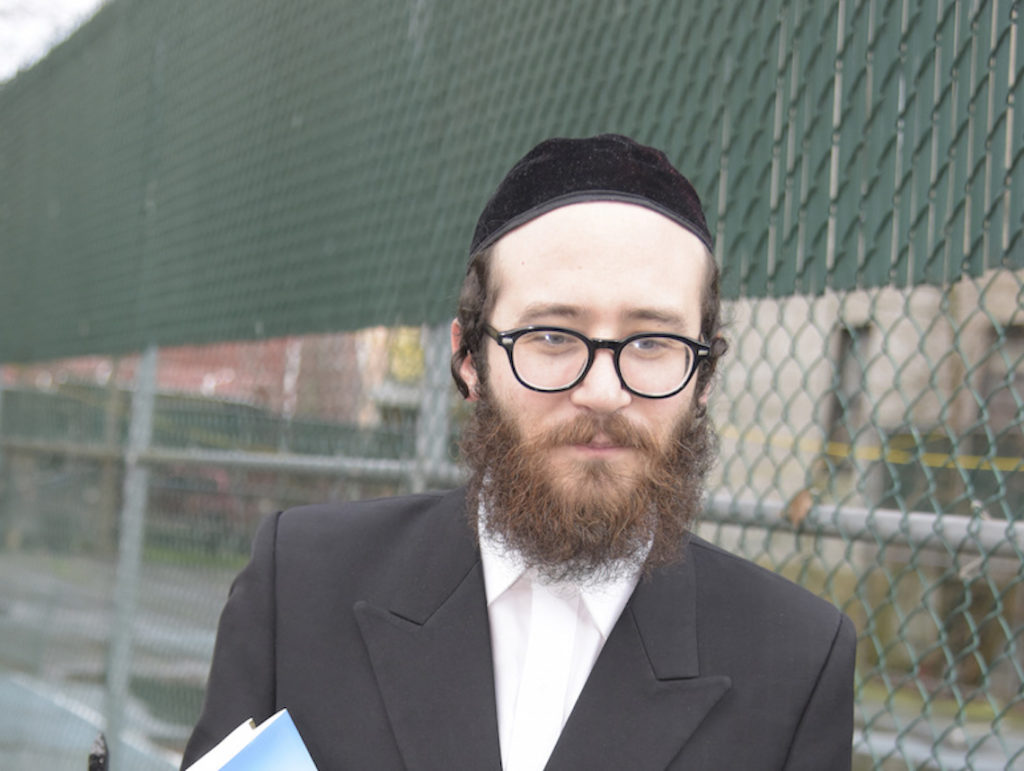
Jake Turx, a reporter for Ami Magazine, told Fox News that he believed Trump acted defensively to his question about rising anti-Semitism in America because of the “unfair” treatment the president was receiving in the media and allegations connected to anti-Semitism.

“It’s very unfair what’s been done to him and I understand why he’s so defensive,” Turx, who wears a large kippah and a beard, told Fox News Thursday, hours after the incident. “And I’m with him when it comes to being outraged about him being charged with this anti-Semitism.”

Turx in a Twitter post said “President Trump clearly misunderstood my question. This is highly regretful and I’m going to seek clarification.”

After a harsh-toned exchange with several reporters — some of whom Trump interrupted, told to “sit down” or be quiet —  Trump said he wanted to take a question from a friendly reporter.

Turx said “I’m friendly,” and began by saying that “despite what some my colleagues have been reporting, I have not seen anyone in my community accuse either yourself or anyone of your staff of being anti-Semitic.” He added: “We understand that you have Jewish grandchildren, you are their zayde,” Yiddish for grandfather.

Trump’s eldest daughter, Ivanka, converted to Judaism several years ago prior to marrying Jared Kushner, who is also Jewish.

However, citing dozens of bomb threats against Jewish institutions in recent months, Turx said, “What we haven’t really heard being addressed is an uptick in anti-Semitism and how the government is planning to take care of it.”

Trump interrupted Turx, said his question was “not fair” and said: “OK, sit down, I understand the rest of your question.” Trump replied that he was “the least anti-Semitic person that you’ve ever seen I your entire life.” Trump then turned to the reporters, said “quiet” three times and added: “See, he lied about, he was going to get up and ask a very straight, simple question, so, you know, welcome to the world of the media.”

He then said: “I hate the charge because I find it repulsive.” Trump referenced Israeli Prime Minister Benjamin Netanyahu’s remark Wednesday during a joint news conference at the White House, where Netanyahu said, “There is no greater supporter of Israel or the Jewish state than President Donald Trump” to a reporter who asked about the rise in anti-Semitic incidents in the United States.

“I think we can put that to rest,” Netanyahu said.

During the Fox News interview, Turx said he believed Trump’s emotional reaction to the subject is a hopeful sign because “it shows a president who is so committed against this problem of anti-Semitism that it bothers him on a personal level, a deep personal level.”

Jewish journalist sticks up for Trump after being called a ‘liar’ Read More »

Chuck Todd and others ask: Why won’t President Trump denounce anti-Semitism?

Asked twice in two days to address an uptick in anti-Semitic attacks during and after the 2016 presidential campaign, Donald Trump answered in ways that left many observers baffled. On Wednesday, asked about anti-Semitism during a joint news conference with Israeli Prime Minister Benjamin Netanyahu, Trump answered by talking about his Electoral College victory and pointing to his Jewish daughter and son-in-law.

The next day, in response to a haredi Orthodox Jewish reporter who asked about the administration’s response to anti-Semitism, the president angrily replied, “I am the least anti-Semitic person that you have ever seen in your entire life,” going on to say, “I hate even the question.” (The reporter did not ask whether Trump was an anti-Semite.)

“It is honestly mind-boggling why President Trump prefers to shout down a reporter or brush this off as a political distraction,” Jonathan Greenblatt, the Anti-Defamation League’s national director, said in a statement posted on Twitter. The American Jewish Committee called Trump’s answers “worrisome and puzzling,” asking, “But if every such question elicits either no substantive response or, mistakenly, is taken personally, then what are people of good will supposed to conclude?”

So what are they to conclude? Here’s a range of responses from recent days to the question “Why won’t President Trump denounce anti-Semitism?”

Trump is a narcissist.

Peter Beinart, the liberal columnist who often writes on Jewish and Israel affairs, said the president took a general question from Thursday’s reporter — Jake Turx of the Orthodox magazine Ami — and made it personal. Tossed a softball question about how the administration planned to monitor and combat hate, Trump seemed intent on defending his own honor.

“The best way to understand it is as the product of narcissism so epic that it crowds out moral concern,” Beinart wrote. “Turx asked about Jewish fears of anti-Semitism. But the only thing that interested Trump was the possibility that people might consider him anti-Semitic. So he turned a question about Jewish victimization into a parable of his own victimization by a Jewish reporter.”

Beinart added: “The problem isn’t that Trump is anti-Semitic. It’s that he’s more upset by the charge than by the actual anti-Semitism growing around the country, some of which his supporters are perpetrating. He’s like the Breitbart-types who think whites suffer more from being accused of racism than African-Americans do from actually experiencing it.”

Trump believes he is under unfair attack.

Turx (a pen name) was willing to forgive the president for hearing his question as an accusation that the president was an anti-Semite, even though he carefully prefaced the question by saying Trump wasn’t an anti-Semite. The reporter stands by that assessment, and blames other media for putting Trump on the defensive.

“I understand why the president was so frustrated,” Turx told Jewish Insider. “It’s a very hopeful sign — it shows that he takes this matter very seriously, and it’s just regretful that it had come to a point where some of the media have been so dishonest that it is difficult for the Jewish community to get closure on this issue. But I remain very confident that because of his close connections with the community this will be addressed.”

Trump is playing to his lunatic fringe.

“Meet the Press” host and NBC News political director Chuck Todd wondered in a commentary if Trump is making a political calculation in refusing to issue a simple denunciation of anti-Semitism. During the campaign, Jewish groups and others pointed out the various times when Trump’s campaign was trafficking in symbols and themes that appealed to the so-called alt-right, whose coalition of economic nationalists, white supremacists and anti-Muslim alarmists includes its fair share of anti-Semites.

Todd asked: “Could it be because some of the president’s supporters aren’t as welcoming as he is and the president doesn’t want to insult or criticize them? That’s what some people are hearing. Could it be that the president needs and welcomes the support of this alt-right and some of the less enlightened people that reside there when it comes to what they think of people of the Jewish faith?”

If that’s the case, Bradley Burston wrote in the left-wing Israeli daily Haaretz, then Trump’s denials that he is an anti-Semite ring hollow.

“Here is a political animal with a superhuman sense for what and whom his followers want him to say, do and attack,” Burston wrote. “When he was out working the crowds, he knew in his bones that white supremacist anti-Semites saw him as their great hope. He fed them all the red meat he could dish out.”

Burston added: “A man who initiates, fuels and fans anti-Semitism, a man who is in a direct position to combat it and does not, is, in my view, an anti-Semite.”

Trump is a [Yiddish expletive deleted].

Trevor Noah of Comedy Central’s satirical “The Daily Show” didn’t delve into Trump’s political or personal motives in his commentary Thursday night. To him, Trump’s reluctance to denounce anti-Semitism boiled down to one word.

“Beyond’s Trump’s completely botched attempt at reassuring the Jewish community, what’s even more striking in that interaction is that you have a president of a democracy who thinks press is only valid when they ask him easy questions,” Noah said. “Questions that he likes. In fact, in his mind, he deserves it.

“‘What are you going to do about anti-Semitism?’ ‘We’re going to stamp it out.’ Done. That’s all you had to say. That was the softest ball possible, a matzah ball if you will. What a putz.”

Chuck Todd and others ask: Why won’t President Trump denounce anti-Semitism? Read More »