fbpx

February 7, 2017

Jonathan Film Review

postersmall

Jonathan is another high-quality film being released today, 2/7/17 by Wolfe Video.  It’s an award-winning German drama about a complicated family set in the beautiful rural farm area of Germany.

Jonathan (wonderfully acted by Jannis Niewohner — a handsome, gifted young actor) at 23 years old, is dutifully taking care of his ailing father on the family farm.  He is nearly overwhelmed when a kind and lovely young aide named Anka arrives to help.  Soon they start to fall in love, even as the father continues to decline.  Then a mysterious stranger appears.

With Bergman-like overtones, and artfully photographed, this film is an honest and unflinching look at the complexities of modern family life and how relationships, past and present, impact a family.

The dialogue is spare but well written, the music is subtle and evocative; overall an engaging, well-crafted film well worth your time.   Written and directed by Piotr J. Lewandowski, this film has won numerous awards at various film festivals.  Releasing today 2/7/17 on DVD/Video on Demand via Wolfe Video, and available through iTunes and major retailers, and at wolfeondemand.com.

Jonathan Film Review Read More »

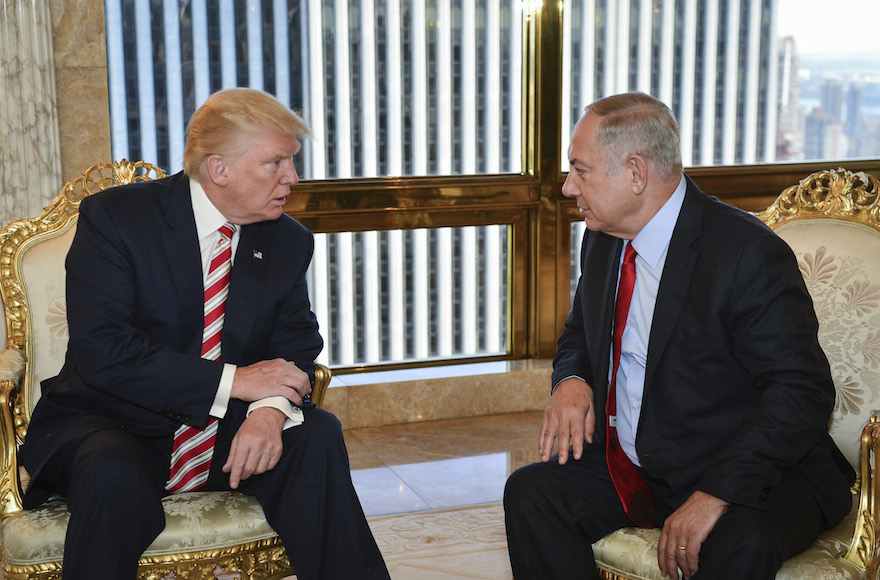
Trump meets Netanyahu: Where it can go right (and wrong)

Benjamin Netanyahu is going to stride in through the White House front door. Donald Trump is not going to grimace while Netanyahu lectures.

The talk in Washington this week, at least in Israel-obsessive circles, is about how the Bibi-Donald bromance, taking center stage Feb. 15 at a White House summit, is going to be easy like a Sunday morning (even though it’s on a Wednesday).

Never mind that the story about the Israeli prime minister slipping in through the back door in 2010, when Barack Obama was president, was an urban legend. The two leaders definitely had their ups and downs – Obama’s grimace during Netanyahu’s Oval Office Middle East history lecture was real enough.

And now, it’s going to be all good. What did President Trump say last month on Fox News Channel about the U.S.-Israel relationship?

“It got repaired as soon as I took the oath of office” is what he said.

And what was it Netanyahu said on Inauguration Day?

“Congrats to my friend President Trump,” the prime minister said on Twitter. “Look fwd to working closely with you to make the alliance between Israel&USA stronger than ever.”

Certainly there is greater agreement between Netanyahu and Trump in areas that dogged the Obama-Netanyahu relationship. Both Trump and Netanyahu have said the Iran nuclear deal is a bad one, and Trump’s White House upended U.S. policy last week by saying settlements are not an impediment to peace.

But there are enough areas where agreement is tentative and vague – and enough history of leaders of both countries creating crises by stepping on each others’ vagueness – that plenty could go wrong.

So where are Netanyahu and Trump likely to agree and where could it go wrong? Here are four areas:

Iran

Where they agree: Trump and Netanyahu both think the 2015 deal exchanging sanctions relief for a nuclear rollback gave away too much to Iran. Trump has called it the worst deal he has ever seen — at least until last week, when he called the deal to absorb 1,200 or so refugees from Australia the worst.

Where they may not agree: Trump’s top officials – most prominently James Mattis, the defense secretary – also don’t like the deal, but say dismantling it now that it is in place would do more harm than good. The argument is that the sanctions relief – removing the main means of pressuring Iran — came at the outset of the deal, and that rebuilding the international sanctions regime now is all but impossible. Republicans in Congress, the last redoubt of plans to kill the deal, are shifting toward that point of view as well.

That also, reportedly, is the posture of the Israeli defense establishment – extract what good one can from the deal for the time being.

But Netanyahu has consistently spoken in terms of scrapping the deal, and said not long after Trump was elected that he would present those options to him when they meet.

“There are ways, various ways of undoing it,” Netanyahu said in an interview on “60 Minutes” in December. “I have about five things in my mind.”

Where they could compromise: After Iran tested a ballistic missile last week, Trump’s national security adviser, Michael Flynn, put Iran “on notice” and the Trump administration slapped new non-nuclear sanctions on Iran.

Novel? Not so much – the Obama administration smacked Iran with similar sanctions the last time it tested missiles, a year ago. But the tough talk and the threat of additional sanctions could provide a space for Netanyahu and Trump to appear, for now, on the same page.

After weeks of talking up the undoing of the deal Netanyahu, meeting with British Prime Minister Theresa May in London on Monday, seemed ready instead to emphasize new non-nuclear related sanctions.

“I welcome President Trump’s insistence on new sanctions against Iran,” he said, addressing May. “I think other nations should follow suit, certainly responsible nations, and I’d like to talk to you about how we can ensure Iran’s aggression does not go unanswered.”

Privately, in exchange for tamping down the kill-the-deal talk, Netanyahu might seek reassurances from Trump that Iran is considered the region’s worst actor, said Shoshana Bryen, the senior director of the conservative Jewish Policy Center.

“Netanyahu will want to know how much reassurance can [Trump] give Israel that he sees Iran as the locus of evil in the region,” she said.

Settlements

Where they agree: The Trump administration, releasing a statement last week on Israel’s announcement of new settlement building in the West Bank and eastern Jerusalem, said that while new settlement announcements “may not be helpful in achieving ” peace, they are also not an impediment to peace.

That upends decades of policy, through presidents Democratic and Republican, declaring settlements were indeed an impediment to peace. And it dovetails perfectly with Netanyahu’s overarching argument throughout the Obama presidency: The Palestinian refusal to re-engage in direct talks without preconditions is the main factor obstructing peace.

Where they may not agree: As much the Netanyahu government welcomed the reversal of decades of policy of settlements as an impediment to peace, the thrust of the White House statement was to caution Israel: “The construction of new settlements or the expansion of existing settlements beyond their current borders may not be helpful in achieving that goal.”

Translation: Don’t get ahead of yourselves. No more surprises.

Surprise! On Monday, the Knesset passed a bill that would retroactively legalize settlements on Palestinian-owned land. Sean Spicer, Trump’s spokesman, declined on Tuesday to comment on the measure, except to tell reporters at the daily briefing that “it will be a topic of discussion” when the leaders meet.

Trump is likely getting pushback on settlement expansion from Arab allies in the region like Jordan and Saudi Arabia, said Ilan Goldenberg, the director of the Middle East Security Program at the Center for a New American Security. Russia, too, whom Trump would like to cultivate as an ally, is likely relaying messages that Israeli settlement expansion could undermine efforts to rally other Arabs to help crush the Islamic State terrorist group.

“The expectation going in with Trump was that the Israelis would be free to do whatever they want,” said Goldenberg, who helped lead the State Department team in the last round of Israeli-Palestinian peace talks in Obama’s second term. “That could create some constraints against giving the Israelis carte blanche.”

Where they could compromise: Netanyahu, still committed to the two-state solution, is said not to be overly thrilled with the legislation. If there is one thing he misses about Obama, it’s using him as a foil to put the brakes on the ambitions of the settlement movement. Being able to say he was “forced” by Washington to limit settlement building could be just what Netanyahu wants.

Syria

Where they agree: Trump sees Syria as a theater to crush the Islamic State. Israel is all for crushing the Islamic State.

Where they may disagree: This could be the knottiest problem afflicting Trump-Netanyahu comity. Trump wants to work with Russia in crushing the Islamic State. Russia is formally allied with the Assad regime in Syria, which means it is informally allied with Israel’s deadliest enemy, Iran, and with Iran’s Lebanese proxy. The last thing Israel wants is Iran and Hezbollah looming over its northern border.

Where they could compromise: Netanyahu will likely make the case to Trump that any lasting deal in Syria’s southwest – bordering the Golan Heights – needs to keep Iran and Hezbollah far away. That could mean an arrangement in which moderate opposition forces, backed by the United States and Jordan, maintain control – although that would be a hard sell to the Russians, who have been pounding moderates.

The other compromise – and less to Israel’s liking – would be to have Assad forces, and only Assad forces, move into the region.

Israel once favored the Assads as the best of the worst: a dangerous enemy, but at least able to keep the northern border quiet. The civil war, and Bashar Assad becoming beholden to Iran and Hezbollah, have shattered that outlook. Now those three actors – Assad, Iran and Hezbollah – are inextricably intertwined in Israel’s view, said Daniel Shapiro, until last month the U.S. ambassador to Israel.

“Assad has talked about retaking all of Syria,” he said. “Anywhere that happens, you have to believe that Hezbollah and Iran gain some kind of strategic advantage.”

The Holocaust

Where they agree: Um.

Where they may disagree:
 Trump’s International Holocaust Remembrance Day statement omitted the salient fact that the victims of the Holocaust were Jewish. Netanyahu is all about protecting Jews. He told Tal Shalev, a journalist for Walla accompanying him to London, “I think that question will be addressed fully during the visit [to Washington] and will be answered fully.”

Where they may compromise:
 There’s no compromise on who the victims of the Holocaust were – and Trump’s team, if anything, is doubling down on its claim that the statement was appropriate and its critics misguided (or “pathetic” and “asinine,” as Trump aides variously said).

A way out, though, may be Netanyahu not lecturing Trump on history, as he did six years ago with Obama, but gently explaining why getting the history right is in the U.S. interest, said Bryen.

“If you say, ‘Donald you screwed it up,’ what have you accomplished?” she asked. “If you share some thoughts about how [omitting Jews from mentions of the Holocaust] impacts American Jews, how it impacts Israel – you have a reason for raising it.”


Trump meets Netanyahu: Where it can go right (and wrong) Read More »

Bannon and the Jews: A conditional kind of love

Reports that White House Svengali Steve Bannon once referred to the American Jewish community as enablers of Islamist jihad revived accusations that the former Breitbart News publisher is an anti-Semite.

On its face the accusation, like the oft-repeated charge that Breitbart itself is an anti-Semitic news site, is weak. Bannon’s point about jihad’s “enablers” is not that Jews share an ideology with the jihadists but the opposite: As a largely liberal community, American Jews support civil liberties and immigrants’ rights — creating a climate, so goes the argument, that even with the best of intentions supposedly allows terrorists to thrive.

Breitbart is a reliably pro-Israel site, well to the right of most American Jewish publications. In the rare instance where one of its correspondents has slipped into explicit anti-Jewish territory — as when an article declared about a Washington Post reporter that “hell hath no fury like a Polish, Jewish, American elitist scorned” — “Jewish” is synonymous with “liberal.” Spend some time on Breitbart and what emerges is contempt for the Secular American Jewish Liberal and admiration for the Religious Nationalist Jewish Conservative.

I don’t know if that makes the average Jew feel any better — that if you’re the right (and I do mean right) kind of Jew, then you’re OK. But it’s essential to acknowledge the distinction if we are to understand the ways public discourse is changing in the Trump area. Anti-Semitism is alive and well on the fringes of the movements that helped elect Trump, but it remains taboo the closer you get to the inner circle, which includes Trump’s Orthodox daughter and son-in-law. Where Jews might have cause to worry, however, is in the tendency of Trump’s insiders to cleave the Jews into two unreconcilable communities — blues and reds, Republicans and Democrats, doves and hawks, Hillary supporters and Trump voters.

The White House tapes revealed Richard Nixon as an unrepentant anti-Semite who whispered with aide Bob Haldeman about the Jewish “bastards” who can’t be trusted and “turn on you.” But his apologists have long argued that his animus wasn’t aroused by Jews per se but by their politics. They point to the Jews in his inner circle — Henry Kissinger, William Safire and Leonard Garment, to name a few (although there’s a long conversation in which Nixon and Haldeman discuss Kissinger’s Jewish “insecurity”). The tapes also suggest that Nixon thought better of Israeli Jews than American Jews.

In one sense, Nixon was right: Then, as now, Jews tended to vote Democratic and were overrepresented among the politicians, activists and academics who opposed him. But there is already a name for such people: liberals. “Jew” doesn’t add much to the formula except to tar a people — a historically persecuted people to boot — with the brush of bigotry.

(And the argument that it was liberals not Jews who raised Nixon’s hackles is undermined by Nixonisms like this one: “The Jews are just a very aggressive and abrasive and obnoxious personality.”)

Breitbart, a sort of farm team for the White House staff, never dips into that kind of invective (even if its readers often do). But they also imagine two very different kinds of Jews. Israeli Jews and their supporters on the right are the good kind, strong and stalwart when they aren’t the innocent and nearly helpless victims of a fierce Arab enemy and their Western enablers. They have a lot to teach the West about security and standing up to Islamist terror.

American Jews, especially the Democratic-voting majority and the organizations that represent them, tend to show up in Breitbart only when they occasionally agree with a conservative position or are criticized by right-leaning Jews for disagreeing with a right-wing position. That was the point of the article by right-wing activist David Horowitz, titled “Bill Kristol: Republican Spoiler, Renegade Jew,” that is usually labeled Exhibit A in describing Breitbart as anti-Semitic. As Horowitz himself explained in a follow-up, he called Kristol a “renegade Jew” because he felt the conservative pundit, in opposing Trump, had “betrayed the Jews.” Horowitz’s overheated article was a defense of right-wing Jewish interests and an attack on a Jew who would undermine them.

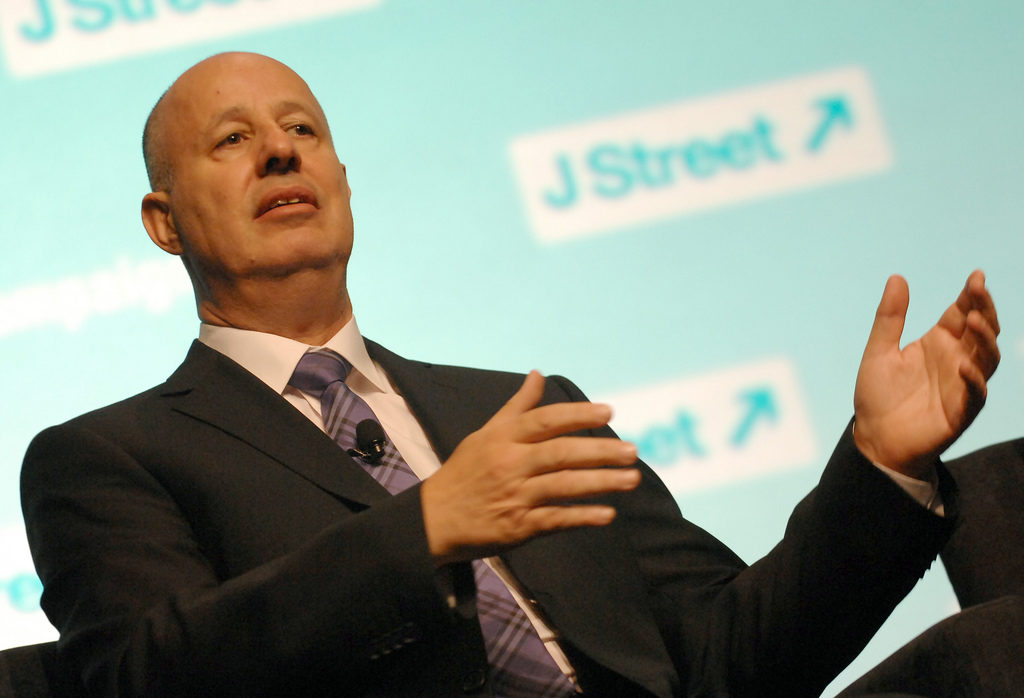
Trump bought into the good Jews-bad Jews view of the world in picking David Friedman as his ambassador to Israel. Most American Jews weren’t surprised that Trump would pick an envoy (and personal lawyer) who shared his and Bannon’s (and, in most ways, Benjamin Netanyahu’s) right-leaning, nationalist version of pro-Israel politics. But after getting over Friedman’s dearth of diplomatic credentials, they were shocked by his stated disdain for Jews on the other side of the argument. Writing for the pro-settler Arutz Sheva news site, Friedman labeled the left-wing pro-Israel group J Street as “not Jewish” and “worse than” the Jewish “kapos” who collaborated with the Nazis.

As my colleague Ron Kampeas pointed out, one traditional job of the U.S. ambassador to Israel is to serve as an envoy between and among American Jews — if not to agree with them, at least to assure them that they will be heard. Dan Shapiro, Obama’s ambassador to Israel from 2011 to 2017, was highly regarded on both sides for performing this function: Representing an administration that was often unpopular with much of the activist class, Shapiro respected, and earned the respect, of the other side.

Jews have done a good job all by themselves in dividing up their community into warring camps — and, perhaps worse, camps that barely talk with each other. The right-left divide, the schism between Orthodox and non-Orthodox schism — Jews didn’t need any help in creating these categories. But they also understood that Jewish influence would be diminished and Jewish security compromised if those on the outside were able to splinter an already splintered and tiny community into smaller and smaller pieces. That was the mantra of pro-Israel advocacy going back to the era of Max Fisher, a Jewish Republican who enjoyed good relations with Nixon.

In drawing up his enemies list, Nixon could barely distinguish between liberals and Jews, and decided he despised both. In drawing up its own list of friends, Bannon and Breitbart are happy to distinguish between the right sort of Jews and the wrong sort of Jews.

Trump isn’t one to reach out to those who disagree with him, to say the least. Divide and conquer was pretty much his campaign strategy. And so far his efforts at Jewish inclusion — like the polarizing International Holocaust Remembrance Day statement — have been dead on arrival.

The evidence is weak that Breitbart or Bannon are anti-Semitic. And Breitbart’s eager pro-Israel stance, like Trump’s, is unmistakable.

But what troubles so many Jews, including some Jewish Republicans, is the deeply conditional nature of a support that says “If you’re with me, I’m with you.” It’s the flip side of Nixonian mania. It’s also the ideological version of two of the weakest defenses in the accused bigot’s arsenal: “Some of my best friends are Jewish” and “I have Jewish grandchildren.”

Bannon and the Jews: A conditional kind of love Read More »

Syrian government campaign of extrajudicial executions

Amnesty International says as many as 13,000 hanged at prison

A new report by Amnesty International describes a campaign of mass hangings and extrajudicial executions at Saydnaya prison. Since 2011, at least once a week, groups of up to 50 people were taken from their prison cells and hanged to death. In five years, as many as 13,000 people, most of them civilians believed to be opposed to the government, were hanged in secret at Saydnaya.

The report called “Human Slaughterhouse: Mass hangings and extermination at Saydnaya prison, also shows that the government of Syrian President Bashar al-Assad uses torture and deprives detainees of food, water, medicine and medical care. The report shows how these policies have killed large numbers of detainees.

“The horrors depicted in this report reveal a hidden, monstrous campaign, authorized at the highest levels of the Syrian government, aimed at crushing any form of dissent within the Syrian population,” said Lynn Maalouf, Deputy Director for Research at Amnesty International’s regional office in Beirut.

“We demand that the Syrian authorities immediately cease extrajudicial executions and torture and inhuman treatment at Saydnaya Prison and in all other government prisons across Syria. Russia and Iran, the government’s closest allies, must press for an end to these murderous detention policies.

“The upcoming Syria peace talks in Geneva cannot ignore these findings. Ending these atrocities in Syrian government prisons must be put on the agenda. The UN must immediately carry out an independent investigation into the crimes being committed at Saydnaya and demand access for independent monitors to all places of detention.”

Amnesty carried out investigations over one year, and interviewed 84 witnesses including prison guards, detainees, judges and lawyers. In many cases, the prisoners did not know they were about to be killed. The report said that hangings at Saydnaya are carried out once or twice a week, usually on Monday and Wednesday, in the middle of the night. Those whose names are called out were told they would be transferred to civilian prisons in Syria. Instead, they are moved to a cell in the basement of the prison and beaten severely. They are then transported to another prison building on the grounds of Saydnaya, where they are hanged. Throughout this process, they remain blindfolded. They do not know when or how they will die until the noose was placed around their necks.

The accused are not given any real trial. One former judge from a Syrian military court told Amnesty International the “court” operates outside the rules of the Syrian legal system. “The judge will ask the name of the detainee and whether he committed the crime. Whether the answer is yes or no, he will be convicted… This court has no relation with the rule of law. This is not a court,” he said.

The Amnesty Report comes as Assad, backed by Russia and Iran, has made gains against Islamic State and retaken large swaths of territory. While it once seemed impossible that Assad would stay on as Syria’s leader, it is now seeming more likely that he will. Assad has an interest in convincing both his citizens and the world that he can peacefully govern Syria.

“The regime has been trying very hard to make things look like everything is okay to the external world,” Laila Kiki, the media spokeswoman at the Syria Campaign, which is a global Syrian advocacy group based in Washington D.C. and Beirut, told The Media Line.

But the Amnesty Report shows that life in Syria is far from normal.

Rape is common, as is torture. Amnesty says at least 17,000 people have died in prisons across Syria in addition to the 13,000 hanged between 2011 and 2015.

“Every day there would be two or three dead people in our wing… I remember the guard would ask how many we had. He would say, ‘Room number one – how many? Room number two – how many?’ and on and on… There was one time that… the guards came to us, room by room, and beat us on the head, chest and neck. Thirteen people from our wing died that day,” said “Nader”, a former Saydnaya detainee.

Syrian government campaign of extrajudicial executions Read More »

Jared as Trump Whisperer? Why a hoary cliche can’t be good for the Jews

“When the Jews are away, the goys will play.”

Alec Baldwin, playing Donald Trump on Saturday Night Live, is assured by an aide that his daughter Ivanka and her husband, Jared, have disappeared for Shabbat – not the Sabbath, not Shabbes: The Not Ready for Prime Time Player uses current Jewish parlance, the Hebrew “Shabbat.”

Which sets the Donald free, so to speak: He proceeds to run diplomatic havoc with Mexico, Australia, Germany and Zimbabwe. Jared and Ivanka “always keep me so calm and make sure I don’t do anything too crazy,” Baldwin-as-Trump says, which turns out not to be so much an appreciation but a lamentation.

Apart from the novelty of Shabbat entering the SNL lexicon, there is another significance to the cold open. It’s the latest manifestation of the Wise Jew, the serene archetype who presumably spends his off-hours with the Magic Negro and the Manic Pixie Dream Girl, polishing aphorisms and working on their warm, knowing chuckles to save the main (usually white and often male) characters from themselves..

All three figures – and there are others: the noble savage, the serene Oriental, the hospitable Arab – are hostility disguised as flattery. They are objectifications, and reduce whole ethnic and religious classes to flat and unlovable clichés. (Yes, unlovable. Who loves a scold? Right. Which is why Baldwin’s letting loose is so funny.) They are constrictive.

And they get dusted off from generation to generation and dressed up as new. The sassy black friends who until not long ago populated Lifetime movies as wise sidekicks might as well be crafted by Harriet Beecher Stowe, albeit after she binged on Cosmo. Kate Hudson, in a different age, could have as easily played Scheherazade — or Esther for that matter — as she did Penny Lane in “Almost Famous.”

And now here comes the wise, even-keeled goy-whisperer, as old as, well, Jesus and his disciples. Jared and Ivanka as Trump’s even keels — Mordecai and Esther to Trump’s Ahasuerus — cropped up in recent days in Vanity Fair, in New York Magazine, in the New York Times and on CNN. According to the Magic Jared theory, bad things happen when he’s not there to run interference.

None of it makes sense: The evidence in the most recent instance is Trump’s signing the chaos-inducing executive order banning travelers from seven predominantly Muslim nations. Trump signed the order at 4:42 pm on Friday, and Jared and Ivanka were busy getting ready for candle lighting, which was at 5:06 pm.

But Jared, as a top counselor to Trump, would have been consulted throughout the drafting process – if he was in the loop – and was still available by phone at signing. Is the implication that, had he been physically present, he would have examined the document and whisked it away, demanding revisions? That seems unlikely.

Abe Foxman, the Anti-Defamation League’s CEO-emeritus, sees a sinister side to the elevation of the Trump-Kushners to figures of overweening influence made unavailable because of a Jewish ritual.

“It’s about Jews controlling, in this case Orthodox Jews,” he said in an interview. “It’s disturbing, and sinister. What this comes down to is that if they didn’t observe the Sabbath, the immigration executive order wouldn’t have happened.”

I asked him if he thought there was sinister intent, and Foxman said no, but that was not the point: The default of the Controlling Jew never ends well for them.

“Ultimately, it blames the Jews for what goes on in the White House,” he said.

Eliza Davis, a Jewish friend of Charles Dickens, took the novelist to task for his portrayal of Fagin, the grasping den leader of a band of pickpockets, in his seminal work, “Oliver Twist.” Dickens, with the best of intentions, apologized, and created by way of atonement the Jew Riah in “Our Mutual Friend,” a character as noble as he is boring and in fact quite sickening.

When Dickens died, the London Jewish Chronicle eulogized him as follows: “He had touched the Jewish character with a somewhat rough and undeserved severity in the unreal character of Fagin. He made amends in his wiser more chastened days by the beautiful if equally unreal character of Riah.”

In modern parlance, the term of art would be: Don’t flatter us, don’t smear us. Just keep it real.

Jared as Trump Whisperer? Why a hoary cliche can’t be good for the Jews Read More »

The man who may replace Bibi

A close confidant of Israeli Prime Minister Benjamin Netanyahu, Tzachi Hanegbi, currently the Likud Minister of Regional Cooperation, arrived in the US capital last week to meet with Congressional officials and attend a Washington Institute for Near Eastern Policy (WINEP) seminar. With police investigations against the Israeli premier for alleged corruption intensifying, Ma’ariv and Al-Monitor columnist Ben Caspit wrote on Sunday that Netanyahu would likely select Hanegbi as his replacement if he were forced to step down.

During his time in Washington, Hanegbi spoke with Jewish Insider about the Iran deal, settlement construction and recent legislation to defund the United Nations stemming from its December resolution condemning Israel. While President Donald Trump had called his “number one priority to dismantle the disastrous deal with Iran,” Hanegbi clarified that such a move is not a “realistic demand.” The Likud minister added, “The US can withdraw from the agreement, but it is not going to make the agreement disappear or torn apart.”

Hanegbi declined to comment directly on the legislation pushed by GOP Senators Ted Cruz (R-TX) and Lindsay Graham (R-SC) about completely defunding the UN in response to the December Security Council vote. “I feel that it is not going to be wise on my part to give suggestions to the United States,” he noted. At the same time, Hanegbi added, “There are several ways to repair it. Not all of them are militant. Some of them can be through diplomacy.”

(Editor’s note: The interview was conducted before the White House statement on settlements)

Jewish Insider: Last week you said, “Nobody, I think, in Israel is really calling for tearing the JCPOA agreement (Iran deal) apart.” Why is this the case? 

Tzachi Hanegbi: “Because it is not realistic since it’s not only an American-Iranian agreement. It’s an agreement that was signed by the five permanent members of the Security Council plus Germany and it was adopted by the United Nations and the European Union and by most countries in the world. The US can withdraw from the agreement, but it is not going to make the agreement disappear or be torn apart. So that is not a realistic demand.”

JI: In response to the UN Security Council vote in December against Israeli settlements, should the US cut off all of its assistance to the international body? (Senators Ted Cruz (R-TX) and Lindsey Graham (R-SC) have introduced legislation to end American assistance to the UN) 

Hanegbi: “I feel that it is not going to be wise on my part to give suggestions to the United States what is the right way to repair the devastating damage that was done with this resolution. There are several ways to repair it. Not all of them are militant. Some of them can be through diplomacy. We know the target: to make this resolution disappear. How to do it? As I said, there are various options.”

JI: Have you met with any Trump Administration official while you are in Washington?

Hanegbi: “I am concentrating during my visit only on the Congress and the forum that was convened by the Washington Institute.”

JI: Prime Minister Benjamin Netanyahu announced plans to build 3,000 settlementhomes in the West Bank in addition to 2,500 units last week. Do you see this new construction surge in response to the new Trump presidency? 

Hanegbi: “I really don’t know why it was announced. I remember many protests of the last Administration so I am sure there were several occasions of such announcements. I don’t know why they were in week one [of the Trump admin] but I think that the administration understands that the way to go forward is to advance the negotiations and go back to discussing the issues. Once you have the solution, and you have final arrangements and two states for two people solution, there are not settlements anymore. There is a border and there is Palestine and Israel. This is a major understanding of the current administration.”

The man who may replace Bibi Read More »

Betsy DeVos narrowly confirmed as education secretary in historic vote

Betsy DeVos was confirmed as secretary of education, with Vice President Mike Pence casting the tie-breaker in a historic 51-50 vote.

DeVos, a Michigan billionaire whose advocacy for school choice has led to sweeping changes in the educational landscape in her home state, provoked divergent opinions in the Jewish community.

Both the Charedi Orthodox Agudath Israel of America and the Orthodox Union issued congratulations within minutes of the vote. It marked the first time a vice president broke a tie for a Cabinet confirmation.

In a letter to the Senate Education Committee last month, Agudath Israel of America expressed its support for DeVos, saying it had worked closely with her for years to change state laws that would make it easier to use vouchers for private schools, including religious schools.

“Mrs. DeVos will be an education secretary who is focused on the needs of each individual student and not on where he or she attends school,” the letter said.

In a separate letter to the committee, the Orthodox Union said DeVos “has a long history of advocating for and supporting” reforms favored by the group, though it stopped short of issuing an outright endorsement.

The Reform movement’s rabbinical arm, the Central Conference of American Rabbis, was opposed to the nomination, as were the National Council of Jewish Women and Jewish Women International.

DeVos’ support for school choice raised concerns among advocates of church-state separation, who oppose the diversion of public funds to religious institutions.

In a statement outlining questions it had for various nominees, the Reform movement asked the senators to ask DeVos about “the use of taxpayer dollars for sectarian education.”

“A central principle of the First Amendment’s Establishment Clause is that members of particular faiths, and not the government, should fund religious institutions,” the statement said. “When vouchers are used towards expenses related to religious school education, they become an indirect government funding of sectarian institutions.”

Betsy DeVos narrowly confirmed as education secretary in historic vote Read More »

19 rabbis arrested during protest at Trump hotel

Nineteen rabbis were arrested at a protest of President Donald Trump’s refugee ban in front of the Trump International Hotel in New York City.

The rabbis, who had gathered as part of a conference hosted by T’ruah, a rabbinical human rights group, were arrested for obstructing traffic in front of the hotel. After marching with a group of about 200 through Manhattan, they sat in front of the hotel and ignored repeated police warnings to disperse.

“Headed to 33rd precinct as one of 18 rabbis arrested tonight to send message that Jewish community stands with refugees & immigrants & refuses to let US close its borders again. #neveragain,” Rabbi Jill Jacobs, T’ruah’s executive director, posted on Facebook just before 9:30 p.m., about an hour after many of the protesters had left.

Protesters, many of them rabbis, came to the demonstration wearing prayer shawls, while others blew shofars to signal their opposition to the ban on refugees and nationals of seven predominantly Muslim countries enacted Jan. 27. One week later, a federal judge issued a temporary stay on the order.

The crowd, barricaded by police, chanted “No hate, no fear, refugees are welcome here.” Protesters held signs reading “My People Were Refugees Too” and “Another Rabbi Standing For Justice.”

T’ruah is one of several liberal Jewish groups that has opposed several of the president’s policies both during the campaign and since the election. The group has come out against Trump’s policies on immigration, refugees and civil rights, and also opposed his appointment of Stephen Bannon as a senior adviser. Bannon previously helmed Breitbart News, which he once described as a platform for the “alt-right,” a loose-knit movement whose followers traffic variously in white nationalism, anti-immigration sentiment, anti-Semitism and a disdain for “political correctness.”

19 rabbis arrested during protest at Trump hotel Read More »

Israel’s juvenile settlement legalization law

The newspapers cannot even agree on a name for the law that the Knesset passed last night, with a 60-52 vote.

One option: Provocative Law to Retroactively Legalize Settlements.

Another one: historic legislation hailed by the Right.

Another one: Contentious Palestinian Land-grab Bill.

Another one: Sweeping legislation that aims to prevent future demolitions of settler homes built on private Palestinian land.

What is this law really about?

It is a law that aims to prevent the evacuation of homes built on Palestinian-owned land many years ago – that is, to save a few hundred settlers an inconvenience. It is a law aimed to demonstrate to the public that the Knesset is doing everything within its power to support the settlers – an important political voting bloc. It is a law aimed at scoring points within the right-wing camp as its leaders try to position themselves for a future battle for Israel’s leadership in a post-Netanyahu era. It is a law aimed as provoking the High Court into proving, once more, that the incompetence of the right is truly the fault of legal elites rather than misguided policies.

Put me as an all-of-the-above responder. And also none-of-the-above. My headline for this morning – following the vote that affirmed the law that allows Israel to compensate a Palestinian land-owner, instead of evacuating a settler from a home built on the Palestinian’s land – is somewhat different. My headline is:

The Knesset passes provocative Frustration Law.

The Knesset passes – that’s a fact.

Provocative – I think that is also a fact. The Palestinians were provoked, the Israeli left was provoked, the status quo was provoked, and I assume many countries in the so-called International Community will claim to be provoked.

Law – Another fact. At least for now. It is a certainty that a legal appeal will force Israel’s High Court to decide whether this law is truly legal. It is widely assumed that the High Court is going to reject the legality of this law – as the Attorney General warned the government it will.

Frustration – Yes, that is the part I need to explain. Why do I call it the Frustration Law?

I will begin by reminding us all that Israel’s right-of-center coalition has been in power for most of the time since 1977. It is a strong coalition that has the support of most Israelis – and even more so of Jewish Israelis. It is a coalition that includes secular and traditional hawks, religious Zionists and ultra-Orthodox parties. It is a coalition sympathetic to Israeli settlements and to Israeli settlers in the West Bank.

It is also a coalition that never agreed on and never presented a coherent remedy for the Israeli-Palestinian conflict. While a dreamy Israeli left is willing to hand the Palestinians land in Judea and Samaria in return for peace; and while a more sober Israeli left-of-center advocates for an Israeli withdrawal from parts of Judea and Samaria to have a clear Jewish majority and rid Israel of the occupation (even if there is no peace as a result of such a move); the right-religious coalition is split and incoherent. Some factions of it maintain that the status quo is currently the only option. Some insist on a two-state solution yet maintain that the other state – Palestine – will be a “state minus,” whatever that means. Some want to keep all the settlements in place, and all the land in Israeli hands, and give the Palestinians “autonomy” (autonomy-plus is a little less than a state-minus). Some want to annex the territory and give all Palestinians the right to become Israeli citizens.

So the right has many solutions but not a solution. Moreover, it has many solutions that cannot be sold: Israelis are not quite comfortable with adding two million (or one and a half, as if that matters) Palestinian citizens. The international community does not accept the legality of settlements. The Palestinians show no inclination to accept any less than a full state status. The High Court insists that lawfulness has to be maintained.

The right is stuck. It has the political power, it controls the government and the Knesset, but it does not have a clear solution to sell, and does not have the majority to support it. Thus, it passes a law that is more an airing of frustrations than it is a solution to anything.

The right-wing coalition is frustrated with Israelis who do not accept its solutions (the “left” – namely, all those who do not support the coalition). The right-wing coalition is frustrated with an international community that attempts to pressure Israel to accept a solution that is also no solution. The right-wing coalition is frustrated with a court that refuses to let it look for solutions outside the boundaries of the law. The right-wing coalition is naturally frustrated with Palestinians, who refuse to agree to its prescribed remedy for the conflict.

So it turns to the immature non-solution of passing meaningless laws and declaring victory. As if keeping some home in the settlement of Ofra from being evacuated – in the unlikely scenario in which the court accepts the legality of the new legislation – solves anything. As if giving Israel the right to compensate private owners of land in the West Bank rather than letting them keep their land is going to lighten the burden of the conflict whose roots are deep and whose immunity to solution is strong.

No, the Israeli right is not responsible for the fact that the Israeli-Palestinian conflict is not yet solved. No, the Israeli right is not necessarily wrong in rejecting solutions that aim to dismantle all settlements and sever Israel’s ties to Judea and Samaria. No, Israel’s right is not the only faction whose bank of ideas is empty and whose only viable option is to more or less stick to the status quo.

But it is guilty of juvenile behavior. Passing a law to air its frustration with a complicated situation is juvenile behavior. After forty years in power, the coalition could be expected to be more mature. After forty years in power, it would be fair to argue that the time for juvenile behavior has passed.

Israel’s juvenile settlement legalization law Read More »