fbpx

February 2, 2017

Trump’s in the Torah

You learn a great deal at your average Shabbat dinner, not just about the family and the latest goings on in everyone’s lives, but also about God, religion, science and economics.

These days, if you like your relatives and wish to stay related to them, you avoid talking politics except to say, “Yes, ma’am, I know I should be ashamed of myself for voting for crazy, corrupt Hillary and before her, Muslim-spy-intent-on-destroying-this-country Obama. I understand that Trump is going to save America and you and me with it. I’m glad you already feel safer, richer and more powerful.”

You learn that every news article in The New York Times and The Washington Post is “fake,” and that renowned, anti-Trump, conservative columnists like David Brooks and George F. Will are “desperate liberals.” You also learn, as I did last Friday night, that Donald J. Trump’s name appears several times in the Torah.

This latest gem of knowledge, you’re told, has been unearthed by scholars of the Old Testament for some time, and now is available at your neighborhood Orthodox shul. It may not be readily visible to the average person reading the Torah, but it’s clear as day to the experts, like Tom Hanks in “The Da Vinci Code,” who can detect and interpret signs and patterns and secret codes buried in the text.

You learn all this and if you want people to like you, or at least not dislike you very much, you throw your hands up and say, I sure hope you’re right.

I realize there were Trump voters in this country who kept their intentions to themselves until they went into the voting booth, but I assure you they weren’t Iranian Jews. Among our kind, it’s the Democrats who keep a low profile, get laughed at or vilified for their beliefs, get shouted at, lectured to, accused of taking money from liberal groups to spread misinformation about one candidate or another. As far as I can tell, somewhere around 60 percent of Iranian-American Jews and at least 30 percent of Iranian-Americans of Muslim background are Trump supporters. The Jews like his support of Israel, the Muslims like his opposition to the regime in Iran.

Well, who am I to say if these people are right or wrong? I have my opinion and they have theirs. I’m always wary of candidates who promise a great deal, and I’m quick to see and point out shortcomings in candidates I voted for. I’d be an imbecile to want to change anyone’s mind or to think that’s actually possible in today’s political climate. But if I were foolhardy enough to try to engage my Trumpist countrymen, and stupid enough to expect a civil response, I would really, truly, sincerely want to know how they explain the distance between what they advocate for the rest of the world and what they want for themselves.

Iranian hawks on Israel, for example, will tell you that peace with the Arabs is impossible, but they wouldn’t be caught dead letting a single one of their children serve in the Israeli army, much less fight in a war. I’m talking about those Iranian Jews who came to the United States instead of settling in Israel, or who settled in Israel until their children were of military service age, then quickly moved to the States.

Iranian hawks on Iran — Iranians of Muslim heritage — can’t wait to send American troops to the region, but only because we don’t have a draft.

They have no problem with a president who will appoint conservative judges to the Supreme Court, couldn’t care less whether Roe v. Wade is overturned, but most of them wouldn’t hesitate to get an abortion. They say they’re not racist; they just happen to know that a woman who looks like Michelle Obama should not be allowed in the White House. They vote against LGBT rights until one of their own comes out. They say Barack Obama was a traitor because his middle name was Hussein and that he bowed to the Saudi king, but they don’t mind at all Trump’s cozy relationship with Putin.

They, who immigrated to this country less than four decades ago, truly believe that banning refugees who have been vetted for 36 months before being allowed into the country is morally and strategically sound. They, the majority of whom stayed in this country illegally — after their tourist or student visas ran out — and operated under the radar for years until they were able to gain political refugee status, who have put to excellent use the cheap labor provided by undocumented  men and women from south of the border, who have made fortunes from manufacturing goods in Asia or South America or selling stuff to Mexico, will tell you without irony that all illegals should be deported and all economic borders should be protected. That anyone who breaks the law by staying in the United States without permission must be sent back.

I would like to know how they rationalize these contradictions, and I’d love to know which genius code breaker detected Trump’s name in the Torah, but I’ve already made myself unpopular enough with my people, so I let it rest.

GINA NAHAI’s most recent novel is “The Luminous Heart of Jonah S”

Trump’s in the Torah Read More »

The many faces of the Jewish refugee

Since the global refugee crisis took over front pages and cable networks, a popular statistic in the Jewish world has been the number 36. It’s mentioned frequently by politically attuned and progressive-leaning clergy as the number of times, at minimum, Jews are commanded in the Torah to care for the stranger in their midst, for they were strangers in the land of Egypt.

But there’s no need to look as far back as the Exodus to remember a time when Jews were strangers in a strange land. The face of the modern refugee is kaleidoscopic: Syrian, Afghan, Rohingya, Yazidi, Sudanese, Congolese. This effect is found in miniature within the many colors of the Jewish refugee over the last century: Persians, Russians, Iraqis, Poles, Germans, Algerians, and others who have sought respite in America.

In the few days since President Donald Trump signed an executive order restricting refugee admissions, the anti-Nazi theologian Marvin Niemoller has enjoyed a new vogue for his verse: “First they came for the Socialists, and I did not speak out. … Then they came for me — and there was no one left to speak for me.” Today’s body politic has reimagined these lines as, “First they come for the Muslims, and then we said, ‘Not this time!’ ”

By compelling them to reach outward, to march for and alongside Muslims, the recent protests have caused American Jews to look inward and to draw on their own past. A look inside the very long — and yet very recent — history of Jewish refugees reveals a diversity that reflects today’s global refugee crisis, as well as its pervading narrative of persecution and hardship.

Collected below, edited for clarity and length, are six of these Jewish refugee stories, in their words.

cov-ebrahimi-then

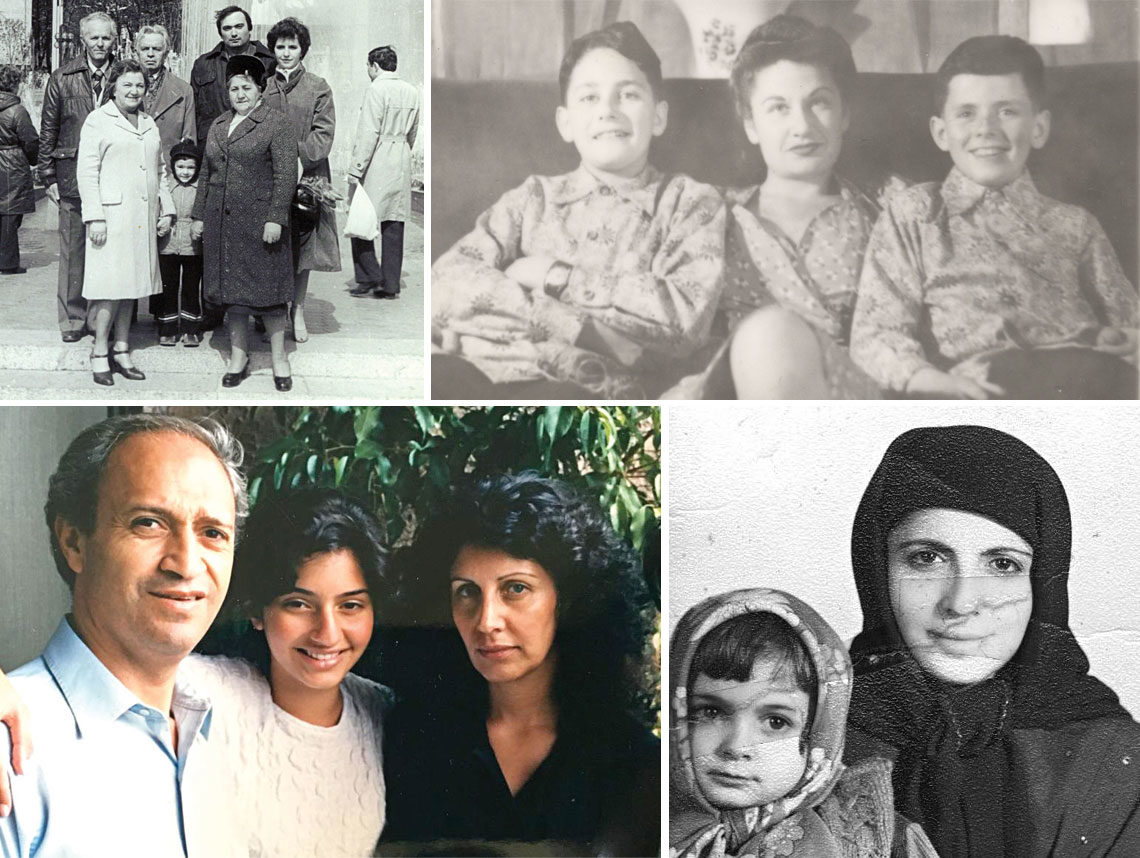
From left: Simon Ebrahimi, his daughter Maryam and wife, Nahid, in Los Angeles in the early 1980s, shortly after arriving from Iran. Below: the portrait for his 2012 novel.

cov-ebrahimi-useAfter a few months, we arrive at the New York airport. I’m with two little children and my wife. And my wife, who knows my temperament, she said, “You just don’t argue with anybody. Let’s go through this.” I said, “Fine.” So the guy calls me and says, “Why didn’t you let go of our hostages?” I said, “Excuse me?” “You Iranians,” he says. “Why didn’t you let go of our hostages?” … The third time, which is, you know, typical, he came and he said, “You still didn’t respond to me.” I said, “You know what, why don’t you and I go to Iran together and release the hostages? It’s a simple solution!” 

— Simon Ebrahimi, 79, Woodland Hills


cov-milana-vayntrub-small

Milana Vayntrub as a toddler, newly arrived from Soviet Uzbekistan. As an adult, she has earned national fame in a series of AT&T commercials.

cov-milana-vayntrubThis is little me on the front steps of our apartment building in West Hollywood, in my coolest athletic gear. Most people living in that community were immigrants and it brought us so much closer together knowing we had this generous network of friends and babysitters we could rely on. A few years after arriving to America, my grandparents immigrated and moved in next door. My grandmother used to make Russian dumplings by hand and sell them to delis. She used her earnings to pay her way through school, where she studied English and accounting. Last year, she was able to comfortably retire. She’s a huge inspiration.

— Milana Vayntrub, 29, Hollywood


cov-igor-mikhaylov-old-kiev-1983

Igor Mikhaylov (center) in 1983 with his family in Kiev. Below: Mikhaylov with his wife and sons in 2013.

cov-igor-mikhaylov-yom-kippur-2013-75-of-1My family and I left the Soviet Union in 1989 when I was 10. We were escaping anti-Semitism, which was rampant. Jewish refugees could not go directly to the U.S., and places like Austria, where we were initially settled, were overrun with refugees. The situation could get very heated, with Austrian protestors holding picket signs that said, “Shoot the Jews!“ and yelling “Sterben!” — “Die!” Later, we settled in a beautiful Italian coastal town, Santa Marinella. It had magnificent views of the Tyrrhenian Sea, palms, beach and a medieval castle, but none of it was really enjoyable since we were living in limbo. People had heart attacks, aneurisms, nervous breakdowns. Then came the vetting process and questions such as, “Were you ever members of the Communist party?” The only correct answer was “No!”  Who would check? How can you prove it?

— Igor Mikhaylov, 38, Granada Hills


cov-penina

Penina Meghnagi Solomon (above, second from right) with her family in a refugee camp in Italy in 1967, after fleeing Libya. Below: in 2013.

cov-penina-nowI can remember the black sky from the burning. And we were in terror because they were looking for the Jews. … We lost everything. We had property, we had money in the banks. … I remember coming in [to the refugee camp in Italy] and not knowing where we’re going to sleep, what we’re going to eat, whatever. I was 17. And my mom was a widow at that time. … But maybe because my personality is I’m always looking to the positive on anything, I was happy to leave [Libya]. I was happy to leave to a place where I was subjugated to always worry, always with the head half turned back, you never know when you’re going to be pinched or someone’s going to try to kill you. So for me, we were on our way to freedom and it was a good feeling.

— Penina Meghnagi Solomon, 67, Valley Village


cov-geminder

Bob Geminder (right) with his brother George and cousin Muriel shortly after he arrived with his family in the U.S. after the Holocaust. Below: Geminder in Los Angeles in 2016.

cov-geminder-nowI was 12 years old. Knew no English pretty much, just some really bad words that the soldiers taught me at the German [displaced persons] camp. … This [photo above] was in East Orange, N.J. — that was kind of our first stop in America. … We were at that DP camp in Germany in Regensburg for about a year and a half, and that was kind of my first schooling. That’s where I learned the alphabet, I learned what two plus two is — you know, some math.. … The big joke in the Regensburg camp was, “Don’t worry about it — you’re going to find money on trees in America.” Me, being a foolish 12-year-old, I started looking at the trees.

— Bob Geminder, 81, Rancho Palos Verdes


cov-tabby-mom-tabby

Tabby Refael (left) with her mother in the 1980s, shortly before emigrating from Iran. Below: Refael with her son in 2017.

cov-tabby-nowThe black-and-white photo features my mother and me in Iran in the mid-1980s. Iran printed the word “Jew” next to our names on our passports. Months later, on the same document, the Americans printed the three greatest words that have ever been written about us, stamped in a miraculous, indisputable promise: “Protected Refugee Status.” That alone should tell us something about the differences between repressive theocracies and redemptive democracies. I am eternally grateful to Congress and to HIAS (formerly the Hebrew Immigrant Aid Society) for the gift of a renewed life, as this photo of my son and me in America in 2017 conveys. It also captures my inner joy at not having had to wear a mandatory Muslim head covering in more than 28 years.

— Tabby Refael, 34, Pico-Robertson

The many faces of the Jewish refugee Read More »

Netanyahu announces new settlement for Amona evacuees as police work to empty outpost

Israeli Prime Minister Benjamin Netanyahu announced that a new West Bank settlement will be established for the evacuated residents of the Amona outpost.

Netanyahu made the announcement Wednesday evening as Israel police and security forces were evacuating the last of the homes for the 40 families living in Amona.

It will be the first new settlement established in 25 years.

A committee assigned to promote the establishment of the new settlement, according to the statement sent out by the Prime Minister’s Office, will determine its location and start the process of establishing it. The committee will be made up of representatives of the settlers,  Netanyahu’s chief of staff, and Defense Minister Avigdor Liberman’s adviser for settlement affairs, according to the announcement.

Netanyahu promised the Amona residents more than a month ago that he would provide them with a new community if the deal struck with them at the time fell through.

Earlier on Wednesday, Israel’s Supreme Court cancelled a December agreement by the government and the Amona residents to move their community to land adjacent to the evacuated outpost, after Palestinians came forward claiming ownership of the land.

Earlier, the Supreme Court ruled that Amona is an illegal settlement built on appropriated Palestinian land. At least three demolition orders have been issued since 1997.

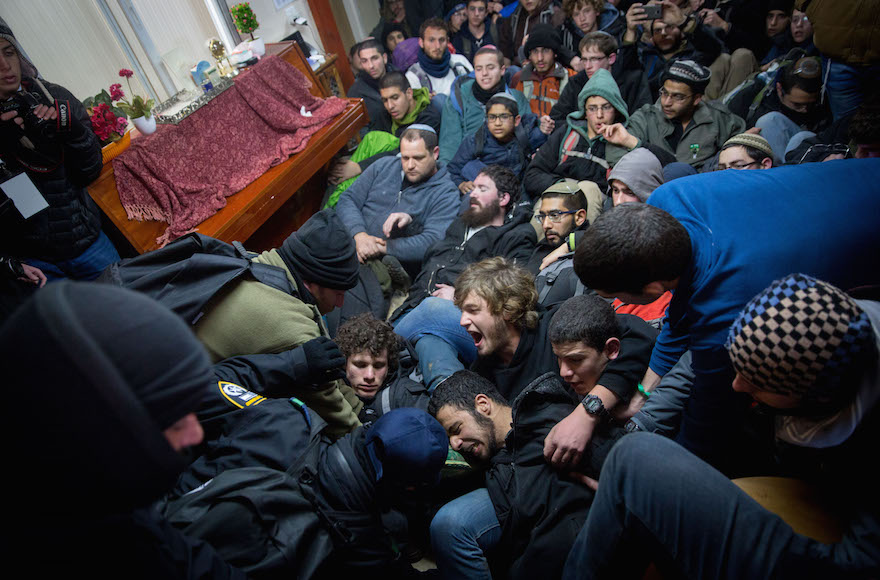
As of late Wednesday night, police and security officers had emptied nearly all of the Amona houses and evacuated at least 4,000 protesters from the outpost, according to reports. Some 60 people reportedly remained holed up in the outpost’s synagogue, and it was estimated that the operation to evacuate the outpost would take until morning. It is not known when the demolition of the buildings would be complete.

At least 24 police officers have been injured in the evacuation, with the arrest of 13 protesters.

Temperatures fell below zero after nightfall, making the evacuation harder on Israeli forces and protesters alike.

Hundreds of police entered Amona on Wednesday morning to carry out the court-ordered evacuation. The activists, including many teens, had stationed themselves in homes and the outpost’s synagogue.

Some police were hit and injured by rocks as well as caustic materials, such as bleach and paint.

In 2006, a confrontation between settlers and police forces attempting to evacuate them turned violent, leaving many injured. The February demolition was postponed from Dec. 25 to give the state time to provide new housing for the residents.

Netanyahu announces new settlement for Amona evacuees as police work to empty outpost Read More »

Jewish patients taking new look at rhinoplasty

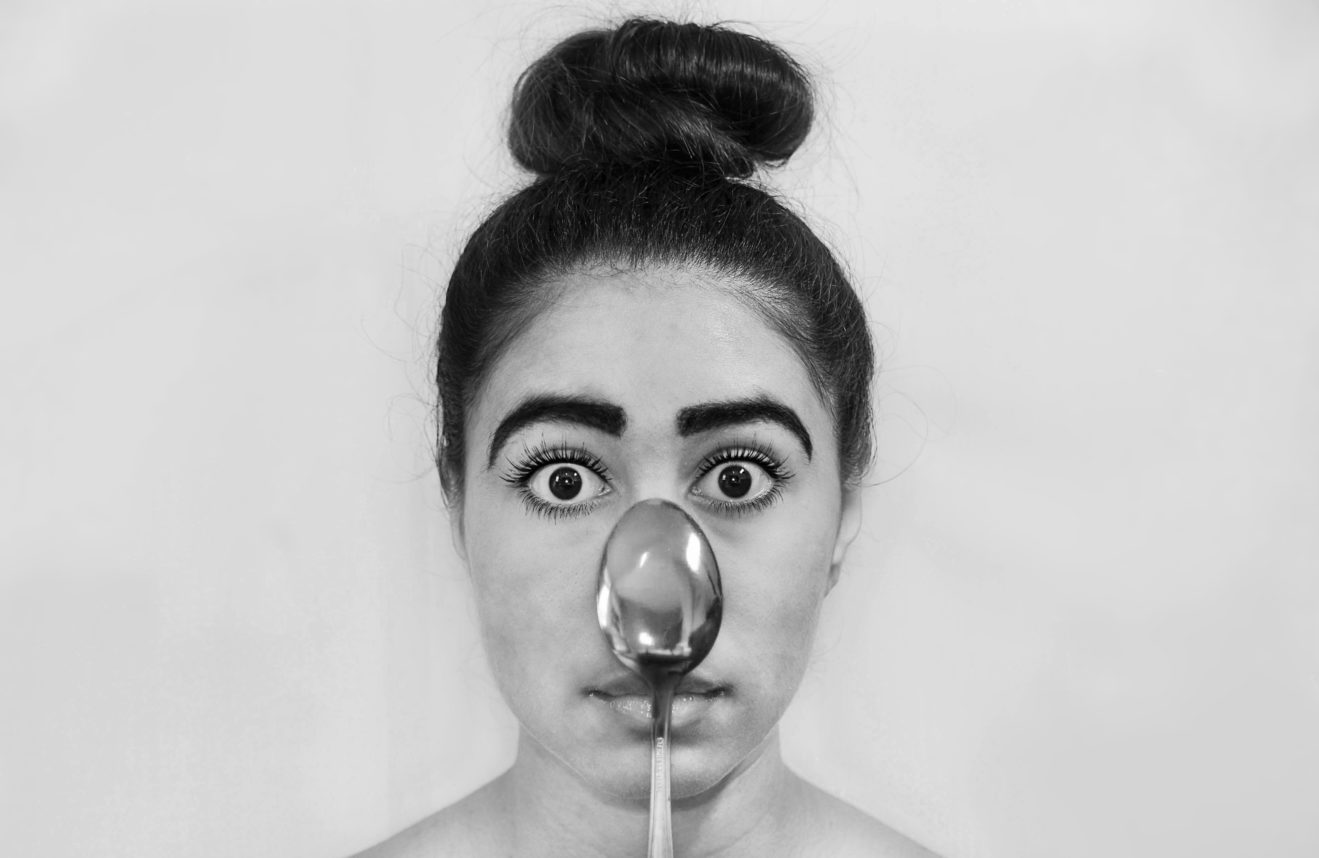
Whether to assimilate or meet a specific standard of American beauty, generations of Jewish teens and young adults have turned to rhinoplasty and other cosmetic surgeries in hopes of improving their career, romantic prospects or social acceptance.

More recently, however, as Jewish patients redefine their notions of beauty, Los Angeles area Jewish plastic surgeons are changing the way they communicate with their patients about what cosmetic surgery — if any — should be done.

These doctors report they also are getting a new wave of Jewish baby boomer clients who have had second thoughts about rhinoplasties done earlier in their lives. Whether they acquired the “button” nose (a standard nose job “style” from the mid-20th century) or something a bit more natural done recently, they want to rediscover their identity by having their original nose reconstructed.

“It’s the Jennifer Grey effect,” Dr. Alexander Z. Rivkin explained, referring to the Jewish actress whose rhinoplasty affected her appearance dramatically. “[My patients] felt like they had lost their uniqueness, a part of their body that connected them to their family and heritage.”

“Mark,” a New York native and California transplant, experienced this effect. After finding success during the 1980s San Francisco tech boom, he decided to have a nose job, thinking it would enhance his status and acceptance in the comparatively less-Jewish milieu of the Bay Area.

“I used to have a Bob Dylan nose, not large but clearly Semitic,” he said. “After the nose job, my cousin told me I looked like an Episcopalian.”

health1Even after a successful procedure, Mark realized he no longer looked like himself. When a music industry job brought him to Los Angeles a few years later, he embraced the city’s larger Jewish community but felt guilty about his nose job. Fully comfortable in his Jewish skin, he found he wanted his old nose back.

The procedure, revision rhinoplasty, can cost from about $14,000 to $24,000, depending on the surgeon, location and specific techniques required. According to Mark’s Beverly Hills-based doctor, Behrooz Torkian, the rebuilding of ethnic features involves using grafts from cartilage elsewhere in the body, such as an ear or a piece of rib, to re-establish features of the nose that were removed. Reversal procedures, he said, are performed more often for Ashkenazi Jews who received “cookie cutter” noses that did not fit their faces in the days before computer imaging.

“Mark’s story resonated with me because I think the worst thing that can be done to a face is to change it in such a way that does not respect its original anatomy or the ethnic features of the face,” Torkian said.

Rivkin, a Westside surgeon and assistant clinical professor at the David Geffen School of Medicine at UCLA, started offering a less invasive and expensive alternative to revision rhinoplasty 13 years ago in response to Jewish patients who said they felt as if they had lost a critical part of themselves when they had their ethnic bump shaved down.

The procedure, which involves injected cosmetic fillers, ranges from $2,000 for a temporary procedure lasting up to 18 months to $4,000 for a “permanent” procedure, lasting 10 years or more.

health2Dr. Nima Shemirani, a Beverly Hills facial plastic surgeon, said although younger Jewish patients explore rhinoplasty and other procedures to fit Hollywood ideals of beauty, future generations will be more accepting of their natural ethnic features. He recommends beginning the “Why rhinoplasty?” conversation earlier in life with a board-certified practitioner, especially because revision rhinoplasty is always more complex than primary rhinoplasty, with double the healing time — especially for Middle Eastern and Sephardic Jews.

“A rhinoplasty can be more drastic for these patients and take away ethnic features which may be desirable as they get older,” Shemirani said. “Ashkenazi Jews have more Caucasian features and, therefore, a rhinoplasty can simply help enhance their looks without losing their ethnicity. Even so, we like to catch patients before they make the mistake of getting a nose that doesn’t match their face.”

Torkian pointed out that the standardized “button,” “cookie cutter” or “pixie” nose associated with baby boomer patients does not match up with many other Jewish features and, therefore, telegraphs that a procedure has been done.

However, with advances in preoperative imaging and surgical techniques, today’s primary and revision procedures reflect a more ethnically sensitive approach to the face as a whole. While these advances give the advantage to patients undergoing surgery for the first time, they also have sparked a
trend among patients who previously had not had the opportunity to avoid the “cookie cutter” nose.

“We live in a world in which cultural tolerance and religious sensitivity are greater than they have been in the past,” Torkian said. “I think the desire to keep some cultural or ethnic features is multifaceted and complex, but it appears that people generally are embracing their heritage, are proud of it, and want to ensure not to completely wipe it off of their faces.”

Jewish patients taking new look at rhinoplasty Read More »

Dr. Ruth’s mission: Sexual literacy

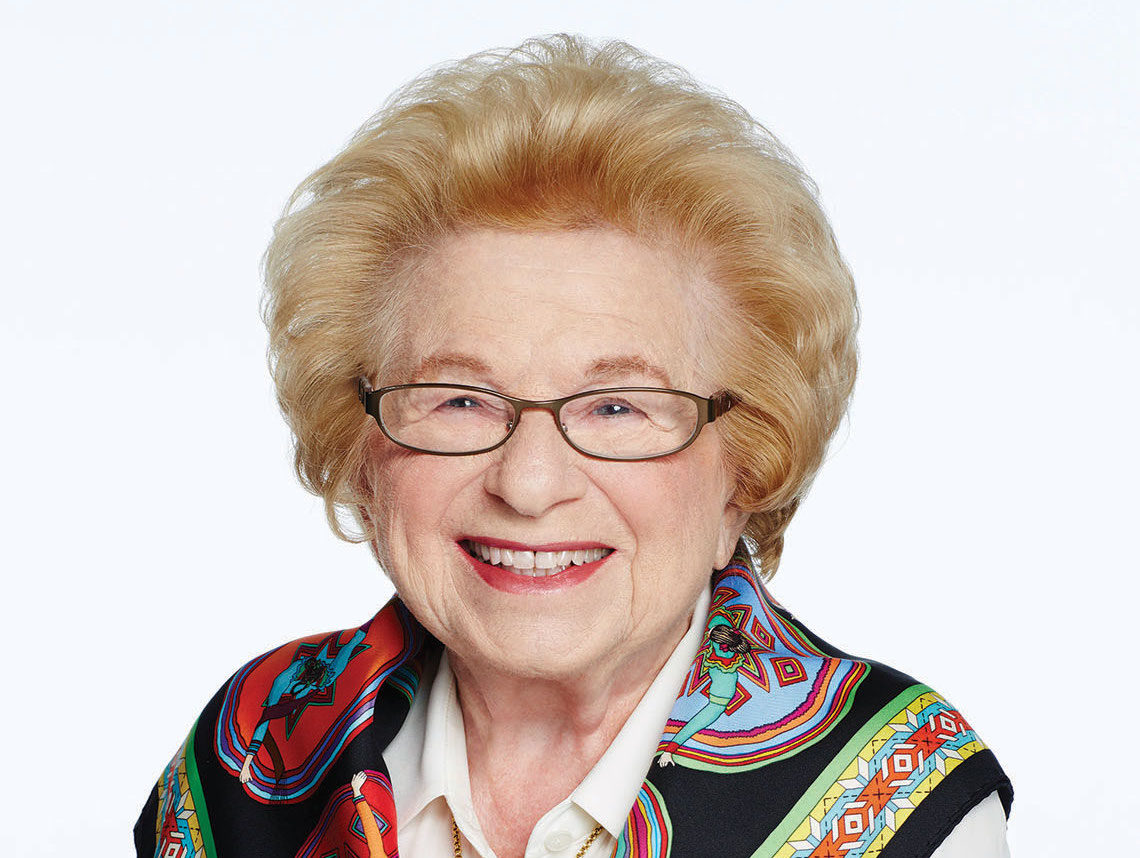
Ruth Westheimer is not someone who gets embarrassed easily.

At 88 years old, the therapist, author and media personality better known as Dr. Ruth still is giving the kind of frank sex advice that would make some people half her age blush.

An iconic figure in the art of sexual-health straight talk, Dr. Ruth is known for her pioneering 1980s radio show “Sexually Speaking,” television programs such as “The Dr. Ruth Show,” her globally syndicated advice column “Ask Dr. Ruth,” and more than 40 books, including “Sexuality in the Jewish Tradition” and her latest, “The Doctor Is In: Dr. Ruth on Love, Life and Joie de Vivre.”

On Feb. 4, Dr. Ruth will bring her expertise to Los Angeles, appearing as the keynote speaker at the annual Sexual Health Expo, an upscale sex-education event at the California Market Center. Her talk is titled “Dr. Ruth on Sexual Literacy: The Knowledge Base You Need to Have Terrific and Safer Sex.”

Notwithstanding her impressive career in sex therapy, Dr. Ruth’s life has been far from one-dimensional. Born in 1928 in Germany, she was evacuated to a children’s home in Switzerland at the age of 10 to escape the Holocaust. In her late teens, she went to Israel and became a sniper for the Jewish underground army, Haganah, and was injured by a bomb. After spending time in France, she moved to the United States in 1956 and obtained a doctorate in education from Columbia University. She went on to study human sexuality at the New York Hospital-Cornell University Medical Center, and she worked for Planned Parenthood and as an adjunct professor at Lehman College in the Bronx before rising to fame with her “Sexually Speaking” radio show.

In a phone interview with the Jewish Journal from her home in New York, Dr. Ruth spoke about her upcoming West Coast trip and offered some of her trademark sex advice.

Jewish Journal: What do you plan to talk about at the Sexual Health Expo in Los Angeles? 

Dr. Ruth Westheimer: I will talk about sexual literacy. I will talk about many of the things that we now know. [In the United States], we have the best scientifically validated data about human sexuality. [But] there are still things that have to be researched, and we still need some more good studies in order to have everybody have the best sex life possible.

JJ: What is sexual literacy? How can people become more sexually literate?

RW: Sexual literacy is that people have to know about their own bodies, what they need, what is pleasurable to them. And once they are in a relationship, they have to know about their [partner’s] body’s needs and desires.

One of the reasons that I have been talking so openly for the last … maybe 50 years about issues of sex is because, for us Jews, sex has never been a sin, but always an obligation to be engaged in by a couple and to make sure that they do have sex on Friday night — that it is a mitzvah.

I’m old-fashioned and a square, and I believe that the best sex is in a relationship, not necessarily marriage, but in a relationship — that people know each other and trust each other.

JJ: What’s your single biggest piece of advice for people looking to improve their sex lives?

RW: To read some books. They don’t have to be just my books. And to make sure that they say, “I would like to pleasure my partner as best I can.” With these good intentions, people can learn. … They can look at some movies, but they shouldn’t think that movies depict a realistic picture of sex. Any of the sexually explicit material is exaggerated. Nobody can have sex like [that].

JJ: You’ve been giving people sex advice for a long time. How have attitudes toward sex changed? 

RW: The attitudes have certainly changed. People are much more willing to learn, much more willing to ask questions, and even a fair like this one in Los Angeles shows that there is a thirst, a desire for people to be better lovers. And I welcome that. I think that is wonderful.

One thing that certainly has changed: Women have to take the responsibility for their sexual satisfaction. They can’t say, “If he loves me, he has to know what I need.” That doesn’t work.

Then there’s a whole body of knowledge that women have to know because very often they don’t know that just before an orgasmic response there is a moment where nothing happens. … Very often a woman says, “OK, it’s not going to happen.” She gives up. She has to know that [in] that moment where nothing happens, she just has to continue to be stimulated or to stimulate herself in order to be sexually satisfied.

JJ: What progress do you think still needs to be made when it comes to sexuality?

RW: I think that people still have to learn when they are in a relationship not to be bashful, but to make sure that the partner knows what they would like. And if they would like something that the partner does not want to do, then they have to accept that. In the olden days, that would have been about oral sex. These days, I hear that more about anal sex. … Nobody should ever be pressured into an activity that they don’t want.

Dr. Ruth Westheimer will speak at 2 p.m. on Feb. 4 at the Sexual Health Expo at the California Market Center, 110 E. Ninth St., Los Angeles. For free tickets, visit this story at jewishjournal.com .

Dr. Ruth’s mission: Sexual literacy Read More »

Health science startup teams with Mayo Clinic on personalized nutrition

DayTwo, the world’s first provider of health improvement and disease prevention solutions based on gut microbiome research, is collaborating with the renowned Mayo Clinic in Minnesota to bring its first product, DayTwo Personalized Nutrition Solution, to early adopters in the United States.

Based on research from Israel’s Weizmann Institute of Science in Rehovot, Israel, showing that different people respond differently to the same food, DayTwo provides actionable health solutions for improving health and preventing disease by balancing blood-sugar levels in a personally tailored way.

As high blood sugar is linked to energy dips, excessive hunger, weight gain and increased risk for diseases such as obesity, diabetes and hypertension, balancing blood-sugar levels presents a significant health benefit.

The research generated an algorithm for predicting individualized blood glucose response to different foods based on gut microbiome information and other personal parameters. This algorithm was further developed by DayTwo and the Weizmann Institute, and predicts blood-sugar response to thousands of foods and meals.

The collaboration is managed by Dr. Heidi Nelson, director of the Microbiome Program at the Mayo Clinic Center of Individualized Medicine.

DayTwo CEO Lihi Segal says the collaboration is well aligned with the company’s U.S. launch targeting health-conscious and pre-diabetic individuals. “Providing our solution to U.S. consumers in a clinical trial setting with the Mayo Clinic allows us to calibrate our predictive algorithm for the U.S. market,” she said.

The Mayo Clinic will participate in Series A funding for DayTwo, which is registered in California and has offices in Rehovot.

Health science startup teams with Mayo Clinic on personalized nutrition Read More »

Does your child really need that antibiotic?

ImmunoXpert, a novel blood test developed in Israel, accurately distinguishes between bacterial and viral infections in children, according to a study recently published in The Lancet Infectious Diseases. The international study in children was led by researchers from the University Medical Center in Utrecht (The Netherlands).

ImmunoXpert, made by MeMed in Tirat Carmel, also was shown to outperform routine tests significantly.

“The results are beyond our expectations,” said principal investigator Dr. Louis J. Bont from the division of pediatric immunology and infectious disease at the Dutch medical center. “We independently confirmed that the test is highly accurate in children, with significantly better diagnosis compared to any of the routine tests we use today. It has the potential to significantly aid us in reducing antibiotic overuse and combating bacterial resistance. To our knowledge, this is the first prospective validation study for a diagnostic assay differentiating between bacterial and viral infections that was double-blinded.”

MeMed CEO Eran Eden said the company “took the unusual risk of allowing leading experts to independently evaluate its tests in a double-blind manner,” meaning that neither those taking part nor the researchers knew which participants belonged to the control group.

Eden continued, “We are excited that the new results corroborate the findings of our previous study,” published in March 2015 in PLOS One. “This is another important milestone in our continuous efforts to generate clinical evidence of the highest quality to support our tests.”

“Unlike most traditional diagnostics, which focus on identifying the disease-causing virus or bacteria, ImmunoXpert looks at the immune system where it identifies markers that indicate if the patient is fighting a bacterial or viral infection,” Dr. Kfir Oved, MeMed chief technology officer, said. “This immune system-based approach overcomes the inherent limitations of many traditional diagnostic tools. It is accurate and rapid and can diagnose infections that are not readily accessible, such as pneumonia.”

The study evaluated 577 children ages 2 to 60 months with lower respiratory tract infections or fever without a source. ImmunoXpert was accurate in distinguishing between clear bacterial and viral infections with a sensitivity of 88 percent, specificity of 93 percent and a negative predictive value of 98 percent. ImmunoXpert outperformed routine tests, reducing the number of cases in which viral infections were erroneously diagnosed as bacterial, by more than 50 percent.

ImmunoXpert is cleared for clinical use in the European Union, Switzerland and Israel. MeMed is collaborating on a series of multi-center clinical studies, enrolling more than 10,000 patients, and has plans to conduct clinical studies in the United States in 2017. The company is partnering with international stakeholders from industry and government to facilitate global availability of its tests.

Does your child really need that antibiotic? Read More »