fbpx

February 2, 2017

Celebrating Jewish Culture With a Homespun Mix

For two evenings last week, Deborah Kattler Kupetz’s midcentury modern family home in the winding hills of Brentwood underwent a Cinderella transformation when it became a makeshift theater. With 85 chairs set up in the living room and ambient lights casting moody spotlights onto four barstools at the fireplace, this was the setting for the Jewish Women’s Theatre and the performance of “Matzo Ball Diaries,” foodie monologues revolving around Jewish identity.

“I host these evenings because not only is it a privilege, it’s the ultimate hospitality,” Kattler Kupetz told the Journal. Hers is one of many homes and venues throughout the city hosting this program. The next performances are scheduled for Feb. 3 at Temple Isaiah in Los Angeles and Feb. 12 at Congregation Tikvat Jacob in Manhattan Beach.

At 7 p.m., audience members began arriving at the Kattler Kupetz home with canned goods for a Jewish Family Services food drive and homemade cookies for a pre-show nosh.

“Who are we as a people? What defines us as a culture?” Ronda Spinak, artistic director at Jewish Women’s Theatre, asked the audience before the show. The answers came as four actors performed vignettes about Sephardic and Ashkenazi customs, kugel, tomato omelets, pancakes, pork chops in cream, cheese blintzes, and, as the finale, matzo balls.

Lisa Klug, a Jewish Journal contributor, wrote the matzo ball closer, a piece called, “A Jewish American Love Poem,” from her humorous book “Hot Mamalah: The Ultimate Guide for Every Woman of the Tribe.” Usually performing it as slam poetry, she had flown down from San Francisco specifically for the premiere of the show.

“This is the first time that my writing is being staged in a theatrical production, and I didn’t want to miss it,” she said. The fact that the production was staged in a home made the experience more thrilling for Klug, who has watched her poem evolve with each performance.

On this particular evening, Cliff Weissman, the only male among the actors, was in the middle of a monologue when the doorbell rang. This is how it goes with the Jewish Women’s Theatre; with performances held in homes, salon-style, phones sometimes ring. So do doorbells. But in the spirit of any performance, the show must go on.

“Partly, it was an economic decision to go into homes, and partly it was reviving and reinventing the tradition Jewish women have had,” Spinak told the Journal. The group also owns The Braid, a performance space and art gallery in Santa Monica, which now is showing “Nourishing Tradition,” an art exhibition with themes similar to those in “Matzo Ball Diaries.”

“What a wonderful way to perform!” gushed actress-writer Shelly Goldstein, an artist-in-residence at Jewish Women’s Theatre who performs in the show. “You don’t have to worry about sets and costumes or props. It’s the most honest, the most generous. It’s raw.”

The production is bare-bones. Actors read from binders, evoking the feeling of a cold-reading. At times, the spare presentation can feel uncomfortable and expository. In “My Lekker Figure,” a monologue adapted from Robyn Travis’ book in progress “The Tokoloshe,” actress Emma Berdie Donson talked about her eating disorder, her skeletal figure and protruding hip bones. The audience fell dead silent.

“Oh, dear” a woman gasped.

“What I love is how powerful the material is received when you just strip it down to the words and the performance,” said “Matzo Ball Diaries” director Susan Morgenstern. “We talk about the teeniest of things, the smallest of pauses, and the inflection and what they mean and how they’ll be received. So it’s really careful detailed work.”

There are moments of levity, as well, when the audience becomes part of the performance; because the venue is a home, the “fourth wall” between actors and audience is often broken.

“I love the piece about brisket,” said Morgenstern, referring to a monologue by Rene Moilanen, “The Secret to Brisket,” which chronicles a granddaughter’s sifting through her grandmother’s recipe book, only to find that each recipe is composed of instant mixes and microwave instructions.

The secret to her grandmother’s brisket? Lipton’s Onion Soup Mix. It’s a running joke throughout the monologue that catches on and soon has the audience chiming in, saying the catchphrase with the actors: Lipton’s Onion Soup Mix. Women in the audience laughed, nodding their heads, maybe because they, too, use Lipton’s Onion Soup Mix in their brisket.

It’s through these stories, about brisket or matzo balls or whatnot, that the narratives of Jewish women (and men) are told. “Stereotypes about Jews are everywhere in society, so we’re trying to hold up a mirror to ourselves in a way,” Spinak said. “We try really hard to offer up a full range of who a Jew is today. We have a very broad view of that.”

The Jewish Women’s Theatre tries to peel away the stereotypes through its productions. The 2017 season continues with “Exile: Kisses on Both Cheeks,” about the Sephardic traditions (March 18-April 3), and “More Courage,” about the correlations between Muslims and Jews (May 6-22). Also, on Feb. 16, Rain Pryor, the daughter of Richard Pryor, teams up with the   Jewish Women’s Theatre to present her one-woman, autobiographical show, “Fried Chicken and Latkes.” It will run for six weeks at The Braid..

Additional shows are being planned by the Jewish Women’s Theatre’s millennial group, NEXT @ The Braid, funded by Jewish Community Foundation’s Cutting Edge Grant and The Jewish Federation of Greater Los Angeles. The millennials are receiving writing submissions through Feb. 20 on the theme “The Space Between,” a show about divisions and finding common ground.

“We need to see our stories. We need to hear our voices. It would be nice to see a well-rounded representation of who we are,” Goldstein said.

Which brings up the question: Who is the Jewish woman?

“She is not one thing,” Goldstein answered.

She is an old family recipe. She is challah rising in an oven. She is a mother-in-law’s kugel recipe. She is Lipton’s Onion Soup Mix.

Celebrating Jewish Culture With a Homespun Mix Read More »
‘Remember the 11 Million’?

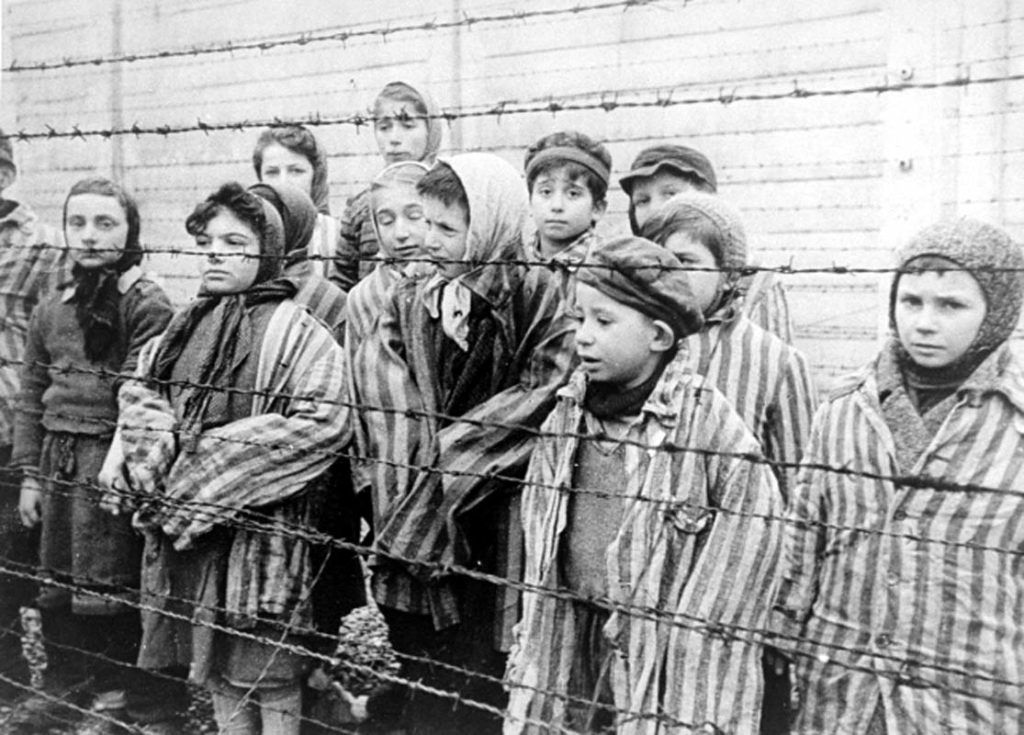
“Five million non-Jews died in the Holocaust.”

It’s a statement that shows up regularly in declarations about the Nazi era. It was implied in a Facebook post by the Israel Defense Forces’ spokesperson’s unit on Jan. 27 marking International Holocaust Remembrance Day. And it was asserted in an article shared by the Trump White House in defense of its controversial Holocaust statement the same day omitting references to the 6 million Jewish victims.

It is, however, a number without any scholarly basis.

Indeed, say those close to the late Nazi hunter Simon Wiesenthal, its progenitor, it is a number that was intended to increase sympathy for Jewish suffering but which now is more often used to obscure it.

The White House statement sent waves of dismay through the Jewish community, including among groups that have been supportive of President Donald Trump.

By mentioning the “victims, survivors, [and] heroes of the Holocaust” without mentioning the Jews, said a host of Jewish organizations, the statement risked playing into the hands of the European right, which includes factions that seek to diminish the centrality of the Jewish genocide to the carnage of World War II.

In defending the omission of Jews from the statement, a White House spokeswoman, Hope Hicks, sent CNN a link to a 2015 Huffington Post-UK piece titled “The Holocaust’s Forgotten Victims: The 5 Million Non-Jewish People Killed By the Nazis.”

Sean Spicer, the White House press secretary, appeared to cite the same source on Jan. 30, saying that the Nazis’ victims included Roma, gays, the disabled and priests. He called complaints about the statement “pathetic.” In the wake of the controversy, the world’s two leading Holocaust museums, in Washington and in Jerusalem, issued statements emphasizing the centrality of the annihilation of the Jews to the understanding of the Holocaust; neither mentioned Trump.

The “5 million” has driven Holocaust historians to distraction ever since Wiesenthal started to peddle it in the 1970s. Wiesenthal told the Washington Post in 1979, “I have sought with Jewish leaders not to talk about 6 million Jewish dead, but rather about 11 million civilians dead, including 6 million Jews.”

Yehuda Bauer, an Israeli Holocaust scholar who chairs the International Holocaust Remembrance Alliance, said he warned his friend Wiesenthal, who died in 2005, about spreading the false notion that the Holocaust claimed 11 million victims — 6 million Jews and 5 million non-Jews.

“I said to him, ‘Simon, you are telling a lie,’ ” Bauer recalled. “He said, ‘Sometimes, you need to do that to get the results for things you think are essential.’ ”

Bauer and other historians who knew Wiesenthal said the Nazi hunter told them he chose the 5 million number carefully: He wanted a number large enough to attract the attention of non-Jews who might not otherwise care about Jewish suffering, but not larger than the actual number of Jews who were murdered in the Holocaust, 6 million.

It caught on: President Jimmy Carter, issuing the executive order that would establish the U.S. Holocaust Memorial Museum, referred to the “11 million victims of the Holocaust.”

Deborah Lipstadt, a professor of Holocaust studies at Emory University in Atlanta, wrote in 2011 how the number continues to dog her efforts to teach about the Holocaust.

“I have been to many Yom HaShoah observances — including those sponsored by synagogues and Jewish communities — where 11 candles were lit,” she wrote in an article in the Jewish Review of Books in which she lacerated Wiesenthal’s ethical standards. “When I tell the organizers that they are engaged in historical revisionism, their reactions range from skepticism to outrage. Strangers have taken me to task in angry letters for focusing ‘only’ on Jewish deaths and ignoring the five million others. When I explain that this number is simply inaccurate, in fact made up, they become even more convinced of my ethnocentrism and inability to feel the pain of anyone but my own people.”

The problem, according to Bauer, who has debunked the number repeatedly in his writings over the decades, is not that non-Jews were not victims; they were. It is that Wiesenthal’s arbitrarily chosen tally of non-Jewish victims diminishes the centrality to the Nazi ideology of systematically wiping any trace of the Jewish people from the planet.

In fact, he said, the term “genocide” could accurately be applied to the 2 million to 3 million Poles murdered and millions more enslaved by the Nazis. But the mass murder of the Poles, Roma and others should not come under the rubric “Holocaust,” a term that Holocaust historians generally dislike because of its religious connotations but nonetheless have accepted as describing only the annihilation that the Nazis hoped to visit on the Jews.

“All Jews of the world had to be annihilated,” Bauer said. “That was the intent. There was never an idea in Nazi minds to murder all the Russians.”

The number 5 million also adheres to no known understanding of the number of non-Jews killed by the Nazis: While as many as 35 million people were killed overall because of Nazi aggression, the number of non-Jews who died in the concentration camps is no more than half a million, Bauer said.

Mark Weitzman, the director of government affairs for the Simon Wiesenthal Center, said that Wiesenthal, in advancing the number, “never intended to minimize the Jewish specificity of the Shoah,” the Hebrew word for Holocaust.

“He was trying to draw attention to the fact that there were other victims of Nazi genocide,” Weitzman said.

Rabbi Marvin Hier, who founded the Wiesenthal Center and delivered the benediction at Trump’s inauguration, told CNN on Jan. 31 that Trump’s statement on International Holocaust Remembrance Day was a “mistake,” but one he did not believe was intended to diminish Jewish suffering.

“I do not accuse President Trump of wanting to dishonor the memory of the victims of the Holocaust who were Jewish, but it was a mistake,” he said.

Lipstadt, writing in The Atlantic, is not so sure.

“It may have all started as a mistake by a new administration that is loath to admit it’s wrong,” she wrote. “Conversely, it may be a conscious attempt by people with anti-Semitic sympathies to rewrite history. Either way, it is deeply disturbing.” n

‘Remember the 11 Million’? Read More »

The Promise of Ahmed Hussen

He came to Canada as a 16-year-old refugee from Somalia. He’s highly regarded across the Canadian political spectrum. He was just appointed as immigration minister in the cabinet of Prime Minister Justin Trudeau.

Now 40 years old, Ahmed Hussen has a promising career in front of him. And in these polarized, fragmented times, he is exactly the kind of public figure we need when it comes to clarifying the wider debate about immigration and Islamism, human rights and national security. 

Trudeau, the leader of Canada’s Liberal Party, often has been lampooned as a “Kumbaya” do-gooder, devoted to his liberal conscience and slow-witted when it comes to recognizing that fanatics across the world with diametrically opposed views to his are gaining strength and power. I will leave it to readers to judge whether any of that criticism is fair, but I will say that Trudeau’s appointment of Hussen shows a boldness that contrasts markedly with the approach of former President Barack Obama, despite their broadly similar worldview. 

Obama, remember, regards the word “Islamist” as an insult rather than a descriptor. But Hussen has a record of actually tackling Islamism in his own community, engaging in the kind of political fight that Obama would most likely have dismissed as a sop to the radical, nationalist right.

Writing in the Toronto Sun, columnist Tarek Fatah, a close friend of Hussen’s — “though we disagree on much,” he noted — related the time the two first encountered each other. In 2004, Muslim activists in Ontario launched a campaign for the introduction of Islamic Sharia law in the province’s family courts, arguing formally that they simply wanted the same rights that were granted to the Catholic and Jewish communities under legislation passed in 1991.

They were supported in this demand by Marion Boyd, a former attorney general who authored a report arguing that it was impossible to sustain Catholic and Jewish law-based family courts while denying them to the Muslim community. But Fatah and others weren’t buying it.

“Opposing them was a much smaller group of secular and liberal Muslims — including yours truly — for whom this was a do-or-die moment,” Fatah wrote. “We knew how the U.K. had let this happen many years before, only to discover, too late, the Muslim community of Britain being held hostage by Islamic clerics.”

For Fatah and his fellow secularists, permitting Sharia courts in Canada would have effectively involved legal surrender to a conservative clerical establishment. Homa Arjomand, a Canadian-Iranian human rights campaigner, eloquently summarized the problem as she pushed back against Boyd’s recommendations. “Our lawyers are studying the decisions of several arbitration cases and will bring them to court and expose how women are victimized by male-dominated legal decisions based on 6th century religion and traditions,” she said at the time.

Eventually, a decision was reached that neatly reflected the dilemma that all liberal democracies face when balancing the need to strengthen secular values against the demands of a vocal religious minority. Sharia courts were not permitted in Ontario, which meant that other religions also were prevented from resolving family disputes in faith-based courts.

As Fatah tells it, Hussen played a diligent, behind-the-scenes role in this episode. Newly minted as a Liberal Party staffer, he introduced the secularists to prominent Ontario politicians, allowing them to present their case directly. 

The importance of having someone like Hussen countering Islamist encroachment among Muslim communities in the West cannot be overstated. As a child, he had seen firsthand the horrors of the conflict in Somalia, which triggered an Islamist surge in that country nearly a decade before the 9/11 atrocities. In Canada, he became a community activist, helping to secure $500 million in funds to revitalize the community in which he lived in Toronto. Moving into immigration law was perhaps the natural next step for him to take.

Now that he’s in Trudeau’s cabinet, Hussen is well positioned to drive home a key message that is increasingly being lost in the global agonizing over national security, particularly in America. Simply put: Islamism and Islam are distinctive concepts.

“Distinctive” does not mean, of course, that they are entirely separate. The imperative of waging jihad in order to impose the rule of Sharia law did not suddenly appear out of nowhere; rather, that struggle is grounded upon authentic Islamic texts, Islamic laws and Islamic traditions. The argument over whether Islamic radicalism is a distortion of Muslim teachings (a default position held by politicians as diverse as George W. Bush, Tony Blair and Obama) or a faithful reflection of them (as argued by nationalists in America and Europe) will continue to rage. 

My own perspective, based on nearly two decades of observing Islamists and their fellow travelers in the West, is that a sledgehammer approach to the more fundamental issue of Muslim integration may play well politically in the short term but is highly destructive in the long term. 

Nobody could seriously argue that Islam is a united body, after all. It is more accurately understood as a culture in the grip of a brutal civil war — between Shia and Sunni, between secular authoritarians and radical clerics, between competing jihadi schools — that is simultaneously linked, ideologically and operationally, to monstrous acts of terrorism against non-Muslims inside and outside the Muslim world. There were plenty of warnings before the 9/11 attacks that this trend was growing, such as the 1994 Iranian-sponsored bombing of the AMIA Jewish center in Buenos Aires, but Western politicians by and large ignored or misunderstood where this tide was heading.

If we are to avoid repeating these same errors, we need to learn from the past by understanding that Islam’s internal fissures can work to our advantage. But there is nothing to be gained from a situation in which the very word “refugee” becomes a pejorative, as is more and more the case in America, or when we face legislative proposals that could, for example, prevent Kurdish Muslims from Iraq and Syria — traditionally our close allies — from entering our country.

In that sense, we can learn much from people like Ahmed Hussen about the importance of nuance and compassion. As a former refugee, he instinctively understands the plight of those driven from their homes by war and genocide. As a human rights advocate, he grasps that some groups are far more vulnerable than others — which is why he just announced that Canada will allow entry to an unspecified number of Yazidis from Iraq, who have been horribly persecuted by Islamic State, within the next four weeks.

At the same time, Hussen’s record suggests that he recognizes the clear difference between practical support for the victims of extreme cruelty on the one hand, and sinking into nebulous cultural relativism or knuckleheaded bigotry on the other. Partisans of both left and right would do well to consider that.

Ben Cohen, senior editor of TheTower.org and The Tower magazine, writes a weekly column for JNS.org on Jewish affairs and Middle Eastern politics. His writings have been published in Commentary, the New York Post, Haaretz, The Wall Street Journal and many other publications. He is the author of “Some of My Best Friends: A Journey Through Twenty-First Century Antisemitism”  (Edition Critic, 2014).

The Promise of Ahmed Hussen Read More »

Linda Sarsour and American Jewish politics

Those seeking to build coalitions must make a difficult decision early on: What compromises are we willing to make on other core commitments in order to effectively organize with those who share this core commitment?

The philosopher Avishai Margalit stipulates that the first way to think about this question is to determine whether we are speaking in terms of “religious compromise” or “economic compromise.” Religious compromise offers very little margin of error; in his memorable phrasing, compromising over the holy risks compromising the holy. Economic compromise is far cruder and simpler, and operates through a simpler cost-benefit analysis. Rotten compromise, the kind we must not do, entails making common cause with evil. Most coalition builders, in trying to assess with whom they can ally, struggle to determine whether they are in the religious or the economic model, and can be paralyzed with indecision in the fear that their choices ultimately produce something rotten.

This is the framework with which I have been thinking about the “Linda Sarsour moment” in American Jewish politics, wherein a major social justice and interfaith activist who was a central organizer of the women’s marches around the country — and who has a track record of outspoken criticism against Israel and Zionism — invites controversy, and hopefully more thoughtful deliberation, on the choices we make about our alliances in the pursuit of our political causes. This issue is presenting itself now, as well, in the form of anti-Trump protests organized by the Council on American-Islamic Relations (CAIR), an organization with a long history of vexed relationship with the Jewish community as it relates to divergent politics on Israel. CAIR was out in force at last weekend’s airport protests against President Donald Trump’s immigration orders.  How does our community, committed to Israel as well as a host of other social justice commitments, navigate collaboration with other faith and political leaders who not only oppose one critical piece of our community’s agenda but often even militate against it?

In response to this challenge, the instinct by many communities is to create “litmus tests” — tools of assessing loyalty and commonality that establish the legitimacy of partnership. In this arena, I see two equally problematic tendencies that represent opposite extremes but that yield similar solutions.

On the left, the litmus test in vogue — and one that sometimes leads progressive activists to exclude Zionists from their camp — relies on a pure application of the academic theory of intersectionality. In arguing for the deep, structural, interdependent relationship among forms of oppression, this form of ideological purity makes acceptance of a total program or platform into a litmus test.

It may make for an incredibly powerful political community; only those who subscribe to the full network of commitments — ostensibly with equal passion for all forms of interrelated injustice — can participate as members. Yet its rigidity also is likely to yield an incredibly small group.

The opposite approach, still bewilderingly au courant in some Jewish communal circles, is the “single-issue” litmus test approach, which evaluates ideas and people on the basis of a single issue — almost always Israel politics. This is a different form of ideological purity. But rather than insisting on purity through linkages, the litmus test insists on a singular cause as the evaluative instrument of legitimacy. This is single-issue politics of disqualification, which works very well for the border police who enforce it, and is baffling and exasperating for most others who live inside or outside the enforced parameters.

If the pure intersectional approach is flawed for seeking perfect or consistent structures as the organizing principle in which to hold a wide group of imperfect and inconsistent moral actors, the single-issue approach is flawed for the perversity that it periodically engenders. As many have noted, the anger in the Jewish community about a line in the platform of the Movement for Black Lives created the risk of moral tragedy. As a friend wrote to me recently: “I can’t support black kids not being gunned down, because some of the movement leaders don’t meet my Israel ideology purity test? That’s the hill we want to die on?”

Neither of these approaches then really works. Rather, they are better at restricting, constricting, and ultimately diminishing effective political community than constituting strategies for effective organizing and growth across diversity. Most political movements actually require broader coalitions than litmus tests allow, such that the foregoing “coherence and conviction” become the discourse of a shrinking and failing minority. I want to instead propose an alternative set of strategies and considerations to replace the litmus test, and to provide some conceptual tools that could be helpful to the efforts at building community, while maintaining loyalty to the moral fabrics and commitments that community-building means to advance.

First, I suggest that we work to articulate a hierarchy of our moral commitments that we can crudely divide among what we consider moral imperatives, moral concerns, and — further down the line — political preferences. Firmly entrenched ideologies of political communities — political parties, religious denominations, etc. — make it easy for their adherents to conflate these three, but they are really separate, and precision counts.

All of us carry around with us a short list of moral imperatives that reflect our central commitments. These are ordering principles in our political universe, and it would be difficult for us to inhabit communities — or to make personal life decisions — that did not follow their mandates. Separately, however, we carry around a longer list of moral concerns — the issues we care about (often deeply) but which do not rise to the level of ordering our families, communities, and life choices. Most of us can tolerate relatively easily living in community with people who do not value the same full list of moral concerns, but we struggle to do so when it comes to moral imperatives.

On the basis of this, my suggestion for building political community is that in lieu of comprehensive or single-issue litmus tests, we endeavor to follow a “two-thirds and 51 percent” rule, which would state as follows: We identify in political communities, or organize for particular causes, with people who share, or at least do not operate in contradistinction to, two-thirds of our core moral imperatives, and with whom we agree on a minimum of 51 percent of our moral concerns.

We need both of these categories — the imperatives and the concerns — precisely because we need a weighted standard which recognizes that some commitments are more significant than others, on one hand, and because a successful political community simply needs to capture a majority viewpoint to be politically successful, on the other. “Two-thirds and 51 percent” enables individuals to belong to communities in which they broadly agree with the consensus viewpoints and are not challenged more than they can be about their central moral commitments. It means a certain degree of manageable discomfort that is implicitly assuaged by the gains accrued by belonging.

Belonging in political community to people with whom we have significant differences — that one-third matters! — does not mean we assent on those issues. We can disagree and fight vigorously on those issues where we have deep disagreement, and I am not proposing that we paper over those differences. But the major added advantage here is that we find more effective common cause than is possible in the inherently constricting litmus test approach, which not only closes off a wider network of allies that we all desperately need, but which also creates a culture of suspicion even toward those with whom we are close. The litmus test approach is a negative structure toward cultivating loyalty; “two-thirds and 51 percent” tilts toward creating cultures of broad assent. Besides, the winning causes do precisely this. It is only the losers who debilitate their own side with infighting.

I recognize that there are those people, on the right and on the left, for whom their relationship to Israel is not just a moral imperative but an exclusive imperative; and for whom, therefore, common cause with an opponent issue entails transgressing an impassable line. I respect this position, especially in its self-awareness of its hierarchy of moral choices. But I also believe it is a tragic position to take in a political moment that requires of us commitments to more than one moral imperative; and also because I wonder whether our willingness to work with outspoken critics of Israel right now, when we agree on many other issues, may in fact enable us to manage those tensions with those critics more effectively in the long run. I think a David Ben-Gurion-like position is a perfectly tenable moral position that balances multiple moral imperatives: We fight for our moral values in American political life as though there was no disagreement with our allies on these issues on Israel, and we fight on Israel with critics of Israel as though there was no domestic agenda. The existence of multiple moral frameworks with which to view the world is not a sign of confusion; it is a sign of sophistication and strength. 

All the following can be true at the same time: that we need community, that our communities stand for core values, that political community can create change, and that each of us have particular, individual moral commitments that constrain our capacity to be in relationship with others who do not share them. But we might be able to build technologies and calculations, such as the ones that I am proposing, that respond to these challenges strategically, unlike the blunt instrument of the litmus test. For the urgent goals of our community and our broader society, I believe a new approach is overdue. 

Yehuda Kurtzer is the president of the Shalom Hartman Institute of North America

Linda Sarsour and American Jewish politics Read More »

Moving & Shaking: Pico Shul goes skiing, BJE and AFOBIS celebrate

Pico Shul went to the mountains over the Martin Luther King Jr. holiday weekend with a shabbaton organized by the Orthodox congregation and the young professionals group JConnect.

The three-day retreat, called Camp Neshama, was held at the Dovid Oved Retreat Center in Running Springs, Calif., which is owned and operated by Bnei Akiva of Los Angeles, the local branch of the international religious Zionist youth movement.

More than 30 young professionals took advantage of the surroundings, spending the weekend skiing and snowboarding at the nearby Snow Valley Mountain Resort, sledding on tiny hills inside the grounds of the retreat center and enjoying communal kosher meals.

“People go to what they want, or they can hang out, relax and make new friends and talk, and have conversations into all hours of the night,” Rabbi Yonah Bookstein, spiritual leader of Pico Shul, said in a Jan. 15 interview as people prepared for car rides back to Los Angeles.

The weekend was the congregation’s second Camp Neshama. The inaugural event was held last Labor Day.

A Friday night dinner kicked off the retreat. On Saturday, people spent daylight hours doing yoga, going on nature walks and attending a lecture on relationships by Bookstein’s wife and Pico Shul rebbetzin Rachel Bookstein.

On Saturday night, people wore wireless headphones to listen to two stations of music — one with Israeli dance tunes and the other with contemporary pop hits — and boogied silent disco-style.

Decked out in ’80s-style snow gear, artist, yoga instructor and writer Marcus Freed was among those who braved the slopes on Sunday before reconvening with the rest of the group in the afternoon for lunch.

The event culminated with a farewell breakfast Monday morning. Shelli Carol, a tutor from Palo Alto, said she appreciated the philanthropic Alevy family for sponsoring the gathering, adding, “I spent my weekend having way too much fun and not getting enough sleep.”


A4558-034

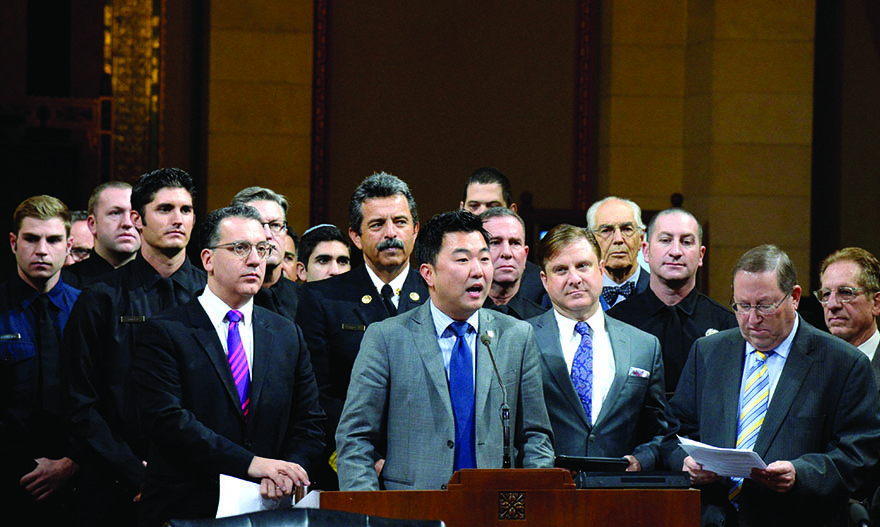
Los Angeles City Councilman David Ryu speaks at a ceremony honoring seven firefighters who volunteered in Israel. Directly behind him are (from left) councilman Bob Blumenfield, fire chief Ralph Terrazas, city controller Ron Galperin and councilman Paul Koretz. Photo courtesy of Council District 4.

Los Angeles Fire Department Chief Ralph Terrazas joined Los Angeles City Councilmembers David Ryu, Bob Blumenfield, Mitchell Englander and Paul Koretz at City Hall on Jan. 20 to honor seven local firefighters who traveled to Israel in November to fight the deadly blazes that erupted there.

The seven men, six from the city fire department and one from the Los Angeles County Fire Department, took time off from work and paid their own expenses to travel to Israel with the Emergency Volunteers Project, an Israeli government-backed organization that trains emergency responders abroad to assist in Israel in times of need. The organization counts 950 volunteers trained since 2009.

The men were LAFD firefighters Elan Raber, Shaun Gath, Aaron Brownell and Ben Arnold, LAFD engineer Dennis Roach, retired LAFD apparatus operator Mike Porper and L.A. County Fire Department firefighter Jake Windell.

The major fires that broke out across Israel, from both arson and natural causes, left more than 1,000 people homeless and caused about a quarter of the city of Haifa to be evacuated.

The firefighters also were honored the same day at the headquarters of the Consulate General of Israel in Los Angeles.

“The state-to-state relationship, as well as the personal friendships that have developed between the first responders in Los Angeles and Israel, serve as a reminder of the strong ties between the two countries,” a statement from the consulate said.

Consul General of Israel in Los Angeles Sam Grundwerg, Consul for Political Affairs Yaki Lopez and Consul for Public Diplomacy Maya Kadosh attended the ceremony at the consulate.

Eitan Arom, Staff Writer


ms-beit-issie-shapiro-gala

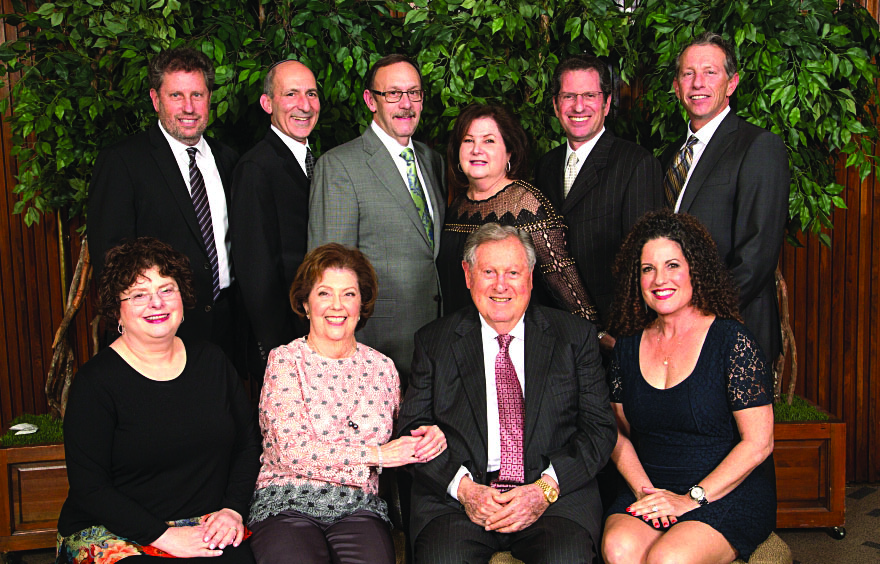
From left: Errol Fine, chair of the West Coast board of AFOBIS; Consul General of Israel in Los Angeles Sam Grundwerg; AFOBIS board member Lee Samson and his son, Daniel; and Benjy Maor, director of global resource development at Beit Issie Shapiro. Photos courtesy of American Friends of Beit Issie Shapiro.

The American Friends of Beit Issie Shapiro (AFOBIS) West Coast regional gala 2016 was held at Sinai Temple on Nov. 17.

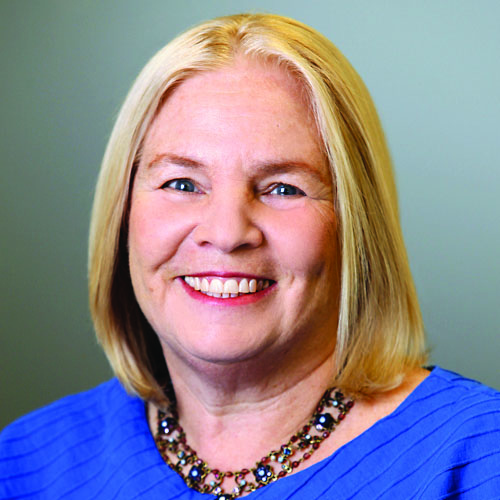
ms-sharon-cermakThe event honored Sharon Cermak, a professor in the department of pediatrics at the Keck School of Medicine of USC, with the AFOBIS humanitarian award.
“I’ve always done work with kids with disabilities and I think Beit Issie is one of the premier institutions for work with children, so being honored by Beit Issie, by a Jewish organization, really meant the world to me,” Cermak said in an interview.

Cermak currently is involved with a program at Children’s Hospital Los Angeles, adapted from an initiative at Beit Issie Shapiro, that creates a sensory-friendly environment for children with autism receiving dental care. As part of the program, soothing music is played, the dental office lights are dimmed, and a vest is placed on patients so as to apply deep, comforting pressure to them.

“We’ve developed something at Beit Issie Shapiro, a butterfly vest, which provides children with a ‘hug’ from a butterfly,” Cermak said. “The vest on the chair wraps around the child and provides deep pressure, which is calming for children [and] helps kids be calmer.”

Beit Issie Shapiro is an Israel-based organization that serves children living with disabilities. Located in Ra’anana, Israel, the organization offers early intervention and medical services as well as special education programs to children living with autism, and it develops technologies that improve the quality of life for people living with disabilities.

Consul General of Israel in Los Angeles Sam Grundwerg attended the event and said the organization demonstrates that Israel is more than the Israeli-Palestinian conflict.

“Beit Issie Shapiro is a glowing example of Israel as an innovation nation imbued with compassion, combining high-tech and high heart,” Grundwerg said. “As a global leader of innovative therapies and state-of-the-art services for children and adults with disabilities, Beit Issie Shapiro is an unparalleled ambassador for the State of Israel.”

Additional attendees included Avishai Sadan, dean of the Ostrow School of Dentistry of USC.

Headquartered in New York, AFOBIS raises funds to support Beit Issie Shapiro.


ms-bje-meet-the-millers

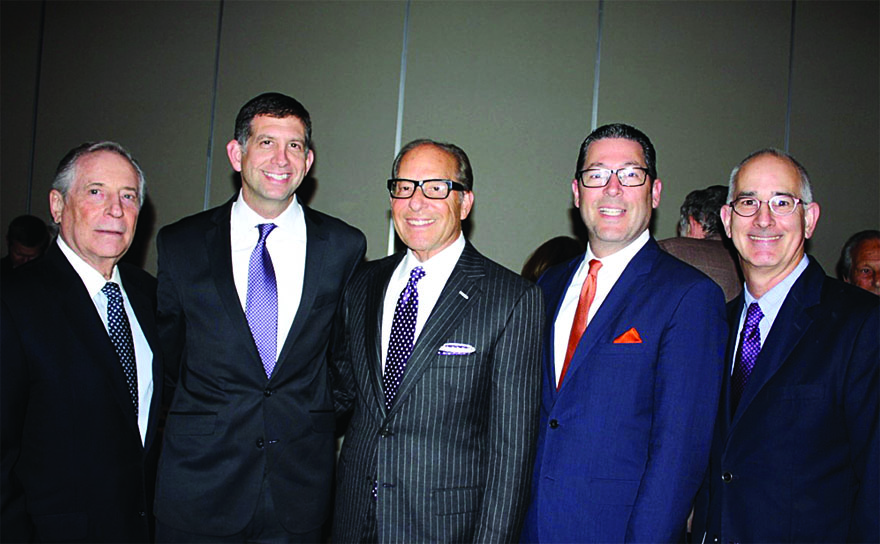
Attendees at the Builders of Jewish Education gala included (from left, top row) Philip Miller, Gil Graff, Alan Spiwak, Adrian Miller, Larry Miller and Jerry Katz, as well as (from left, bottom row) Judy Miller, Judy and Louis Miller, and Caryn Katz. Photo courtesy by Mark Lee.

Builders of Jewish Education (BJE), the central agency for Jewish education in Los Angeles, honored 20 members of the philanthropic Miller family and recognized professionals Phil Liff-Grieff and Monise Neumann on Jan. 18 at Sinai Temple.

“It was phenomenal,” Miriam Prum Hess, director of donor and community relations at BJE, said of the evening. “We honored an amazing family that really is a role model from generation to generation — l’dor v’dor — and two professionals who are the epitome of creativity, professionalism and caring.”

More than 530 people turned out at the event, which raised more than $500,000.

Funds raised will benefit the BJE March of the Living program, which is in need of additional staff historians to accompany teenagers on the upcoming March of the Living trip to Poland and Israel, as fewer and fewer survivors are alive or physically able to go.

The funds also benefit the BJE Hebrew Language Proficiency Project, which is focused on maximizing day school students’ acquisition of Hebrew language skills. The Journal reported in 2015 that the program has “had an impact on 2,000 students, 65 teachers and 27 Hebrew coordinators and lead teachers.”

Members of the Miller family honored included the patriarch and matriarch of the family, Louis and Judy Miller, the namesakes of the Miller Introduction to Judaism Program at American Jewish University.

Marjorie Gross, Natalie Roberts, Angel Schneider and Sheila Baran Spiwak co-chaired the event, which saw the Daniel Raijman Ensemble perform and Dr. Mark Goldenberg serve as emcee.


ms-landresShawn Landres, co-founder of Jumpstart Labs, a Los Angeles-based incubator of Jewish innovation, in December was elected chair of the Los Angeles County Quality and Productivity Commission (QPC), which oversees the nation’s oldest and largest local government innovation fund.

He is serving a renewable one-year term.

Landres has served as a member of the commission since 2013. He was first appointed by former Los Angeles County Supervisor Zev Yaroslavsky in 2013 and reappointed by Supervisor Sheila Kuehl in 2015. He chaired his first meeting on Jan. 23.

Landres also serves as board co-chair of Jumpstart Labs.

In addition, the father of two is a senior fellow at the UCLA Luskin School of Public Affairs and chair of the City of Santa Monica’s Social Services Commission.

Moving & Shaking highlights events, honors and simchas. Got a tip? Email ryant@jewishjournal.com. 

Moving & Shaking: Pico Shul goes skiing, BJE and AFOBIS celebrate Read More »

Invite a Muslim for Shabbat

It will be a very long time before I forget the news I heard this week of a 5-year-old Muslim child handcuffed at Dulles Airport on Saturday because he was deemed a security threat. News outlets later reported that this boy is a U.S. citizen who lives in Maryland.

While that news continues to disturb me, I can only imagine what it does to Muslim children living in our country.

This past Monday night my wife came home and told me that a Muslim acquaintance of hers who she knows through work told her that his child is very scared and is crying non-stop since Saturday.

We started talking about what we could do to help this child.

Every Friday night we host lively Shabbat dinners in which we usually entertain members of our congregation.  But after hearing that story, my wife and I decided that we should invite this Muslim family for Shabbat dinner.

A Shabbat dinner is a powerful opportunity to connect while breaking bread together.

Recently the Washington Post wrote a story about a former white supremacist who changed his racist views and entire world view after celebrating Shabbat dinners with his classmates.

In our case we would have a different goal. Our goal in inviting Muslims would not be to convert each other or to engage in interfaith dialogue or to give each other political litmus tests. Indeed, the best Shabbat meals we have are the ones that accept an informal policy of not talking politics.

Rather, we must simply demonstrate that we are embracing and giving respect to our Muslim neighbors.  In this specific case, our goal would be to tell this Muslim child that there are people in this country who are not Muslims but who care very deeply about him and his well-being. Not only do we not want him to leave our country, we want him to grow up and be one of our future leaders. Nothing says I care about you and I believe in you like freshly baked challah bread and homemade bread.

From the perspective of Jewish law the Talmud specifically authorizes inviting a non-Jew to a Shabbat meal (Beitzah, 21b).

Indeed the Midrash (Bereishit 11:4) tells of the time that the Roman ruler, Antoninus went to visit the great sage of the Mishnah, Rebbe for a Shabbat meal. He was so impressed with the lukewarm Shabbat food that was served that he returned during the week for another meal. But this time the food was served piping hot and it wasn’t good. He asked Rebbe what was missing. Rebbe said, “We are missing one spice. The spice of Shabbat!”

We should all follow Rebbe’s lead and share the spice of Shabbat.

Now that I think about it I am embarrassed to admit that through no specific intent or plan it so happens that we have never had a Muslim join us for Shabbat dinner. We just don’t run in the same circles.

It feels like now is the time to change that. Now is the time for people of all faiths to reach out and give some extra love to our Muslim neighbors.

The President campaigned on the promise of putting a ban on Muslims coming into this country. This past week through his Executive Order many law abiding Muslim citizens including green card holders, students, and people who have served the US Army, were handcuffed at airports and detained like criminals. Even though many were released, I don’t remember hearing an apology.

In light of what happened this week, Muslims in this country have every right to feel scared and marginalized.

It is our job as citizens, whether we are Republicans or Democrats, to reach out and embrace our Muslim neighbors. We must tell them that having a 5-year-old boy in handcuffs is not what we want our country to be. We must say to our Muslim neighbors  that we want you in this county.

For this reason, I am asking my fellow Jews this week to reach out and invite a Muslim family to their own Shabbat meal this week.

Now is the time to show our love to those who are scared and marginalized.


Shmuel Herzfeld is the Rabbi of Ohev Sholom – The National Synagogue, the oldest Orthodox synagogue in Washington, D.C.

Invite a Muslim for Shabbat Read More »

The U.S. Army vet, IDF volunteer, now in Congress

From Jewish Insider.

He has quite the resume. Freshman Congressman Brian Mast (R-Fla.) served 12 years in the U.S. Army earning a Bronze Star Medal and the Purple Heart Medal, in addition to obtaining an economics degree from Harvard. For many in the Jewish community, the icing on top is that Mast volunteered with the Israel Defense Force (IDF) in January 2015, packing medical kits at a military base near Tel Aviv.

However, the Florida legislator’s climb from the U.S. Army to Capitol Hill has not been without challenges. Stepping on an improvised explosive device (IED) in Kandahar, Afghanistan, Mast lost both legs along with his left index finger in the blast. In an interview with Jewish Insider from his Congressional office, Mast focused on the high cost of war including the 67 friends he has lost while serving overseas. “I have seen the gamut of instances from friends of mine getting sprayed by automatic weapon to stepping on explosive devices, like I stepped on, to falling off the side of a mountain or a cliff. Everyone sticks out very vividly, very clearly.”

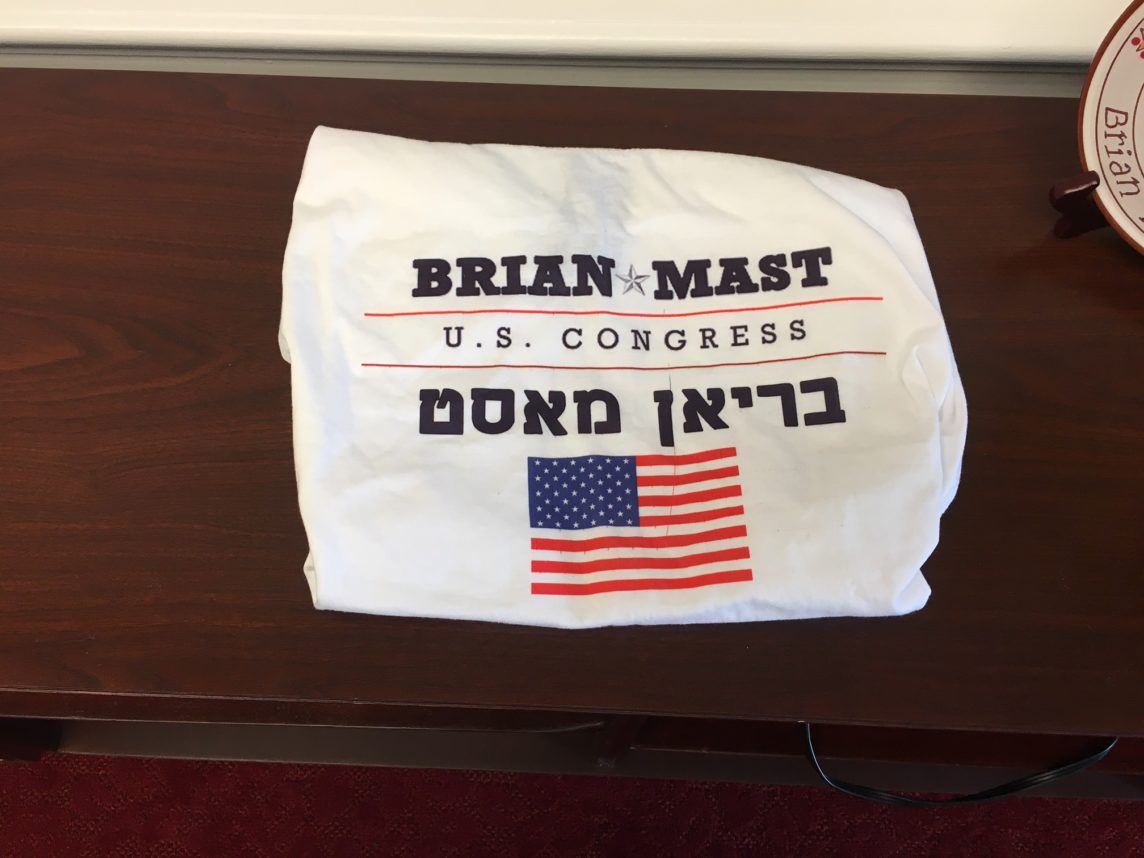
Mast has formed an especially close relationship with the Jewish community. After the interview, he showed Jewish Insider a shirt sitting in his office of the Congressman’s name written in Hebrew letters above an American flag. Calling the White House’s omission of Jews in its statement on Holocaust Remembrance Day a “missed opportunity,” the Florida lawmaker invoked his previous visit to the Yad Vashem memorial in Jerusalem.

The 2014 war in Gaza strongly impacted Mast, who is married with three children. After observing anti-Israel protests in Boston during the conflict, he noted the “hypocrisy” of those demonstrating. “I said that if any of our neighbors were firing rockets into the U.S. like that, guys like me would go and kill them immediately and every American would be proud of us for doing so.”

Already last summer, he endorsed Trump as President, even when many Republicans were fleeing from the real estate mogul. Explaining his support, Mast told Breitbart News in June, “If you have an infestation of rats and rodents in your home and you need to call the exterminator, you don’t necessarily care about the personality of the exterminator. You just care that he gets rid of infestation.”

Mast also backed the White House’s decision to place a temporary travel ban of individuals from seven predominantly Muslim nations including Iraq and Syria. With approximately 500,000 killed in Syria and 4.5 million refugees, Mast contrasted the mass exodus with how he believes Americans would have handled a similar situation. “For everybody that I know here in the U.S., if that (Syria) was the kind of reality that we faced, we as a people here would fight until our last breath to protect our communities. You wouldn’t see us seeking refuge somewhere else.”

image1-2The Army vet’s recent election to Congress continues his longtime service to his country. “Everyone has their place in life. Some people want to build the biggest business or save the most children. My purpose was service to this country and the military is the place that you go in my opinion to serve at the highest level for your country.”


Jewish Insider: You served for 12 years in the U.S. military including overseas in Afghanistan.  What were the most powerful moments of your service? 

Congressman Brian Mast: Probably the most powerful moments that I had were those times when I lost friends — of which I lost 67 friends to date. There is undoubtedly, a cost to war, especially when you have been at it for 15 years. I have been removed from the battlefield for six years now. I have seen the gamut of instances from friends of mine getting sprayed by automatic weapon to stepping on explosive devices, like I stepped on to falling off the side of a mountain or a cliff. Everyone sticks out very vividly, very clearly.

JI: Did losing your own two legs in addition to the deaths of so many of your colleagues cause you to question the lengthy U.S. involvement in Afghanistan?

Mast: No. The immediate time of going over there, right after the events of 9/11. A reckoning that had to happen. We were attacked and there was absolutely going to be a response to that attack. Beyond that, there have been refugee places, terrorist safe havens and terrorist training camps. And that is exactly what Afghanistan was prior to 9/11 and prior to us going into there. So, that had to be eliminated as a pipeline. One of the things that you realize as the ongoing war on terrorism is that while there should certainly be a strategy to exit these places, there also has to be a very specific strategy to maintain and not become like Iraq or Syria right now where you can say probably the biggest mistake that was ever made was withdrawing too soon and leaving a vacuum in place there that allows for the facilitation of the kind of situation that we have going on with ISIS right now.

JI: What motivated you to join the U.S. military?

Mast: I loved the military. I knew at a very young age it was where I was going to end up. It’s what I wanted to do. It’s just the right place for me. As I always tell people, I was like a round peg in a round hole. Everyone has their place in life. Some people want to build the biggest business or save the most children. My purpose was service to this country and the military is the place that you go in my opinion to serve at the highest level for your country. So, I loved it. I knew I was going to be there.

Mast: You established a very strong connection with Israel that led you to even volunteering with the IDF. Can you describe how Israel became such an important personal cause?

I grew up in a Christian home and Christian school my whole life. I was always raised for support of Israel. It was certainly always part of my household. That doesn’t mean that I always knew why that was the case. It was just the way that I was raised. But, there was actually a very specific catalyst for me going and serving with Israel. This goes back to 2014. I was injured in 2010. This was after I was injured and out of the army. I am studying up in Cambridge and we lived right next to the Boston Commons. That summer was Operation Protective Edge, there were a lot of protests going on around the country, people that were protesting Israel for defending itself from the barrage of rocket attacks. I didn’t agree with those that were protesting Israel. It seemed completely hypocritical especially those in the U.S. I said that if any of our neighbors were firing rockets into the U.S. like that, guys like me would go and kill them immediately and every American would be proud of us for doing so for defending our country in that way so it seemed like a very hypocritical, double standard.

The catalyst was one specific night when all of these protests were going on, there were people out in the Boston commons and they started saying things to me and my family, harassing us about me being a U.S. service member which really, really struck me. It was that moment that it really sank in the parallel that exists between the United States and Israel and what we represent: those things that unfortunately become all too cliche to say, but it’s very serious to say that we do represent freedom, democracy and human rights for all people. Those are things that are not represented throughout the rest of the Middle East. Those protestors recognizing as a U.S. service member, I fought for the exact same things that those Israeli service members were out there fighting for that instigated them to pinpoint me. It is not hard for people to figure out that I am a U.S. Service member. I don’t have any legs and I always have that hat on that is sitting right behind you that says Army Rangers on it so most people can figure it out pretty quick. So when I saw this parallel playing out, I said to my wife that night, ‘I don’t know what it’s going to look like. I want to find a way to show my support for Israel because these people out there protesting them in the drop of a dime with no provocation decided to start harrassing us. It speaks so perfectly to how you can’t appease these ideologies of hatred.

JI: The White House issued a statement on Holocaust Remembrance Day without mentioning Jews or anti-semitism, a move widely criticized among American Jews. How do you interpret the Trump Administration’s statement?

Mast: It’s incredibly important that we do remember the Holocaust. Unfortunately, the number of survivors that we have from the Holocaust are dwindling. It was probably a mistake to not very specifically mention that. It’s a big missed opportunity, especially if it is something that falls on your heart and not go out there and speak passionately on that day.

JI: Among the Republican party there is a debate about whether to support the two state solution. What is your opinion on the issue?

Mast: I am a person that says that the future of Israel should be decided by Israel. I don’t mind the USA playing an invited role in diplomatic negotiations, but I don’t think for us to go out there and impose our will or our blueprint for peace is something that would be lasting. The blueprint for peace has to be decided by the climate in Israel and those stakeholders and come to an agreement. That involves us not playing a role or pushing for a two state solution, that is not something that I personally push for in any aspect whatsoever.

JI: So, do you believe the Palestinians should ever be granted statehood? 

Mast: I don’t see a desire for them to have a state, certainly before they were to normalize their relations with the world. Do I see the need for the creation of another terrorist state in this world? Absolutely not. When you have the leaders– if you want to call it Palestine– that call for the destruction of Israel and praise the destruction of Israel and call for the same thing for the U.S. that is not a state that I think is beneficial for us to play a hand in creating.

JI: During a House floor debate last month you said: “Palestinians [are] a group that has been historically defined by their responsibility for terror.” What did you mean by this statement?

Mast: When you look at their background and acts of terrorism: That is what they are defined by. There is a reason that you see a large fence all the way around and a guarded area throughout the area that they reside in. There was a time when that didn’t exist. Why was that fence put up? That fence was put up because of the rash of bombings that occurred. You look at their leaders. You look at the ways they praise acts of terrorism. That is what they are defined by. That has been probably one of their chief exports has been terrorism, so I think that is something that defined them as a people.

JI: Did you support President Trump’s travel restrictions including the indefinite barring of Syrian refugees from entering the United States?

Mast: Yeah. I think there is something very prudent about the U.S. analyzing who we allow entry to in this country and how we allow entry to them. When you look at the time periods that are proposed: 90 days and 180 days, these are not big, long lasting time periods. If you look at any U.S. government action, there are very few things that you can point to that happen in 90 or 120 days in order to do something well and do something right. So, yeah, I think it is prudent when you look at the State Department’s recommendation on travel to these countries, it’s important to ask yourself: if we don’t recommend travel there why would we necessarily want travel allowed in and that is a reason to answer those questions. People tell me, ‘well these are law abiding citizens coming from these countries,’ I think it is very important to scratch the surface of that and say what are the laws that are being adhered to when you have largely Shariah-driven countries like Iran where the execution for someone for being homosexual or the severing of limbs are things that you can still find essentially on the books. That’s what it means to be a law abiding citizen in some of these places.

It’s very hard to imagine Iraq and Syria in any semblance of what they were in the past. The kind of nation states they were in the past. It is even more difficult to imagine them returning to that kind of thing if you allow everybody that you would consider to be moderate, the kind of people you would want to build a government around, middle class people that have skills and the ability to build infrastructure in that country without those people in place and as difficult as it is to say, I think I have the ability to say this as well as anybody. I know the cost of war, I know the cost of war on myself.

What I can tell you is that for everybody that I know here in the U.S., if that (Syria) was the kind of reality that we faced, we as a people here would fight until our last breath to protect our communities. You wouldn’t see us seeking refuge somewhere else. That is who we are as Americans and that is part of what makes us great. If they ever want to have a kind of future for their nation states that they want to be proud of again, they have to find that resolve to stay and fight and create a kind of country they want to create just like we did during our own revolution.

The U.S. Army vet, IDF volunteer, now in Congress Read More »

A settlement evacuated: A manufactured emotional drama

1.

Amona is no longer. A settlement was built and cultivated on a mountain top, and now it’s gone. Policemen and women evacuated the settlers, bulldozers dealt with the houses. Israel is still a country of law and order, and its government – think what you want about its policies and hawkish tendencies – abides by court decisions. So, as I wrote not long ago: the settlers do not control Israel’s politics. They have a voice, they have a standing, they have achievements, and they have failures. Ultimately, the government is in control, and not them.

2.

Evacuations seem dramatic when you follow the procedures. But the evacuation of Amona is not dramatic. The settlers and their supporters have to fake shock and outrage, the government has to fake sorrow and reluctance, the public is dragged to fake excitement and concern – all of it is manufactured emotional drama. Made for TV, much ado about nothing. Or very little. Of course, it is somewhat sad to see a community having to dismantle itself. But the fate of Amona was sealed long ago, and the residents of Amona had many opportunities to find a way for them to move forward together, as a community of builders, someplace else. They made their choice: evacuation drama. It was not necessarily a foolish choice. When there is drama, the government gets nervous and feels a need to compensate the settlers for their agony. Amona could not be saved, but compensation for it could, and still can, be bolstered.

3.

The story of Amona is a long one. A few weeks ago, my brother, Israel Rosner (with colleague Itai Rom), presented it in an almost hour long TV investigative report for Channel 10 News. I will present it here in one sentence: The State of Israel turned a blind eye when activists decided to build a new settlement in Amona, on land owned by Palestinians, and then realized that the legal problem with such a move could not be overcome.

The settlers of Amona were pawns in a game much larger then themselves. But not completely innocent pawns. Yes, they naively trusted the leaders who told them that everything is going to be OK. Still, they are not naïve.

4.

The Amona case and its outcome are partially a result of Israel’s changing norms. Some things could be done twenty years ago with a nod and a wink, and now the bastards have changed the rules. The settlers rightly argue: we built Amona the way we built many other settlements. Brick by brick, trick by trick. Why is the result destruction this time? Because of the private land on which Amona was built. Because of the more aggressive legal tactics of anti-settler NGOs. Because of the court’s growing impatience with such trickery and illegality.

There are many reasons to regret the fact that Israel is becoming more formalized, less flexible and loose in applying certain norms. There was something charming about Israel’s youthful naughtiness. But Israel is getting older and larger – and can no longer behave like a juvenile punk. Also – it cannot and should not steal land from its legal owner.

What now? Nothing much. Israel is going to test the waters with the Trump administration and attempt to go back to pre-Obama policies in the West Bank. That is, back to building in the settlements. The internal battle within the Israeli right is going to be not about whether to build but rather about where to build. The Prime Minister and Defense Minister want to build in the so-called settlement blocs. Their coalition partners are going to pressure them to also build in more distant settlements.

6.

The Obama administration made life difficult for Prime Minister Netanyahu, but it also made life easier for him. He was the ultimate excuse with which to reject the demands of his more radical partners.

The settlers and their supporters hope that the Trump administration will not provide Netanyahu with such excuses. They hope to strip Netanyahu of his excuses.

But they can’t: He still has the general attorney (who recently announced that he will not defend the legality of a pro-settlement legislation if passed in the Knesset). He still has the court – as the drama in Amona proves.


A settlement evacuated: A manufactured emotional drama Read More »

Episode 22 – Uri Geller: Spoon bender and spy

tnjb-logo-2-0In August 1973, the CIA conducted a study at the Stanford Research Institute in Menlo Park, California. That study documented the unique abilities of a young man named Uri Geller. After 7 days of tests, the study concluded “that he [Geller] has demonstrated his paranormal perceptual ability in a convincing and unambiguous way.” To paraphrase Uri’s own son: whichever way you look at this, there’s a fascinating story here!

Uri also conducts an ESP experiment for you guys this episode! Listen, follow his instructions and share your drawings in the comments. We’ll upload his drawing soon!

Episode 22 – Uri Geller: Spoon bender and spy Read More »

Regina Spektor discusses her Russian-Jewish reaction to the refugee ban

Interviewed Jan. 30 on the KCRW-FM show “Morning Becomes Eclectic,” Russian-Jewish indie songstress Regina Spektor described President Donald Trump’s executive order calling for a ban on refugees entering the United States from seven Muslim-majority countries as “pure insanity.”

“I came here with refugee status. My heart really goes out to all the people that are, this Muslim ban, I think it is just, it feels like pure insanity to me, and I came here as a Russian-Jewish refugee from a country that doesn’t even exist anymore — the Soviet Union,” she said in an interview with “Morning Becomes Eclectic” host Jason Bentley. “But my parents were, at least at that moment in time, we weren’t fleeing because our physical lives were in danger; we were fleeing because there was anti-Semitism and no freedom of religion.”

She continued: “Seeing how much my parents had to give up, how hard it was for them to come to a place without any money and without knowing the language, all the things they had to do to get here, I can’t imagine now, especially as a mother, what it feels like to be a parent of a child and be fleeing for physical safety, for food, for shelter,” she said. “It hurts that things are being done on our behalf as a people that don’t seem to reflect our progressive nature.”

During the interview, she attributed her pessimism about the future of American life under President Trump to, in part, her Russian-Jewish roots.

“I think there is a part of me that’s very much hopeful and then there’s a part of me that’s maybe the Soviet-slash-endless-row-of-generations-of-Jews-who-barely-survived-and-that’s-why-I’m-here kind of part, and it’s very sort of, I don’t know, kind of, suspicious and confused and deflated,” she said.

The conversation began with Bentley asking Spektor about what it was like for Spektor to perform at the Jan. 21 Women’s March in Los Angeles. Spektor performed a cover of Jewish icon Bob Dylan’s “Blowin’ in the Wind” in front of a sea of people on a closed-down street in downtown Los Angeles.

https://www.youtube.com/watch?v=5yJ9DRq8okA

“I wanted to find the right words to express the feeling I was having, so, of course, I went right to a human I really love so much and that’s Bob Dylan, and then I covered ‘Blowin’ in the Wind.’ I felt, I don’t know, it felt really right at that moment,” she told Bentley.

Spektor fled the Soviet Union at the age of 9 as one of 36,114 Jews who immigrated with the help of HIAS (formerly the Hebrew Immigrant Aid Society), the self-described “oldest international migration and refugee resettlement agency in the U.S … founded in 1881 originally to assist Jews fleeing pogroms in Russia and Eastern Europe.”

Spektor, who will perform April 8 in support of her latest album, “Remember Us to Life,” at the Dolby Theatre, was one of several celebrities to appear at women’s marches on Jan. 21 across the country.

The entirety of the 42-minute “Morning Becomes Eclectic” interview and performance with Spektor is available at kcrw.com.

Regina Spektor discusses her Russian-Jewish reaction to the refugee ban Read More »