fbpx

January 9, 2017

Syria and the scandal of our Orthodox synagogues

“Lord of the Universe, I beg You to redeem Israel; but if You do not want to do that, then I beg You to redeem the gentiles.”— Rabbi Yisrael Hopstein, Maggid of Kozhnitz and legendary Chassidic leader in Poland (1733-1814) (1)
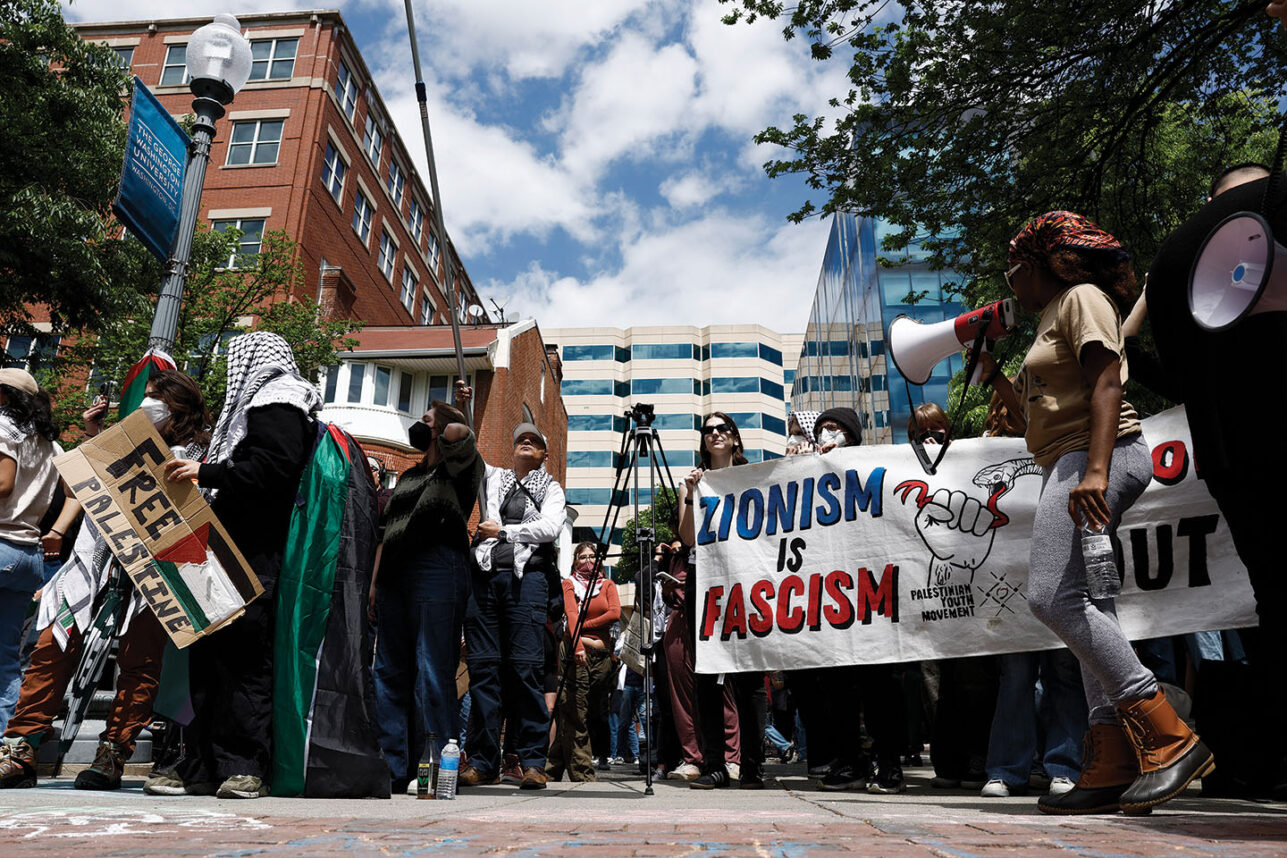
When Rabbi Professor Abraham Joshua Heschel (1907-1972), the famous American Chassidic thinker who lived a fully Orthodox life, was once asked by a journalist “why he [as a religious leader] had come to a demonstration against the war in Vietnam,” he said “’I am here because I cannot pray’.…Confused and a bit annoyed, the journalist asked him, ‘What do you mean, you can’t pray so you come to a demonstration against the war?’” Rabbi Heschel replied, “’Whenever I open the prayer book, I see before me images of children burning from napalm’” (Susannah Heschel, Abraham Joshua Heschel: Essential Writings [Maryknoll, NY: Orbis Books, 2011] p. 17).

On another occasion, while walking with Martin Luther King Jr. in Selma, Alabama, at the famous Civil Rights March against racism, he felt a sense of holiness that reminded him of his younger years when he would walk with the great Chassidic rebbes in Poland. For him the march was a deeply religious undertaking, a mitzvah. “I felt my legs were praying,” he said (Ibid p. 35).

His message was clear: We forfeit our right to pray when we become indifferent to the atrocities done to our fellow men (1).

Indeed, how dare we come before the Lord of the Universe with our personal prayers asking Him for His kindness and gifts, when we ignore the enormous atrocities done to other human beings?

“Prayer” said Rabbi Heschel, “must never be a citadel for selfish concerns but rather a place for deepening concern over other people’s plight” (Susannah Heschel, idem page 17).

To this very day, we Jews are justifiably outraged beyond description when we remember how the world was silent as six million of our brothers and sisters – including more than one million Jewish children – were slaughtered during the years of the Holocaust. We feel great animosity toward Pius XII, Hitler’s pope, for failing to call on millions of his Catholic followers to protect the Jews and stand up against this ferocious murderer.

This came to my mind when I read about the terrible atrocities that are now being committed against hundreds of thousands of innocent Syrians, including tens of thousands of children, who are being killed and mutilated (not to mention the savagery and barbarity in so many other countries). No, this cannot be compared to the Holocaust, but the brutalities in Syria defy all description.

Fortunately, the Government of Israel and members of the larger Jewish community in and outside of the State of Israel have not sat idle in the face of this crisis. They have arranged medical and financial help for the victims, organized solidarity marches and have been taking to the streets, and much more. What Jew would not join these noble acts?

Yet, one place that seems to be totally indifferent to what is happening in Syria and in other parts of the world is the Orthodox synagogue, the most Jewish place of all, and of which I am a proud member.

While I have been informed that synagogues of different denominations have introduced special prayers, it seems, as far as I have been able to investigate (and I hope I’m wrong!), that most Orthodox synagogues (including those in yeshivot) have failed to introduce any prayer, or even the reciting of tehillim for the Syrian victims. These terrible atrocities have, in general, not even been mentioned. All we hear is thundering silence.

Orthodox Rabbi Yuval Cherlow of Petach Tikva, Israel, whom I consider to be a Gadol Hador (a great religious and halachic leader of our generation), wrote a special prayer related to the Syrian catastrophe, but it seems to have been ignored by most if not all Orthodox synagogues.

Several months ago, a prayer for world peace was sent to thousands of people and hundreds of Orthodox synagogues, which, except for some hesder yeshiva students, was totally ignored by those Orthodox synagogues, including the Modern Orthodox. This prayer is a plea to God to have mercy on all victims of war, terror attacks, tsunamis, earthquakes, hurricanes, raging fires, tornadoes, starvation, homelessness, and population displacement. (2)

The only communities that responded were Reform and Conservative synagogues and, to the great surprise of many, several churches, the leaders of which said they would include the prayer in their services. (This prayer takes no more than a minute to recite.)

In the introduction to his magnum opus, Ha’amek Davar on the Torah, Rabbi Naftali Tzvi Berlin (1817-1893), the last Rosh HaYeshiva of the famous Volozhin Yeshiva, makes the powerful point that the greatness of our patriarchs Avraham, Yitzchak, and Yaakov, and no doubt the matriarchs, was the fact that they cared about the well-being of the gentiles in their day, even if they were idolaters. One example is the famous story of Avraham arguing with God to save the people of Sedom, who had fallen to the lowest possible level of moral behavior. Nothing stopped him from trying to save these people, even when it meant having to fight with God Himself (Bereishit 18: 23-33). No doubt this is why Avraham is called the “father of a multitude of nations” (Ibid 17:5). But this is not merely a compliment; it is a deeply religious mission for all the People of Israel. To be an example to the world, and to stand up for all those innocents who have fallen victim to the unspeakable evil of others.   

It is for this reason that Rabbi Yosef Karo, in his monumental codex, the Shulchan Aruch (Orach Chayim 576:1), legislated the law that in times of catastrophe one should fast and lessen one’s pleasures (including sexual intercourse), based on the Talmudic statement:

“When the community is in trouble, a person should not say: I will go to my house, I will eat and drink and all will be well with me” (Ta’anit 11a).

This is not Reform or Conservative; it is Orthodox law. So why ignore this important ruling?

The worst sin toward our fellow human beings is not to hate them but to be indifferent to them. People are not aware of their own insensitivity. Conscious insensitivity is almost a contradiction in terms. But one begins to sincerely wonder whether that’s true when there is a call to our synagogues that is completely ignored.

Sure, the members of Orthodox synagogues are generally sensitive people, but they don’t seem to realize that as a community that believes in prayer, and constantly prays for its own welfare, they cannot stand idly by and fail to pray when great evil is heaped upon their fellow humans. I cannot think of a stronger form of narcissism.  

The point is not whether our prayers for all these victims will be answered. This is left up to God. But the message we send to ourselves and our children is that we’re not even prepared to take the time during our synagogue service to draw our attention to the plight of thousands and thousands of children who are being killed, who have lost their arms and legs, and whose bodies have been burned beyond recognition.  

How can we be outraged by the world’s silence in the face of six million of our brothers and sisters being murdered in the Holocaust when our synagogues can’t even take a moment to say a prayer for other human beings, especially children, who are suffering beyond imagination? Do we, the Orthodox, start praying only when the atrocities are as bad as the Holocaust? Or only when it relates to our fellow Jews?  

Millions of people are occupied with physical pleasures, the need for honor and comfort, their hates and loves, all of which are for the most part not worth our time and energy. Yet synagogues refuse to take time for the real issues, which will determine the well-being of hundreds of thousands of innocent people.

As Jews, we realize that since the world has “failed to fight for right, for justice, for goodness; as a result we must fight against wrong, against injustice, against evil” (Abraham Joshua Heschel, I Asked for Wonder: A Spiritual Anthology, Samuel H. Dresner (Ed.) [New York: The Crossroad Publishing Company, 1983] p.95).

In all honesty, as an Orthodox Jew, I wonder how anyone can believe that God will listen to our prayers when we can’t spare even one minute to pray for the women and children of Syria and the millions of others living in unimaginably devastating circumstances.

Maybe it would be more honest to stay at home and forfeit our right to pray. When we become indifferent to the atrocities done to our fellow humans, then, as Rabbi Heschel teaches us, we had better be silent and live in shame.

As American actor and author William Redfield (1927-1976) once said, “To try may be to die, but not to care is never to be born” (The Book of Bill: Choice Words, Memorable Men, Tom Crisp (Ed.) [Kansas City, MO: Andrews McMeel Publishing, LLC, 2009] p. 72).   

******************

  1. Martin Buber's “Tales of the Hasidim” volume 1, p. 289 (New York: Schocken, 1961)
  2. See also the powerful poem by Chief Rabbi Avraham Yitzchak Kook, “Shir Meruba” (The Fourfold Song), in which he pleads to pray for all human beings and all of creation. Orot HaKodesh (Jerusalem: Mossad HaRav Kook, 1985) pt. 2, sec. 3, essay 30.
  3. It was suggested to say this prayer Shabbat morning after the prayers for the State of Israel, the Israeli soldiers on the battlefields, and those who are missing in action.

Rabbi Dr. Nathan Lopes Cardozo is the Founder and Dean of the David Cardozo Academy, as well as the author of 13 books and numerous articles in both English and Hebrew. Hailing from the Netherlands, Rabbi Cardozo is known for his original and often fearlessly controversial insights into Judaism.

Syria and the scandal of our Orthodox synagogues Read More »

Across the US, 16 JCCs get bomb threats in a single day

Bomb threats were called in to at least 16 Jewish community centers and other institutions in seven states on Monday.

The calls were prerecorded in some cases and live in others, with the caller using voice disguising technology, and likely came from a single source, said Paul Goldenberg, the director of Secure Community Network, the group affiliated with the Jewish Federations of North America that coordinates security for the Jewish community.

The states were spread across the South and the Northeast. Only some of the JCCs were evacuated.

All the alerts were false, Goldenberg said, and designed to produce maximum disruption.

“In the Northeast it’s 20 degrees outside and these individuals are doing everything they can to disrupt who we are and what we do,” Goldenberg told JTA.

He did not name the states or JCCs, but various media have reported bomb threats in Florida, Maryland, Tennessee, South Carolina and New Jersey.

Hundreds of people reportedly were evacuated from the buildings, several of which house preschools and senior adult programs during the day. Goldenberg said evacuations depended not on the urgency of the situation but the practices of local authorities — some counsel immediate exits, others do not.

Among the affected sites were the Kaplen JCC on the Palisades in Tenafly in northeast New Jersey, which evacuated the entire building, including a preschool, senior center and adult day care facility for people with disabilities, local media reported. In South Florida, the Miami Beach Jewish Community Center and Alper JCC in southwest Miami-Dade also were evacuated in the morning.

Other sites that were threatened included the Siegel JCC, north of Wilmington, Delaware; the preschools at the Tampa JCC and the Tampa Jewish Federation in central Florida; and the Jewish Community Alliance in Jacksonville, in northern Florida. All the facilities were searched and given the all-clear by authorities.

Goldenberg counseled an immediate call to local first responders in every instance, but also said live calls indicated a more acute risk than robocalls.

“If they’re taking the time to call, if it’s a live person, the concern rises,” he said.

He also recommended studying a 15-minute video that SCN has posted on its website outlining what to do in case of a bomb threat. Golden berg said SCN in the next few days would organize, through the JCC Association of North America, a conference call reviewing possible threats.

In London, bomb threats were called in Monday to three Jewish schools, the Jewish Chronicle reported.

Searches of the schools did not turn up any explosives, and other schools in the area were placed on lockdown until the searches were completed. Copycat calls reportedly also were made to several non-Jewish schools.

Bomb threats were called into two Jewish institutions in the Orlando, Florida, area on Jan. 5.

There has been an increase in the United States in reports of threats and vandalism on Jewish property in the wake of the presidential election. President-elect Donald Trump, who was reluctant to denounce support during the campaign from white supremacists and anti-Semites, has since repudiated racists who say they feel emboldened by his victory, as well as ultranationalist successes in Europe.

Across the US, 16 JCCs get bomb threats in a single day Read More »

For black Jews, Obama represented an America of multiple identities

On Election Day 2008, Marcella White Campbell remembers her 4-year-old son playing in front of the TV, repeating the name of the man who would soon become the first African-American president of the United States.

“He was running around and rolling the name Barack Obama on his tongue,” said Campbell, managing editor of Bechol Lashon, a group that advocates for Jews of color. “I remember looking at him and thinking, this is this biracial man who may be president of the United States. He’s trying to get around this moment and figure out what it means to him. I couldn’t even imagine how exciting it would be for my kids.”

Obama made history as the first black president, but for African-American Jews, that was only the beginning of his resonance. Several African-American Jews told JTA that eight years of having the son of a black man and a white woman in the White House showed them that living with a hyphenated identity doesn’t make you any less American.

“It helps you to imagine what it means to be American in a different way,” said Yavilah McCoy, founder of Ayecha, another advocacy group for Jews of color. “The fact that there was a president that viscerally embodied the idea that you can both have an ethnic and cultural identity and be American and a leader of the American people, while holding those things to be true, I think as American Jews, it is a model for us.”

But where some African-American Jews felt hopeful watching Obama’s administration, others doubted that underlying currents of racism in America would dry up or disappear. Shais Rishon, a black Jewish writer who goes by the pen name MaNishtana, remembers that when Obama walked onstage to declare victory in 2008, MaNishtana was afraid the president-elect would be assassinated.

“I knew he wasn’t going to be any worse than any other president,” MaNishtana said. “But I also knew there wasn’t much he could do by himself to fight the tide of what had come before.”

Jewish Americans have long grappled with the significance of their dual identities and how each affects the other. For African-American Jews, that struggle contains yet another dimension. Campbell told JTA that along with identifying with Obama personally, she has felt compelled to defend him as a black person in Jewish contexts and as a Jewish person in black contexts.

“There have been times when someone says Barack Obama is really bad for Israel, and I guess I feel more put on the spot than someone else might feel by that in the sense of needing to back him up,” she said.

American Jews at large voted for Obama twice in large numbers. But Jewish leaders have frequently opposed his actions on Israel, including signing an agreement with Iran last year that they said fell short of curbing its nuclear program and last month allowing the United Nations Security Council to pass a resolution criticizing Israel. MaNishtana, who is Orthodox, remembers feeling hurt when synagogues he attended edited their prayers for the country — removing any well wishes for the president.

But when reflecting on Obama, African-American Jews interviewed by JTA focused more on his significance for the black community. Several pushed back on the idea that he should have spoken out more forcefully on issues affecting black Americans, questioning how much difference it would have made and appreciating that he worked to be a president for all Americans, regardless of identity.

“Given that his job is so hard, are there some things he could have come out and said earlier? Yes,” said Jared Jackson, who heads Jews In All Hues, which helps Jewish organizations be more attentive to diversity. “But would it have stopped, you know, the killing of unarmed black and brown men and women, and trans [people]? I can’t really say.”

The reflections of some black Jews have changed with the election of Donald Trump, who has promised to undo Obama’s legacy and who won office after a campaign that included statements targeting minorities. They worry that the Trump presidency could erase or counteract Obama’s message of inclusivity.

“Part of the narrative we were teaching them during the 2008 election was what this was showing was that America is changing,” Campbell said of her kids. “We believed that at that time and we told them that. The past eight years culminating in the 2016 election has left us wondering: Is that true? Did we lie to them?”

But no matter what comes, African-American Jews who spoke to JTA all said they would remember Obama’s years fondly as a time when they felt represented in the White House.

Rabbi Capers Funnye, head of the International Israelite Board of Rabbis, an African Hebrew Israelite body, is also Michelle Obama’s cousin. He remembers standing a few rows back in a crowd some years ago watching Obama greet voters. When Obama reached Funnye’s section, he called out the rabbi’s name, surprising Funnye’s relatives.

“One cousin said, ‘Damn, the president can pick you out of a crowd?’” Funnye recalled. “I said, ‘Yeah, I know him and he knows me.’”

For black Jews, Obama represented an America of multiple identities Read More »

Obama: ‘No basis in fact’ to accusations US orchestrated UN anti-settlements vote

Accusations that the United States orchestrated last month’s U.N. Security Council anti-settlements resolution have no basis in fact, President Barack Obama said.

In one of his final interviews as president, Obama spoke to Ilana Dayan, a reporter for Israel’s Channel 2, who has interviewed him in the past. The interview is to be broadcast Tuesday, but Channel 2 teased a portion on Monday.

Dayan asked Obama about Prime Minister Benjamin Netanyahu’s claim that the U.S. abstention allowing through the Security Council resolution was “shameful” and about Israeli ambassador to Washington Ron Dermer’s claim that there was evidence that the Obama administration orchestrated it.

“I’ll be honest with you, that kind of hyperbole, those kind of statements, don’t have basis in fact,” Obama said. “They may work well with respect to deflecting attention from the problem of settlements, they may play well with Bibi’s political base as well as the Republican base here in the United States, but they don’t match up with the facts.”

U.S. officials said they could not vote for the resolution, advanced by four countries led by New Zealand, because it was imbalanced and because the United Nations itself is an inherently antagonistic forum to Israel. However, they said they could not vote against it – triggering an automatic veto — because they agreed with its premise that settlements were undercutting prospects for peace and a two-state solution. The officials adamantly denied they led the effort to advance it.

President-elect Donald Trump objected to the resolution and tried to thwart it. It was the first resolution opposed by Israel that the Obama administration allowed through.

Obama also rejected criticism that he should not have allowed through a dramatic Security Council resolution in the last month of his presidency.

“The fact of the matter is that I’m president until Jan. 20 and I have an obligation to do what I think is right,” he said.

Dayan, describing the full interview, quoted Obama as saying that he was always a friend to Netanyahu, but that Netanyahu would not recognize his friendship.

In the clip that appeared on the Channel 2 website, she asked Obama if he has any more surprises in store for Israel, or will Netanyahu be able to “sleep well at night” until Jan. 20, when Trump assumes the presidency.

Obama, in an apparent allusion to Trump’s reputation for being unpredictable, replied: “There’s an interesting question as to whether he’ll sleep better after Jan. 20.”

Obama: ‘No basis in fact’ to accusations US orchestrated UN anti-settlements vote Read More »

Baker defends Obama’s move at UN

Former Secretary of State James Baker on Sunday defended the Obama Administration’s move at the United Nations Security Council against Israel last month.

“It was former Prime Minister Ehud Barak of Israel who said Israel needs to make the tough decisions if it wants to avoid becoming an apartheid state,” Baker said in an interview with CNN’s Fareed Zakaria on Sunday. “And so that’s why I think it was appropriate in this instance for the United States to abstain.”

Citing the many instances past U.S. presidents decided not to veto UN resolutions on settlements, Baker asserted, “The reason I think settlements are a bad idea is that they tend to create facts on the ground which prohibit or prevent negotiating the status of that particular land according to the Land-for-peace provisions and requirements of the U.N. Resolutions 242 and 338. And if you create facts on the ground, there’s nothing, really, then left to discuss about trading land for peace.”

Baker, 86, was among the few Republican national security heavyweights who played a crucial role in convincing President-elect Donald Trump to pick ExxonMobil CEO Rex Tillerson as his nominee for Secretary of State.

The former Secretary of State also expressed disapproval of Trump’s opposition to the UN vote and his plan to move the U.S. Embassy from Tel Aviv to Jerusalem.

“The President-elect has said he would like to be the president that solves the Israeli-Palestinian conflict. And let’s hope he can do that,” Baker said. “But you can’t think you can succeed at that if you are, in effect, so biased one way or the other. You cannot be Israel’s lawyer and expect to solve the Palestinian-Israeli dispute. And so I hope he’s successful in doing it, but you have to be seen to be at least a semi-honest broker.”

“As to the U.N., things will be different after Jan. 20th,” Trump tweeted after the Security Council voted on Resolution 2334. “The big loss yesterday for Israel in the United Nations will make it much harder to negotiate peace,” the President-elect tweeted 24 hours later. “Too bad, but we will get it done anyway.”

According to Baker, “If [Trump] expects to solve this terribly difficult problem of Israeli-Arab conflict, he’s going to have to be seen to be somewhat of an honest broker or it isn’t going to happen.”

Baker defends Obama’s move at UN Read More »

Bomb threats against Jewish centers, not in Los Angeles

Jewish community centers in several states reported receiving ultimately discredited bomb threats on Monday. None of the threats targeted Jewish organizations or institutions in Los Angeles.

“There have been no threats here in Los Angeles,” Ivan Wolkind, chief operating and financial officer at the Jewish Federation of Greater Los Angeles, which operates the Community Security Initiative for the Jewish community in Los Angeles, said in a phone interview on Monday. “And what we always say is, we try not to do anything reactively as a result of an event happening somewhere else, or an event happening anywhere.”

The threats occurred in Florida, Tennessee, Maryland, South Carolina and Delaware, the ADL statement says.

“Law enforcement are investigating the incident, which may have originated from the same phone number. So far, no explosives have been found,” the ADL statement says.

Haaretz, an Israel-based daily newspaper, reported that the calls were both prerecorded and live.

The ADL statement says the threats “may have originated from the same phone number.”

The ADL said in a statement the threats did “not appear to be credible.” Nevertheless, Wolkind described threats made through phone calls as an effective way of causing disruption to local Jewish communities.   

“For sure what we can all see—if there is a phone-in threat, it for sure causes disruption and worry to a Jewish institute,” he said. “We have no way of knowing who phoned these in and why.”

The Community Security Initiative of the Jewish Federation of Greater Los Angeles provides resources to local Jewish organizations related to security measures.

Bomb threats against Jewish centers, not in Los Angeles Read More »