fbpx

October 20, 2015

Amid Israel’s terror wave, African migrants find danger where they sought safe haven

In the days since an Eritrean migrant was shot to death by an Israeli security guard and then beaten by a mob at Beersheba’s central bus station, a fellow migrant named Awat Ashever has insisted to other Eritreans that the killing was just a terrible mistake.
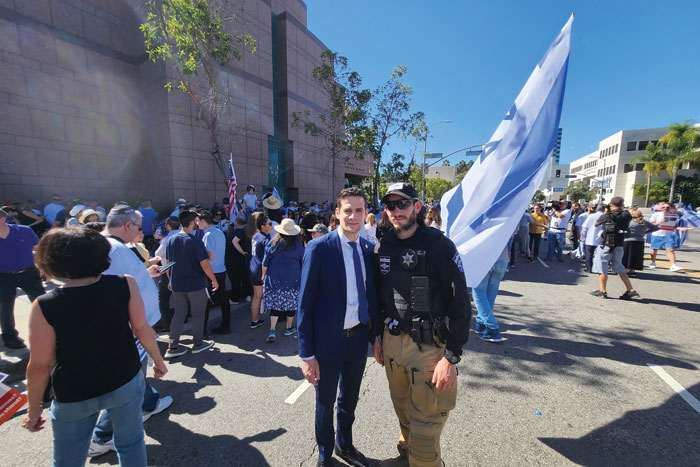
It’s an uphill battle, as some of the 45,000 African migrants in Israel see the incident as evidence of discrimination they say has existed for years. The episode has also brought home the dangers of the terror wave sweeping the country where they have sought safe haven.

The death of Haftom Zarhum, 29, followed a terrorist attack at the station that killed an Israeli and wounded 11. A guard mistook Zarhum for the terrorist. Several Israelis — including a soldier — then kicked and beat Zarhum amid chants of “Break his head.” On Twitter, Defense Minister Moshe Yaalon called the incident a lynch.

But Zarhum, who worked in a plant nursery in the southern village of Ein Habesor, had come to Beersheba only to extend his conditional release visa, which gives Eritreans and Sudanese the right to live in Israel with restrictions.

“People are upset about what happened in Beersheba,” Ashever told JTA. “It’s hard to tell people it was unintentional. The state of Israel doesn’t accept you … so people say it was intentional.”

Despite condemnation from Israeli politicians, including Prime Minister Benjamin Netanyahu, some migrants see the killing as part of a larger societal problem.

“Politicians, for years they were making incitement against refugees,” said Ghebrehiwot Tekle, 35, who came to Israel from Eritrea in 2007 and now lives in Tel Aviv. “It influenced some people — they took the law [into] their hands. [Zarhum] didn’t have anything in his hands. He didn’t have any gun, any knife.”

Most migrants in Israel hail from Eritrea and Sudan and insist that they are seeking asylum from brutal dictatorships. The Israeli government, however, labels them economic migrants who have come to the country in search of work. With rare exceptions, it has not recognized them as refugees or given them work visas.

In 2012, Israel built a border fence with Egypt to block illegal migration, and in 2013 began detainingthousands of migrants in Holot, a center next to a prison on the Egyptian border.

Migrants have decried these measures, along with harsh rhetoric from Israeli politicians, as mistreatment. On Monday, a crowd gathered outside Holot to protest Zarhum’s death.

But Jeremiah Sunday Diario, a Nigerian pastor who has ministered to migrants in Israel since 2005, saw the incident as isolated. Zarhum was killed, the pastor said, because he was thought to be a terrorist, not because he was Eritrean.

“Any person in that position would do the same thing, when someone comes to kill you,” Diario said.

The migrants have also had to deal with frequent danger in a country where they have sought refuge. Since Tekle arrived eight years ago, Israel has fought three wars in Gaza and suffered periodic waves of terror attacks. The present wave has seen nine Israelis die in dozens of attacks since the beginning of October.

Ashever said that at first, he tried not to get caught up in the tension over the attacks, but found himself facing the same dangers as his Israeli neighbors.

“If you’re in Israel, it affects you,” he said. “But we didn’t think it would affect us. I don’t deal with these things. It’s not my problem. I just came because of the situation in Eritrea.”

Diario has encouraged migrants to take responsibility for their own safety. In the event of a terror attack, he says, he tells migrants to walk fast — but not run, to avoid being misidentified as an attacker trying to escape.

Before Ashever arrived, he had a vague awareness of the Middle East conflict. But after seven years of attacks and given the government’s hard-line stance on migrants, he says he’s come to expect difficulty in Israel.

“I go from problem to problem,” he said. “My life is like this.”

Amid Israel’s terror wave, African migrants find danger where they sought safe haven Read More »

This Israeli ex-diplomat is Kenya’s biggest pop star

Zipping between meetings at Nairobi’s five-star hotels wearing a suit and tie, Gilad Millo looks every bit the ex-diplomat he is.

But looks can be deceiving: Though he may be balding and slightly pudgy, Millo is one of Kenya’s hottest pop stars.

He’s so popular, in fact, he’s known throughout the country simply as Gilad, a la Madonna or Prince.

“The word ‘celebrity’ feels strange, but, yeah, people now ask me to pose for selfies with them,” said Millo, the former deputy head of mission at the Israeli Embassy in Kenya, speaking to JTA by telephone from his home in Nairobi on Monday.

Millo made his musical debut in April with the song “Unajua” — “Do You Know” in Kiswahili, one of Kenya’s four official languages.

By May, “Unajua,” a mellow tune about the lingering attachment of ex-lovers, topped the weekly chart of X FM, a popular Kenyan radio station, and stayed on the top 10 lists of other stations for months. By August, the track received a rave review in the Daily Nation, one of Kenya’s largest newspapers.

In the video, Millo, an Ashkenazi Jew, walks with his bicycle and guitar around the Nairobi neighborhood where the song’s producer lives. A classier indoors set is used for the song’s guest artist: Wendy Kimani, a young Kenyan singer who rose to fame in 2008 as a finalist on the East African version of “American Idol.”

Kimani — who recently moved to Amsterdam, where she lives with her Dutch husband — concedes that Millo does not exactly possess the looks that Westerners would expect for an up-and-coming pop star. But in Kenya,“the masses are still quite rural, so they’re not so much into looks and fashion,” she said.

“For them it’s all about the music,” Kimani said. “If someone has the music, that’s all that they care about.”

Plus, the song topped the charts before the video was released — so few people knew Millo was what East Africans call “mzungu,” a white man.

“And even after, many couldn’t believe Gilad was really singing because few white people in Kenya speak Kiswahili,” Kimani said.

Music has always been a major part of Millo’s life. In his 20s, he was a member of a Jerusalem rock band, White Donkey. Millo was planning to become a professional musician rather than follow in the footsteps of his late father, Yehuda Millo, who served as a diplomat for 37 years.

But when Millo’s son was born, his wife, Hadas, said that “there’s no money in music and we need to find a real job,” Millo recalled in an interview that he gave last month to Israel’s Channel 2.

After working as a journalist, he became a diplomat in 2003. Millo served in Nairobi and Los Angeles before leaving Israel’s Foreign Ministry in 2008 and settling in Nairobi permanently.

“The connection with Kenya was instant,” Millo said. “I’ve never encountered a more open, generous people.”

It was only recently, a quiet afternoon when his wife and teenage kids were away, that Millo called up a music producer, M.G., whom he had met through a friend. Millo showed up at the studio with a song he wrote just “to see how it goes,” he recalled.

“We realized we had a hit the second we finished recording,” Millo said.

Thanks to “Unajua,” he has landed dozens of guest appearances on Kenyan radio and television shows. There he promotes his campaign about farming for the Balton CP Group – the British firm where Millo works as head of business development and public relations — which represents mostly Israeli agriculture and communications companies.

“After we establish that I’m white, that I sing in Kiswahili and that this place is home for me, there’s still 10 minutes of airtime, so the interviewers and I often go into other things that I’m passionate about,” Millo said.

Titled “Farming is Cool,” the campaign tries to appeal to the millions of young Africans who swapped their  now-aging rural communities in favor of the perceived opportunities of big metropolises like Nairobi and its suburbs and slums, where only a third of about 6 million residents have adequate sewage systems. The aim is to attract young people to more sustainable and advanced agriculture.  

Last month, Millo released his second single, “Sema Milele” (“Say Forever”), which the well-respected online magazine Afrika Nmbiu crowned as “the perfect wedding song.” He is working on a third single with a Kenyan artist, 22-year-old HK Gachago.

He may be big in Kenya now, but Millo says he’s not making money from his music — yet. Still, whatever income his musical career may generate, he hopes to donate.

In addition to hoping to help empower youth through farming, another cause is Israel for Africa, the nonprofit that Millo and his family established in memory of his father that promotes Israeli innovation and culture in Africa.

“Europeans and Americans don’t always get the connection that many Israelis have with Africans,” he said. “But we feel it instantly, every time we crack a joke or slap one another’s back.”

This Israeli ex-diplomat is Kenya’s biggest pop star Read More »

At Israeli-American Council’s second national conference, more people and less politics

As about 1,300 Israeli Americans convened from Oct. 17-19 in Washington, D.C., for the Israeli-American Council’s (IAC) second annual national conference, anxiety and anger over the recent wave of Palestinian stabbings in Israel was a much-discussed topic during a weekend that was otherwise less flashy, less political and more formal than the group’s flashy inaugural conference a year ago.

Ron Dermer, Israel’s ambassador to the United States, gave the opening remarks on Saturday evening, with a message that Israeli officials have consistently sent over the past few weeks — that the torrent of stabbings of Israeli Jews is a result of incitement in Palestinian culture, and not something that would change even if Israeli policy toward the Palestinians changes. This was in sharp contrast with Secretary of State John Kerry’s remarks at a Harvard event, where he blamed the stalled peace process and “a massive increase in settlements” for “this violence, because there’s a frustration that is growing.”

Dermer told the receptive crowd, “If the international community would focus on Palestinian incitement one-tenth as much as they focus on building apartments for Jews in Jerusalem, the situation might be very different.” And on Sunday evening, Israeli cabinet minister Yuval Steinitz offered a similar message, saying, “This violence is only about incitement.”

Dermer, like many in attendance, was born in the United States to an Israeli parent. Receiving numerous rounds of applause and a standing ovation from much of the crowd in a packed ballroom at the Washington Hilton, Dermer said, “What my ima [mother] passed on to me, you can pass on to your children,” encapsulating one of the IAC’s primary goals — to foster a strong connection to Israel among first- and second-generation Israeli Americans.

At last year’s conference, which drew 500 fewer people and was held in a much smaller ballroom at the Hilton, headlines in major media outlets focused on big political names who addressed the IAC crowd, among them 2012 Republican presidential nominee Mitt Romney, former Sen. Joseph Lieberman, an independent from Connecticut, Sen. Lindsey Graham (R-S.C.), Sen. Robert Menendez (D-N.J.) and billionaire rival political kingmakers Sheldon Adelson and Haim Saban, who participated in a lively and entertaining onstage discussion during which they talked (or joked) about teaming up to purchase The New York Times and Washington Post, in order to ensure that those two outlets would cover Israel more favorably, Saban said at the time.

At this year’s conference, the IAC’s VIP list and topics of discussion were much tamer — no presidential candidates, no senators, and an even split of Democrats and Republicans, all strong supporters of Israel and all opponents of President Barack Obama’s signature diplomatic nuclear agreement with Iran. They included California Congressmen Brad Sherman (D-Sherman Oaks) and Ed Royce (R-Fullerton).

Sherman, who spoke Saturday evening after Dermer, sharply criticized, to loud applause, the idea that Israeli settlements factor into the recent stabbings.

“They did not die because there were protesters who were concerned about settlements,” Sherman said. “[They] died at the hands of terrorists who are motivated by a racist ideology that calls upon its adherents to expel all Jews from the Middle East.”

Notably missing from this year’s conference was Saban, who recently ended his support of the IAC and of Campus Maccabees, a new task force he helped create last summer with Adelson to fight the growing on-campus Boycott, Divestment and Sanctions (BDS) movement, which has successfully passed dozens of resolutions in student governments targeting boycotts of Israeli goods and companies that do business with the Israeli government. Although it was rumored that Saban’s withdrawal of support from the two groups stemmed from differences he has with Adelson, his team has said he left in order to focus on other philanthropic efforts for the time being. Adelson has given millions of dollars to the IAC and is the group’s largest donor, having given $12 million to the group at its March gala and fueling its national expansion in 2013.

Adelson was notably lower key when he spoke Monday than he often is when in front of friendly audiences and reporters, mostly using the opportunity to praise one of his biggest philanthropic benefactors, Birthright Israel, for its impact on young American Jews. In his discussion with Barry Shrage, who heads the Boston Combined Jewish Philanthropies, among the largest Jewish Federations in the country, political observers in the room were closely watching Adelson for hints as to which Republican presidential candidate he’ll support for the 2016 election, but Adelson didn’t touch at all on politics. In fact, the most notable comments from the discussion, the last event of the conference, came from Shrage, who called on Jewish Federations across the country to work closely with the IAC and help integrate it into local Jewish communities.

“We insist that IAC become an integral [part] of every community,” Shrage said. In Los Angeles, home to the IAC’s national office and to the largest number of Israelis and Israeli Americans in the United States, the IAC and the Jewish Federation of Greater Los Angeles have shared a cool relationship since the IAC’s inception in 2007, working together on very few initiatives. Shrage also criticized leading Jewish-American figures on the left, such as author and commentator Peter Beinart, “who would love us to believe that the best way to alienate our next generation is to engage on Israel issues.”

“That would be a horrible self-fulfilling prophecy, which is what I think some of those people actually want,” Shrage said.

The structure of the breakout sessions, offered in English and Hebrew, included topics such as “From the Frontlines: How to Defeat BDS,” “The Israeli Entrepreneur: What’s the Secret Sauce” and “Israel on Campus: Perception vs. Reality.” The conference felt similar in topics and structure to annual national conventions held by groups such as AIPAC and the Jewish Federations of North America (JFNA), albeit with more emphasis on issues relevant to Israeli Americans.

And between breakout sessions, hundreds of people, ranging from college students and young professionals to veterans of the Jewish and Israeli professional world, chatted and networked over coffee, Bamba and Bissli, schmoozing and taking advantage of face time with pro-Israel and Israeli-American professionals who they more often communicate with via email and phone during the rest of the year.

The content of the major speeches and the groups represented during the breakout sessions indicated that the IAC, although currently active in seven cities nationwide, has quickly joined the professional mainstream Jewish-American pro-Israel community, which includes much larger groups such as AIPAC, the JFNA, and Birthright. And although Jewish groups such as the “pro-Israel, pro-peace” JStreet were absent from the conference, Israel’s center-left opposition leader, Isaac Herzog, who lost handily to Prime Minister Benjamin Netanyahu in the March elections, was received warmly by the crowd when he spoke onstage with Udi Segal, a journalist for Israel Channel 2.

As Adelson, who supported Netanyahu in the Israeli elections, sat only feet away, Herzog joked, “Unfortunately Sheldon and [wife] Miriam did not support me.”

“To say that it’s hopeless and therefore we should stay forever, wherever we are with no answer, leads us directly to the fact that we’ll be a one-state solution,” Herzog said to moderate applause.

Throughout the conference, people were constantly checking their phones for updates from Israel. News of several stabbings and attacks by Palestinians occurred over the weekend, and the grim news on the other side of the world was never far from the surface at the largest gathering of Israeli-Americans in the country.

“It makes me feel guilty that I am here talking about Israel and not actually supporting my family and friends who are in Israel,” said Niran Avni, an Israeli from suburban Tel Aviv who currently lives in Los Angeles. “But I like that we get to talk, and talk how we can influence from here what’s happening over there.”

One of the ways the IAC hopes to support Israel from the United States is by mobilizing teams of social media professionals to “defend Israel online” when conflicts break out. There were social media workshops and, in an area called “The Situation Room,” tables were set up with about two-dozen laptops where anyone could peruse the various ways that pro-Israel groups are using social media to advocate for and defend Israel online. The IAC also revealed a new partnership with IDC-Herzliya, in which the two groups will share resources and knowledge to assist Israel on social media.

Adam Milstein, an IAC co-founder who recently was named the group’s chairman of the board, said he believes the IAC offers Israeli-Americans a vehicle through which to support Israel from abroad. “Now that we have this organization, we have this identity, we have this movement. Part of it is to be advocates for the State of Israel.”

In addition to supporting cultural and Hebrew-language programs, and supporting Israel through social media and grants to pro-Israel groups, the IAC is also set to launch a lobbying arm that will be aimed at state and local governments, and maybe even the federal government. The group recently hired Dillon Hosier, former political adviser to Israel’s consulate in Los Angeles, to head the IAC’s statewide lobbying efforts, which Milstein said could include passing resolutions against BDS and for cooperation with Israel, and possibly become involved with Title VI anti-discrimination statutes at the federal level.

“We want to actually accomplish alliances in counties and municipalities,” Milstein said. “We want to be engaged in legislation that’s taking place on the federal level.”

At Israeli-American Council’s second national conference, more people and less politics Read More »

Two Palestinians killed in West Bank stabbing of Israeli soldier

An Israeli soldier was lightly wounded in a stabbing attack in the West Bank near Hebron.

The two Palestinian assailants in the Tuesday evening attack in Kiryat Arba, a settlement near Hebron, were shot dead by Israeli troops, a spokesman for the Israel Defense Forces said.

Armed with knives, the Palestinians allegedly stabbed the soldier while he was guarding a four-story apartment building known both as the House of Peace and the House of Contention, Israel’s Channel 2 reported. Jewish-Israelis own and live in the building.

It was at least the fourth attack in the West Bank on Tuesday against Jewish targets. Hours earlier, also near Hebron, a Jewish-Israeli man was hit and killed by a truck after he exited his car to inspect damage from rocks thrown by Palestinian rioters.

In the afternoon, an Israeli soldier and civilian were injured in a car-ramming attack at the Gush Etzion junction. Before that, an IDF officer was lightly injured after being stabbed by a Palestinian man in the southern Hebron Hills. In both incidents, the assailant was shot dead by Israeli security forces.

Two Palestinians killed in West Bank stabbing of Israeli soldier Read More »

Hillary, Jeb and 9/11

Of all the places to be when Donald Trump said George W. Bush bore some responsibility for 9/11, I happened to be at the National September 11 Memorial Museum in Manhattan.

It’s pretty hard to stand beside a wall marked by 2,983 tiles — each painted a different shade of blue to symbolize the number of victims lost both in the 2001 attacks and in the 1993 World Trade Center bombing — and understand what Jeb Bush meant when he said his brother “kept us safe.”

The concrete wall serves as a repository for some 8,000 victims’ remains. Spelled out across its face, in letters made from metal recovered from the site, is a line from Virgil’s “Aenaid”: “No Day Shall Erase You From the Memory of Time.”

Jeb wasn’t trying to erase the victims’ names, God forbid, from memory. But he was trying to erase our memory of time itself. His brother had been president for nine months before Sept. 11, 2001. He did not keep us safe.

How much responsibility does George W. Bush bear for what happened that day? We still can’t be sure. But the answer is more than what his brother and defenders think — which is none — and less than what his critics would like to believe — 100 percent. The same is true for Hillary Clinton’s husband, Bill. Both the Clinton and Bush administrations passed up opportunities to take more forceful action against Osama bin Laden and al-Qaeda.

Their lapses, failures, screw-ups and neglect have been well documented by intelligence officials, journalists and historians. The 9/11 Commission Report itself includes an implicit criticism of the former presidents. 

“Given the character and pace of their policy efforts,” wrote the authors, “we do not believe they fully understood just how many people al-Qaeda might kill, and how soon it might do it.”

This is what the commission was referring to when it gently termed 9/11 a result of inadequate imagination, policy and planning.

The 9/11 museum organizers had to thread a similar political needle, but they stuck it into the wall. As you go through the exhibition hall, the first displays are of the massive loss and damage: severed columns, a length of I-beam twisted back on itself as if it were a willow twig. If that’s what happens to steel, your mind is forced to ponder the fate of human flesh. 

Just as the carnage pushes you to ask how and why, the exhibition focuses on the perpetrators, al-Qaeda, and the American government. Against one wall, at about shin level, is a reproduction of the Aug. 6, 2001, memo Bush received, titled “Bin Laden Determined to Strike in the United States.”

The description of the redacted memo takes pains to indicate that it is just one of dozens of such warnings and memos a president receives, and it contained no specifics as to a time and place. To some people, that earns Bush a pass. To others, it begs the question: Isn’t leadership about setting priorities and knowing where to focus? The No. 1 job of the federal government is the security of the United States. Bush didn’t make the al-Qaeda threat a priority.

We’ll never know what the results would have been if Bush had told the State Department official who carried the Aug. 6 memo to his Texas ranch, “I’m gonna get on this.” Instead, he took the memo, infamously said, “All right, you’ve covered your ass, now,” and carried on with business as usual.

But let’s do a thought experiment: If 9/11 happened nine months into an Obama administration, does anyone really think Jeb Bush would be saying, in that case, “Obama kept us safe?” And does anyone think Obama wouldn’t acknowledge, as George W. Bush never has, his share of responsibility? Our nation’s toxic political discourse poisons the chance for an honest, dispassionate assessment of our failures. 

Why this all matters becomes achingly apparent as you walk through the 9/11 memorial. The individual names inscribed in the reverse fountains that mark the footprint where the Twin Towers stood are haunting. But what stopped me in my tracks was a firefighter’s hatchet on display. Recovered under the rubble, it was scarred by fire, twisted, the metal deeply pitted by debris. It told the whole story of the unfathomable courage of the 411 first responders who died in the collapse. We owe the dead a full accounting.

And this, too, is the lesson of the memorial: If it happened once, it could happen again.

Suicide terrorism is a part of modern life. It happened again in Israel this week, last week in Iraq, before that in Turkey. Whether it is a woman with a knife, a boy with a vest or 19 men on four jumbo jets, the threat is not going away anytime soon. We now live in a world where we can’t afford, not for a second, for our imagination to fail us. 

If Hillary and Jeb can’t discuss how Bill and George could have done a better job keeping us safe, then how can we trust them to do better? And how can Jeb imagine the next attack if he can’t even imagine his brother saying, “I’m sorry”?


Rob Eshman is publisher and editor-in-chief of TRIBE Media Corp./Jewish Journal. E-mail him at robe@jewishjournal.com. You can follow him on Twitter and Instagram.

Hillary, Jeb and 9/11 Read More »

Israel arrests top Hamas leader in West Bank

Israel arrested a top Hamas leader in the West Bank, accusing him of inciting terror attacks.

Hassan Yousef was taken in early Tuesday morning near his home in Ramallah in a joint operation of the Israel Defense Forces and the Shin Bet security service.

“Yousef has been actively instigating and inciting terrorism and publicly encouraging and praising the execution of attacks against Israelis,” the IDF said in a statement, noting that he has been arrested and imprisoned “multiple times.”

“Hamas’ leaders cannot expect to propagate violence and terror from the comfort of their living rooms and pulpits of their mosques. When you encourage, promote and praise the death of the innocent, the IDF will act swiftly in order to contain the hateful incitement that jeopardizes the safety and well-being of so many Israelis and Palestinians alike.”

Yousef’s son, Mosab Hassan Yousef, served for more than a decade as the Shin Bet’s most valuable source on Hamas. He detailed his years of spying for the security service in his autobiography, “Son of Hamas.”

Mosab Yousef converted to Christianity 15 years ago and left the West Bank in 2007 for California, where he now lives.

Yousef disowned his son in 2010.

Israel arrests top Hamas leader in West Bank Read More »

Ban Ki Moon, Whatever it is You’re Trying to Do – Please Stop.

Yesterday, we got a surprising news alert – The UN Secretary General, Ban Ki Moon, will stop by for a surprise visit to Israel. After almost three weeks of living under terror threats,“>As quoted on The Times of Israel, Israeli Ambassador to the UN Danny Danon, said: “I expect the secretary general to come out with a clear call against the incitement to violence of the Palestinian Authority.” This, sadly, did not happen.  Ban released a video addressing Israelis and Palestinians about what he called “the dangerous escalation in violence across the occupied Palestinian territories and Israel and especially in Jerusalem.”

“I am dismayed – as we all should be – when I see young people, children, picking up weapons and seeking to kill. Violence will only undermine the legitimate Palestinian aspirations for statehood and the longing of Israelis for security…I know your hopes for peace have been dashed countless times. You are angry at the continued occupation and expansion of settlements. Many of you are disappointed in your leaders and in us, the international community, because of our inability to end this conflict.”

At first glance, this seems like a peaceful message, coming from an impartial person who only wants peace and quiet in the Middle East. At a second and third read, put together with his “serious review” last week, where he have claimed to find “the apparent excessive use of force by Israeli security forces” to be “troubling,” we get another disturbing case of anti-Israel incitement. The kind that leads to more terrorism, and to deaths of young Palestinians, who are “>The UN has a very clear anti-Israel agenda, with Israel being the most condemned country by the United Nations Human Rights Council. Not China, not Iran, and not even North Korea. Just last summer, only several days after it was discovered that Hamas had turned an UNRA school in Gaza into a terror cell, Ban Ki Moon himself condemn Israel for attacking it, and returned the missiles found in the school to Hamas. If that's not enough, Israel is being condemned and even being called a “war criminal” for similar actions done by other armies, including the US Army, in Iraq, Iran and Syria.

But unlike the UN's blunt bias, Ban Ki Moon himself attempts to hide his. Well, guess what, Mr. Ban – your bias is starting to show. When sending an insightful message, blaming the “Israeli Occupation” for the terror attacks against Israeli Jews, Ban Ki Moon ignores the real problem – deep networks of Islamic terrorists and their supporters, spending days and nights educating young children to kill as many Jews as possible and win glory in the afterlife. They receive messages from the media, from their families, from their schools and from their peers, about the “poisonous” western society and the “Zionist devil,” with a religious Islamic society being the best and only solution.

This is what leads to terror attacks, in Israel, in France, in the US and so on. But blaming it on the “Israeli occupation” is much easier than facing the worrying problem of rising Islamic terrorism, brainwashing more and more young Muslim (and non-Muslim) children. 

Thing is, while the western media easily ignore their responsibility to their consumers, providing bluntly biased reports, UN officials, the UN Secretary General specifically, simply cannot afford doing it. They're here to decrease chances of war, but with ignoring the real problem, they only lead the world into a new war, of extreme Islam against The West.

If that's not enough, there is so much wrongdoing in the world, and the United Nations, as an organization, must put itself back on track before it will completely lose all legitimacy.

Besides the Palestinians who thrive for a country of their own, there are the people of Syria, where a civil war has taken the lives of 170,000 so far. Since 2011, their streets are colored in blood red, and the UN is nowhere to be found. In Iraq, the ISIS has been executing Christians, taking over the country and doing as it pleases, and the UN stands aside. In Gaza, Hamas is spending money donated by countries and organizations worldwide on underground terror tunnels instead of its people's welfare, launching rockets from hospitals and schools and crowded neighborhoods – and the UN looks the other way. What about the rise of far-right movements in Europe, and the anti-Semitic violent actions against Jews there? Not to mention the famine in Africa aside the fast-pace spread of the Ebola virus there.

Ban Ki Moon's true intentions will probably forever be hidden from us. But whether he intends to strip Israel down from its global legitimacy, or to truly help making peace in the Middle East but doing so by blaming Israel for the Palestinian terrorism – someone needs to tell him he is only making things worse for the world.

Ban Ki Moon, Whatever it is You’re Trying to Do – Please Stop. Read More »

Program teaches parents to raise curious kids – Israeli style

Idis Arugeta used to come home from a long day of work and stick her toddler in front of the TV. But she said an Israeli-created home visitation program has changed the way she parents.

Now Arugeta said she sets aside one-on-one time to do things like read with her daughter — and it has paid off.

Her daughter has become “the best student,” Arugeta reported. “She knows everything.”

HIPPY, or Home Instruction for Parents of Preschool Youngsters, is designed to help low-income parents prepare their 3- to 5-year-old children to start school. Parents receive a weekly curriculum. They are given books on a schedule — every week or every other week — including a new book that teaches them how to become their child’s first teacher.

The program was started in Israel in 1969 to help immigrants from North Africa and the Middle East prepare for life in their new country. HIPPY, which still operates in its native country, came to the United States in 1980 via the National Council for Jewish Women’s Research Institute for Innovation in Education at the Hebrew University of Jerusalem.

Today there are 140 HIPPY sites in 23 states and the District of Columbia.

Locally, HIPPY partners with the Fairfax County public schools in Virginia, Enterprise Community Partners in Baltimore, and the Perry School Community Services Center and the Family Place, both in the District of Columbia.

More than 125 parents participate in HIPPY at the Family Place. The majority are Spanish speakers with little formal education in their native country, according to Haley Wiggins, executive director of the nonprofit.

“Lots of parents say, ‘I send my child to school to learn,’” Wiggins said.

HIPPY works to change that mindset, she said. Parents are shown how to make their children lifelong, eager students.

“We really work with the parents. We empower them to be role models,” Wiggins said.

While the curriculum emphasizes reading and math, there is also a week dedicated to germs and why showering and teeth brushing are important.

A typical HIPPY session happens in the parent’s home, though libraries and other public places are options as well. The home visitor explains the week’s curriculum and shows the parent what to do. During the hourlong visit, the home visitor also tells the parent about other services available. Many clients, said Wiggins, have no idea how many programs exist on the local and federal level to help people deal with the challenges of poverty.

HIPPY also sponsors monthly meetings for parents to get to know each other while learning. Some topics during recent meetings have included bullying, tax preparation and domestic violence prevention. The program is provided free to the families, with most of the funding coming from the federal government’s Maternal, Infant and Early Childhood Home Visiting Program.

Linda Frank, chair of HIPPY USA’s board of trustees, spoke about the program like a proud parent.

“It really has become a passion for me,” she said.

To her, HIPPY is about much more than handing out books. Frank said parents learn the importance of being in contact with teachers, attending back-to-school nights and staying engaged with their child’s education.

Other skills that are taught to parents include how to get children to pay attention, take turns and sit quietly, she said.

Sonia Sorto, a HIPPY home visitor, said the program truly makes a difference. The parents often start out wary, she said, but quickly “most parents become really involved.”

Program teaches parents to raise curious kids – Israeli style Read More »

Along with Jewish vendors, another Cubs legacy at risk–losing

I wrote a story last year about the Orthodox Jewish vendors that used to work Cubs games at Wrigley Field.

The story, “At Wrigley Field, Orthodox vendors going the way of Cubs wins,”prompted an outpouring of reminiscing in Jewish Chicago about the good old days, including a letter from a reader about the first Orthodox Jewish vendor ever to work the ballpark.

Here was my original lede:“Longtime fans of the Chicago Cubs know there are a few mainstays they can expect when they visit Wrigley Field: ivy on the outfield walls, a strict no-wave policy rigorously enforced by fans and, most days, disappointing play by the hometown team.

“But there’s one little-known quirk at Wrigley that appears to be fading away as the ballpark, which celebrated its 100th anniversary last week, enters its second century: the numerous Orthodox Jewish vendors who sell food and drinks in the stands.

“A few subtle signs could give them away: a stray tzitzit strand flapping out of a jersey, a name tag reading Simcha, the mincha prayer minyan that used to take place in the outfield stands before or after games.”

With the Cubs now in the MLB National League Championship Series for the first time since 2003, one proud Chicagoan told me on Saturday that I should change the story to eliminate the references to Cubs’ losses.

Well, let’s see. That was before the Cubs dropped the first two games to the New York Mets. With the playoffs now shifting to Chicago, can the Cubbies rewrite history?

Along with Jewish vendors, another Cubs legacy at risk–losing Read More »

Yitzhak Rabin’s murder: ‘This American Life’ examines the holes left behind

The assassination of President John F. Kennedy shocked the American public; the assassination of Prime Minister Yitzhak Rabin reshaped Israel’s.

This week, the long-running, long-form radio journalism program “This American Life” examines the circumstances surrounding Rabin’s 1995 assassination and its imprint on Israeli politics, policy and psyches.

The episode, called “The Night in Question,” is narrated by Nancy Updike, a producer of “This American Life,” and her husband, Dan Ephron, a former Jerusalem bureau chief for Newsweek and author of the book “Killing a King: The Assassination of Yitzkak Rabin and the Remaking of Israel,” which arrives this week.

For the hourlong episode, Updike and Ephron speak to a number of people involved in the events of Nov. 5, 1995, when Rabin, who had just finished speaking at a peace rally in Tel Aviv, walked off the stage to his waiting car and was shot twice in the back.

The couple considers the many conspiracy theories swirling around the murder and why so many Israelis (a third of the general public; half of religious Jews according to polls) are still inclined to believe them. And they analyze how Rabin’s death has reconfigured Israel’s identity and rerouted its course as a country.

The episode’s prologue begins at the home of the assassin, Yigal Amir. Amir is still in prison, but his brother and co-conspirator Hagai Amir, who was released a few years ago, proudly shows Updike and Ephron the shed where he and his brother plotted the crime for two years and handcrafted some of the munitions.

“We wanted to do it,” Amir tells them. “It didn’t happen by accident. We did it to save Jews, to stop this process that was killing Jews.”

The process he is referring to is the Oslo Accords, the second part of which Rabin and Palestinian leader Yasser Arafat signed weeks before the assassination. At the time of the murder, the country was split 50-50 in its support and opposition to the accords.

“The brothers are still unapologetic about what they did,” Ephron says. “They killed the prime minister because they didn’t like his peace deal.”

The case against Yigal Amir seems clear cut: He was caught on video raising a gun to Rabin. He calmly confessed to the police, reenacted the crime for them and never recanted his testimony.

Still, many people don’t believe him. The list of “loose ends” from that night is long: claims that the bullets were blanks, witnesses who say they didn’t see blood on the scene, an abnormally long drive to a very close hospital. Israelis and the media have long been captivated by conspiracy theories.

Ephron and Updike debunk some of the major ones in their report. Ephron, who does not buy into the claims, admits to a moment of doubt when Dalia Rabin, the prime minister’s daughter, lays Rabin’s bloodstained and bullet-ridden shirts on a table. In addition to the holes in the back, there’s a mysterious third hole in the front.

But after taking the clothing to a forensic specialist in Arizona for extensive testing, Ephron concludes: “It’s not a bullet hole. Rabin was not shot in the front.”

The reporters speak to Moti Naphtali, the investigator who first interrogated Yigal Amir immediately following the shooting. When Naphtali informed Amir that Rabin had died, he tells Ephron and Updike, Amir raised his Styrofoam cup of tea. “He said, ‘Let’s make a toast. L’chaim,’” recalls Naphtali. “To life. To life that he took.”

They also spoke to Menachem Damti, Rabin’s driver that night, who recounts the silence in the car as Rabin lay bleeding in the back, and who is haunted by a mistaken left turn he made that prolonged the drive to the hospital and fueled one of the conspiracy theories.

While Damti turned left that night, the country has since slowly turned right.

“After Rabin died, our path to the future was clearer than it ever was before,” activist Daniella Weiss tells Updike and Ephron. “We won the land, and we won the politics.” For 40 years, Weiss has been a vocal proponent of expanding settlements.

In 1975, when Rabin was prime minister for the first time, he opposed the settlements, famously calling them a “cancer in the tissue of Israel’s democratic society.” Then, Weiss was on the fringe of Israeli society. At a campaign rally before the recent elections, she introduced Prime Minister Benjamin Netanyahu.

The left constitutes 15 percent of the country, Ephron and Updike report. Now, “the left is the fringe.” When Kennedy was killed, America stayed more or less on the same path. When Rabin was killed, his ideology died with him.

Yitzhak Rabin’s murder: ‘This American Life’ examines the holes left behind Read More »