fbpx

April 24, 2013

The one question Madoff’s victims forgot to ask

(3/29/12 – CBS Marketwatch) Bernie Madoff: “From my first interview to the media I have said that ‘the banks must have known,’ and were complicit and contributing to my crime.”

He’s back.  In a pathetic effort to reduce his 150 year sentence while also offering his unsolicited assistance in reforming the financial services regulatory regime, Madoff is making sure we all know that JP Morgan, Citibank, and other large global banks knew that they were participating in his $50 billion Ponzi scheme that shattered lives as well as investor confidence.

The real lesson from Madoff isn’t that crooks will think twice before screwing investors and therefore the world will be safe for investors.  History simply isn’t on our side.  It will happen again, but we need to know the right questions to ask. 

So the next time you are presented with a “too-good-to-be-true” investment opportunity, Question Number One should be, “where will my money be held?”  That’s it.  End of story. 

The vast majority of registered investment advisors and hedge fund managers are decent, trustworthy fiduciaries who won’t steal your money.  Think of investment advisors like commercial airplanes.  You only hear about the crashes, not the safe landings. 

Most advisors keep clients’ money in custody with a third party brokerage firm like Charles Schwab or Fidelity.  These firms have extensive fraud and investor protection systems. Not Bernie.  He held clients’ dough at Bernard L. Madoff Securities; a brokerage firm owned by, well, you get the picture.

A now-famous (and completely unconfirmed) story:  Three well-known partners of movie company met Madoff a number of years ago.  LIke most of his victims, they were impressed by his modest, but extremely consistent long-term performance.  Two of the partners signed up on the spot, but the third simply asked “where do propose keeping our money?”  When Madoff answered, Partner #3 said “thanks, and goodbye.”

Madoff’s genius was his appeal to a different type of greed.  It wasn’t that investors were promised or expected 20% returns.  Rather, they were promised something that doesn’t exist in this universe: long-term consistent returns, year-in and year-out. The frustrating thing about the Madoff affair is that investors could have avoided their catastrophic losses by simply asking the only question that matters.

The one question Madoff’s victims forgot to ask Read More »

Who’ll support Israel?

“Israel’s great challenge: gun-hating, gay-backing, grass-smoking young Americans.” 

That was the title of an article published on April 5 in Haaretz, Israel’s most prestigious newspaper, and — this is relevant here — the most left-wing of Israel’s prominent papers. The author is Chemi Shalev, U.S. correspondent for Haaretz from 2007 until 2011.

Because of the article’s significance, here are extended excerpts:

“Support for Israel is lowest among the very same demographic groups that are increasingly winning American hearts and minds on domestic and social issues.”

“A Pew Research poll released this week found that for the first time, a majority of Americans favor the legalization of marijuana, by a 52 percent-45 percent margin. Support is lowest among older, conservative Republicans and highest among younger, liberal Democrats.

“The same trend holds true, in varying degrees, in all the recent polling on the issues that top the current American domestic agenda, such as gun control, gay marriage and immigration reform. The younger and more liberal you are, the more you are likely to support such measures; the older and more conservative you are, the more you are likely to oppose them.

“Support for Israel, on the other hand, runs in the opposite direction: older, conservative and Republican Americans tend to prefer Israel over the Palestinians by overwhelming numbers, while younger, liberal and Democratic Americans are more ambivalent. In a January Pew poll, the gap between “conservative Republicans” and “liberal Democrats” on this matter [Israel] was no less than a staggering 75 percent-33 percent. …

“As the National Journal wrote this week: ‘The culture wars now favor the Democrats. The wind is in their backs.’ The question, therefore, is whether this wind might not eventually erode traditional support for Israel? …  A paper published earlier this year by Israel’s Institute of National Strategic Studies (INSS) … dissect[s] the correlation between religiosity and support for Israel. … The most supportive are the most religious, both Christian and Jewish, and the coolest toward Israel are those who cite ‘none’ as their main religion. …

“One cannot ignore the general global trend of liberal-leftist criticism of Israel — which, at its extreme, translates into a negation of its very right to exist.”

Shalev’s conclusion:

“Ultimately, it may lead to a realignment of American attitudes toward Israel as well. … No one should be under any illusion that the distance between Israel and the increasingly gay-backing, gun-hating, grass-smoking American population is anything less than a dangerous threat to its No. 1 strategic asset, relations with the U.S. Given the speed in which American attitudes are changing on other issues, this danger may be lurking just around the corner.”

So, then, according to the Haaretz writer — and there is no rational basis on which to disagree with him — the more Americans who embrace same-sex marriage, the legalization of pot, more gun control, and abandon Judaism and Christianity, the less support there will be for Israel.

The question is: Why would that be? 

Every Jew concerned with Israel’s security needs to answer this question.

Here are my explanations. 

One is the left-wing brainwash that permeates nearly all educational institutions, from elementary through graduate school. With few exceptions, American (and European) students are provided with only one way to view the world: secular and progressive. For more than a half century, and for the first time in American history, students have received a godless and Bible-less education. They leave school thinking ill of America and its founders (racist, sexist white men) and fearing secondhand smoke and carbon emissions far more than the evil of our day, Islamism. 

A second reason is the substitution of feelings for standards. One decides what is right by consulting one’s heart. People’s hearts, including mine, break for the children murdered in Connecticut, and that leads many to attribute those murders to insufficient gun control. People’s hearts, including mine, break for gay men and women who cannot marry the person they love, and that leads many to support the abandonment of the man-woman definition of marriage. People’s hearts break for the Palestinians, including mine in more than a few instances, and therefore many regard them as the “underdogs” in the Middle East, suffering under the yoke of Israeli “occupation.” 

A third reason is narcissism. A generation of Americans has been raised with self-esteem, not self-control. Therefore the thought of depriving oneself of any joy, including, of course, pot, is unthinkable.

Fourth, and finally, radical departures from the values of the past mean nothing to most Americans who went through the progressive brainwash described above. 

Previous generations thought Israel was important? So what?

Previous generations opposed pot. So what?

Previous generations thought that God, going to church or synagogue, studying the Bible, and leading a religious life were important? So what?

Previous generations — indeed every generation in every civilization in history — defined marriage as between men and women? So what?

This generation was raised to believe that their positions on virtually all social issues should be determined by their feelings, rather than by standards that transcend feelings. After all, they have the high self-esteem needed to dismiss prior standards. And they have one moral yardstick — equality. Consequently, what the past valued is simply irrelevant. They know that they know better than previous generations — about legalizing pot, about blaming criminal violence on too few gun laws (rather than too few fathers), about the definition of marriage, and, yes, about Israel.

There are fine arguments on behalf of legalizing marijuana, same-sex marriage, more gun control laws and a secular life. But the rejection of so many fundamental values of countless previous generations comes at a price. And the Jewish state may very well pay it. 

Who’ll support Israel? Read More »

What would Woody Allen do?

Paris-Manhattan,” whose respective residents consider their city to be the center of the known universe, is the title of an appealing French movie by a first-time feature film director.

The movie centers around Alice Ovitz, a Jewish pharmacist in Paris, and her worshipful obsession with the American director and actor Woody Allen, who is strongly associated with his native Manhattan.

Alice’s passion is unrequited, as she never tries to contact Allen, who, however, makes a cameo appearance toward the end of the film.

Alice, played by the stunning Alice Taglioni, studies Allen’s movies with the dedication of a yeshiva student poring over Talmud passages and frequently offers DVDs of the master’s works to her pharmacy customers who come in complaining of depression or anxiety.

In her bedroom, she keeps an oversized poster of her hero and converses with him about problems of love, life and career moves.

She poses her questions and the poster Allen responds with appropriate lines taken from his various movies. It’s a shtick lifted from “Play It Again, Sam,” in which Humphrey Bogart’s Rick (“Casablanca”) counsels Allen on how to upgrade his love life.

Alice could use some of Rick’s advice herself, for between running the pharmacy and watching Allen’s movies, she hardly has time for dates, though her father frequently reminds her she isn’t getting any younger.

The father, Isaac Ovitz (Michel Aumont) is married to an alcoholic wife, so he takes on the role of the family’s Yiddishe Mameh, bugging his daughter about finding a mate and evaluating potential suitors.

Into all of this appears Victor (Patrick Bruel), of rough-hewn appearance but with a sensitive soul, who has come to install a burglar alarm system in Alice’s pharmacy.

The system emits clouds of chloroform, which knock out any intruder, but also any innocent bystander in the neighborhood.

Victor starts romancing Alice but faces two obstacles. First, he admits that he has (gasp) never seen a Woody Allen movie, and second, he has a formidable rival in the suave and sophisticated Pierre.

The only way Victor figures he can outscore the competition is to give Alice the one thing she desires most — a face-to-face meeting with the actual Woody Allen, in the flesh.

So crucial was Allen’s participation to the project that had he refused, the film’s director and screenwriter, Sophie Lellouche, would have dropped the whole project, Lellouche said in a transoceanic phone call.

As it turned out, enlisting Allen’s cooperation wasn’t nearly as formidable a task as she had feared.

On a trip to New York, she tracked Allen down at a nightclub where he regularly plays clarinet with fellow jazz musicians. Allen asked Lellouche for her script, and in a few days called back to say that he was available for a cameo role — uncredited and unpaid, yet.

It helped that Allen loves Paris, where the film was shot, a sentiment reciprocated by the French, who esteem him even more than do his American countrymen, according to Lellouche. “We love his intellectual humor,” she observed.

Lellouche drew heavily on her own background in writing the screenplay for the movie. “I come from a traditional Jewish family; we get together every Friday night for a Shabbat dinner,” she said.

“My father is exactly as I show him in the film, but my mother is certainly not an alcoholic — as a matter of fact, she never drinks.”

To her father’s relief, Sophie married when she was 28; her son just celebrated his bar mitzvah, and she also has an 11-year-old daughter.

Lellouche said there is much of herself in Alice Ovitz. “I am a dreamer and poetic; I feel that anything can happen anytime,” she said. “But the movie’s Alice is much more dynamic than I am.”

Reviews of “Paris-Manhattan” have ranged the spectrum from ecstatic to devastating, but Lellouche professes not to be bothered by the bad ones. “I’m very optimistic,” she said, “and in any case, it is not my aim to make movies everyone will like.”

Lellouche’s only previous film credit is a short movie, titled “Dieu, Que la Nature Est Bien Faite,” translated somewhat awkwardly as “God, That Nature Is Well Done.” Her original concept for that film was of a woman as the central character, who went out on a lot of blind dates and developed the ability to tell within two minutes what was on the man’s mind.

Because the idea seemed pretty obvious and repetitive, she switched her protagonist to a man who could tell what his woman companions were thinking.

“Paris-Manhattan” opens May 3 at three Laemmle theaters, the Music Hall in Beverly Hills, Town Center in Encino and Playhouse in Pasadena.

What would Woody Allen do? Read More »

‘Assisted Living’: Connections and transformations

The surprising ways in which people can connect is at the heart of the play “Assisted Living,” written by and starring the husband-and-wife team of Winnie Holzman (Tony nominee for the book of the Broadway musical “Wicked”) and Paul Dooley (co-star of the Robert Altman films “Popeye” and “A Wedding”). The two play all four characters in this work about a fading soap opera actor (Dooley), his girlfriend (Holzman), an adoring fan (Holzman) and her curmudgeonly father (Dooley). The vehicle is a guest production at the Odyssey Theatre in West Los Angeles. 

As the story begins, Frank, the actor, is working on his lines and is being cued by girlfriend Emily, who notices a pile of his fan mail. She reads a particularly touching and worshipful letter from Heather, who pours out her heart, exposing her sense of worthlessness and insecurity. Emily is deeply affected by the fan’s pain and urges Frank to respond, but he is dismissive.

Frank has his own problems. He keeps complaining about getting less and less to do on the soap opera. 

“Having been on the show for 36 years,” Dooley explained, “Frank is very cynical. Now he’s finding that the younger, better-looking people coming in are taking over his turf, and he’s being relegated to the sidelines. 

“So, it’s kind of about how a man is declining in his view of himself or in his success.”

In the second scene, we meet Edgar, a crotchety, dissatisfied elderly man living in a senior facility. In comes Heather, his daughter, and it soon becomes obvious that Edgar denigrates her and favors his son. But Heather receives a very understanding reply to her fan letter and is so heartened by the response that she is moved to tell her father that she loves him. The two open up to each other, and Edgar admits that he also watched Frank’s soap opera. He and Heather begin to bond over a discussion of the program, which has gone off the air. 

The third and final scene has Frank, alone, out of work, and contemplating selling his New York apartment. Heather shows up at his door, a completely changed woman. The response to her fan letter has enhanced her self-image, motivated her to improve her appearance and given her confidence. She brings Frank a script she and her dad wrote about what might have happened to the characters had the program survived. At first, Frank is uncaring, but he slowly warms to her interest and her admiration.

Dooley said he and Holzman started the piece some 28 years ago, around the time they got married, then put it aside for a long time. “Every five or 10 years, we’d say, ‘Let’s finish that,’ but we never did. She’d be busy, or I’d be busy. She took about four years to write ‘Wicked,’ different drafts, and she did television shows, and I was off doing my things, and it just didn’t seem to have the window of opportunity until, some time in the last six months, we finished it up.”

As to the title, he said, “It’s not only that the father in the second scene is in an assisted living facility, but, as Winnie and I saw it, it’s the ways in which people assist other people in living.”

Holzman expanded: “You don’t live by yourself. We’re all connected and interconnected, but it’s the ways in which we do connect that are sometimes not what you’re expecting. And I think in the play help comes in ways that are unexpected, but they are almost like little blessings.”

Holzman points to the change in Frank when Heather shows up at his door, not asking for anything. “She brings him something that she wrote, that she wanted him to see, and it lifts him up. It gives him something. … I’m not saying that it takes away all his problems, but she becomes a ray of light in his life at that moment. And it’s a person that he completely dismissed.” 

In Heather’s case, Holzman added, the response to her fan letter meant that somebody noticed her and took the time to say that she mattered. It was a catalyst for her total metamorphosis.

 “I believe in transformation. I believe people can change, but it just happens in very mysterious ways. It’s not always something that you can plan. It’s mystical, and that’s what we’re trying to show in the play”

Holzman, who is Jewish, says her work is influenced by her parents’ sense of social responsibility, a core value in Judaism. “They were very much into helping people achieve equality, in the spirit of tikkun olam, how can I be of service?” 

Holzman and Dooley have injected their script with a great deal of humor, especially in their sendup of soap operas. “My favorite thing is to entertain and have people laugh,” Holzman concluded, “but also feel like they’re touched, like their hearts are touched. If I had that, I would be very, very thrilled with that response.”

“Assisted Living” is at the Odyssey Theatre, 2055 S. Sepulveda Blvd., Los Angeles, through May 12. Performances are Fridays and Saturdays at 8 p.m., Sundays at 2 p.m. For tickets or other information, call (310) 477-2055 or go to AssistedLivingThePlay.com

‘Assisted Living’: Connections and transformations Read More »

Adding Israeli spice to the burger mix

Southern California could be considered the epicenter of the hamburger universe. It’s where burger innovation was immortalized — the first cheeseburger allegedly was invented in Pasadena — and where every possible type has already been there, done that. (One Santa Monica restaurant tops its burgers with onion fondue and house-made rémoulade.) 

Leave it to an Israeli burger chain to disagree. Burgerim — which opened in Israel in 2008 and has 62 all-kosher stores there — recently opened its first American branch right here in Burgertown, USA, on Santa Monica Boulevard in West Hollywood. 

Its angle: a wide variety of meats and spreads on slider-sized buns offered in a gourmet, mix-and-match menu. For example, patrons can chow down on a mergez (a lamb and beef sausage) burger with harisa (red, hot pepper sauce) or a chicken burger with Moroccan tomato salad.

The smaller sizes, which can be consumed in a couple of bites —  are intentional, according to Ashley Gershoony, a partner in the local franchise.

“Everybody’s on a diet, so they get a burger in a smaller size,” Gershoony said. 

And for people not on a diet?

“Instead of eating one plain beef burger, they can eat two different meats,” she said. “If it’s too big, nobody’s going to try the lamb and the Kobe. But if it’s a smaller size, they get to have fun with both.”

Gershoony, 25, decided to create a Burgerim franchise in the United States with the help of her cousin, Oren Loni, who owns the Israeli company.

Although Gershoony has modified the Israeli menu for American tastes — patrons can still get the familiar ground-beef burger with shoestring or sweet potato fries —  it was in Israel’s Burgerim restaurants that the idea of these Mediterranean-inspired  patties originated. White Castle sliders these are not.

Customers at Burgerim can choose from nine different burgers, including ahi tuna and veggie, all of which come on a challah bun. Every burger is only about 3 inches wide and weighs three-quarters of an ounce, markedly smaller than a 4-ounce burger (quarter-pounder). 

So someone looking to go all-in for lunch may want two, three or even four burgers. For someone just looking for a healthy snack, though, a turkey burger with a quinoa salad may be more tempting — not a typical combo at the average burger joint.

For $9.25 and a 10- to 15-minute wait, a customer can get a veggie slider with an Israeli salad and soda. There’s seating for around 30 people, with tables both indoors and outside. 

Jonathan Bevineto, one of two managers at the West Hollywood branch, traveled to Israel to get a taste of Burgerim in the Holy Land. Although the menu here has been adjusted for American taste buds, it still retains the original’s distinct Mediterranean flair. 

“We are different,” Bevineto said. “We’ll have certain burgers that these places will not have.”

One can order a lamb burger with Moroccan-dusted onion rings, along with several spreads, including hummus, tahini and garlic aioli. Every burger comes with an unlimited amount of spreads, served in small cups perfect for dipping the slider-sized burgers, and sweet beignets are available for dessert. 

Bevineto said that Burgerim’s location on Santa Monica Boulevard attracts a lot of walkers who are looking for a snack, making its bite-sized burgers a nice alternative to the bulky and messy ones found elsewhere. After eating at Burgerim, he said, “You can still go for a run.”

Bevineto will assist future franchisees in establishing their own Burgerim branches. As is standard in the franchising field, the Burgerim parent company helps new franchises pick a site location, map out architectural designs and construction plans, and assists with marketing. According to its guidelines available online (BurgerimUSA.com), franchise agreements come in 10-year increments. Each franchise pays the parent
6 percent of annual sales.

Gershoony received eight weeks of franchise training — the standard duration for anyone looking to open a Burgerim restaurant — and partnered with two local Chinese investors. The eatery currently has two managers and a staff of 14. Gershoony hopes that the American market’s demand for Burgerim mirrors that of Israel’s, and, to that effect, she said that within 90 days another branch in Los Angeles will open. If all goes well, in the near future Burgerim will have a kosher franchise in the area, too, Gershoony said.

Her plans are for Burgerim to expand into other California cities and, eventually, across America. For now, though, she wants to establish Los Angeles as Burgerim’s American headquarters.

“L.A. is a hot spot,” she said. “Everybody comes to L.A.” 

Adding Israeli spice to the burger mix Read More »

Has Villaraigosa succeeded as L.A.’s mayor?

Years ago, I was complaining about one of our governors to a colleague, Jack Germond, an experienced and highly respected national political reporter. Germond, who had reported from many states, regarded my analysis with skepticism. He said he seldom met a statehouse reporter like me who thought well of the governor, even if the chief executive was doing a good job.

Germond was expressing one of the truths of political journalism: While absence may make the heart grow fonder, daily proximity breeds criticism and contempt. I thought of his comments as I was writing this column considering whether Antonio Villaraigosa has succeeded in his two terms as mayor of Los Angeles, which end in a few weeks.

Assessments from journalists who write about him frequently range from scorn to disappointment. Blogger Ron Kaye, former editor of the Los Angeles Daily News, wrote, “It turned out he was just a song and dance man, entertaining but weak, afraid of standing up for what he knew was right, content to live like a millionaire at public expense and enjoy fine wine, food and entertainment at the expense of the greed merchants.” Jim Newton commented in the Los Angeles Times, “He’s not what many had hoped he’d be. … He promised something great. He delivered something merely good.”

My take is more positive. I’m not offering up a detailed analysis of Los Angeles’ eight years with Villaraigosa, but I’ll cite two issues that have been somewhat lost amid the media concentration on the city’s fiscal crisis and the May 21 city election. One is ethnic relations, the other mass transportation.

On relations among ethnic groups, much of Villaraigosa’s job has been outreach; Jewish Journal reporter Jared Sichel gave a flavor of it in these pages last week when he wrote that the mayor “has been to Shabbat dinner, lit the menorah, and he broke matzah with friends at a Passover seder.” Such visits to homes, community centers and places of worship are good public relations, feel-good politics that have their place in binding the city together.

But his greatest accomplishment in race relations has come from his support for a drastic change in the way the Los Angeles Police Department handles poor ethnic communities and dissident groups, a process begun by his predecessor Mayor Jim Hahn. This has reduced the conflict between the LAPD and such communities and groups. Those conflicts were a leading cause of the riots in 1965 and 1992 and L.A.’s ongoing racial conflicts before, between and after these traumatic events. It has been the greatest step in improving Los Angeles relations in many years.

Villaraigosa doesn’t get all the credit. As KPCC reporter Frank Stoltze noted in the public radio station’s excellent assessment of the Villaraigosa years, the mayor got a break when Hahn, his predecessor, dumped old-school Police Chief Bernard Parks, who is African-American. The move cost Hahn African-American support and probably led to his loss to Villaraigosa in 2005. But it cleared the way for two reform police chiefs — William Bratton, appointed by Hahn, and Charlie Beck, picked by Villaraigosa. “I think he gets credit in that he stayed out of the way,” author Joe Domanick, a student of the LAPD, told Stoltze. “All he had to do was support the two best police chiefs the LAPD has ever had.”

Under the new style of LAPD leadership, crime dropped — violent crime is down 40.2 percent; property crime, 23.6 percent; gang crime, 37.5 percent. A daring and imaginative program of working with the heavily Latino and African-American gang members, advocated by civil rights activist and attorney Connie Rice, was embraced by the LAPD and brought under the supervision of the mayor’s office by Villaraigosa, increasing the ranks of women, African-Americans and Asian-Americans; the police department grew to Villaraigosa’s goal of 10,000 officers. Critics say Villaraigosa hit his 10,000 goal by moving 200 officers from the General Services Department to the police department, meaning the mayor only hired 800 additional cops. But that’s nitpicking.

Villaraigosa also deserves a top grade for his deep involvement in securing the federal dollars that will help finance a big expansion of mass transportation. As chairman of the U.S. Conference of Mayors, he lobbied hard last year for congressional approval of Sen. Barbara Boxer’s mass transportation bill that will create hundreds of thousands jobs around the country by accelerating the construction of transit and highway projects. 

The measure contains a provision, originated in the mayor’s office, permitting the Los Angeles County Metropolitan Transportation Authority (MTA) to borrow money for the stepped-up construction, which will be repaid through a voter-approved sales tax increase. An MTA official told me $1.75 billion would be made available through next year, speeding up construction and putting new transit on a 10-year completion schedule, rather than the 30 years it would have taken before the new law passed.

Villaraigosa complains the news media hasn’t given him enough credit for such accomplishments. And in that, he’s right. But the mayor also has to accept some of the blame for his reputation. His affection for the high life — his divorce, two-high profile romances, a visit with bad boy Charlie Sheen at the opening of a new bar in Mexico — doesn’t burnish an image of a serious person.

Drawn to the sensational, and viewing the mayor against the backdrop of daily City Hall turmoil, it’s easy for the media and the public to sell him short. That’s a mistake. Villaraigosa’s accomplishments — especially with transportation and the LAPD’s race relations — will be improving the city long after his term ends. 

What Jack Germond told me about governors can apply to mayors, too. 


Bill Boyarsky is a columnist for the Jewish Journal, Truthdig and L.A. Observed, and the author of “Inventing L.A.: The Chandlers and Their Times” (Angel City Press).

Has Villaraigosa succeeded as L.A.’s mayor? Read More »

‘My Mother’s Wars’: Witness From Afar

I met Lillian Faderman last Saturday when we both appeared on a panel titled “Holocaust Lives” at the Los Angeles Times Festival of Books. To be sure, the Holocaust figures crucially in her new memoir, “My Mother’s Wars” (Beacon Press, $25.95), but her book is more than a testimony of the Holocaust — it is a love story, a family memoir and, above all, an American tale.
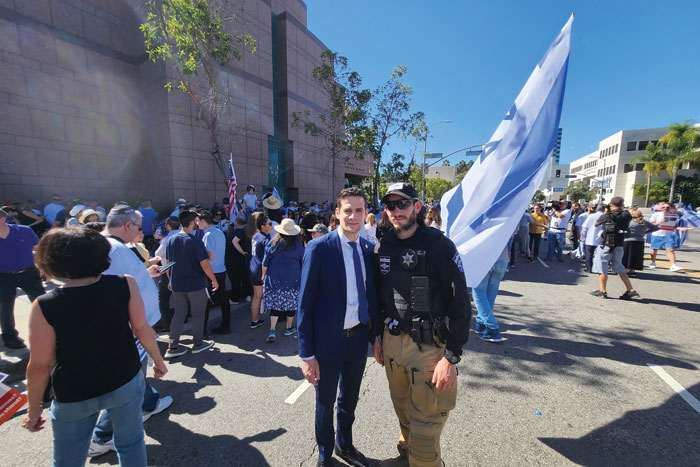

“My mother kept no secrets from me about her strange and difficult life before I was born,” explains Faderman, a leading scholar of lesbian history and literature. “But the older I got, the less I understood. … Thirty years after my mother’s death, my young-womanhood long gone, a sadness suddenly came upon me with the thought that though I’d known all her secrets, I hadn’t known her.”

The starting point of Faderman’s search for meaning and memory is her mother’s lifesaving flight, at the age of 17, from Latvia to America, where she hoped to become a dancer. She soon ended up sewing pinafores in a clothing factory on Delancey Street and living with her older sister and brother-in-law in Brooklyn. On the day she left Vilna, she vowed to the rest of her family that she would bring them to safety in America, too: “I swear on my life, as soon as I have the money. All of you!” But when she happens to meet a charming young man called Moishe in a park in the Bronx, it turns out to be a fateful encounter.

“In the old country they would have said it was beshert, destined,” observes Faderman. “I’m not sure that I believe in beshert, but I am sure that … this moment, too, led inexorably to what she would pay for to her last rattling breath.”

The saga of Mereleh Luft — who would soon rename herself Mary Lifton — will remind some readers of Henry Roth’s “Call It Sleep” or Abraham Cahan’s “The Rise of David Levinsky.” Indeed, Faderman is a gifted storyteller, and her haunting book carries all the toolmarks of the novel, the sights and sounds and smells that allow the reader to enter the narration in an especially intimate way. But she always reminds us that “My Mother’s Wars” is memoir, not a work of fiction, by heralding each new chapter with a fragment of reportage from the 1930s and 1940s, an era when every private life was impacted, distorted and often ended by the workings of history. “The world was rocking,” she observes, “and would soon tip over.” 

It turns out, in fact, that Mary Lifton is an eyewitness to some of the most momentous events of the era in which she lived. The International Ladies’ Garment Workers Union organizers in the clothing factory where she works, for example, appeal to the cutters and drapers to strike. “I bet that’s why the bosses didn’t want to fix the toilet,” says one of her fellow workers. “[T]hey don’t want the radicals meeting in the ladies room.” For Mary, the risk of losing her job threatens not only her livelihood but also her ability to send money back to the family in Latvia. Yet she acts on principle: “Welcome, Comrade” she says to each one who joins her on the picket line. She is rewarded with a blow to the head from a horse-mounted cop.

“ ‘F—ing kikes!’ he sneers, and again swings his billy club.”

Now and then, Faderman herself enters the story she tells with an aside, often ironic but even more often tender and poignant. She knows, for example, that her mother’s tumultuous love affair will result in the birth of a child, but not in a marriage. “I cheer her on,” writes the author. “Much better, for so simple a soul, to be obsessed by simple slogans than by a lover who’s as cloudy as a muddy river. Much safer, despite even the baton’s blow, to think day and night about unions and comrades and struggles for justice than about a love as insubstantial as the ether: that’s what I’d like to shout to her across the eight decades. But she would hear such selfless nattering like a deaf person hears the shouting of a mute — which is just as well, for if she’d chosen better and safer, how could I come to be?”

From back in Latvia, even more ominous events are reported to Mary in letters from her younger brother, Hirschel. The so-called Perkonkrusts are the Latvian version of the Nazis, and “they look and sound like that lunatic wind-up doll in Germany with the black toothbrush pasted above his lip.” Hirschel envisions a dire future: “You’d have to be a mole not to see where this is going.” For Mary, love and history are enmeshed: “And if things get worse for the Jews in Latvia and the family has to come here and she has a baby and isn’t married.” But it turns out that Mary makes a choice in her love life that closes off what may have been the best chance of escape for her family.

Thus does Faderman allow us to understand the significance of the title she has chosen for her book. Even as her mother yearned to find love in America, she was forced to witness from afar the workings of history that would ultimately extinguish the lives of her cherished family — “she’s standing on a high cliff watching shipwreck victims, those she loves, foundering in the sea far below.” In a strange and shattering way, her struggle for private happiness worked against her family’s struggle for survival, an irony that impressed itself first on Mary Lifton herself, then on her brave and discerning daughter, and now on her daughter’s admiring readers.


Jonathan Kirsch, author and publishing attorney, is the book editor of the Jewish Journal. His latest book is “The Short, Strange Life of Herschel Grynszpan: A Boy Avenger, a Nazi Diplomat, and a Murder in Paris” (W.W. Norton/Liveright), published in 2013 to coincide with the 75th anniversary of Kristallnacht. Kirsch can be reached at books@jewishjournal.com.

‘My Mother’s Wars’: Witness From Afar Read More »