fbpx

December 25, 2008

“Breakdowns” & The “Maus” that roared (or Art Spiegelman through the looking glass)

Art Spiegelman, the cartoonist whose graphic memoir, “Maus,” won a Pulitzer Prize, was in town recently to promote a reissue of “Breakdowns,” a collection of his underground comics work first published in 1978.

As Spiegelman pointed out to me, his name in German means “Mirror Man” (mine means “Pond-wood”) — and revisiting “Breakdowns,” now subtitled, “Portrait of the Artist as a Young %@&*!” was like finding a letter you’d written 30 years ago. For this new edition, Spiegelman spent two years drawing an introduction in comic book form, a series of vignettes that Spiegelman described as “a demo of how memory works” as well as a prose afterword — an elaborate consideration of the most fundamental of questions — “Who am I? How did I become this way? How did I become an artist and what inspired this work?”

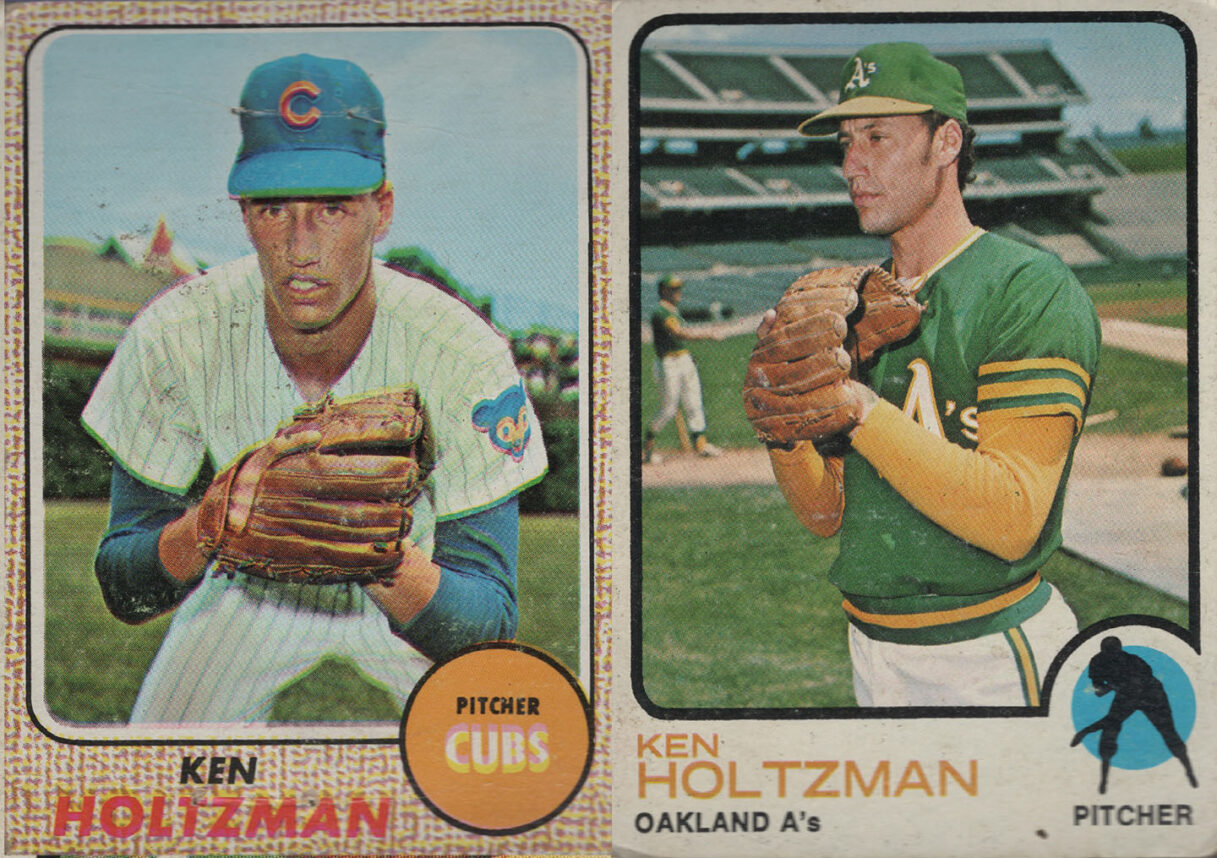
Spiegelman was born in 1949 (in Sweden, of all places). His parents, Polish Holocaust survivors, were making their way to the United States, en route to landing in New York City, where they lived in Washington Heights and Rego Park. As he renders in the new introduction, Spiegelman started drawing early and as a child became besotted with newspaper comics and with Mad Magazine. He published his first cartoons at 13 in a local newspaper, and by the time he was 18, he had landed a summer job working for Topps Chewing Gum (which included cartoons in the gum wrappers) under the legendary Woody Gelman, where he met some of the now-celebrated early comic strip artists, as well as some rising talent, among them Robert “R” Crumb.

Spiegelman attended Harpur College in Binghamton, N.Y. (now part of Binghamton University). It was the ’60s! Sex, LSD and combinations of both blew his mind, while trips to San Francisco, the East Village and a Vermont commune put flowers in his hair, or at least in some of his drawings.

Although his parents wanted him to be a dentist, a breakdown (of the mental hospital kind) made clear that was never going to happen. That same year, 1969, Spiegelman’s mother committed suicide. In his comic book depiction of her death, Spiegelman dubbed it “the perfect crime,” saying that in killing herself she murdered a part of him and at the same time left him “to take the rap.”

After his mother’s death, Spiegelman returned to Binghamton, where filmmaker Ken Jacobs inspired him to think of himself as an artist. Studying the way early cartoons anthropomorphized animals in one of Jacobs’ classes gave Spiegelman his “Eureka!” moment. He decided to create a comic in which the victims would be drawn as mice, and the persecutors as cats. It would be about … race in America! Imagine Ku Klux Kats lynching black mice! It seemed genius — that is until Spiegelman realized he knew, as he put it, “bupkis about being black in America.”

Justin Green, one of the cartoonists Spiegelman had befriended in San Francisco, had asked him to contribute a short strip to an underground comic to be called, “Funny Animals.” Spiegelman decided to apply his earlier idea to a different tack — his own life. The three-page cartoon Spiegelman produced in a month’s time in 1972 was called “Maus.” It was about a father who tells his young mouse son “bedtime stories” about his time in Mauschwitz. He drew it in a very simple black-and-white direct style, as he called it, “conventional in form, radical in content.” Later that same year, Spiegelman would draft a German Expressionist style narrative called, “Prisoner on Hell Planet” about his mother’s suicide.

Over the next six years, Spiegelman experimented with a variety of comic book forms, incorporating elements of pulp detective fiction and porno films, referencing everything from the Sunday funnies of the early 1900s to Cubism and riding a “New Wave” in his work that, much like the movies or music of the time, mixed high art with low to find new forms. This was the work collected in the 1978 “Breakdowns,” the title of which is a play on words alluding both to the artistic term break-down, to Spiegelman’s own mental anguishes and his breakthrough artwork.

Much like Norman Mailer’s “Advertisements for myself,” “Breakdowns” was meant to make the case for Spiegelman’s art. “For me,” Spiegelman notes in his new afterword, “Breakdowns” is “a manifesto, a diary, a crumpled suicide note and a still- relevant love letter to a medium I adore.”

ALTTEXT Spiegelman then decided to expand “Maus” into a book-length work. When people asked him how long it would take to finish “Maus,” he would answer “two or three years,” which he now says was “idiotic because I was saying that for years and years.”

In 1982, his father died. During our conversation, I suggested that perhaps one of the reasons “Maus” took so long was that Spiegelman couldn’t finish it while his father was still alive.

Spiegelman admitted that although he had hoped to finish the work while his father was still alive, his death, “may have made certain things easier.” “My relationship with my father improved a lot after he died,” Spiegelman explained. “I bristle when people ask if I think of my comics as therapy, but I will say that to act out [Vladek’s part] in this, which is what you have to do in order to draw any decent strip … was a kind of gestalt thing to see it from his point of view.”

“Maus” was first published in book form in 1986 (in part to beat out Spielberg’s animated movie about a mouse, “An American Tail”), and “Maus II” came out in 1991. “Maus” won the Pulitzer Prize in 1992 — requiring a special category since its form was considered so unconventional.

“Maus” also became a tough act to follow. In a comic strip called “Pop Art” that is part of the new intro to “Breakdowns,” Spiegelman draws himself fleeing from a giant Maus-like mouse monument, saying “No matter how much I run I can’t seem to get out of that Mouse’s shadow.” The success of “Maus,” he now says, was “constricting.”

Then came Sept. 11.

For Spiegelman, who lived in lower Manhattan with his family, the event was profoundly affecting. Having spent much of his life living with the specter of his father’s cataclysm, he now found that “something one might call history was intersecting with my story in a direct way.” (I suggested to Spiegelman that this was like the scene in “Hannah and her Sisters” where Woody Allen plays a hypochondriac who visits his doctor and is shocked to find out that he might indeed be deathly ill).

“One of the things I felt that morning [was]… ‘Schmuck, you should have done more comics.’ I feel it’s like what I can do best. Even though it’s hard.”

Spiegelman started to draw large one-page panels, which a friend who was editor of Germany’s “Die Zeit” offered to publish with a “no editing” clause (The New Yorker, where he had worked for many years, passed). Over the next year, Spiegelman drew 10 pages. Publishers from England, Italy and France carried it — “A coalition of the willing,” as Spiegelman called it, and eventually it was published in the United States in The Forward, which had also published “Maus” in serial form. It also came out finally in book form with the title, “In the Shadow of No Towers.”

Keeping his vow to make more comics, Spiegelman has several works forthcoming: He just did a volume for Toon Books (www.toon-books.com), whose editorial director is Francoise Mouly, Spiegelman’s wife and frequent collaborator (he’s listed on the Web site as “series advisor”). He’s also done a collection of three different sketchbooks to be published by McSweeny’s, as a well as “Meta Maus,” an update of the 1994 “Maus Voyager” CD-ROM, to be published by Criterion. And he is working on a new comic that, he says, “I refuse to talk about what it would be, because that would sure kill it.”

As much as “Maus” owes to the legacy of his father, Vladek, Spiegelman feels equally that “all of my work before that and after that [owes] a lot to the fathers who made the Sunday comics from 1900.”

“Maybe that’s the way I am Jewish,” Spiegelman said. “I was lecturing somewhere on Yom Kippur, and I explained that I didn’t observe the High Holy Days, since I haven’t gotten high since about 1980. [However]… in many ways the Jewishness has to do with carrying a history.”

“The irony for me is that I am involved in this Oedipal struggle, and now here I am this patriarch of comics who’s in a kind of Oedipal target position for younger comics, who might think I’m taking up too much oxygen.”

Reflecting on the way comics have changed since he first published “Breakdowns,” Spiegelman said, “When I was growing up, if you went into a bar and told this woman that you drew comic books, it wasn’t a really surefire pick-up line…. Now it seems to be as good as saying that I play bass in some punk band.”

The current comics explosion that has birthed Comic-Con and made graphic novels hot literary properties for the movies, is “part of the trifecta that just happened to comics.”

“Now comics can be anything,” Spiegelman said, “that includes a literary or visual arts comic that could find its way into bookstores or museums easily.” Much as that makes Spiegelman happy, it also concerns him.

“I’ve been fretting recently [that] I placed my bet on this when it was an unusual place to be. It seems I’m living in a Phillip K. Dick world — like I willed it into existence somehow. Now, in the last eight years, is when it’s really flourished. Comics can now be a serious medium — as opposed to ephemeral garbage. I’m worrying perhaps that I used up the seriousness quotient for the planet and it ended up being in comics; so now the world of political and social arena has no adults left in it.”

One could say it was as if from “Maus” to now, the Mirror Man and the comics he begat had passed through the looking glass.

“Breakdowns” & The “Maus” that roared (or Art Spiegelman through the looking glass) Read More »

Jamie Sneider’s ‘Jewish Woman’ ain’t your bubbe’s 2009 calendar [VIDEO]


Jamie Sneider's calendar, the video


Cheesecake might be a crowd-pleaser when it comes to desserts, but for calendars the appeal is slightly more limited.

The trend that started with barely there pinups in World War II has become so acceptable in recent years that it's served as a fundraising vehicle for various charities, inspiring the PG-13 film, “Calendar Girls.” These racy, tongue-in-cheek calendars are also an inspiration for Jamie Sneider, whose photos appear on every page of the “Jamie Sneider: Year of the Jewish Woman” calendar for 2009.

Most of the photos feature Sneider, dressed in bikini bottoms, swapping her top for matzah balls, challahs, bagels, black-and-white cookies and other culinary Jewish favorites. In addition to filled champagne flutes for New Year's Day and Chinese takeout boxes and movie popcorn for Christmas, the calendar also takes an irreverent approach to the Jewish holidays, including Tu B'Shevat (two seedlings) and a strategically placed etrog and lulav for Sukkot.

“I wanted to celebrate the Jewish woman in a way that we might not think of her, but to also celebrate the religion in a unique way … and to get a couple chuckles,” Sneider said.

In contrast to Hollywood producer Adam Cohen's “Nice Jewish Guys 2009,” featuring marriageable professionals with their clothes on, Sneider doesn't portray a nice Jewish gal as much as she does a nice Jewish stripper. Still, the for-profit calendar and its more than 60 images were carefully planned to assure the accuracy of each religious reference.

“Even though it's a comedic calendar, it could not be amateur. It had to look professional and beautiful,” she said.

The total cost to produce 1,000 calendars and several posters — $18,000.

The money was a family investment, she said. Her parents were a little surprised but were ultimately happy that Sneider “was getting back into [her] religion in a unique way.”

Unique is definitely the word. The month of March features a classic Purim charm: two groggers and a poppyseed hamantaschen that requires a double-take. April offers Sneider as human seder plate with a sexually provocative question for the second night: “Guess where I hid the afikomen?”

The calendar also includes Hebrew dates, religious holidays (some secular included), a glossary of Jewish terminology and the weekly Torah portion.

A native of Wayland, Mass., Sneider isn't just skin, bones and baked goods. She earned a bachelor's degree in fine arts with honors from NYU's Tisch School of the Arts at the Experimental Theatre Wing, has worked as an actress for “Late Night With Conan O'Brien” and performed solo shows throughout New York City.

Shortly before leaving New York, she started a humor blog, Reluctantly Moving to L.A., which she still maintains, even though she now resides happily in Los Angeles.

The blog was actually the starting point for the calendar, Sneider said. After receiving an overwhelmingly positive response to her photos, she decided to make her idea a reality. Since the release of her calendar in mid-October, Sneider has made a television appearance on the KTLA “Morning Show” and done a radio interview on Sirus' Playboy Radio channel.

Although “Jewish Woman” will undoubtedly offend people, Sneider doesn't think it crosses a sacrilegious line.

“We only used symbols of celebration as opposed to religious items for the photo shoots. If anything, it's an ode to my religion and completely expresses my love of Judaism,” Sneider said. “Hopefully, this calendar can encourage people to express their identity more openly.”

For more information about the “Jamie Sneider: Year of the Jewish Woman,” visit Jamie Sneider’s ‘Jewish Woman’ ain’t your bubbe’s 2009 calendar [VIDEO] Read More »

Fake Santa goes nuts, kills at least five

Talk about Bad Santa.

Right around the time I was asking my wife where Santa was last night—I guessed Lawrence, Kan., though I’m not sure why—a man dressed like Old St. Nick showed up at a Christmas Eve party in the San Gabriel Valley, about 20 miles east of downtown Los Angeles, and opened fire on partygoers:

Bruce Jeffrey Pardo, 45, knocked on the front door of a home on the 1100 block of Knollcrest Drive in Covina around 11:30 Wednesday night, said Covina Police Lt. Pat Buchanan. Thought to be someone hired to entertain children at the party, Pardo was let in the house and immediately opened fire with a handgun, Buchanan said.

Partygoers fled the house in panic, running to neighbors and frantically calling police.

Shortly after, the two-story house located at the end of a quiet cul-de-sac was fully engulfed in flames, fire officials said. It took about an hour and a half to extinguish the fire.

The Los Angeles Times is reporting three dead; The New York Times says at least five. It’s not clear if Pardo knew he people in he house or if entertainment had been hired. He eventually killed himself outside his brother’s house.

So much for silent night.

Fake Santa goes nuts, kills at least five Read More »

Artifact-rich Sports Museum opens downtown

A T206 Honus Wagner baseball card, one of the rarest in the world. Barry Bonds’ 755th home run ball. A handful of infield dirt, the broken champagne bottle used to christen the stadium and the first ball thrown out at Ebbets Field, home of the Brooklyn Dodgers, in 1913.

These are some of the gems at the Sports Museum of Los Angeles, which opened on Nov. 28. Not surprisingly, the collection, owned by Gary Cypres and housed downtown in a 32,000-square-foot warehouse, has already generated the kind of breathless blurbs usually uttered by radio personalities for movie openings.

“Awesome! Fantastic! Unbelievable! That one person could collect all this memorabilia is incomprehensible,” Los Angeles Mayor Antonio Villaraigosa said of the museum, located a few blocks south of Staples Center.

“The best sports museum in the world!” former Dodger owner Peter O’Malley added.

This is one case where everything that has been said is true. Cypres’ vast sports collection, which fills 30 well-lighted galleries, is extraordinary and reflects its owner’s deep love of sports history.

It is not simply that he knows Yale, not USC, was the school that pioneered football; Cypres also owns a rare Edison film of the 1903 Yale vs. Princeton football game, which runs on a small screen above an exhibit on college football.

And it’s not simply that he knows that the L.A. Times got it wrong when it reported that, after Joe DiMaggio’s 56-game hitting streak ended, he hit in another 12 games (Joltin’ Joe actually hit in another 16 consecutive games); Cypres also owns the ball that was speared by Cleveland’s Ken Keltner to end DiMaggio’s 56-game skein.

Still, one has to ask, where are the Jewish sports artifacts?

Mark Spitz’ gold medals? Barney Ross’ lightweight, junior welterweight and welterweight belts? Hank Greenberg’s 58th home run ball from 1938?

None of these are to be found at the museum, but there is a jersey worn in 1957 by Dodger Sandy Koufax, one of the greatest Jewish athletes of the past century and arguably the greatest left-handed pitcher in the history of Major League Baseball.

Cypres, who slumps over but who once stood about 6-foot-3 1/2-inches when he played forward at Hofstra, says, “You want Jewish?”

He points out a photograph of the Cleveland Rosenblums, a championship basketball squad from the late 1920s and early 1930s. What is striking is how much shorter the players were then. The tallest player, Joe Lapchick, was 6-foot-5, tiny by today’s standards. Dressed in knee pads and tank-tops, sticking out their chests, with their bodies turned to the side, not straight-on, the Rosenblums look more like a college wrestling team than a pro basketball squad.

In one of the basketball rooms, there are also jackets worn by members of the House of David, a barnstorming outfit that played basketball and baseball, and the Philadelphia Sphas, a legendary Jewish hoops team during the early days of basketball. There are also photos and a plaque of Abe Saperstein, founder of the Harlem Globetrotters.

A modest, unassuming man who has made his money in investment banking and the travel business, Cypres, 65, grew up in the Bronx at a time when Jews were still dominant in basketball, when CCNY, a team coached by Nat Holman and comprised of many Jews, became the only school to win the NIT and NCAA titles in the same year. Cypres played ball on the playgrounds and at summer camp with Larry Brown, the current Charlotte Bobcats coach, who was himself a great player in the ABA.

Yet when asked what it meant to be a Jewish kid back then, when there were many star Jewish athletes, Cypres says that didn’t influence him to play basketball.

His favorite athlete was Mickey Mantle.

Although he roots for the Dodgers now, Cypres still has a love for his boyhood Yankees and has a whole room devoted to Mantle as well as rooms filled with DiMaggio, Lou Gehrig and Babe Ruth memorabilia.

Unfortunately, despite the wealth and beauty of the resources in this museum, it has attracted few visitors so far. Part of that is due to the economy, which is harming attendance at many museums such as MOCA, on whose board Cypres’ wife, Kathi, sits. Part of it is due to its location, downtown, as opposed to the Westside. And part of it is due to the time of year. Cypres expects greater turnout in the summer when kids are out of school.

But Cypres has gotten many calls from corporations, asking to hold events in his museum. He sees it as a perfect spot to host dinners, seminars and parties.

Meanwhile, his sports memorabilia collection, which he values at roughly $30 million, keeps gaining in value. As he says, “better than the stock market, Imight add.”

Artifact-rich Sports Museum opens downtown Read More »

Teriton tenants win battle to stay in historic apartment complex

After a three-year battle with alleged religious nonprofit Or Khaim Hashalom, tenants of the historic 28-unit Teriton Apartments in Santa Monica have won the right to remain in or return to their apartments for up to seven years under their former rent-controlled leases, according to a settlement made public Dec. 4. Jurisdiction will be returned to the Santa Monica Rent Control Board.

Tenants have also received monetary restitution from Or Khaim Hashalom, negotiated individually and confidentially. Additionally, the nonprofit must adopt a comprehensive, written fair-housing policy and provide training for property managers. In addition, its IRS status, donations and applications and rental agreements must be monitored for three years by the Santa Monica City Attorney’s Office.

“This is really a wonderful outcome,” said Dan Zaidman, whose mother, Nathalie, 93, has lived in the complex for 40 years and has become both physically and mentally impaired. “To move her right now would have been very traumatic.”

Approximately 10 of the tenants affected by the ruling, including Zaidman, are currently living at the Teriton. Another, Kaveh Zal, has returned to the building.

The controversy began in November 2005, when owners Rouhollah Esmailzadeh and others, who had purchased the building in April 2005 for an estimated $10.5 million, obtained a demolition permit. The action triggered a routine review by the Santa Monica Landmarks Commission of the three-story garden apartment building designed by architect Sanford Kent in 1949, which sits on almost an acre at 130-142 San Vicente Blvd.

The following April, in a scheme Santa Monica Deputy City Attorney Gary Rhoades described as “odd, complicated and, hopefully, one of a kind,” tenants received notice that religious nonprofit Or Khaim Hashalom, which had incorporated only three months earlier, had purchased the building.

The organization, under spiritual head Rabbi Hertzl Illulian, sought to evict the tenants, demolish the building and build up to 40 luxury condominiums, as well as provide housing for Jewish refugees from the Middle East.

Multiple hearings and lawsuits ensued, with the tenants claiming that the mission of the nonprofit violated their civil rights according to 42:405 of the Fair Housing Act. They were represented by attorney Christopher Brainard.

The Santa Monica city attorney’s consumer protection unit concurrently filed a lawsuit against Or Khaim Hashalom; its legal representative, attorney Rosario Perry; and others for alleged discriminatory practices, including “terminating their tenancies because of their race, religion and national origin.”

Meanwhile, the Teriton was unanimously declared a historic landmark by the Landmarks Commission on Nov. 13, 2006. That decision was upheld by the Santa Monica City Council on June 12, 2007, when the council rejected an appeal by Or Khaim Hashalom, claiming it was exempt from landmarking under California Government Code Section 3736(c), which allows an organization to alter or destroy historical buildings under certain conditions, including economic hardship or hindrance of religious mission.

Eventually, after Or Khaim Hashalom failed to have the discrimination lawsuits dismissed, a series of negotiations with parties from both cases followed, with retired Judge Robert Altman mediating.

Separately, Or Khaim Hashalom filed suit against the city of Santa Monica, challenging the City Council’s designation of the Teriton Apartments as a historic landmark. On Oct. 15, 2008, Judge James C. Chalfont denied that claim.

Or Khaim Hashalom has appealed the judgment, with a ruling expected in about a year, according to the group’s legal representative, Perry, who also serves as secretary of its board of directors. Tenants’ attorney Brainard believes the designation will not be overturned.

The building was put up for sale on Nov. 15, 2008, at an undisclosed price. Any potential buyer would be obligated to honor the terms of the settlement, according to Brainard.

Or Khaim Hashalom’s Rabbi Illulian remains optimistic. “We lost a lot of money, a lot of time, energy and hopes, but we don’t give up,” he said.


For previous stories on the Teriton:

Teriton ‘landmark’ status upheld but residents still face eviction

Santa Monica apartment building at center of battle receives ‘landmark’ status

Fate of Santa Monica apartment building embroils rabbi and residents in legal battle


Teriton tenants win battle to stay in historic apartment complex Read More »

An enduring miracle

This coming Shabbat, together with Jewish communities around the world, we will celebrate the joyous festival of Chanukah. Most of us are quite familiar with the story of Chanukah and the miracle that our tradition recalls.

We learned as children that when the Maccabees rededicated our ancient Temple in Jerusalem, they found enough oil to light the menorah for only a single day. God’s miracle, we learned, was that the oil that should have lasted but one day lasted, rather, for eight days.

The rabbinic sages, explaining the ritual lighting of Chanukah, recounted in the Talmudic tractate of Shabbat the miracle noted above. We might wonder whether this miracle actually occurred. And, if it did not occur, we might question whether we should continue to observe the ritual lighting associated with this nonevent.

In order to understand the original and continued significance of the lighting of Chanukah’s flames, we might explore the manner in which we light the chanukiyah — Chanukah’s eight-branched menorah. We can thereby gain a deeper and enduring appreciation of the lighting, one that chronicles a miracle we live today as much as it commemorates a miracle of long ago.

The Talmud instructs us to observe Chanukah’s ritual lighting in accordance with the sage Hillel’s practice. We are to kindle one additional flame for each successive day of the holiday. On the first day, we kindle one flame; on the second, two flames; etc. According to the sage Shammai’s dissenting opinion, we ought eliminate one flame for each successive day of the holiday; on the first day, eight flames; on the second day, seven flames; etc.

At first glance, Shammai’s approach seems compelling: In recounting the miracle of the single jar of oil that lasted eight days, we should acknowledge that, despite our rational conclusion to the contrary, there was in actuality enough oil on the first day of Chanukah to last eight days, on the second day to last seven, and so on. In other words, Shammai suggested that the proper way to recount the miracle is to recall what once occurred from the perspective of one who knows how the story ends.

Still, the Talmud rules in accordance with Hillel. I believe Hillel’s view prevailed because it reflected a belief that the ritual lighting of Chanukah is more than commemorative; it exists very much in the present tense, experientially. Standing outside the miracle, remembering it historically as Shammai did, the focus is simply on how much oil remained each day. However, when we use the ritual to relive the miracle in our present, when we experience each day of it anew, we are not certain that our oil will last yet another moment. We cannot be sure that the lights we revisit from our ancient Jewish past, or even those we strive to preserve and nourish today, will endure. Will the Jewish flame of our era burn forth unto our children and our children’s children? Are we any less at risk of losing our light than the menorah in the Temple was so very long ago? Might it have been the case for the rabbis long ago that the “miracle” of Chanukah was a metaphor for our people’s unlikely but persistent survival and flourishing, against all odds? Is it possible that the miracle that we celebrate in our own era, when kindling our own flames of Chanukah, is the ever-constant miracle of our presence in this world, altogether, as Jews?

The flames of Chanukah, as Hillel had us kindle them by adding one more flame each day, express our enduring faith that our flame of today will grow ever stronger, in our own generation and beyond. The flames we kindle on Chanukah represent our commitment to the work we must do to enhance and clarify the light of our people and the beauty and depth of Jewish meaning and purpose. Ultimately, from within the annual and ongoing miracle of Chanukah, we might even come to recognize that we, ourselves, are the flames; we are the enduring miracle of Chanukah, if we make it so.

Rabbi Isaac Jeret is the spiritual leader of Congregation Ner Tamid, a Conservative congregation in Rancho Palos Verdes. For more information, visit http://www.nertamid.com.

An enduring miracle Read More »

Olmert issues Christmas day warning to Hamas

Unfortunately, mistletoe doesn’t hang over the Israeli border with Gaza.

Hamas won’t stop shelling nearby communities with Kassam rockets. So Israeli Prime Minister Ehud Olmert—yeah, he’s still around—issued a “last-minute” warning to the Islamic Resistance Movement: stand down or force will be used.

Reuters reports:

His comments were the clearest indication yet that Israel was preparing a possible Gaza offensive which could result in heavy casualties on both sides and fuel a humanitarian crisis.

Israeli political sources said Olmert’s security cabinet approved a “staged” military escalation, beginning with air strikes against a wider range of Hamas targets in the densely-populated enclave.

A large-scale operation has yet to be authorized but could get a green light depending on Hamas’s response, the sources said.

In Gaza, Hamas spokesman Fawzi Barhoum said Israel would “pay the price” for any attack.

Olmert told Al Arabiya television, an Arab broadcaster widely watched in Gaza: “I didn’t come here to declare war.”

“But Hamas must be stopped—that is the way it is going to be. I will not hesitate to use Israel’s might to strike Hamas and (Islamic) Jihad. How? I will not go into details now,” Olmert said, according to a statement issued by his office.

No one is winning in this quiet war. But never ceases to amaze me that the international community condemns any Israeli response to the rocket attacks against its own civilians.

Olmert issues Christmas day warning to Hamas Read More »

Less controversy surrounds this year’s Oscar foreign film entries

ALTTEXT
Scene from ‘Waltz With Bashir’

A record number of 67 countries are vying for the Oscar in the best foreign-language film category, with generally obscure directors from Afghanistan to Venezuela dreaming of sudden recognition in Hollywood and beyond.

Among five entries of special Jewish interest, three deal with Middle East conflicts, one with terrorism in Germany, and one with the friendship between a Jewish and a Muslim family in Morocco.

In contrast to previous years, there have been no acrimonious controversies so far. Apparently all sides have tired of arguing whether the Palestinian entry should be officially designated as coming from Palestine, the Palestinian Authority or the Palestinian territory, and plain “Palestine” has won out.

Nor has any film been disqualified for too much English dialogue, as happened to Israel’s “The Band’s Visit” last year,

The substitute entry for Israel was “Beaufort,” the story of an Israeli army unit during the first Lebanese War, and that conflict between neighbors is revisited by two movies this year.


‘Under the Bombs’ trailer

Lebanon’s “Under the Bombs” depicts Israel’s 2006 invasion to wipe out Hezbollah terrorists and the devastation it brought to the southern part of the country.

The film’s only professional actors play an upper-class Muslim woman, living abroad, and the Christian taxi driver she hires in Beirut to search for her son and sister in a destroyed southern village.

On their odyssey, the oddly paired driver and passenger encounter refugees, puzzled and bitter by the loss of homes and relatives, but Franco-Lebanese director Philippe Aractingi largely steers away from sweeping denunciations.

Some villagers accuse Hezbollah fighters of “stirring up a hornets’ nest” and dislike them almost as much as they do the Israelis.

“This is not a political or propaganda film,” said Aractingi in a phone call from his home in Paris. “It’s a human rights film about people caught in a war they don’t want or comprehend.

“When I was a schoolboy in Beirut, we were taught that Lebanon was a neutral country, like Switzerland. So people don’t understand why they’re being bombed.”

Israel’s entry, “Waltz With Bashir,” is also about war in Lebanon, this one in 1982, but in every other respect the approach and technique are radically different.

Director Ari Folman combines state-of-the-art animation, an anti-war theme and psychological analysis in the autobiographical story of a traumatized Israeli soldier trying to recover suppressed memories of combat.

Aractingi and Folman have never met, but the Lebanese director said he “loved” “Waltz With Bashir.” He hopes to meet his Israeli counterpart, if both films are among the finalists, although a public meeting might be “politically risky” for Aractingi.

“Salt of This Sea,” the Palestinian entry, is more hard-edged and propagandistic than such skillful predecessors as “Divine Intervention,” “Olive Harvest” and “Rona’s Wedding.”

Soraya (Suhar Hammad) is a young Brooklyn-born woman of Palestinian descent, who learns that when her grandfather abandoned his stately Jaffa home in 1948, he left behind a bank account of 315 pounds in the British-Palestine Bank.

Obsessed with the idea of reclaiming her grandfather’s savings, Soraya comes to Israel, meets handsome young Emad (Saleh Bakri, Israel’s current heartthrob), and when the bank manager tells Soraya that the account no longer exists, the pair get the money (plus interest) by holding up the bank.

Later, disguised as Israelis and with Israeli license plates on their car, the pair visits the grandfather’s home in Jaffa and giddily samples the attractions of Tel Aviv.

There are no scenes of outright Israeli brutality, but the film conveys the Palestinians’ sense of humiliation during airport interrogations, searches at roadblocks and denials of exit visas to study abroad.

The Moroccan entry, “Goodbye Mothers,” by director Mohamed Ismail, is an oddly affecting though somewhat amateurish film that focuses on the close friendship between a Jewish and a Muslim family.

The location is Casablanca, and the time is the early 1960s, when large numbers of Moroccan Jews clandestinely made their way to Israel in defiance of a ban by the Moroccan government.

Both families are portrayed with equal sympathy, and the only shady character is an Israeli emissary sent to spur the exodus to the Jewish state. The film is marred by some wild mugging and overacting, reminiscent of silent movies, and frequently awkward English subtitles.

Germany’s entry, “The Baader-Meinhof Complex,” also looks back to the 1960s and ’70s, when the West German “Red Army Faction” went on a murderous rampage against some its leading countrymen allegedly subservient to American and Israeli “imperialism.”

Amid incessant gun battles, the only comic relief in the high-tension docudrama comes when Yasser Arafat’s men in Jordan try to train and impose a minimum of discipline on the unruly, and frequently nude, German terrorists of both genders.

Director Uli Edel, who lived through the film’s era as a young man, recreates the setting and mood of the time with impressive fidelity.

Some German critics have complained that the film “humanizes” the gang and its psychopathic leader, Andreas Baader. But in an interview, Edel pointed to his long closing scene, which dwells on the senseless, brutal murder of a German businessman.

For the first time, Jordan has entered a film, but “Captain Abu Raed” steers away from war and politics by offering a mellow tale about an aging airport janitor who is mistaken for a glamorous international pilot by neighborhood urchins.

Nine finalists among the 67 competing films will be announced the week of Jan. 12. They will be winnowed down to five on Jan. 22, with the winner clutching the Oscar at the Academy Award ceremonies on Feb. 22.

The Golden Globes award nominations by the Hollywood Foreign Press Assn., which often foreshadow the Oscar picks, include “Waltz with Bashir” and “The Baader-Meinhof Complex.” The two movies are also frequently mentioned as favorites by various groups of film critics.

Also among likely foreign film contenders are Italy’s “Gomorrah,” Sweden’s “Everlasting Moments,” France’s “The Class,” Argentina’s “The Lion’s Den,” Turkey’s “Three Monkeys” and Singapore’s “My Magic.”

“Salt of This Sea” and “Under the Bombs” are considered long shots.

In the Documentary Features category, with a record 94 entries, “Blessed Is the Match: The Life and Death of Hannah Senesh,” about the World War II Israeli heroine who parachuted behind enemy lines, has qualified among the 15 finalists.


‘Waltz With Bashir’ U.K. trailer

Less controversy surrounds this year’s Oscar foreign film entries Read More »

Disraeli: The curious case of England’s Jewish prime minister

Adam Kirsch, “Benjamin Disraeli” (Nextbook: Schocken, 2008 ) $21.00.

Benjamin Disraeli was born Jewish, baptized as a boy but (mostly) considered himself to be Jewish.

He famously proclaimed to Queen Victoria — who began by hating him and ended adoring him — that he was the “blank page” separating the Old and New Testaments. He was an unconventional Tory, a reactionary with the glimmer of a radical peeking through. This proud defender of the majesty of his ancient people remains to this day the only Jewish prime minister England has ever known.

Into this career, tangled with old political fights and unclear motives, comes Adam Kirsch. Kirsch is an accomplished poet and critic with a deservedly formidable reputation. In addition to writing for various literary periodicals, he was a regular book columnist for the now defunct-New York Sun, whose serious book coverage was rare among newspapers. From his early days at The New Republic, this son of a local lawyer, historian and much-loved man of letters Jonathan Kirsch, has shown an erudition and judgment far beyond his years. Just as well, for few subjects require discernment as rigorous as the complex, vertiginous character aptly known as “Dizzy.”

French writer Andre Maurois began his biography of Benjamin Disraeli: “In the year 1290, on All Saints’ Day, King Edward I expelled the Jews from England.” English historian Robert Blake began his celebrated biography as follows: “Benjamin Disraeli’s career was an extraordinary one; but there is no need to make it seem more extraordinary than it really was.”

Peculiar, is it not? Why begin a biography more than 500 years before the birth of its subject, or begin by proclaiming its subject less remarkable than he is sometimes portrayed? But taken together these biographical choices tell us something about this fascinating character and about how Kirsch set about portraying Disraeli in a distinctive and persuasive way.

These opening sentences form the vectors that shape Disraeli — his Jewishness and his maddening mixture of achievement and artifice. Nobody was ever quite sure about the Lord of Beaconsfield; he was mightily gifted, but what, exactly, did he believe in, other than himself?

Benjamin Disraeli was born to a Jewish family in 1804. Despite his early baptism (at the age of 12), his contemporaries continued to see him as Jewish. Disraeli alternately evaded and relished his heritage. When his most undiplomatic enemy, Daniel O’Connell, attacked him in the House of Commons — referring to Disraeli’s Jewish lineage — Disraeli answered “Yes, I am a Jew. And when the ancestors of the right honorable gentlemen were brutal savages in an unknown island, mine were priests in the temple of Solomon.”

History designates some people to travel in tandem. Disraeli, with his mocking wit, will always be paired with the earnest, brilliant and periodically bizarre William Gladstone. Gladstone, among the most successful prime ministers in British history, detested Disraeli; Disraeli, it is said, when asked to define the difference between a misfortune and a calamity, said that if Gladstone fell into the Thames River, it would be a misfortune. If someone fished him out, it would be a calamity.

In addition to Gladstone’s liberalism and Disraeli’s Toryism, what distinguished them was that Gladstone was an insider. Here is where Kirsch’s biography particularly shines. Recently, Yirmiyahu Yovel demonstrated in an important biography of Spinoza how much of the philosopher’s thought could be understood through the prism of exile and alienation. Kirsch does something of the same for Disraeli.

This biography is part of the exemplary Schocken/Nextbook series, under the editorship of Jonathan Rosen. Kirsch uses this natural Jewish emphasis to show us that Disraeli was constantly tacking against the wind of his outsiderness. Part of the insincerity intuited by others was that more than most politicians, Disraeli could not answer with untempered instinct; everything had to be calculated, because he would never be accepted as ‘fully English.’ To be a prime minister and yet not thought part of the real polity of the country is an extraordinary situation indeed.

Kirsch takes us through the controversies of Disraeli’s career — the corn laws, the Reform bill, the Chartist movement, the Eastern question — all of them recounted briskly and with a clarity that enables us to understand these buried controversies. Page by page, we are reminded how precarious it was for Disraeli to have one foot in each testament.

Kirsch ends the book with a helpful bibliography. At the conclusion, he reminds us of the wonderful biography of Blake, saying it “remains the best starting point for any reader who wants to get to know him.” Now we can say — read Blake, by all means, but begin with Kirsch.

David Wolpe is senior rabbi of Sinai Temple. His column on books appears frequently in The Journal.

Disraeli: The curious case of England’s Jewish prime minister Read More »

‘Defiance’ celebrates Jews’ daring acts of WW II resistance

“Every day of freedom is like an act of faith,” says Tuvia Bielski, one of three brothers who led a partisan group battling Nazi troops in the forests of Belarus.

Tuvia (Daniel Craig), Zus (Liev Schreiber) and Asael (Jamie Bell) are the heroes of “Defiance,” which chronicles not only their daring acts of sabotage, but also how they established behind enemy lines a self-contained community of a thousand Jewish men, women and children.

Unlike Russian, Polish or French resistance groups, the Bielski Otriad (detachment) had to face, in addition to German soldiers and tanks, frequently hostile local populations, anti-Semitism among “allied” Soviet partisans and opposition by Jewish community elders who feared Nazi mass reprisals.

To make matters worse, there were bitter quarrels about strategy and methods between the more militant Zus and the more idealistic Tuvia.

Nechama Tec, whose book is the basis for the film, has described the Bielski Otriad as “the largest armed resistance by Jews during World War II.” As such, the exploits of the three brothers and their followers have given heart and pride to Jews burdened by the common misconception that all European Jews went passively to their doom.

One who gained new self-esteem was Edward Zwick, who, growing up in the Midwest, felt shamed by the supposed meekness of Jews during the Holocaust.

Once he became a well-established television and film director/producer (“The Last Samurai,” “Blood Diamond,”) Zwick spent 12 years trying to bring “Defiance” to the big screen.

The long delay was due partly to the reluctance of Hollywood’s Jewish honchos to tackle the subject, but even more by their reluctance to gamble their money on so complex a story.

“Studio chiefs fear anything that smacks of complexity,” Zwick told an Anti-Defamation League audience at an advance screening.

Paramount finally backed the movie, with Craig, the current James Bond star, in the lead. Zwick commented, “My greatest hope for the film is that another 15-year-old boy in the Midwest will see it and never feel the shame I did.”

Abraham Foxman, national ADL director and himself a child Holocaust survivor, praised “Defiance” as the first American film to tell the truth about the collaboration of many Lithuanians, Poles and Ukrainians in the extermination of their Jewish neighbors.


The trailer

But surprisingly, Foxman was unsure how “Defiance” would be judged by Jewish viewers. “I am not certain whether we are ready to embrace fighting Jews,” he said.

After shooting of the film was completed, a brief media flurry brought some unwelcome publicity.

A Polish government agency, the Institute of National Remembrance, charged that the Bielski detachment might have joined Soviet partisans in an attack on the village of Naliboki, in March 1943, in which 128 civilians were shot.

ALTTEXTThe agency, known by its Polish acronym IPN, deals with “crimes against the Polish nation” and is generally considered right wing. Even in its own brief report, IPN stated that participation of the Bielski partisan in the killing “is merely one of the versions of the investigated case.”

Descendants of the Bielski brothers have categorically denied the charge, as has Mitch Braff, director of the San Francisco-based Jewish Partisan Educational Foundation (www.jewishpartisans.org).

“For one, it’s been clearly established that no Bielski partisans were in the vicinity of Naliboki at the time of the shooting,” Braff said. “Furthermore, it would have been stupid to kill civilians whom the partisans needed for food supplies.”

Based on extensive research and interviews, Braff believes that between 20,000 and 30,000 Jewish partisans, mainly from Russia and Poland, fought the Nazis during the war.

American Jewish University scholar Michael Berenbaum and Braff are collaborating on a teachers’ guide to accompany release of the film and the subsequent DVD.

“Defiance” will open at selected Los Angeles theaters on Dec. 31, before a later national rollout.

Image: Director Edward Zwick, right, with Daniel Craig and Alexa Davalos on the set of “Defiance.” Photo by Karen Ballard/Paramount Vantage

‘Defiance’ celebrates Jews’ daring acts of WW II resistance Read More »