It happens to the smartest and most beautiful of women. Enter Ms. X. We run into each other four years after we were friends in college and decide to meet for dinner.
Ms. X is skinnier now, wears a lot more makeup and is no longer all about T-shirts and jeans. She is high-style and her breasts are way bigger than I remember.
I order a burger, and she orders a salad. I order a drink, and she abstains due to a recent discovery of what alcohol does to her.
Ms. X and I get to talking. Her eyes are heavy; they look a little pained, a little tired. She is all clinical in her language, minimal in what she has to say and often refers to her many therapist friends who allow her to speak and speak and speak without an end in sight.
She also pulls the age-old trick of a depressive. The “you know, people like you and me” trick, where she refers to her neurosis and then to you, bringing you down into her deep, dark cave with her.
What happened to Ms. X? Life. What does she claim happened? Men.
Men are the scapegoat for lost and neurotic twentysomethings. Men and women and the dating scene really are the ill topic of choice for so many of my otherwise smart friends.
This is not to say that I haven’t been plagued by obsession as aversion from existential crises. I’ve been Ms. X before
I was there, too, terrified about my future
This “love” can be another word for insanity, compartmentalization of self and the neurotic anxiety of any generation. Further, it gives us someone else to blame
This is what happens: Issues of God, of death, of life, of marriage and career are so overwhelming that we 20-something genius people fall in love with the worst person possible or grow tirelessly obsessed with the dating scene. We fall in love or cry over not falling in love and then tumble so deep into that lair of emotion, revolving completely around our desirability, that we are blind to the things we actually once cared about.
And we grow, suddenly, very, very boring as all we are capable of speaking about is the boyfriend/girlfriend, the ex-boyfriend/ex-girlfriend or the potential boyfriend/girlfriend who just won’t rear his or her God-given head. Rather than attempt to learn how to live with and to love ourselves, rather than discuss the taboo topics of the horrors your 20s throw at you, we hunt for someone else to be our mirror, to do the dirty work of self-discovery for us.
Ms. X, when she got to talking, had found a passion. It wasn’t music or art. It wasn’t ideas or fashion. No. This woman’s passion was the man who did not love her.
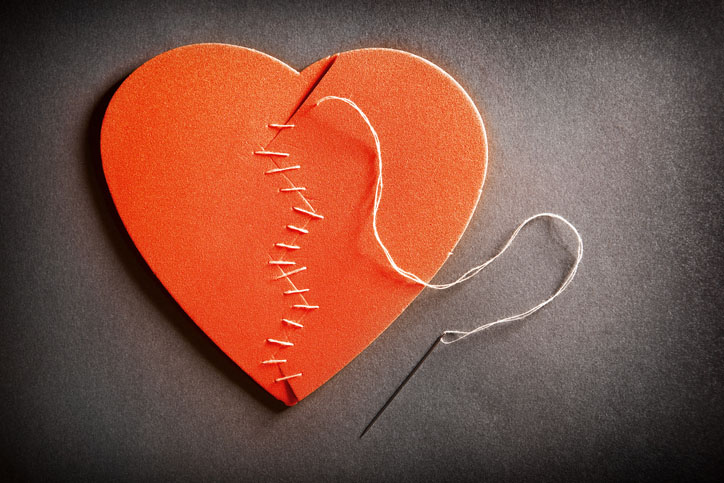
I sound mean. I sound harsh. But this syndrome once swallowed me, and now that I am panting on shore, thanking God I survived, it is swallowing my woman friends left and right. Is it a life-cycle imperative to lose yourself in love before finding yourself?
I want to yell to all my crying female friends who are so sure that “a man will fix it all.” “It” being a deep well of loneliness, lack of self- and world-knowledge and confusion over what to do with this world/self/country. “It” being “I don’t know what to do with my life,” or “I don’t know what to do about my depression,” or maybe, “I don’t know what to do about George Bush.”
I don’t know either. All I do know is that a man won’t make it all better. Not without a lot
We need a new language, one of the 21st century that will allow people in their 20s to articulate their anxiety not as neurosis, particularly about the conundrum of finding love in the eyes of another, but as intellectualism. We need the permission in our friendship relationships to speak of what is truly wrong
Someone needs to start throwing you-just-made-it-through-an-enormous-life-crisis parties or he’s-out-of-your-hair-and-you-can-be-with-yourself-again parties, instead of just engagement parties. Sobriety parties,
never-had-an-addiction-to-begin-with parties, I-finally-found-a-passion-in-life parties, I-survived-a-year-on-my-own parties.
Congratulations need to be doled out where they are truly due.