
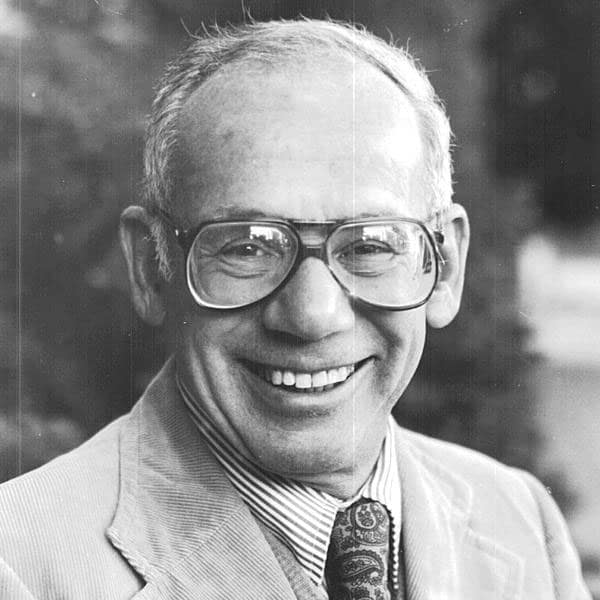
“I wish I had 10 percent of the success with the Israeli government as I have with private donors,” sighed Moshe Kaveh, the president of Bar-Ilan University.
His sentiment is understandable. Together with Israel’s six other research universities, Bar-Ilan has been in a prolonged financial wrestling match with the country’s budgetmakers, which, Kaveh warned, could well lead to another academic strike in the fall.
On the other hand, private donations to Bar-Ilan are at a new high, with the West Coast and the Southwestern states leading the rest of the country by a wide margin.
Kaveh was recently in Los Angeles and, in an interview, gave an update on the state of both his university and of Israeli higher education.
Founded 53 years ago, Bar-Ilan is now the largest Israeli university, with 33,000 undergraduate and graduate students, double the number of a decade ago.
To accommodate expanding enrollment, professional schools and research projects, the campus at Ramat Gan has also doubled in size over the last eight years and the campus is one of the showpieces of Israeli higher education.
Although many consider Bar-Ilan an Orthodox bastion, some 60 percent of its students graduated from secular high schools and only 40 percent from religious schools.
Regardless of ideology or academic major, however, every student must spend 25 percent of the curriculum on Jewish studies.
The religious and social mix makes for some lively discussions, inside and outside the classroom, but Bar-Ilan may be one of the few places in Israel, Kaveh said, where the Orthodox and the secular can debate their different perspectives with civility and tolerance.
Bar-Ilan has also seen a boom in new facilities, mostly underwritten by private donations, with Los Angeles philanthropists contributing the lion’s share.
Facilities for studies and research in nanotechnology, medicine, brain research, psychology, languages and Jewish heritage bear the names of such Los Angeles donors as the Gonda (Goldschmied) family, Fred and Barbara Kort, Max and Anna Webb, Lily Shapell, Jack and Gitta Nagel and Milan and Blanca Roven.
Now in the works is the Digital Judaic Bookshelf Project, which aims for nothing less than a complete compendium of Jewish knowledge and thought. Its foundation is the university’s Responsa Project, with some 90,000 questions and answers on all aspects of Judaism.
Private donations now make up 20 percent of Bar-Ilan’s total budget.
“Ten years ago, I couldn’t have dreamt of the kind of support we are getting now,” said Ron Solomon, West Coast executive director.
The kippah-wearing Kaveh, 64, is a prominent physicist, who spends every summer conducting advanced research at Britain’s Cambridge University.
His area of scientific expertise is disordered systems and chaos theory, a specialty he finds useful in dealing with the Israeli government, and that brings him to the downside of his current message.
“All we have in Israel are our brains, but what we are seeing is a steady brain drain, mainly to the United States and Europe,” Kaveh said, sipping water in the lobby of the Century Plaza Hotel.
He puts most of the blame on the government’s budgetary priorities. Currently, the Ministry of Education provides 65 percent of the national university budgets, including faculty salaries, but during the last “seven bad years,” as Kaveh put it, the government has reduced support to higher education by 25 percent.
One result has been that faculty slots have been frozen at all Israeli universities, which means that retiring or departing professors are not being replaced.
Another drawback is that there are no positions available for Israelis who have finished their studies or taken faculty positions at foreign universities but want to return home.
The situation has become so confrontational, that the country’s professors went out on a three-month strike last winter, with Kaveh, as immediate past chairman of the Council of Israeli University Presidents, playing a key role in negotiations with the government.
Some figures point to the discrepancy in funding between Israeli and American universities. The Israeli government budget for all the country’s universities, with their 250,000 students, comes to $1 billion a year, Kaveh said.
By contrast, the University of California, with 10 campuses and 220,000 students, runs on an $18 billion operating budget.
Unless the Israeli government turns its attention to the problem and restores the cut funds, the country’s universities will likely shut down in October or November, Kaveh warned.
He brightened as he returned to discussing the fundamental mission of Bar-Ilan.
“We generally think of the B.A. as the bachelor of arts degree,” he said. “I like to think that B.A. stands for Ben Adam, the Hebrew term for mensch. That’s our real mission, to create a graduating class of menschen.”

































