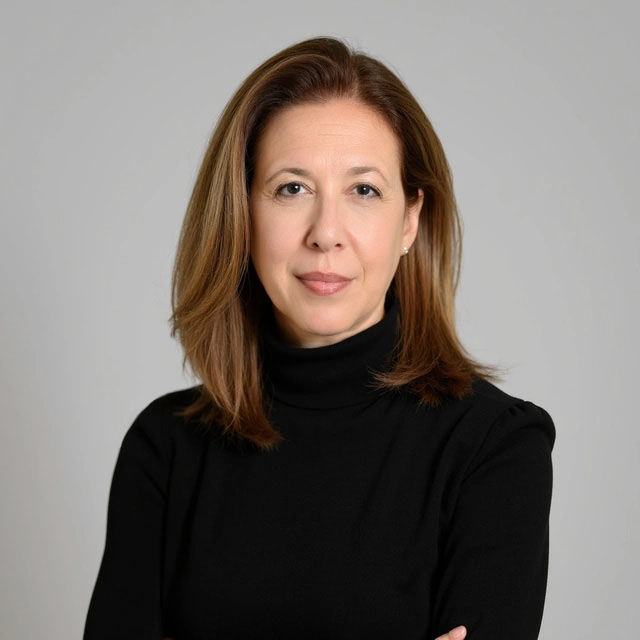
Eileen Horowitz, an elementary school teacher for two decades, taught general studies at Adat Ari El Day School for six years. She became principal of Temple Israel of Hollywood Day School in 1995. This February, Horowitz was one of 11 graduates of the Bureau of Jewish Education’s intensive three-year Machon L’Morim program, which gives day school educators advanced instruction in Judaica. She and her husband have two grown children as well as a new grandson.
Beverly Gray: Tell me about your background.
Eileen Horowitz: I grew up as a Conservative Jew in New York in the 1950s, and was not offered the opportunity to pursue any religious training.
BG: Because you were a girl?
EH: I don’t know if it was because I was female, or because there wasn’t a mom at home to encourage it. I belonged to the youth group, went for High Holy Days and kept a kosher home with my dad, but I didn’t get the formal education.
BG: How did you make up for that?
EH: As I got older and had children, we moved to California and became members of Adat Ari El. At my daughter’s bat mitzvah rehearsal, I said, “I could do that.” They offered a class for adults, so right after my daughter’s bat mitzvah I signed up for my own. What was very significant for me was that my mom died when I was nine. She was 42 when she died. So when I was 43, I had my bat mitzvah, and that radically changed my life.
BG: Your day school students must have regarded you as a role model.
EH: Yes, they did. And the wheels began to turn in me. I began to pursue other avenues, which led me to the [principal’s] job at Temple Israel of Hollywood. It’s a very spiritual environment, very creative, very eclectic, and it felt like I was going home.
BG: Why did you keep on studying Judaica?
EH: I went on a trip to Israel for day school teachers who had never been [there]. That piqued my interest in knowing more. And my son became a ba’al teshuvah and entered a yeshiva. This was a departure from our everyday life, and I had questions. So I began to do some more exploration.
BG: And you signed up for Machon L’Morim.
EH: We had some of the finest educators in the city. And we just bonded as a group. One member developed a brain tumor and passed away. One member became pregnant, and another member’s husband had a stroke. We had grandchildren born and children married, so we went through the life-cycle events together.
BG: How was your coursework?
EH: The Torah study we did in class is very different from reading Bible stories for children. It really made me question my own belief system. I guess I had clarity where a lot of my classmates didn’t. Sometimes they got tired of me saying this, but my faith in God became stronger because I understand very clearly that God is directing me, and has led me on this incredible journey.
BG: Has what you’ve learned helped in running a day school?
EH: I believe that teaching about God in a school setting is a very powerful thing. So I use that in my discipline. When children are sent to me, I will say to them, “What would God think of you for using those words today?” Or “Are you acting in God’s image today?” I take them into the chapel when I have that conversation with them, so that they are aware of a greater presence than themselves. In today’s culture, when we know how out of control kids can be, it’s very grounding.