
Tattoos and Bar Mitzvah
Dear Rabbi,
I am an 18-year-old male who has just recently become more interested in my religion. First, am I too old to have a bar mitzvah? Second, I have a tattoo. What kind of problems does that create with heritage?
Stan
Dear Stan,
First, mazel tov on your renewed interest in Judaism and Torah. Judaism is an ancient and profound way to bring God into your life. I commend you for your determination and your seriousness, and I congratulate you on your awakening.
You are never too old to celebrate a life of mitzvot (commandments). The truth is that you became a bar mitzvah (someone responsible for fulfilling God’s commandments) when you reached your 13th birthday. That happens automatically and is built into becoming a mature Jew.
Now that you are realizing what this means, you certainly should celebrate this publicly by learning how to lead the service, read from the Torah and chant the haftarah. That would serve to affirm your newfound conviction and would inspire countless others by your example.
As for tattoos: Torah law forbids them and you should not have any more tattoos applied to your body. But the one you have you did without awareness of its being prohibited. It doesn’t affect your status as a Jew or as a child of God in the least.
Three Gods in One
Dear Rabbi,
I have a very hard time with the concept many Christians use — that of three Gods in one.
In my study of the Old Testament, I find only one God with many titles, names or manifestations as He deals or works with men.
How do the Jewish people look at or perceive God?
Martin
Dear Martin
Judaism affirms that there is only one God, and that God’s oneness is complete and total. That people perceive this oneness through their own culture and understanding is inevitable, but we affirm that to compromise God’s oneness would mean that God is somehow limited, and that cannot be true of God.
We also understand God to be the force that created all that is, and as a loving and good Creator who reaches out to humanity in a variety of ways. For Jews, that relationship is our covenant, the link between God and the Jewish people, embodied in Torah and Jewish tradition, and expressed in a life of mitzvot.
By the way, we do not refer to the Tanach (or Hebrew Bible) as the “Old Testament” because we do not believe that a new one superseded it.
Threat of Secularism
Dear Rabbi,
The Supreme Court in Canada regularly imposes rulings that override the convictions of various religious groups and believers.
Are there situations (or potential situations) where observant Jews might be forced into actions against their convictions as a result of secular laws and court rulings?
Do you regard today’s secular governments and judiciary as a potential threat to Jewish religious convictions and practices?
Mark
Dear Mark,
Thank you for your inquiry. There are certainly many instances in which secular governments have a moral obligation to overturn specific theological convictions of particular religions for the sake of preserving a neutral public space for all its citizens (those of different faiths and those not affiliated with any public religion). There is a fine line separating religious conviction from public policy. Both policy and faith suffer when that line is ignored.
Are there instances where secular governments can cross the line and infringe on the free expression of Judaism? Yes, sadly, anti-Semitism and misguided understandings of “enlightenment” have led some governments to legislate against kosher slaughter and preparation of meat, and have lead other governments to legislate against brit milah (circumcision).
To my mind, the difference between permissible legislation and improper legislation is whether or not the legislation is to protect citizens of all faiths and cultures, or simply to interfere with the practice of a particular faith. The anti-Jewish legislation listed above is wrong because it prevents Jews from practicing Judaism.
I know that it is fashionable to label secular governments a danger to faith among some circles. Personally, I’m much more alarmed by the danger coming from the mediocrity of religious organizations and leaders in showing the welcoming, compassionate and loving nature of the God in whose service we are called, and in a similar hesitation to take stands on behalf of social justice. More people are turned off to religion by what they see inside their synagogues, churches and mosques than by what they see on television or read in the papers.
Mail letters to Dear Rabbi, c/o The Ziegler School of
Rabbinic Studies, 15600 Mulholland Drive, Bel Air, CA, 90077-1599; or e-mail to
bartson@uj.edu .
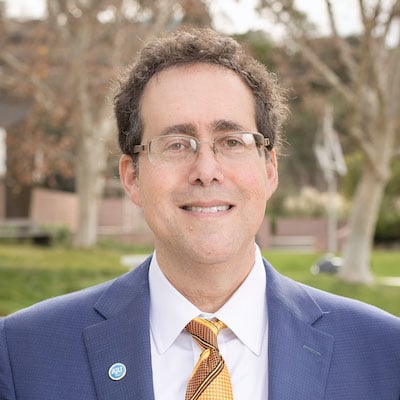
Rabbi Bradley Shavit Artson serves as the dean of the Ziegler School of Rabbinic Studies at the University of Judaism, and is the author of “The Bedside Torah: Wisdom, Visions, & Dreams” (McGraw Hill, 2001).

































