
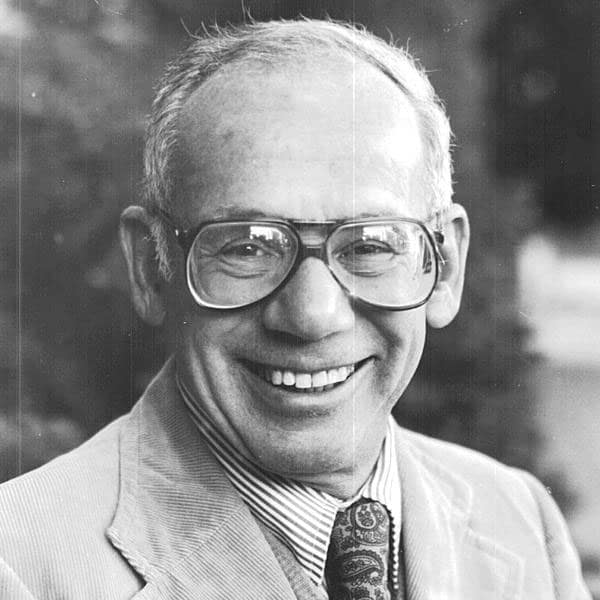
After his liberation from Auschwitz, Italian writer and scientist Primo Levi observed, “To destroy a man is difficult, almost as difficult as to create one. It has not been easy or quick, but the Germans have succeeded.”
In the HBO Signature production of “Primo,” the character of Levi is not speaking of physical destruction, which in the Nazi extermination camps could be both quick and easy.
Rather, Levi means the psychological destruction of a man by slowly stripping him of his dignity and humanity, says British playwright, actor and painter Sir Antony Sher.
“Imagine arriving at the Auschwitz train platform, going through the selection process,” Sher continues. “Your clothes are taken away, your body hair is shaved, and, step by step, you become nothing.”
Sher is a South African-born Jew living in London; author of the one-man play “Primo,” on which the TV special is based; and, by edict of the Levi heirs, the only actor allowed to perform the part.
The play is based on Levi’s description of his 11 months in Auschwitz in his book “If This Is a Man,” and what strikes the viewer is the dispassionate, almost scientific, attitude Levi the chemist brings to his horrifying experience.
Sher said in a phone interview that when he first read Levi’s book, it was as if the author “took me by the hand, saying, ‘Come, I’m going to guide you around hell now.’ ”
Everything about “Primo” is designed to focus on the words, undistracted by the visual props one might expect in a Holocaust drama.
The minimalist stage set consists of a maze of gray walls leading to doors and windows open to unseen light sources. Throughout, Sher forgoes the striped pajamas of an inmate in favor of a shirt, tie and cardigan to signify that Levi is speaking from the perspective of the immediate post-war years, when he wrote his book.
It takes the combination of a master writer and master actor to convey the Nazi process of transforming a civilized man into an untermensch without the visual reinforcement of shouting guards and mounds of skeletons.
As part of the gradual dehumanization process, Levi recalls the repetitive prisoner count in freezing weather, the endless waiting for the “selectsia” to pick men for the next death quota and the days when “nothing continues to happen.”
“Everyone was ferociously alone,” Levi wrote, on constant watch to keep bunkmates from stealing a pair of shoes or socks. However, there were also rare instances of altruism. Levi’s life was saved by Lorenzo, a fellow Italian inmate, who nourished him with some spoonfuls of soup.
“It brought hope that there was still some goodness in the world,” Levi comments.
In the opening line of the play, Levi/Sher observes, “It was my good fortune to be deported to Auschwitz only in 1944.” That is not irony, for by that year the Nazi regime was so short of manpower that it extended the lifespan of prisoners compared to the earlier war years.
Levi was “fortunate” again, coming down with scarlet fever in January 1945, shortly before the arrival of the Red Army. The Nazis forced the 20,000 “healthy” prisoners on a death march that few survived.
The sick ones left behind in the camp noted the arrival of four Russian soldiers on horseback on Jan. 27, but few of the emaciated inmates “knelt in prayer or went to the gates to greet the liberators.”
Despite Levi’s remark about the German “success” in destroying their prisoners’ self-worth and humanity, Sher believes that Levi himself successfully resisted this fate.
Such a judgment came under scrutiny in 1987, when Levi fell down a flight of stairs, resulting in his death. While his family members maintained that the fall was an accident, most analysts believe that Levi, who suffered from recurrent depression, committed suicide.
Or as Elie Wiesel, hearing of the chemist’s death, put it, “Primo Levi died 40 years earlier in Auschwitz.”
Sher, considered one of Britain’s finest actors, feels a special affinity with Levi. Like Levi, he said, “I am a secular, nonpracticing and nonbelieving Jew, though I feel very Jewish in my identity.”
Sher added, “Primo came out of Auschwitz and said, ‘There is no God.’ When [Elie] Wiesel came to see me play Primo, he told me that he still practices his faith, although he thinks it was wounded in Auschwitz.”
Sher, now 60, mused that had he lived in Europe during the Hitler era, he would have been sent to a camp for being Jewish and for being gay.
Having been spared that fate, Sher believes that Levi’s writing comes as close to conveying a sense of the concentration camp as is humanly possible.
“We have heard much about death in Auschwitz,” Sher said. “Levi showed us what it was like to live there.”
“Primo” premieres June 22 at 9 p.m. onthe HBO Signature channel, and repeats June 24 at 6 p.m., June 26 at 8 a.m. and June 28 at 9:30 a.m.

































