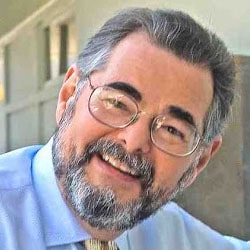
There’s nothing surprising about a man or woman who muses about death in the later years of life. For Hillel Halkin, however, the fear of dying began at the age of 11 or 12, when he read an article about leprosy in Reader’s Digest and promptly convinced himself that he suffered from the disease.
“In the years to come, I contracted one fatal disease after another,” he recalls in “After One-Hundred-and-Twenty: Reflecting on Death, Mourning, and the Afterlife in the Jewish Tradition” (Princeton University Press), a work of both scholarship and confessional memoir. He concedes that the wholly imaginary afflictions of his youth and adolescence seem funny in retrospect. “No one could have guessed that I lay in bed at night praying for another year of the life I desperately craved.”
Born in New York in 1939, Halkin made aliyah in 1970 and has since achieved international stature as a translator of Hebrew and Yiddish fiction into English, and as a biographer, critic, novelist and journalist. His book “Yehuda Halevi” won the National Jewish Book Award in 2010. Now, at the age of 77, the subject is no joke.
“For most of us, the years up to seventy, give or take a few, are ones we retain our strength in,” he writes. “We’re not the same at sixty as we were at fifty, but with a bit of luck, our decline isn’t painfully obvious. It only becomes that a decade or so later. By then, we’re all on death row.”
All of these musings prompted Halkin to accept an invitation from the Library of Jewish Ideas, a publishing project co-sponsored by the Tikvah Fund, to survey and comment upon the Jewish beliefs and traditions that touch on death and dying. He discloses that he is not a religiously observant Jew, but he reminds us that “you can’t have lived in Israel for over forty years as I have without encountering death in its Jewish forms: Jewish jokes, Jewish prayers, Jewish funerals, Jewish mourning, Jewish memorial rites.”
The starting point for his journey of exploration through the textual landscape, of course, is the Hebrew Bible. As Halkin points out, the Torah and the other early books of the Bible — unlike other religious writings of the ancient world — do not have much to say about what happens when we die. “Although I would have been prepared when I died for a descent to an underworld,” Halkin writes in the first person about a hypothetical Bible-reader in antiquity, “I would have had no notion of how to reach it, of what awaited me there, or if anything much awaited me at all.”
The later prophets were more explicit: “For behold, the day is coming that shall burn as an oven; and all the proud, yea, all the wicked, shall be stubble; the day that comes shall burn them up … ” Here the Messianic idea of judgment, punishment and redemption enters in the Jewish tradition, but it is writ large only in Daniel, a work of the second century B.C.E. “The dead, or at least some of them, will rise bodily!” Halkin explains.
The most important source of Jewish teachings about death, Halkin emphasizes, is the Talmud, in which rabbis and sages prescribe the rituals that observant Jews still embrace during the period of mourning. The underlying rationale of these practices, he writes, is to “allow sufficient space for grief while channeling it into formulaic expressions and surrounding it with numerous prescriptions that make sure its desirable limits are not exceeded.” Too much grief, in other words, is not permitted: “Gradually, mourners are expected to return to ordinary life,” Halkin writes.
Similarly, the writings that compose the Talmud are sometimes “frustratingly ambiguous” and even openly contradictory when it comes to “the world to come” (olam ha-ba), the Hebrew phrase used to describe the afterlife, and just as “unforthcoming” in distinguishing between heaven and hell. Halkin sees a psychological advantage in the lack of clarity and unanimity: “In itself, there is no more to be gained from the contemplation of never-ending torment than there is from the contemplation of never-ending bliss.”
One of Halkin’s great and enduring gifts is his ability to translate the abstruse and difficult passages of the ancient and medieval texts into accessible English, a gift that is much used in “After One-Hundred-and-Twenty.” But the passages that I appreciate most are the asides to the reader in which we hear Halkin’s own voice. He wonders aloud about whether sex in the afterlife will be monogamous, for example, and whether “my celestial body will be a more perfect replica of my terrestrial one, complete with skin and nerves?” Against all the pious speculation of the wise men who have come before him, however, Halkin seems to embody the fatalism of Kohelet.
“I pace and think: what is this thought that I am thinking? It is about bodies and souls, but it is also about the scrape of my scandals on the wooden floor, the pain in the tendon of the heel that I sprained a week ago, the ache in my back from sitting too long at the desk, the August light pouring through the northeast window, the old sheet I hang there every April to keep out the morning sun … and take down again in September,” he writes. “Each time I reach the stairs and turn back, I see this sheet. Its shabbiness annoys me and I think: for years I’ve been promising myself to replace it with a Venetian blind and I’ve never done it. Soon I’ll be dead and there’ll be no need to do anything.”
Jonathan Kirsch, author and publishing attorney, is the book editor of the Jewish Journal.



















 More news and opinions than at a Shabbat dinner, right in your inbox.