
In a photograph currently hanging in the Los Angeles Museum of the Holocaust (LAMH), Holocaust survivor Sophie Zeidman Hamburger drapes a garment she wore while escaping from a Nazi death march over her arms, one of which bears a number tattoo. In another, Toby Fainzylber Tambor holds her mother’s shawl and a handmade spoon, given to her by a friend tasked with caring for Tambor during the war should her mother die.
The photographs are part of “Café Europa: Portraits in Black and White,” a new exhibition at LAMH, featuring black-and-white photographs of 42 members of Café Europa, a social club for survivors run by Jewish Family Service of Los Angeles. The exhibition was recently extended to run through October.
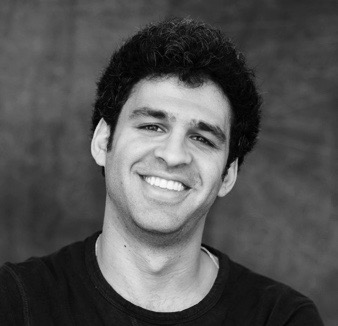
Barbara Mack, a local photographer who has taken pictures of celebrities and politicians during events at American Jewish University, shot the photographs for the exhibition, and it was her idea to have the survivors pose with objects from their pasts.
“I had an idea that I would ask these people to bring something that was important to them,” said Mack, a retired psychologist. “It was very effective, those pictures with the objects.”
In other photographs, survivor John Gordon holds an etched-glass mug from a Hungarian spa where his mother vacationed before the war; Halina Schejnfinkiel Wolf, who crocheted for Germans in a ghetto, holds a doily; Vivian Sidranski Chakin holds a metal disc with an identification number on it, issued to her when she was forced to work in an assembly line in an airplane factory. Brief biographies of each survivor, written by Jane Jelenko, accompany the photographs in the exhibition.
“The interrelationship between their faces, the stark power of the black-and-white and these very powerful archival objects, it confronts the visitor with a number of dimensions where they can find ways into individual Holocaust stories,” said Mark Rothman, executive director of the museum.
The museum published the photographs in a book this past summer. Rothman said that the book has become a “bestseller at the museum,” which moved to its new location in Pan Pacific Park in late 2010.
The exhibition opened in June, culminating a three-year-long process that began when Susie Forer-Dehrey, chief operating officer of Jewish Family Service of Los Angeles, visited Mack’s studio and asked her to shoot portraits of Café Europa members. Although nobody at the time knew that the photographs would eventually wind up in an exhibition, Mack’s hunch was that the photos would go further than the plans Forer-Dehrey had for them, which was that they would be distributed to Café Europa members, Mack said.
“As soon as I started taking the pictures, I knew this had to be a book, and I knew it had to be a museum exhibit,” Mack said.
Café Europa has approximately 300 members, who meet weekly at the Westside Jewish Community Center and the Valley Store Front Senior Center in North Hollywood.
For the exhibition, Mack only photographed members who meet at the Westside JCC, but Forer-Dehrey said that after the High Holy Days, Mack plans to photograph Valley-based members, so that they, too, can be given professional-quality pictures of themselves.
“When the Valley people saw [Mack’s photographs], they said, ‘When is it our turn?’ ” Forer-Dehrey said.
Gordon, a survivor who has been involved with Café Europa for more than 10 years, spoke fondly of the experience of working with Mack.
“All of us who were photographed had a wonderful experience,” Gordon said. “She was very thoughtful, and I think the photographs reflect that.”
“CAFÉ EUROPA: Portraits in Black and White” runs through Oct. XXXX at the Los Angeles Museum of The Holocaust, 100 S. The Grove Dr. in Los Angeles. (323) 651-3704. lamoth.org.

































