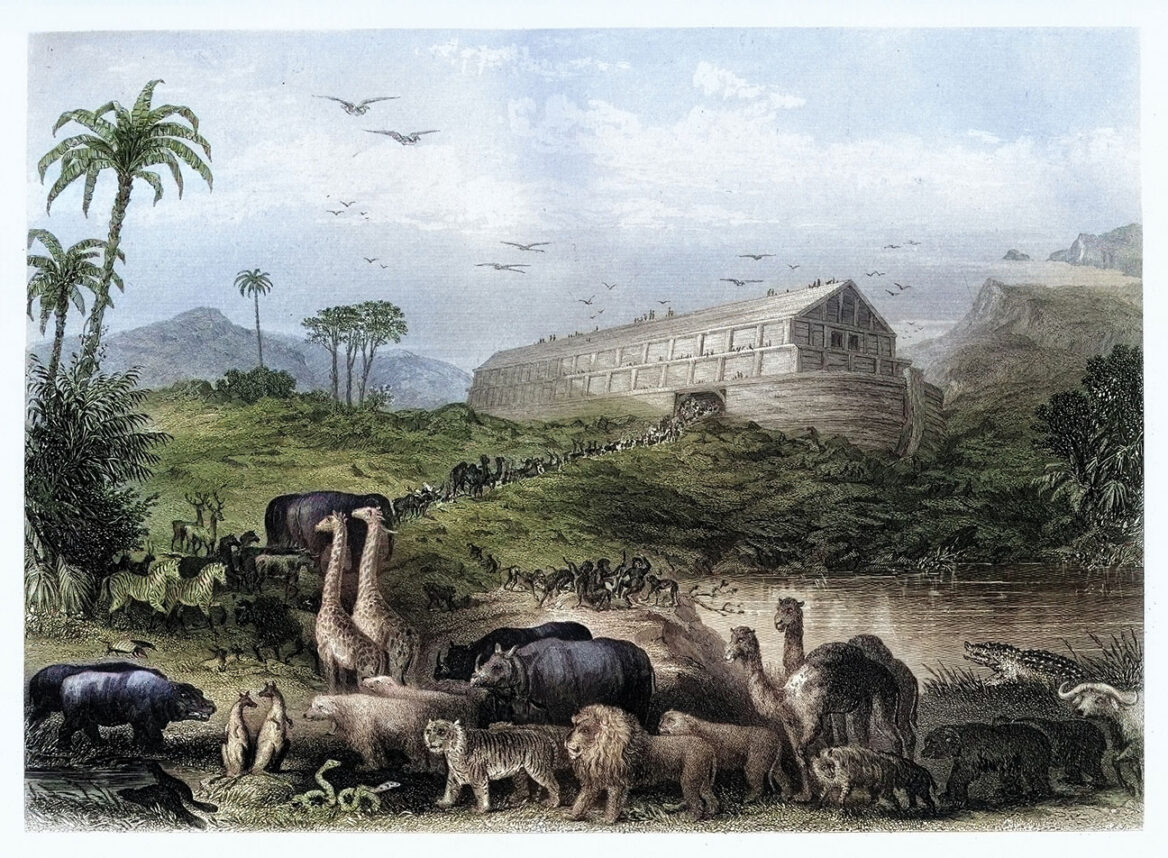
Back in the social-action heyday of the 1960s, tikkun olam was everyone’s favorite mitzvah. Repairing the world was hip, and folk anthems such as "Times They Are a Changin’" were as de rigueur around Jewish campfires as that ditty about animals boarding Noah’s ark two by two.
Now those times have changed, and justice-tinged pop seems charmingly old-fashioned in an era of Britney and Christina (or spoof-worthy, as in the 2003 Christopher Guest mockumentary, "A Mighty Wind").
But just as you’re wondering, "Where have all the folkies gone?" comes Peter Yarrow of the earnest folk trio, Peter, Paul & Mary. At 65, he’s portlier and more teddy bearish than when the group debuted in Greenwich Village in 1961, helping to spur a musical and social revolution. Yet he’s still crisscrossing the country with his guitar, fighting the good fight through music, playing his gently urgent tunes all across the land.
In September 2002, he trekked to San Diego to show solidarity for a synagogue that lost a congregant in the Hebrew University cafeteria bombing.
On a January day in Iowa, he boarded a campaign bus to support presidential candidate John Kerry, his old friend from the Vietnam War protest movement.
On May 1, he performs a solo benefit concert for Temple Beth Tikvah at Plummer Auditorium in Fullerton, his only Southern California stop on a tour to promote his current projects. Between songs such as "Leaving on a Jet Plane," he will tout his anti-bullying program, Operation Respect, which has reached more than 10,000 schools, and two new Peter, Paul & Mary releases, "In These Times" and the boxed set, "Carry It On."
Then he rushes off to his next destination: "Peter always works too hard," as the group’s Mary Travers recently told Parade. "He’s always flying somewhere."
In an interview from his New York home just before he was scheduled to leave on another jet plane, Yarrow’s famously mellifluous voice was hoarse from too much air travel. Nevertheless, he waxed on about why he remains passionately committed to folk music and to his favorite mitzvah of tikkun olam.
"As a Jew and a human being, I believe I have a moral imperative to fight injustice, and I’ve seen how folk music can help do that," he said. "Its power is that it allows people to realize that we should care about one another and that we should all do our part."
If folk’s message is tikkun olam, the music itself feels Jewish to Yarrow.
"It’s as if there’s always a reminder of sadness, loss, hope and yearning for a better world," he said. He demonstrated by chanting a mournful "Ai chitty chitty bim bam bam," which was heartfelt but slightly jarring coming from the guy who immortalized "Puff the Magic Dragon."
Yarrow first discovered folk’s power at Cornell University in the 1950s. With his Pete Seeger records and hand-me-down clothes, this son of a progressive Jewish schoolteacher felt acutely out of place amid his conservative, sometimes anti-Semitic classmates.
"In the freshman dorm, someone called me a dirty Jew and punched me hard in the face," he recalled.
As a professor’s assistant his senior year, he said he taught a folk music course to "Cornell ‘men’ who were preoccupied with dressing in the right tweed jacket. But when they started singing along, their voices opened and so did their hearts." In an instant, the fiercely idealistic Yarrow knew what he wanted to do with his life: change the world through song.
After graduation in 1959, he made a beeline for the country’s folk capital, Greenwich Village, where he hooked up with Travers and Noel "Paul" Stookey. Before long, their folk songs were among the first to air on AM radio stations, paving the way for artists such as Bob Dylan and proving that popular music could convey serious, sociopolitical messages.
Over the years, it was Yarrow who became known as the group’s most tireless activist, organizing "no nukes" rallies and demonstrating for peaceniks in Israel, among other endeavors.
He brought his guitar everywhere, but in the late 1990s he began worrying that his work had been based on a faulty premise. For decades, he’d been preaching to adults, yet war and racism remained rampant.
"I thought, ‘We should start with children, because they are still malleable,’" said Yarrow, who founded Operation Respect in 1999. "All the movements I’ve been involved with are about disrespect in one form or another, so this targets the problem early on."
It’s all part of his favorite mitzvah, he told The Journal, before catching that jet plane to his next tikkun olam gig.
For concert tickets, $35-$150, and information, call (714) 871-3687.