Etgar Keret is coming to Los Angeles, but fear not. This brilliant young Israeli writer of his generation, a skillful satirist who seems to have a knack for expressing the emotions, thoughts and language of his peers, has not gone completely Hollywood.
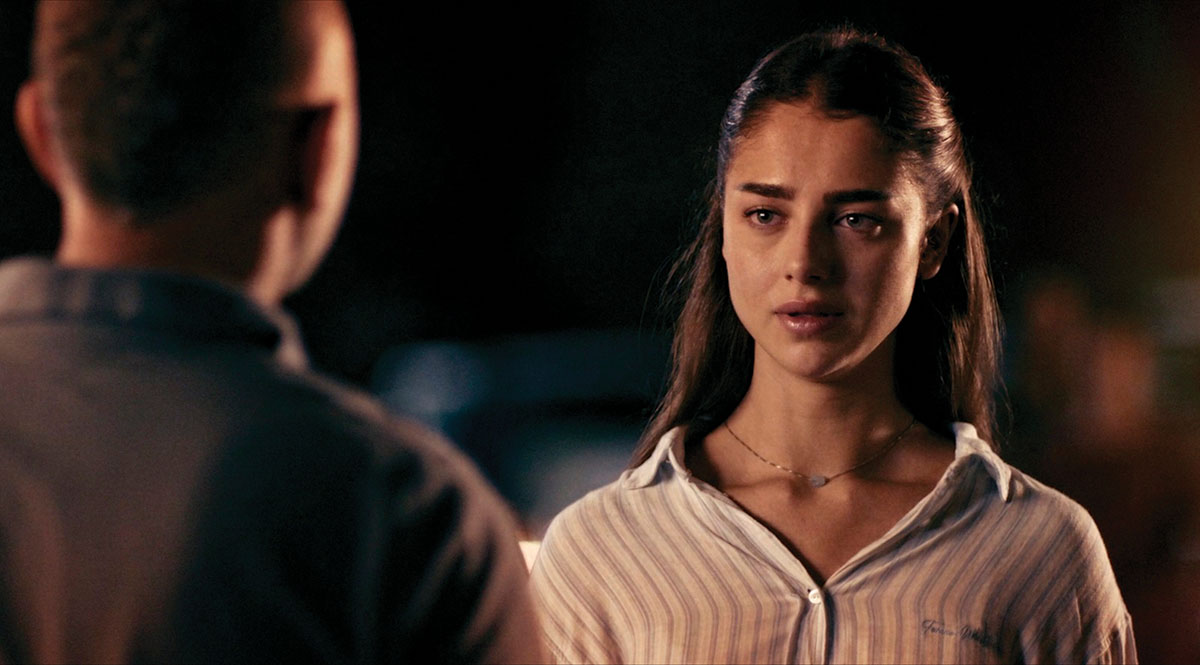
He has returned to fiction, despite spending more than a year working on several movies: “Wristcutters: A Love Story,” based on his novella, “Kneller’s Happy Campers,” which debuted at the 2006 Sundance Festival; “$9.99,” a stop-motion animated film starring Geoffrey Rush and Anthony LaPaglia, based on his story, “For Only 9.99 (Inc. Tax and Postage),” and “Jellyfish,” which he co-directed with his wife, actress Shira Geffen.
“I’m not mainstream,” insists Keret, who will read from his recently translated short story collection, “The Nimrod Flipout” (Farrar, Straus and Giroux), at the Skirball Cultural Center’s fourth annual Stanley F. Chyet Literary Event on April 10.
The 39-year-old writer sits at his neighborhood Tel Aviv cafe, dressed in jeans and a plaid flannel shirt; his long hair is graying and mussed. He drinks a small cappuccino with soy milk served with a plate of flaky halvah cookies.
“Writing stories is the most natural thing to me, but what pulls me to movies is working with other people. I love people, and I love collaborating. I want the people who work with me to love the stories, to be a little bit crazy and committed themselves,” he says.
His 1996 film, “Skin Deep,” won the Israeli Oscar, as well as first prize at several international film festivals. More than 40 short films based on his stories have been produced, and one, “Crazy Glue,” received the 1998 American MTV prize for the best student animated film.
Keret has authored four short story collections in Hebrew, two in English, two children’s books, a handful of novellas, graphic novels, screenplays and collaborated on anthologies. His works have been translated into more than 20 languages, which have received critical acclaim around the world.
His writing has, at its core, a very offbeat, youthful sensibility. Keret writes a lot about men — mostly young men — the army, life in Israel’s secular center, where he was born, raised and still lives, and the friendships and sexual relationships of early adulthood.
Keret’s writing is focused on the characters and the plot rather than aesthetic and conflict. There’s little to no physical description of his characters, but it’s not hard to imagine skinny guys in jeans and T-shirts slumped in chairs or loping down the street.
It’s probably what Keret was like when he first began writing while stuck in a dead-end job in the army. But it was only once he was at Tel Aviv University that his writing took off.
The way Keret tells it, he was always late to class because he would stay up late writing. Finally, his adviser, a philosophy professor, said he would have to cancel Keret’s scholarship if he didn’t get his act together. Keret showed him the stories he had written, which helped kick-start his career.
He doesn’t like to over-intellectualize in his writing, but he does go for emotion, writing about things and events that move him.
Keret and his father, a bookkeeper, have always had an emotional relationship, he says. But the way his father displays love and affection is by means of the details that his father knows about his life from handling Keret’s bookkeeping.
“He’ll say, ‘You got home late that night,’ because of a taxi receipt, or “How was dinner at that restaurant?'” Keret says. “Emotion comes from where it comes from, from the way I live it.”
It’s an essence that is profusely displayed in his work.
In the collection’s title story, “Nimrod Flip-Out,” which was also printed in the summer 2004 edition of Francis Ford Coppola’s magazine, Zoetrope, Keret tells the tale of four friends, Miron, Uzi, Ron and Nimrod. When Nimrod’s girlfriend breaks up with him, he commits suicide while serving in the army.
Ron, the narrator, appears to be a singularly self-absorbed 20-something, smoking joints and mildly contemplating his future. But he is completely and utterly dedicated to his friendship with his buddies, even when Uzi goes and gets married.
“Me and Miron sat on the balcony drinking coffee. Miron had a new thing going now. Whenever he’d make us coffee, he’d always make one instant for Nimrod, too, in the séance glass, and he’d put it on the table, the way you leave out a glass of wine for Elijah on Passover, and after we were through drinking, he’d spill it in the sink.”
In his inimitable way, Keret gives meaning with each word, choosing carefully in order to imbue the sentence with as much understanding as possible.
“I love minimalistic writing,” he says. “I seek the abstract, and it’s the same in my movies. They say I’m like the captain of the Titanic, because I take sentences out, I throw stuff overboard.”
Etgar Keret will speak April 10, 7:30 p.m., at the Skirball Cultural Center, 2701 N. Sepulveda Blvd., Los Angeles. (310) 440-4500. For more information, visit www.skirball.org or etgarkeret.com/.