With tax cuts the talk of the town, Jewish philanthropic agencies are worried about another part of President Bush’s fiscal plan: the repeal of the estate tax.
Officials of many funds are concerned that charitable giving will suffer if the estate tax, which levies a high tax on the estates of recently deceased individuals, is repealed. Some are calling for reforming rather than ending the tax.
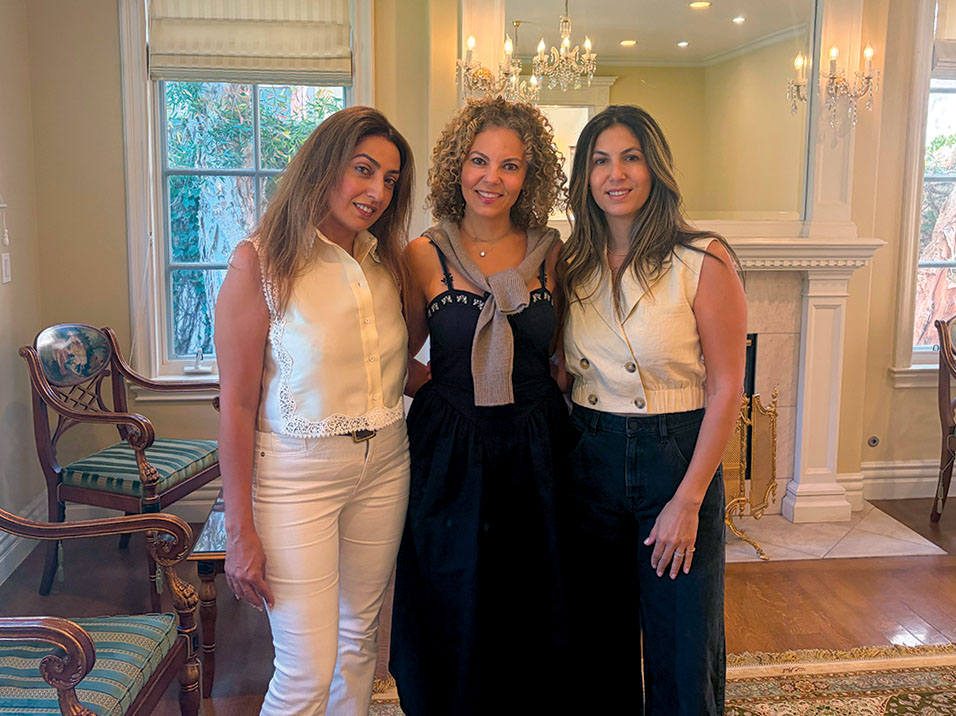
Marcia Hazan, trustee with Foster Family Foundation in San Diego, said she "absolutely" stands to gain if the tax is repealed, "but as my father always says, it’s a privilege to pay taxes. Particularly, I feel that way because I didn’t earn the money; he earned the money."
Hazan and other representatives of family foundations and philanthropies discussed the issue at a Jewish Funders Network meeting last week in Atlanta, where philanthropist Edith Everett called for reform of the estate tax. Everett suggested making adjustments for family farms and people with smaller estates but objected to a repeal.
Everett said that hundreds of people approached her and thanked her for speaking out. "There wasn’t a single person who said, even in a nice way, ‘I disagree,’" Everett said.
Everett and hundreds of other philanthropists, including William Gates, Sr., and George Soros, have signed a petition asking that the estate tax, which many believe serves as an incentive to leave one’s wealth to charity, be preserved. Responsible Wealth, a project that brings together people who are concerned about increasing economic inequality, are organizing the petition.
The Bush Administration argues that the estate tax, or so-called death tax, impedes economic growth because it levies another layer of taxes on people and creates a disincentive for seniors who want to save money for their children or grandchildren.
Only the wealthiest 2 percent of all estates pay any estate tax at all.
Some studies have estimated that repeal of the estate tax could reduce charitable gifts and bequests by close to $6 billion annually.
Jewish organizations have stayed quiet on the issue, worried about offending some of their biggest donors if they take an unpopular stance. United Jewish Communities, the North American Jewish community’s central fundraising and social services agency, has not taken a position.
Others close to the issue note that while no one gives to charities simply because of the estate tax, it does provide a powerful incentive. The warning, then, is that those contemplating charitable gifts will still give something if the tax is repealed but may give significantly less.
The Jewish Council for Public Affairs is looking into the issue, and while the Reform movement’s Union of American Hebrew Congregations has not come out officially against the proposed change, its Commission on Social Action has spoken out against it.
Another major concern is lost revenue to the government, which could mean cuts in services and programs if the estate tax is repealed. Some estimates show that eliminating the estate tax would cut $28 billion from the government’s coffers.
The repeal of the estate tax is drawing more attacks than the rest of the 10-year, $1.6-trillion Bush plan for cutting taxes.
An executive at one Jewish nonprofit said she views the estate tax as a codification of Jewish beliefs into law.
"Tax cuts that benefit the wealthy are unfair and are not the best reflection of Jewish values," she said.