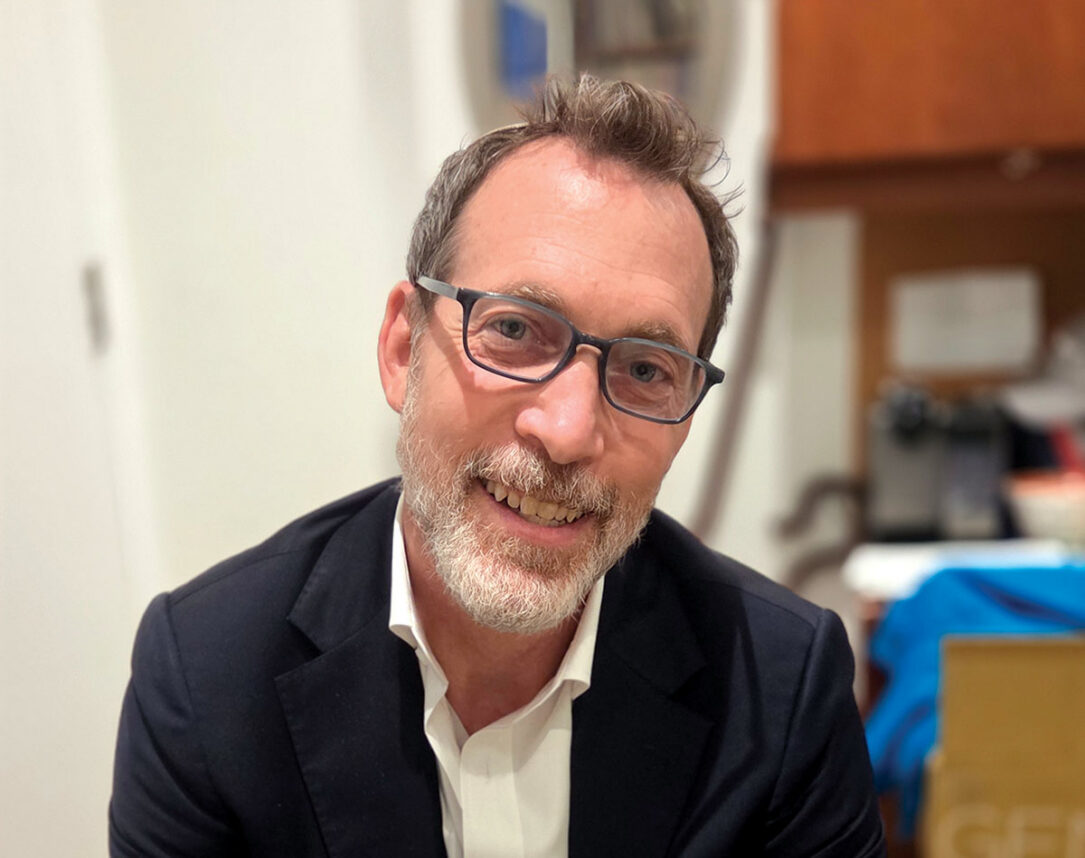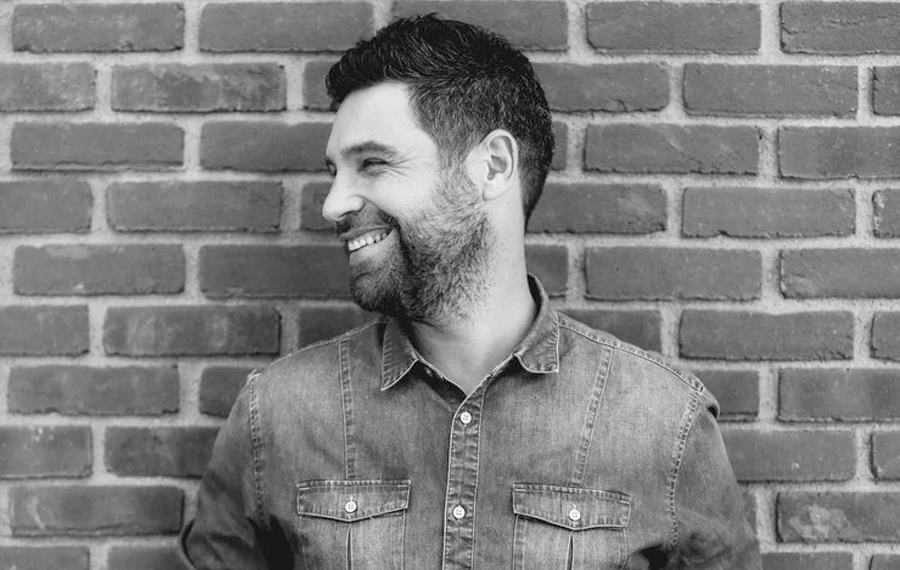
The son of Americans who moved to Israel, Duvid Swirsky grew up without a television, phone or refrigerator. But, there was a record player, and his parents’ albums of Bob Dylan, Van Morrison and Neil Young were the soundtrack of his youth. So was the music of Rabbi Shlomo Carlebach, who founded Moshav Mevo Modi’im, where Swirsky grew up from age 10. It wasn’t long before he was playing music with Carlebach, and a neighbor’s child, Yehuda Solomon. Eventually, the boys co-founded their own band, Moshav.
Together, they play world music festivals, clubs and the gamut of Jewish events. Moshav is just one of Swirsky’s outlets for jamming with his “soul family.” Now based in Pico-Robertson, Swirsky, 42, also works with singer/songwriters, Dov Rosenblatt and Ami Kozak. Their trio, Distant Cousins, has licensed original tunes to TV, film and commercials. Their song “Are You Ready” can be heard in the current DreamWorks animated featured film, “How to Train Your Dragon: The Hidden World.”
While Distant Cousins makes its on-screen debut this month as a shul band backing a rabbi portrayed by Billy Crystal in the new dramedy, “Untogether,” Swirksy performs twice monthly at Friday night services with Nefesh at Wilshire Boulevard Temple in Koreatown.
Jewish Journal: You are a rocker who lends your voice to a rocker on TV in ABC’s “A Million Little Things.” How did that happen?
Duvid Swirsky: The Distant Cousins’ manager, Dave Morris, is to thank for that. He saw an opening and suggested I record — just me and the guitar.
JJ: What is it like being part of prime-time television?
DS: It’s amazing. I’ve worked with the composer and it’s been great. It’s what we call planting seeds. You watch them grow. When these things happen, I’m very grateful.
JJ: How did you also get cast in a fictitious shul band in “Untogether,” and how is it performing at an actual shul with Rabbi Susan Goldberg’s community, Nefesh?
DS: “Untogether” came through a music supervisor. Once they were using some of our music in the movie, they let us know they needed a band. I don’t think of myself as an actor. I was just playing guitar and singing. They just happened to put that in a movie. In the film, it’s Distant Cousins.
Dov and Ami are Orthodox and don’t play instruments on Shabbat. But if they would play on Shabbat, I would have them play at Nefesh. I feel really close to Rabbi Susan Goldberg and the community. In order to be an artist these days, you have to do a lot of things.
JJ: What was it like working with Billy Crystal?
DS: Billy Crystal was so sweet. It was really a nice experience, We were hanging out and playing [songs] between takes. If he were a real rabbi, I would join his shul.
JJ: What do you love about working with Moshav co-founder, Yehuda Solomon?
DS: We grew up in it and it just kind of keeps going. We play lots of weddings, concerts, everything. We are a real working band. We were in the mood recently to record songs we grew up singing. And then we started writing some new music and that’s [our latest album], “Shabbat I & II.”
“Untogether” came through a music supervisor. Once they were using some of our music in the movie, they let us know they needed a band. I don’t think of myself as an actor. I was just playing guitar and singing. They just happened to put that in a movie.”
JJ: You’re also slated to tour this spring with Distant Cousins. What do you love about about the band?
DS: The Cousins really feel like family as well. Our kids play together.
JJ: What’s the greatest difference between your two bands?
DS: Moshav is the Middle East. It’s very rhythmic, very much about live shows. It’s about dancing and music from our roots, music from Eastern Europe and the Middle East. Yehuda is my brother from another mother. He’s incredibly talented. With Yehuda, it feels like a musical, gypsy caravan. We’ve been together over 20 years. So it’s like a marriage. We’ve gone through every phase. And Distant Cousins is three writers and producers — a working partnership. Each has a recording studio. It’s a lot about getting assignments and turning them over quickly.
JJ: What is your most personal song?
DS: They are all kind of personal. A song can’t be good unless it’s personal. The Distant Cousins song “Your Story” is close to my heart.
JJ: How does your work express who you are?
DS: I love playing and creating music. The more I am doing it, I’m happy, Distant Cousins has a brand new album, “Next of Kin.” Moshav’s latest recording is “Shabbat I & II.” And Nefesh — those are the three things I love and want to share with the world as much as possible.
Lisa Klug is a freelance journalist and the author of “Cool Jew” and “Hot Mamalah: The Ultimate Guide for Every Woman of the Tribe.”