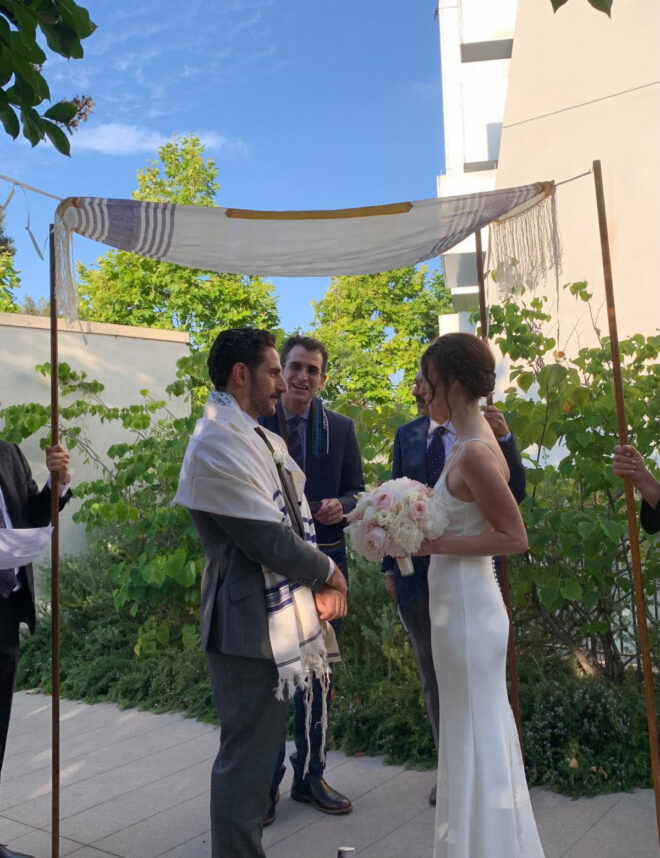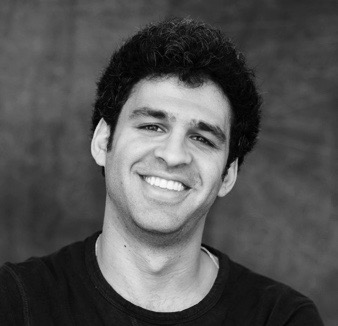
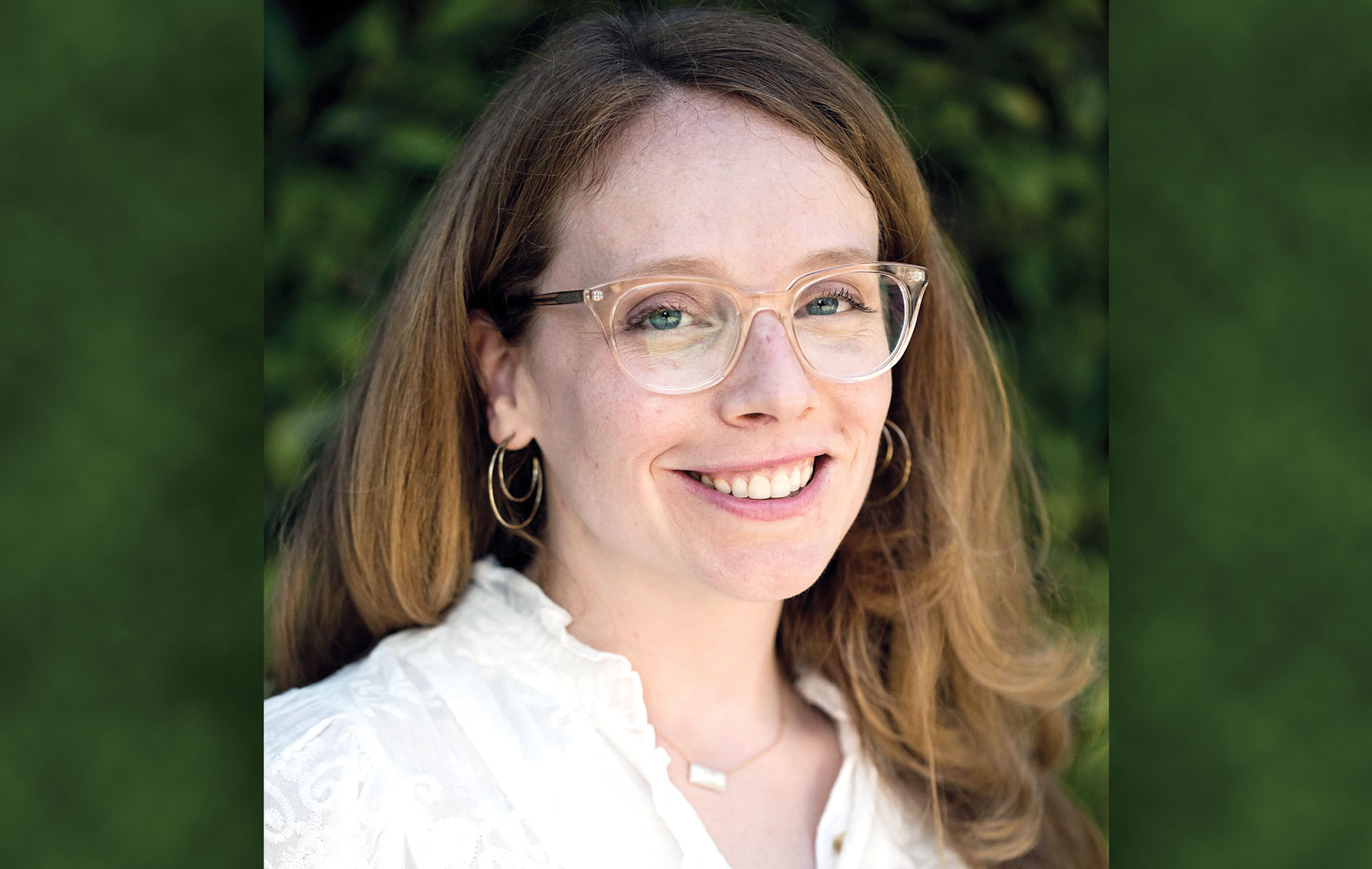
Rabbi Tova Leibovic-Douglas was ordained this past May at the Ziegler School of Rabbinic Studies at American Jewish University, but she’s not yet comfortable with being called rabbi.
The 32-year-old native Angeleno will have to get used to it because she’ll be leading High Holy Days services this year at the Sanctuary @ Pico Union, an alternative congregation housed at the multicultural arts and interfaith Pico Union Project in downtown Los Angeles.
She was happy to talk with the Journal, though, about her Jewish journey, developing High Holy Days traditions with her two young children, her time working as a spiritual counselor at Beit T’Shuvah — the Jewish addiction-treatment facility — and how she’s reluctantly learning to embrace the moniker “Rabbi Tova.”
Jewish Journal: How did growing up with a father who was raised ultra-Orthodox and a mother who was raised Methodist influence your Jewish journey?
Tova Leibovic-Douglas: In a certain way, both of my parents chose Judaism. My mom, who grew up in the South, converted to Judaism and my dad, who left the ultra-Orthodox world in his late teens, chose to live a Jewish life he did not grow up with. So, although I didn’t grow up in those worlds, per se, I was exposed to them and they certainly influenced me as a human being and also as a rabbi. It allowed me to step in and out of different worlds I would otherwise not be exposed to.
JJ: What traditions for the High Holy Days are you developing for your family?
TLD: Our 3 ½-year-old is at the stage of really understanding the High Holy Days in a way she can communicate. We were just talking about how it is Elul and what it means to blow the shofar. I’m thinking of asking her a question, maybe before bed, maybe in the morning, like, “What are you thinking about in terms of your life today?” Generating these conversations as a family is something we can do as our kids continue to grow up. And, obviously, singing fun songs like “Apples Dipped in Honey.”
JJ: Why did you decide to become a rabbi?
TLD: When I was cleaning out old notebooks, I found an essay I wrote at Milken [Community Schools] on my Jewish theology and what I hope for from my Judaism. I wrote that maybe one day I would be a Jewish leader or a rabbi. I wrote in parentheses “hahaha,” which is funny to me. I didn’t know women rabbis existed until I was 13, and it wasn’t a goal of mine.
JJ: What was your goal at the time?
TLD: To be a teacher, for the most part. And a mom. I just never could see myself being a rabbi. Something about the title.
“At Beit T’shuvah they insisted I call myself Rabbi Tova, so I do it, but it’s not exactly the most natural thing. I also think rabbis are human just like anybody else. They are just people doing their best in the world.”
JJ: Are you now getting used to the title?
TLD: Slowly. At Beit T’Shuvah they insisted I call myself Rabbi Tova, so I do it, but it’s not exactly the most natural thing. I also think rabbis are human just like anybody else. They are just people doing their best in the world. There is something about having a title when talking to a human being that feels sort of strange.
JJ: In a letter on the Pico Union Project’s website, you wrote about being skeptical of the “What if?” theme of the congregation’s High Holy Days services. Why is that?
TLD: I think sometimes there’s a piece of me that says “What if,” and inserts whatever “what if” is, and then I want to say, “So what? Who cares about the ‘what if’? Let’s be here. Let’s be now. Let’s be present.” But there’s a lot of emotion and spiritual depth when we do explore ourselves in multifaceted ways, so I think the [what if] question could be perfect for what we are trying to do on the High Holy Days, which is to reflect deeply about ourselves.
JJ: What’s next for you?
TLD: I’m not sure where my rabbinate is going to go, but I’m really excited about that. I feel like I’m in a place where I am really blessed to live in Los Angeles. There are amazing communities and a lot of opportunities to reach many different people, and I think all of the experiences I’ve had thus far in rabbinical school have been eye-opening. Casting a wide net is sort of my vision for my rabbinate.