Recently I was catching up on reading some back issues of the Jewish Journal, when I came across a column by Dennis Prager called, ““>The Chutzpah Imperative” by Rabbi Edward Feinstein. On page 6 he says not only does power corrupt, but that powerlessness corrupts as well. Specifically, he writes, “The sense of powerlessness inevitably leads to cynicism and despair. It despairs of the human capacity to shape the conditions of our own existence. It despairs of hopes and dreams. It destroys the human soul.”
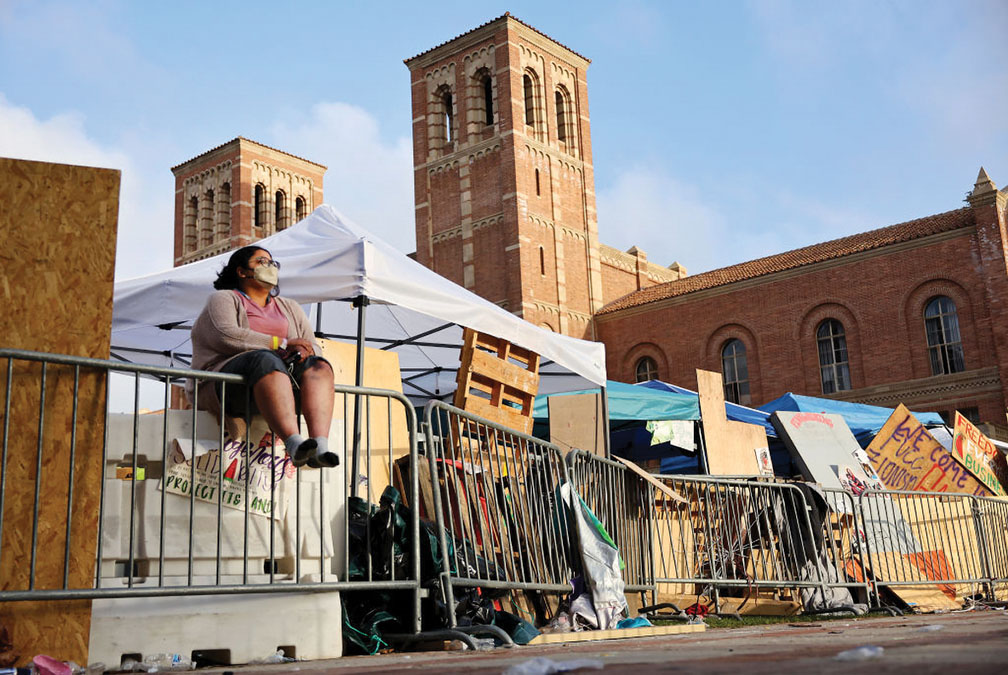
Let’s look at Rabbi Feinstein’s insight in the light of what has been happening in Ferguson and New York as a result of the two black men who were killed by white police officers, and the failure to indict those officers. The protests in those two cities, and in other cities across the country, are not just about those two deaths. Rather, they are about the sense of powerlessness many people in minority communities in our country are feeling.
It is not just about the sense that they are powerless to rise out of poverty, or that in order to better their lives they must overcome a myriad of obstacles which those in the majority do not face. Those things alone would be terribly prone to creating cynicism and despair.
Worse than that, though, is the growing sense that, no matter what they do, they are powerless to prevent their sons, brothers, or themselves from being gunned down by the police. There is a feeling that they are powerless to save their own lives, even if they put their hands up or they tell the police they can’t breathe.
Hopelessness and despair can lead to moral corruption and crime. If the environment in which you find yourself is inherently unfair, if you feel powerless to better your own circumstances no matter what you do, then, as a rational person, you have far less reason than others to follow the rules of society. If you see crime as the only way to gain the power or status you lack, you are much more likely to commit crime than someone who can gain power and status in other ways.
There is also a widely held belief that people will rise, or fall, to the expectations of those around them. If someone shows consistently that they believe in you, you are more likely to succeed. Likewise, if the police are always treating you like a criminal – for instance, pulling you over or stopping and frisking you for no reason – you may be more tempted to break the law. Again, this is a result of the feeling of powerlessness – if you’re treated like a criminal no matter what you do, there is less reason to avoid being a criminal.
This isn’t to say that people who commit crimes are not responsible for their actions. However, rather than blaming people for their “poor moral character” and washing our hands of the matter, those of us in the majority need to take a deep look at what we are doing to cause powerlessness and despair among those in the minority. We need to take steps to make sure people who are not committing crimes are not treated like criminals, have a fair shake at bettering their own circumstances, and, most of all, feel that, no matter what they do, they will not be killed by the police without ample good reason.
—————-
“Like” the “>follow me on Twitter.