When Noreen Green founded the Los Angeles Jewish Symphony (LAJS) in 1994, she had to wrestle with a couple of questions.
First, what defines a Jewish orchestra and differentiates it from other orchestras? And will a woman conductor, that rarest of species, succeed in molding a group of disparate musicians — a combination of community members, high-level university students, L.A. Philharmonic members and studio players — into a disciplined, highly professional ensemble?
Listeners and critics will be able to judge for themselves on Sept. 7, when the LAJS will celebrate its 20th anniversary at the Jon Anson Ford Amphitheatre at 7:30 p.m.
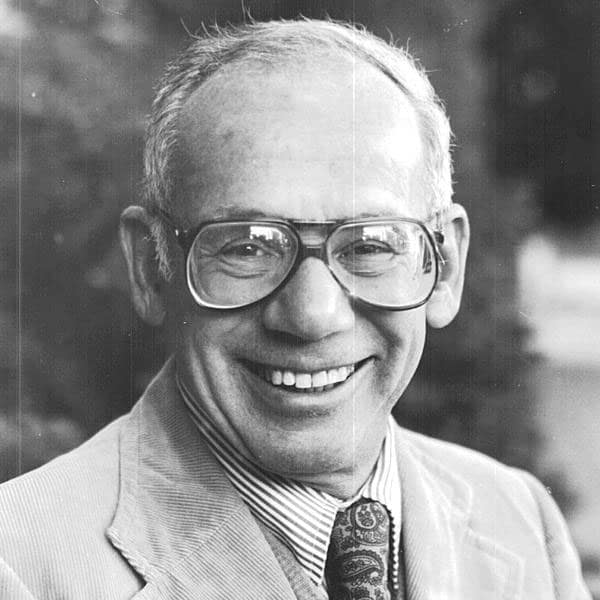
For the event, Green will be reunited with an early collaborator of her venture, the multitalented composer, pianist, actor and showman Hershey Felder. Green credits Felder with helping to shape some of the early decisions and development of the LAJS, although Felder disavows such a key role.
The anniversary concert will feature “Aliyah,” Felder’s concerto for piano and orchestra that celebrates the founding of the State of Israel. It also will draw on music from his one-man shows as Leonard Bernstein, George Gershwin and — coming up — Irving Berlin.
The orchestra’s mission statement emphasizes its “dedication to the performance and preservation of music reflective of the Jewish experience,” presentation of the works of famous and not-so-famous Jewish composers and introduction of new compositions by Jewish artists.
However, not all compositions by Jewish composers are necessarily “Jewish,” while works by gentile composers may convey a Jewish flavor. On the latter point, Green observes, “We also play works by [Dmitri] Shostakovich and [Sergei] Prokofiev.”
Green is a multitasker and mother of two teenagers, whose work schedule includes collaborations with the Latino community — using Sephardic music as a bridge for the symphony’s education program — as well as with black gospel choirs and Holocaust survivors. Although she has staff to help, Green spends much of her time overseeing the fundraising and administration aspects of the symphony.
She doesn’t make a big deal about being one of the few women conductors on the scene. She has conducted the Jerusalem Symphony Orchestra a number of times. Some deeply religious music lovers in Israel’s capital would never attend a performance if it included a woman singer but have no problem with a woman conductor.
On the podium, Green generally wields the baton wearing a jacket and black pants, but when she appeared in Johannesburg in 2003, for the religious community, she was asked to wear a long skirt.
“I didn’t dig in my heels and refuse,” she said. “I’m a collaborative person by nature.”
A self-described “Valley girl, born and bred,” Green, 55 grew up in Sherman Oaks, attended Grant High school and moved on to the University of the Pacific in Stockton, receiving a bachelor’s degree in music education. Next was California State University, Northridge, where she taught in the music department for 10 years, during which time she also earned her master’s degree in music. She then earned a doctorate in choral music at USC (she is generally referred to as Dr. Green).
She served for 20 years as music director at Valley Beth Shalom (VBS) in Encino, where she continues as music scholar in residence. “It was through Rabbi Harold Schulweis at VBS that I learned to reach out to other communities and countries,” Green said.
“I love to teach,” especially in the multicultural environment of Los Angeles, she said.
Her most recent project, which debuted in May, is the 55-voices-strong American Jewish University Choir, which she founded through the Whizin Center for Continuing Education. She also founded, with Phil Blazer at JLTV, the American Jewish Symphony, a touring ensemble. The premiere performance is scheduled for April 26, 2015, at New York’s Queensborough Performing Arts Center, with actor-comedian-singer Mike Burstyn as soloist.
The Los Angeles Jewish Symphony’s 20th anniversary concert is at 7:30 p.m. on Sept. 7. Tickets range from $30 to $50 (student and children discounts available). For ticket information and reservations, visit FordTheatres.org, or call (323) 461-3673. The Ford Amphitheatre is located at 2580 Cahuenga Blvd.