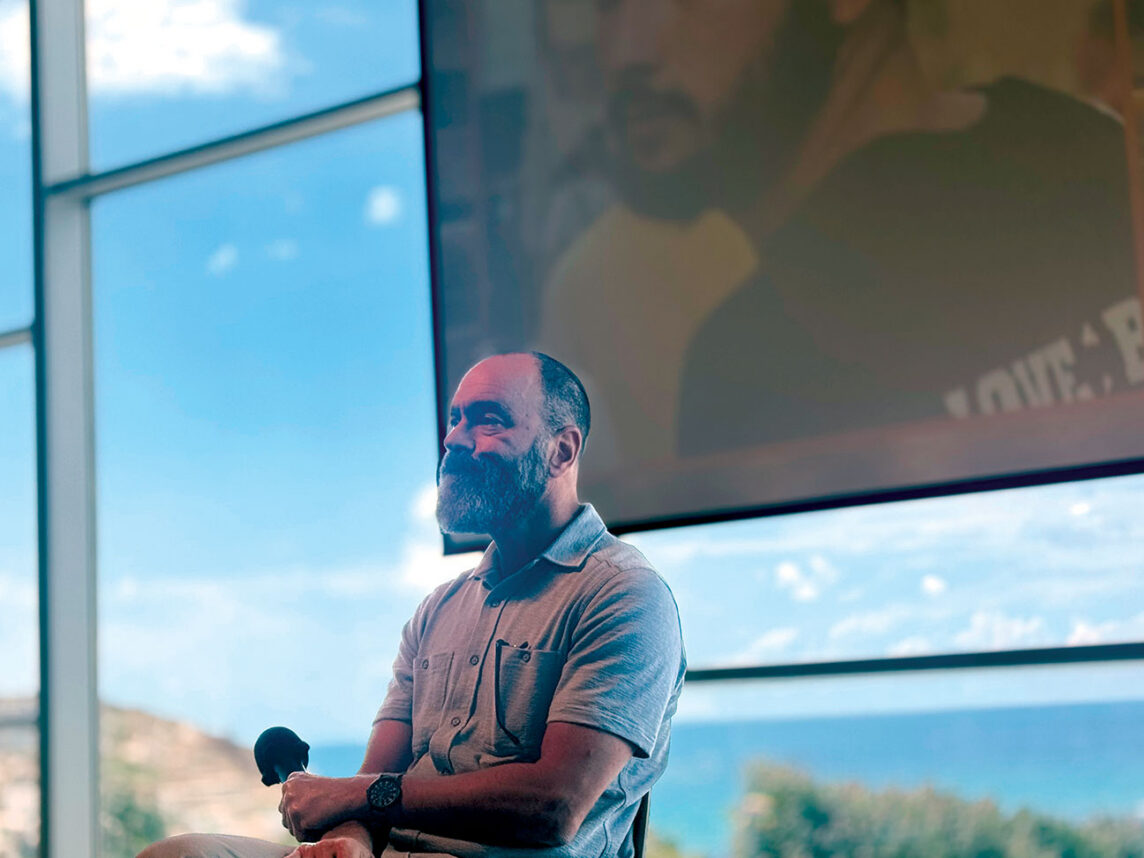
Jewish, Christian and Buddhist religious leaders discussed their respective faiths’ support for reproductive choice during a recent program at the National Council of Jewish Women/Los Angeles’ (NCJW/LA) Fairfax headquarters on July 28.
“Choice: An Interfaith Perspective” included a panel discussion with Rabbi Jill Zimmerman, formerly of Temple Emanuel of Beverly Hills; Chandana Karuna of the International Buddhist Meditation Center; the Rev. Frank Wulf of the Methodist congregation United University Church; and the Rev. Carissa Baldwin of All Saints Church in Pasadena.
“As with all things Jewish, there is a wide range of opinions,” said Zimmerman, adding that the “Reform movement for decades has supported women’s right to choose.”
The California Religious Coalition for Reproductive Choice, Miracle Mile NOW, Planned Parenthood of Los Angeles and NARAL Pro-Choice America co-sponsored the event, which included workshops on lobbying legislators and other hands-on advocacy.
Approximately 40 people attended the program.
Leanore Saltz, vice president of advocacy at NCJW/LA, said that this year, “We’re putting even more of an effort into the pro-choice movement … because the opposition is absolutely breaking down doors to chip away at Roe v. Wade, and each state has figured out how they can go around Roe v. Wade and do it on a state basis.”
Like Zimmerman, the other clergy members stressed their support for the pro-choice movement.
Wulf dismissed what he sees as misguided views on Christianity’s abortion stance.
“We need to put out in public that Christians aren’t unanimous in opposition to abortion … so Christianity doesn’t come off looking like some monolithic, anti-abortion religion,” he said. “It’s not that.”
Karuna said, while one of the basic precepts of Buddhism is not to take a life, it’s critical to examine the intentions of the person seeking an abortion.
“If somebody is choosing to go for an abortion, do they responsibly look at it? Is it to stop suffering?” she said, adding that Buddhist precepts are not fixed and that its adherents shouldn’t judge others.
Zimmerman welcomed the opportunity to hear voices of other religions weighing in on the issue, saying, “I think it is always inspiring to work with prominent people of different faiths and different traditions who share common values.”