
fbpx

NYT Jerusalem Chief Responds to Critics

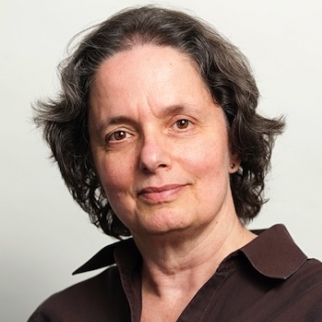
Fresh on the heels of a piece by The New York Times’ ombudsman calling for the removal of the Times’ Jerusalem bureau chief Ethan Bronner from his current post, the author and journalist spoke to a small group of American Jewish University supporters at a private home in Beverly Hills on Feb. 9.
[additional-authors]
February 17, 2010

Fresh on the heels of a piece by The New York Times’ ombudsman calling for the removal of the Times’ Jerusalem bureau chief Ethan Bronner from his current post, the author and journalist spoke to a small group of American Jewish University supporters at a private home in Beverly Hills on Feb. 9.

Bronner’s son recently joined the Israel Defense Forces, and some critics on the blogosphere questioned Bronner’s continued objectivity toward the region. At the event, Bronner, who is Jewish and whose wife is Israeli, briefly addressed the controversy, telling the group his editors are confident in his coverage and that he expects to remain in Israel, where he has been since 2008, his third stint there. Bronner went on to explain the many complexities of reporting on the region.

“In this world of black and white, I traffic in grey,” he said. “I cover one place with two completely contradictory narratives.” Sites like the Temple Mount, for example, have two names, depending upon which group you’re talking to, so the simple use of a name can be seen as prejudicial. And what some call a “‘fence,’ which is neighborly, and others call a ‘wall,’ which is aggressive,” he said, “The New York Times calls a ‘barrier,’ because we think it doesn’t sound like anything at all.”

Of the peace process, Bronner said, “Right now the situation is quite stuck. Both sides feel so burned, and both sides feel that time is on its side.”

He said a complicating factor in coverage is that Israel is open about its politics, while the message is highly controlled by its opponents.

“On the Palestinian side, there is no robust debate and no data, so my ability to report on that is limited,” he said.

Asked whether he believes the peace process can succeed, he said, “I don’t, particularly, but there’s no other thing that you can work toward.”


Did you enjoy this article?
You'll love our roundtable.

Editor's Picks

A Night of Gratitude Honoring Dennis Prager

Latest Articles

Rosner’s Domain: Weeks of Known Unknowns

So here we are, stuck with just a few bad options to consider. And that’s just the political superposition of undetermined future – alongside it there’s also the possible – probable? – war with Iran.

After the Last Out, Collect a Different Kind of Card

At a time when Jewish education is competing for attention in a world dominated by screens, sports, short-form videos and endless streams of content, these easily collectable cards offer a different kind of engagement.

6 Jewish Takeaways from the Midterm Elections

There is little chance that the combination of a weakened Trump and an emboldened Democratic Congress produces similar levels of support for aggressive action against Iran and its proxies, and other policies that a wide spectrum of Israelis see as crucial to their security.

Israel Drives Them Crazy

In the diaspora and in Israel, we cannot turn back the clock and undo the harm that was done to us. But we can shape our own future. Israel is strong and resolute. So must we be.

Torah Portion: Chayei Sarah

The Torah offers a comforting view of a life beyond this life. We aren’t told what it will be exactly — yes, it’s abstract and vague — but we are told it’s waiting for us as it was for Abraham.

Hatred Opened the Door. A Missed Victory Held It Open.

For me, the disaster isn’t that Democrats won or Republicans lost. It’s that politicians who demonize Israel, deny Jewish self-determination and explain away antisemitism are finding an increasingly receptive electorate in the world’s most important democracy.

The Jewish Dilemma

The central issue is not whether Jewish voters should support Democrats or Republicans. It is whether either party can demonstrate that Jewish security, Jewish identity and Jewish self-determination are compatible with its broader political agenda.

More news and opinions than at a Shabbat dinner, right in your inbox.






























