It was a beautiful morning in May on the world’s highest mountain, and Dan Mazur was feeling good. He had been hiking throughout the night in below-freezing temperatures, and now he and his team — a sherpa and two other climbers — had only two hours to go until reaching the summit of Mount Everest.
Mazur had reached the top before, 15 years earlier. But this time, the mountain climber and guide was leading two clients who were paying more than $20,000 each for the chance to accomplish the goal of a lifetime. Their objective was so close they could almost reach out and touch it.
Suddenly, Mazur saw something unexpected — some yellow fabric in the distance. At first it looked like a tent, but then it became clear that it was a person, a man sitting cross-legged on a narrow ridge with an 8,000-foot drop to one side and a 6,000-foot drop to the other.
At 28,000 feet — a part of the mountain dubbed the “death zone,” because the weather is so cold and oxygen is so scarce — the man wore no gloves, no hat and had unzipped his down suit to his waist.
“I imagine you’re surprised to see me here,” the man said.
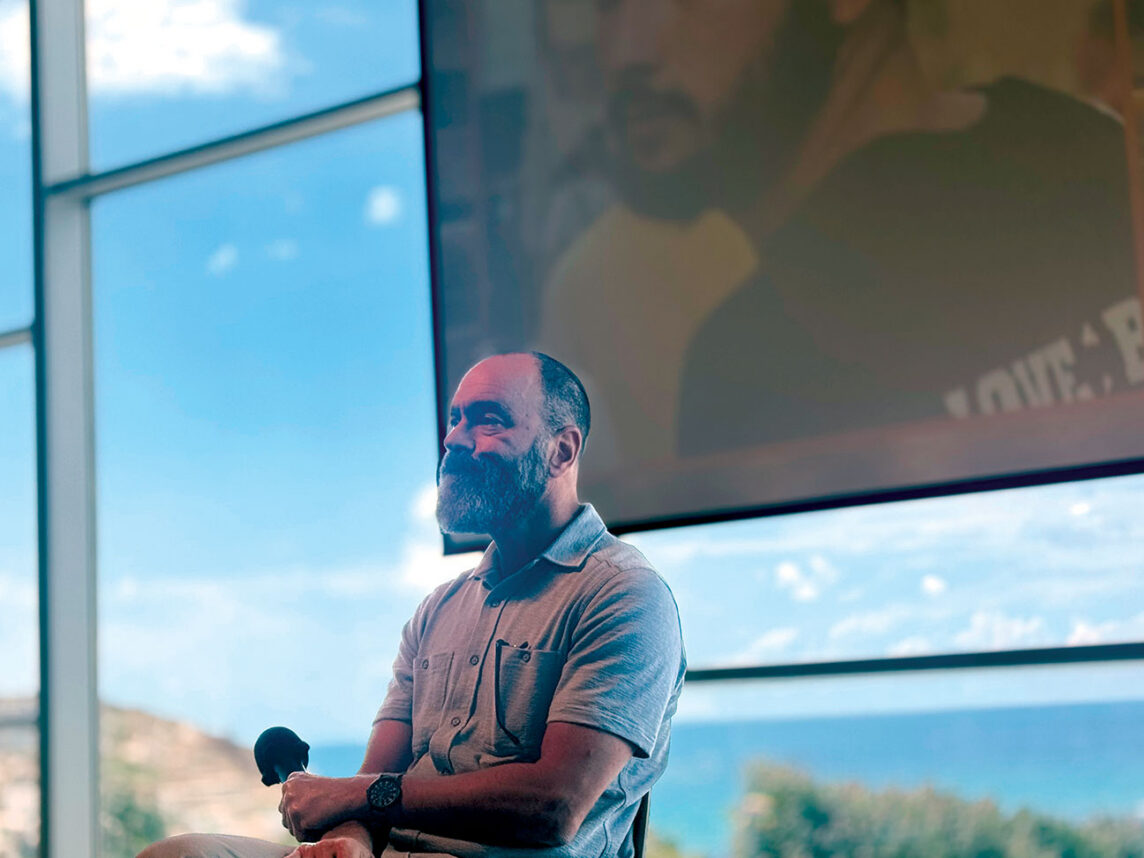
What happened next would cost Mazur his summit and save the man’s life. Now, more than six months later, Mazur, a 46-year-old who lives in Olympia, Wash., will talk about the adventure and dramatic rescue at the Malibu Jewish Center & Synagogue on Wednesday evening, Dec. 6.
As it turned out, the man on the ledge was Lincoln Hall, one of Australia’s best-known climbers. Hall had attempted to summit Everest 22 years earlier but never made it. This time, at age 50, Hall had made it to the top.
But on the way down the day before, Hall had started having trouble.
Experiencing the classic symptoms of altitude sickness — fatigue and hallucinations — Hall had refused to continue down the mountain and ended up passing out. The two sherpas with him concluded, after poking Hall in the eye and getting no response, that Hall was dead. Suffering from lack of oxygen themselves, they hurried down the mountain.
A friend had already broken the news to Hall’s wife and teenage sons: Hall was dead — or so they thought. In fact, he was struggling but alive. He ended up lasting through the night alone.
Atop the mountain, at around 7:30 a.m., Mazur and his team persuaded a resistant Hall to put on his gloves and hat. They gave him oxygen, tea and a Snickers bar and tethered him to their rope. They radioed down to Hall’s expedition group, which dispatched a rescue team.
It would take more than three hours for the rescuers to arrive. But Mazur and his climbers waited with Hall, while their chances of summiting slipped away.
In the end, Hall suffered frostbite; he lost some fingertips. But he made it down the mountain.
Mazur’s rescue caught the attention of national media, which had reported only days earlier the demise of another Everest climber, David Sharp, who died after an estimated 40 climbers passed him without offering any help.
“I was always taught that when you see someone who needs help, you’ve got to help him right away,” Mazur said, speaking on the phone from Washington State.
If he had the day to do over, he said, “I would do it again exactly the same.”
Mazur, who grew up with a Jewish father and non-Jewish mother, said he is more spiritual than religious. But that day, high on the mountain, Mazur prayed. He prayed that God would help Hall.
“I believe that Lincoln Hall survived because he was very lucky; the weather was not too bad; he was in good shape,” Mazur said. “And I believe there was a higher power that was looking after him.”
Dan Mazur will speak on Wednesday, Dec. 6 at 7:30 p.m. at the Malibu Jewish Center & Synagogue, 24855 Pacific Coast Highway. Admission is free.
For more information, call (310) 456-2178