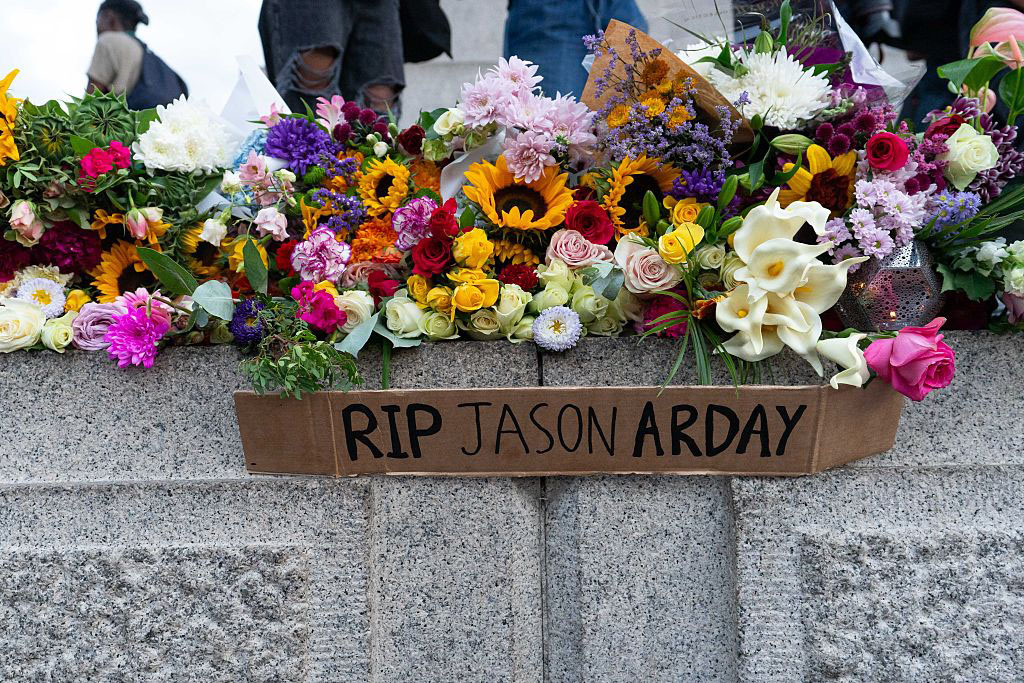
Philip Seymour Hoffman was found dead on Feb. 2. He was 46.
When the news of his sudden, tragic death broke, I was speechless.
Hoffman was more than a film actor. He was also a theater actor and director. He was a father. He leaves behind three children.
But, if I may, I’d like to delve into his career on the silver screen. A look at the actor’s film credits reveals that he was, to borrow Muhammad Ali’s famous phrase, “The greatest.”
In just the span of two years (1998-2000), Hoffman, who was born in Fairport, New York, appeared in “The Big Lebowski,” “Magnolia, “Talented Mr. Ripley,” “Almost Famous,” among other pictures. In just two years.
In the five years that followed, he co-starred in a versatile collection of features, including “Punk Drunk Love,” “Red Dragon,” “25th Hour,” “Cold Mountain” and “Along Came Polly.”
“Capote,” for which he was named Best Actor at the Oscars, caps off this half-decade of risk-taking.
Then in 2007, alone, Hoffman starred in “The Savages,” “Before the Devil Knows You’re Dead” and “Charlie Wilson’s War.” These were critically acclaimed, important films.
2008 was no less productive. During that year, he played the leading role in Charlie Kaufman’s “Synecdoche, New York,” an incomprehensible piece of beauty. Roger Ebert called it one of the best films of the decade.
Worth mentioning is that two other Hoffman films, Spike Lee’s “25th Hour” and Cameron Crowe’s “Almost Famous,” also appear in Ebert’s list of the best films of 2000-2010.
That same year, in “Doubt,” Hoffman’s portrayal of a Catholic priest helped earn that film multiple Oscar nominations.
“Moneyball” (2011); P.T. Anderson’s “The Master (2012); “The Late Quartet (2012): the list of his impressive works goes on. Recently he appeared as the villain in “The Hunger Games: Catching Fire,” bringing gravitas to a young adult-catering film franchise.
His small role in “Almost Famous,” in which his character serves as a mentor figure to the fledgling music critic William Miller, has always stood out to me. I was in ninth grade at the time, and I was interested in music, and writing. I was William Miller, and when Hoffman’s Bangs takes a shot on Miller, giving him “an assignment,” to write a music review on Black Sabbath for Creem Magazine, I felt a lot of things. One of them was jealousy. When will something like this happen to me? was my thinking. Something else I felt was love. I loved – and love – Hoffman in this movie. His telling Miller that he has to stake his reputation as a journalist on being “honest and umerciful” always pulls on my heart strings. The phrase describes Hoffman.
May he rest in peace.