
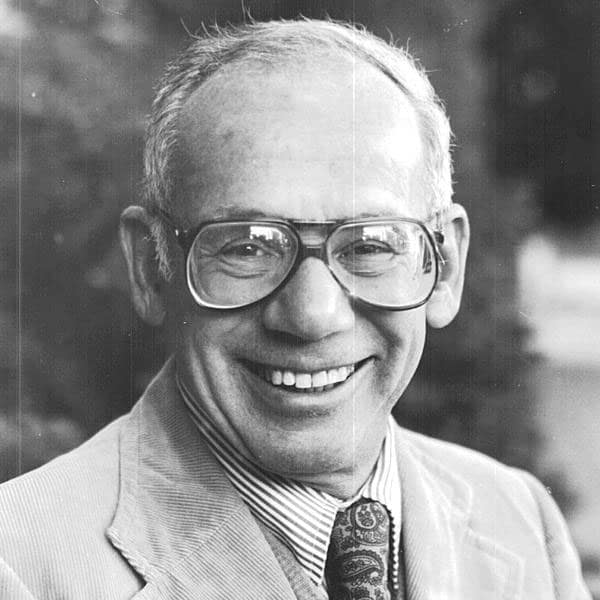
Did Daniel Pearl die as a martyr, proudly proclaiming his Jewishness, or did his abductors force a reluctant admission from him at gunpoint shortly before they killed him?
Neither scenario fits the journalist’s personality and the truth is more complex, said his father, Dr. Judea Pearl.
"Danny never lied about being Jewish," said the elder Pearl. "All the kidnappers had to do was ask him and he would tell him that he was a Jew."
The parents have never seen the videotape of his final statements, which ended in Daniel Pearl’s decapitation, but according to detailed transcripts and a description by the U.S. consul in Karachi, Daniel Pearl’s statements fell into two categories.
The first consisted of the affirmation of his Jewishness, and though they appear to be in one piece, were actually given in three different takes.
In the first statement, Daniel Pearl said, "I am American, I am Jewish [some unintelligible words] my family on my father’s side is Zionist."
In the next segment, Pearl said, "My father is Jewish, my mother is Jewish, I am Jewish."
In the third statement, he said, "My family follows Judaism. We made numerous family visits to Israel. A street in B’nai Brak is named for my great-grandfather."
Judea Pearl believes that the three statements were made freely by his son, and delivered willingly and with relative ease.
According to many reports, Daniel Pearl conveyed a certain sense of pride while affirming his Jewishness, and his father believes that the reference to the street in B’nai Brak, which the captors could not possibly have known about, was meant as a signal to Daniel Pearl’s parents that he was in good condition.
On the other hand, a subsequent monologue in which Daniel Pearl denounced U.S. policies and the killing of Palestinians by Israelis (against background TV footage of the intifada) was clearly made under duress.
"He was purposely mispronouncing words, such as ‘Amrica’ instead of ‘America’ and inserted long ‘uuhhs’ between words," observes the father.
Judea, or Yehuda, to give his given Israeli name, was raised in an Orthodox family, but he and his son rarely practiced their religion, except for holiday observances.
Nevertheless, "Danny loved Judaism," said his father. Daniel Pearl was curious about it, and the two engaged in a self-invented game in which they challenged each other’s knowledge of Pirkei Avot (Sayings of the Fathers).
Videoclips of Daniel Pearl’s life, screened at a memorial service in March, showed him celebrating his bar mitzvah at the Western Wall in Jerusalem, and a trip to Moscow in 1986, where he met with Russian Jewish refuseniks and was instrumental in bringing one family to the United States.
Also chronicled was a journey on the Trans-Siberian railroad to China, where Daniel Pearl conducted an impromptu Passover seder, using rice cake for lack of matzah. He remembered the ritual from his own boyhood, when he recited the traditional Four Questions at family seders.
The great-grandfather mentioned on the abductors’ tape was Chaim Pearl, who grew up in Ostrowitz, Poland. According to family history, Chaim was attacked one day by a peasant with an iron bar, went straight home and told his wife, "Start packing, we’re leaving."
The couple was one of 26 families, all gur Chasidim, who founded the fervently Orthodox enclave of B’nai Brak, near Tel Aviv, where Chaim changed his occupation from merchant to farmer.
Daniel met and married his wife, Mariane, the daughter of a Dutch Jewish father and Cuban Catholic mother, in Paris. At age 16, she converted to Buddhism.
Mariane Pearl spoke movingly of her life with Daniel at a Los Angeles memorial service in March and is slated for a visit to her in-laws, including an introduction of her 4-month-old son Adam, later this month.
Mariane and Daniel Pearl had agreed to circumcise Adam, and Daniel told his parents that he hoped to raise the boy with all the Jewishness he could muster.
Questioned on this point when she was interviewed by Larry King, Mariane Pearl said that she wanted to raise Adam without any religious indoctrination.

































