
On the eve of Israeli Memorial Day, my husband and I joined thousands of other Israelis at a Jerusalem memorial service — in English.
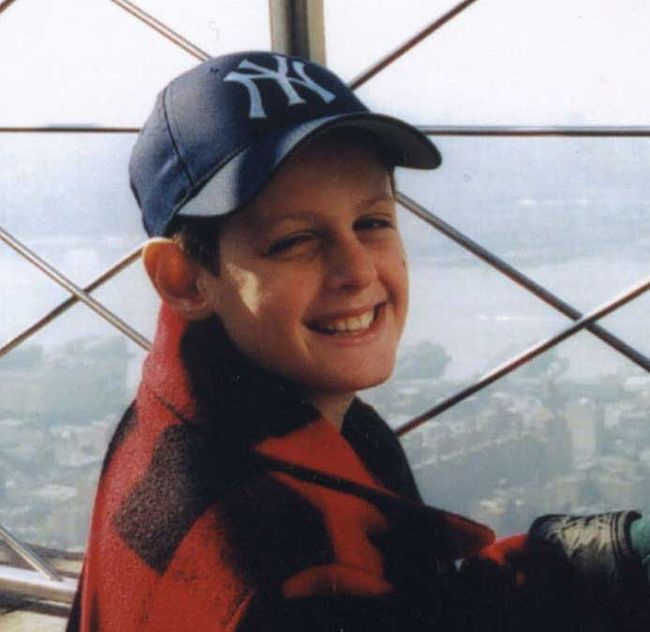
We stood at attention as the memorial siren wailed and then listened to the testimony of bereaved families. Sherri and Seth Mandell spoke about their son Koby, who was murdered by terrorists in 2001, at the age of 13, along with a friend.
The ceremony was a somber tribute to Israel Defense Forces soldiers and victims of terror. It was also a moving reminder that many “Anglos” (immigrants from English-speaking countries) have made the ultimate sacrifice for Israel.
Yet 70 years after Israel was created, many Israelis can’t understand why we Anglos, especially those of us from safe, secure North America, immigrated to Israel and continue to live here. Nor do they grasp just how much Anglo immigrants have contributed to Israel. Few realize, for example, that many Anglos fought in Israel’s War of Independence.
Though few in number (of Israel’s 8.8 million citizens, fewer than 500,000 are native English speakers), Anglos are responsible for much of the social change in Israel.
It was Anglo olim who spearheaded legislation against smoking in public places and for improved road safety and consumer protection. Anglo olim are at the forefront of inclusion and accessibility for disabled people, programs for teens at risk and the fight for women’s equality.
Anglos, particularly American immigrants, “are disproportionately represented in the world of social activism in Jerusalem,” Rachel Stomel, herself an American olah involved in social justice and women’s rights advocacy, notes in a Times of Israel blog.
“Are the type of people who make aliyah a self-selecting group of ideologically driven people who are more likely to engage in activism and work at nonprofits? Have Americans just been conditioned to waltz into other countries and tell everyone how to run things better?” Stomel asks.
This drive to make a difference has drawn Anglo olim not only to social causes but to the settler movement.
In her book “City on a Hilltop: Jewish-American Settlers in the Occupied Territories,” Sarah Hirschhorn notes that an estimated 60,000 of Israel’s 200,000- 300,000 American citizens live in the West Bank.
Contrary to the prevailing Israeli stereotype of American settlers as religious and political extremists, those who came in the aftermath of the 1967 war “were people involved and sympathetic to leftist social movements such as the U.S. civil rights struggle,” Hirschhorn writes.
Israelis seem to have forgotten that Americans and other Anglos were also among the founders of Peace Now and are quick to accuse Americans of “being behind” the Reform and “Conservative” movements in Israel, as if non-Orthodox Judaism were an unwelcome import. “There’s a lot of pushback and accusations of Americans interfering, even though we’re Israeli, too,” Yael Levy, an olah from the U.S., told me.
While I think our activism is vital, I’m sure other Israelis are fed up with our griping about government bureaucracy and the national penchant for taking shortcuts. But many seem to share our angst at the uniquely Israeli practice of suddenly rushing to the front of a long line at the supermarket or bank (cappuccino in hand) as if those of us who have been waiting patiently for 20 minutes shouldn’t care.
Israel continues to infuriate native-born and immigrants alike, but 70 years after its founding, it is home.
At the Memorial Day service, Seth Mandel, Koby Mandell’s father, recalled that right after his son’s murder, “I wanted to take my wife and kids to the airport and never see Israel again.”
What stopped him?
“We realized we weren’t going to allow the people who had killed Koby to destroy our other children’s lives,” he said.
Koby, who loved baseball, “was proud of being an American,” his mother, Sherri, said, “but was prouder of being an Israeli.”
Michele Chabin is an award-winning journalist who reports from Jerusalem.































