A stunning shift has occurred in America. We’ve gone from being terrified of assembling in groups to being eager to join public protests. Remember how authorities were warning us not to congregate in groups because of the coronavirus? It was essential, we were told, to continue honoring the lockdown, lest the virus triggers mass infections and more fatalities.
What a difference a cause makes.
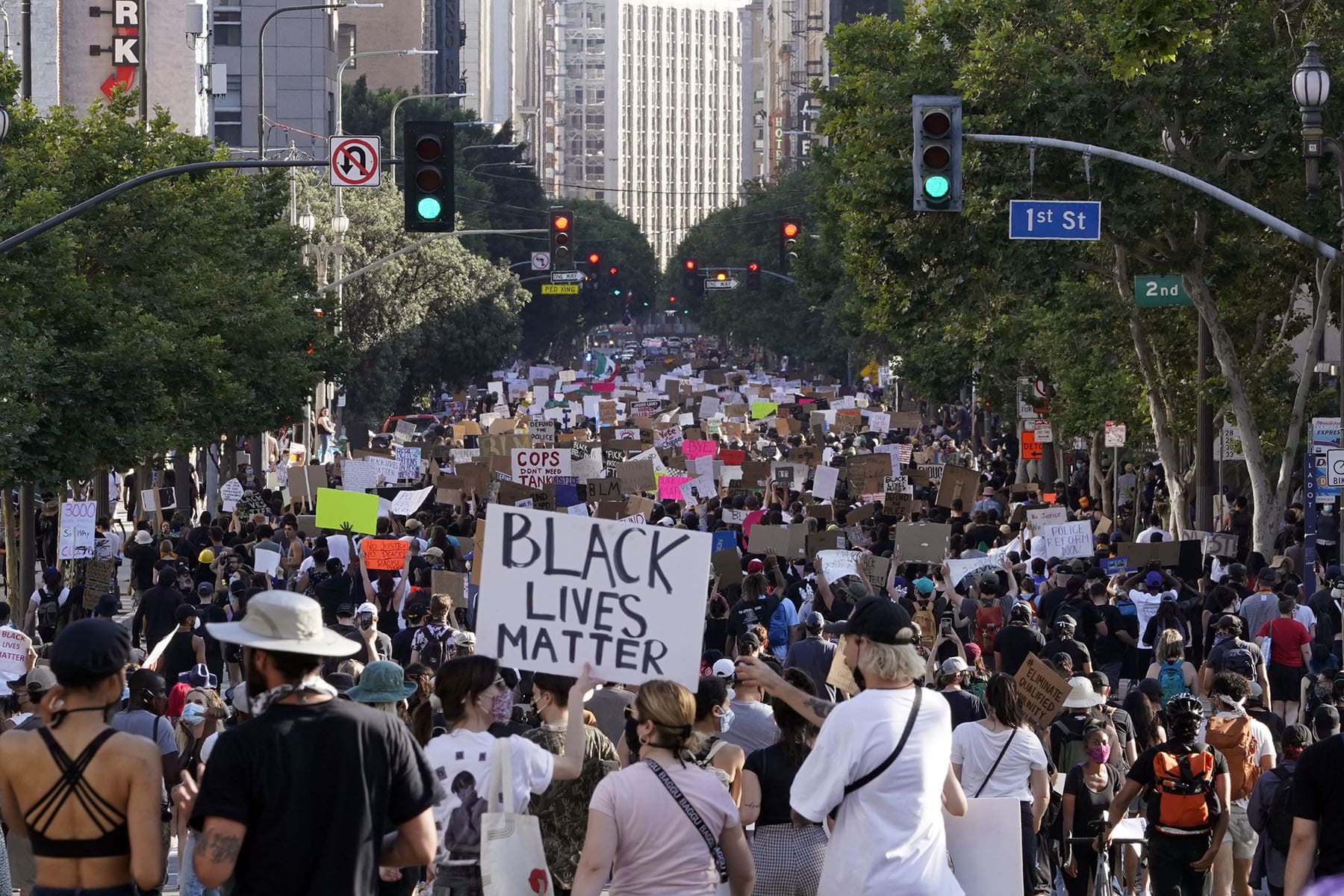
Only a few weeks ago, New York City Mayor Bill de Blasio was cracking down on small gatherings of worshippers. Then, suddenly, he endorsed tens of thousands of social justice warriors marching through his city.
The imperative of social justice has overtaken the imperative of social distancing.
Most of the commentary, including my own, has focused on the moral dimensions of the protests, expressing outrage at racism, police brutality and racial inequalities, while decrying the violent riots and looting among a minority of protestors.
Few people have noted, however, that widespread images of large public gatherings have had an unintended consequence: They’ve made leaving our quarantines and engaging with the world a lot more acceptable. Virus concerns aside, more and more people are returning to our streets and public parks and generally disregarding the pandemic rules of social distancing.
What’s behind this sudden shift?
Exhaustion, for one thing. After months of being stuck in lockdown, people are antsy. Also, when you see authorities dismissing their own guidelines about public assembly, you tend to get cynical and set your own guidelines.
But there’s something deeper. A social justice protest is not just another outing. It is a visceral expression of our humanity: Real people making real noise marching on real streets to protest real injustice.
A social justice protest is a visceral expression of our humanity: Real people making real noise marching on real streets to protest real injustice.
The COVID-19 virus, by contrast, diminishes our humanity. We face an invisible, contagious enemy that attacks our bodies and forces us to stay away from one another. That’s not human; that’s closer to science fiction.
Maybe that’s why so many people have built up the courage to leave their homes and join the protests. They want their humanity back.
The images of the pandemic exposed our vulnerabilities. We saw patients on ventilators, emergency workers straining to handle the pressure and medical experts who kept changing their tune. We were off balance, spooked by a mysterious microbe, frightened to make any moves.
The images of the protests are wholly different. We’re back on familiar turf. Millions of people empowered to march in the streets is an icon of our nation’s history. It’s inherent to our culture. It’s as real as it gets.
Even the violence of the riots, however tragic and unfortunate, feels more real than the violence of a tiny virus no one can see.
And let’s not forget the image that started it all: The callous face of a Minneapolis cop who put his knee on a black man’s neck for close to nine minutes while the man cried out for his life, saying “I can’t breathe.”
That image of an all-too visible, human aggressor is the mirror opposite of an invisible, lethal virus. It’s an image so stark and repulsive it overshadowed, at least temporarily, the silent killer that’s been haunting us for months.
It’s possible, of course, that we’ll see a jump in infections due to the protests. We’ll know soon enough. But regardless of how the battle against COVID-19 evolves, it seems to me we’ve already turned a corner. The threat of the virus is still there, but it no longer owns us.
Regardless of how the battle against COVID-19 evolves, it seems to me we’ve already turned a corner. The threat of the virus is still there, but it no longer owns us.
Instead of sheltering in fear, we’re marching in outrage. Instead of looking inward and reflecting on ourselves, we’re looking outward and thinking of others. Instead of moving away from one another, we’re moving closer, with or without masks.
It’s hard to fully grasp how a news story could so quickly overtake the biggest story of modern times. A virus that continues to terrify the planet and has decimated economies no longer has a monopoly on our consciousness. It’s been joined by a classic, societal, profoundly human drama.
The virus, however dangerous, makes us shrivel. The protests, however risky, make us human. In a noisy, messy, even violent way, the cause of fighting for justice has brought back our humanity.
Having tasted this feeling of liberation, and with the long days of summer upon us, I doubt we will see a return to mass hibernation. For better or for worse, after months of languishing in a dark tunnel, America is getting bolder about getting out.