Misguided action against Israel harms peace, and reeks of a bygone era’s antisemitic boycott of Jewish businesses
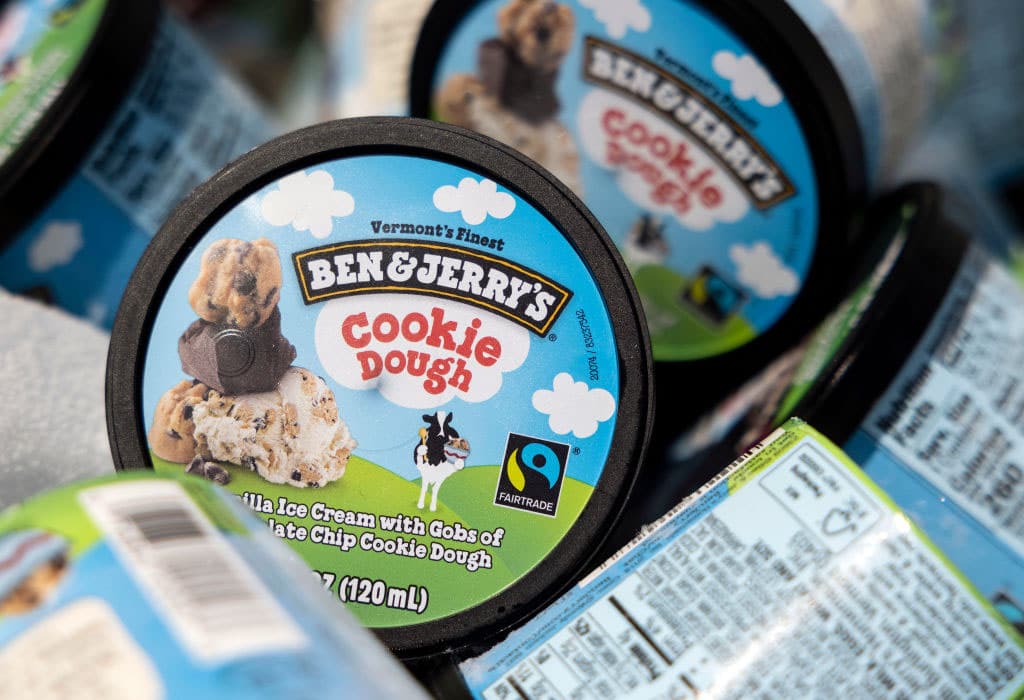
News that the board of Unilever’s Ben & Jerry’s Ice Cream has decided to prevent their Israeli manufactured ice cream from being sold in the West Bank has become a very contentious issue. Some say Ben & Jerry’s melted under pressure from BDS. Others are screaming ice cream war. Others congratulate Ben & Jerry’s for standing up for justice, while others point out that Ben & Jerry’s “made a political decision that singles out Israelis and one ‘disputed’ territory.” Imagined flavors of Ben & Jerry’s are being offered in memes. Many Jewish groups say the Unilever is supporting an antisemitic boycott.
To stem the potential businesses losses, Ben and Jerry’s Israel, together with Mizrachi, have launched a campaign to get ice cream to IDF soldiers. Ben and Jerry’s Israel operates by license from the parent company, and have 160 employees in Israel. In the US some Kosher supermarkets taking Ben and Jerry’s off the shelves, saying that they don’t want to carry a company that supports the BDS movement against Israel. Mixed in with the issue is criticism aimed at the Kof-K which certifies the ice cream as kosher. The Kof-K is also fighting the move.
Ben & Jerry’s Israel is fighting back and tweeted, “We will continue to produce the beloved blue-and-white ice cream flavor for all Israelis throughout Israel – and we will not stop standing firm and protecting the Israeli consumer against anti-Israel attacks.”
Unilever, trying to calm fears, says it is against BDS, and will continue to do business with Israel. However, Jewish groups point out that Unilever has taken action only over the disputed Israeli territory, and not anywhere else.
Boycotting Jews isn’t New, It’s What Jew-haters Have Done for Centuries
Sadly, the Jewish community has a great deal of experience with boycotts. The BDS movement is not so clever. BDS just repackaged a popular way to encourage anti-Jewish activity. In Europe, before WWII, when ultra-nationalist groups came to power in many countries, one of their biggest targets were Jewish businesses. Germans, Poles and others boycotted Jewish businesses with devastating results.
So is the movement to pressure musicians and companies to boycott Israel rooted in an ethical and moral desire to help Palestinians in their campaign for national sovereignty, or is BDS another antisemitic boycott campaign like the boycotts of the 1930s?
How we know that Unilever and Ben & Jerry’s are Supporting an Antisemitic Boycott
By boycotting only Israel, Unilever and Ben & Jerry’s are singling out a Jewish country over “human rights” concerns and ignoring authoritarian and highly repressive regimes. Unilever continues expanding their ice cream empire in China, despite millions in concentration camps and cultural genocide of Tibetans and Uyghurs. China is the world’s biggest oppressor. Just ask the people in Hong Kong, Tibet and the Uyghurs. But they have Unilever Ice Cream.
Unilever and Ben & Jerry’s do business in countries with horrific past human rights atrocities, that have never been rectified. Australia and Canada dispossessed aboriginal people and communities, stole their land and kidnapped their children, but they sell Unilever and Ben & Jerry’s ice cream there. And those communities have never recovered.
Japan has Unilever and Ben & Jerry’s but the Japanese never made reparations over organized rape of tens of thousands of “comfort women” from around Asia. It’s estimated that during WWII, 50k-200k women forced into prostitution to soldiers. The Japanese have never paid them any reparations and threaten economic penalties when countries bring it up.
So it’s ok to sell Unilever and Ben & Jerry’s ice cream in countries which commit genocide & crimes today, or in countries which committed their crimes recently, even if they haven’t made amends, because, well, business is business. Just not ok to do business with the Jews.
Ice Cream should bring people together
Ice Cream should bring people together. By boycotting Israeli manufactured ice cream, both Israelis and Palestinians will suffer economic damage. By singling out Israel, Unilever and Ben & Jerry’s are being racist, setting one standard for the Jewish country, and one for all the other countries of the world.
That’s not justice, that’s injustice.
Do what is right, Unilever and Ben & Jerry’s and stop the misguided antisemitic boycott of Israel.