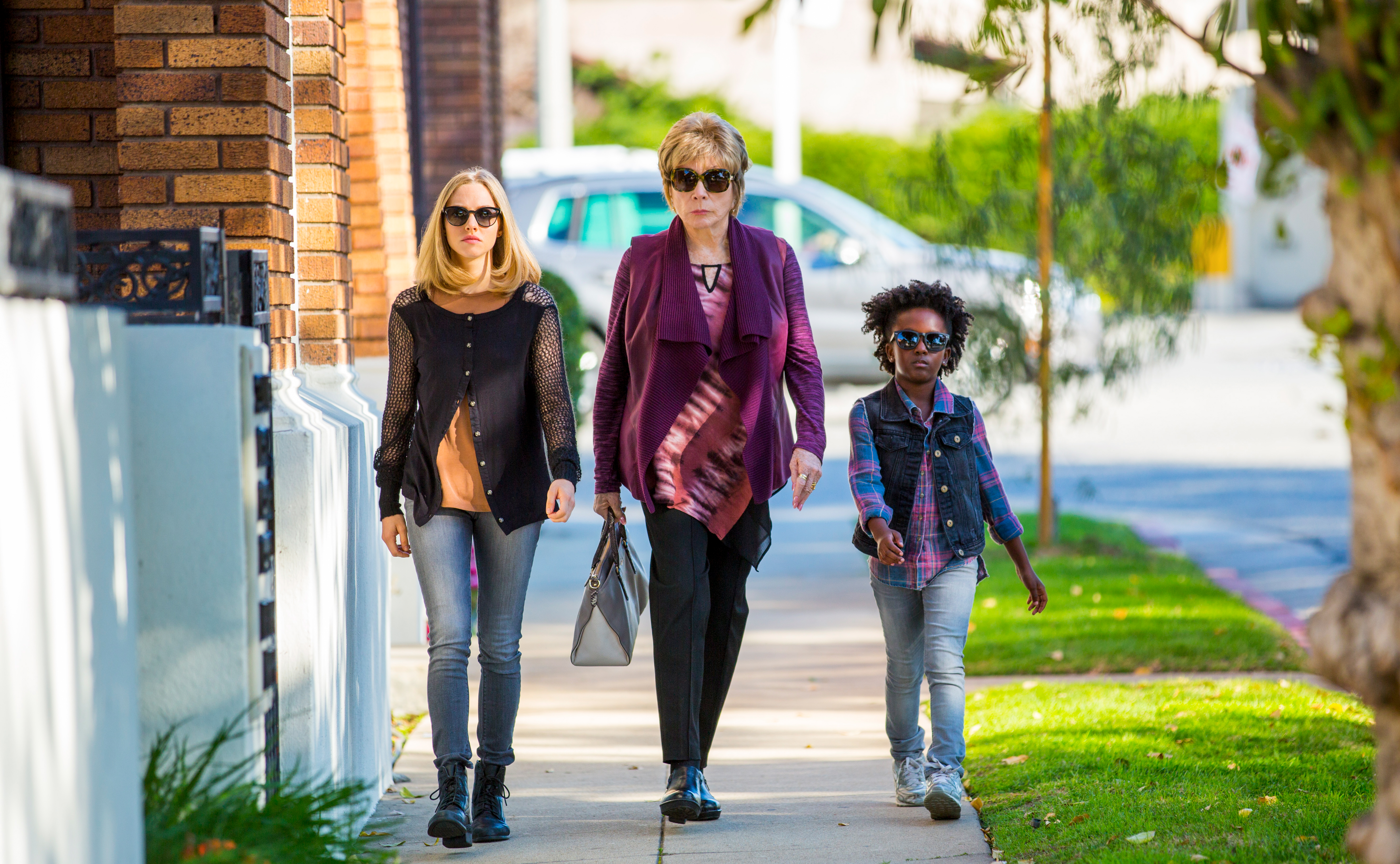
In THE LAST WORD, a retired businesswoman named Harriet (Academy Award winner Shirley MacLaine) confronts her mortality as she sculpts her own obituary. Harriet targets Anne (Amanda Seyfried), a reporter, to distill her life into its final success story. The pair take a metaphorical–and literal–journey with Brenda (newcomer Ann’Jewel Lee), a pre-teen who has as much to gain from the relationship as the other two. The movie also stars Thomas Sadowski, Anne Heche, Philip Baker Hall and Tom Everett Scott. Mark Pellington (ARLINGTON ROAD, THE MOTHMAN PROPHECIES, COLD CASE) directs.
I spoke with director Mark Pellington about symbolism and themes in THE LAST WORD. He sees the film as a study in mortality and what each of us leave behind at the end of our lives. Pellington says: “I want these characters to have suffered some degree of loss, yet I don’t want it to be through death. I want them to be left alone in that they’re searching to become a little more whole, a little more complete.”
Harriet, Ann and Brenda come together as incomplete sides of the same coin. Each is missing a specific person in their lives within the parent/child relationship, but lacks in other important ways, too. For example, Harriet appreciates the qualities about Brenda with which she herself identifies. However, these are the very characteristics she regrets in herself having let them rule her life. Brenda’s ability to say anything and stick up for herself are laudable, though without a measure of regulation they will overtake her life the same way they have Harriet’s.
The women’s evolution is emphasized during a baptismal scene of cleansing as they go for a late-night swim. Traditional film analysis looks at water from this perspective, and Pellington does as well. “By the end, for her to take off her clothes, to let it go, to get messy is a change she was ready to go through because she had achieved these goals of seeing herself differently,” he explains.
The film shows that evolution is possible regardless of age or temperament and nothing is a replacement for personal connection. Isolation comes in many forms. The first shot of Harriet is standing in a dormer window looking out at the grounds of her home. Ann sits in isolation, blaring loud music on her massive headphones, though she’s surrounded by coworkers. Even Brenda’s first interaction sets her apart as she battles a recreation center supervisor.
The complicated relationship among the trio becomes an unexpected friendship in this coming-of-age story. True to life, it is sometimes impossible to realize something is missing until you’re confronted by it.
For more about THE LAST WORD, including Shirley MacLaine’s thoughts on labeling women in Hollywood, take a look below:
—>Looking for the direct link to the video? Click here.