“Az Een Sotoon Be On Sotoon Faraj Hast”
“From one column to another, there is freedom.”
There is an ancient Persian parable that recounts how an innocent man was once accused of stealing. He was ordered by the king to be tied to a column and whipped until he admitted his crime or faced certain death. As the man was being beaten, he begged to be untied and retied to the adjacent column before his punishment resumed. The guards, thinking that he had gone insane, agreed to his plea and thus untied and retied him. By the time he was tied to the adjacent column, news spread that the true thief had been captured and thus this innocent man was promptly freed. For better or for worse, the story teaches us that in the absence of a viable solution to one’s predicament, delaying matters can often help one achieve his desired outcome.
My father and his family are Iranian Jewish refugees of the 1979 Islamic Revolution in Iran. Prior to the revolution, my grandfather was a successful fabric merchant in the bazaar, or public marketplace, in the southern city of Abadan near the Persian Gulf. He often spoke of a masterful negotiation skill, the art of the bazaari, when referring to fellow merchants. The master bazaari is shrewd and extremely calculated in his analysis of all negotiations; he knows when to apply psychology and above all else, he knows how to stall in a negotiation until a more favorable opportunity emerges.
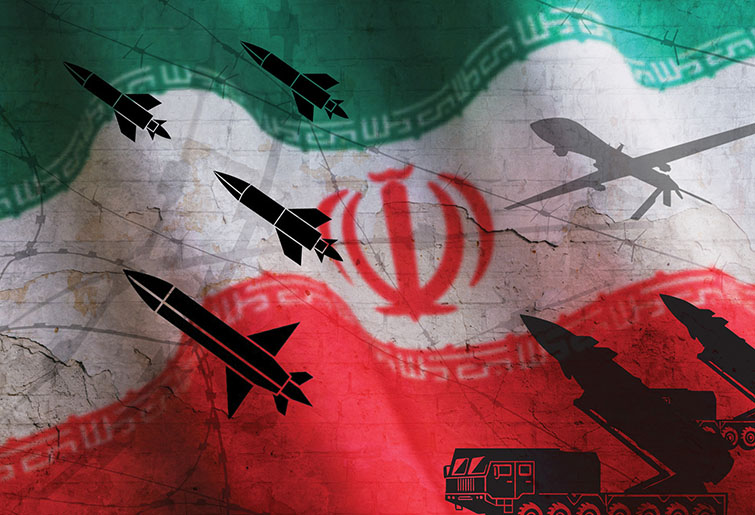
Today, we see a new “sotoon”(column) in the form of the US-Iran nuclear negotiations, especially in light of last Friday’s announcement of the four-month extension and $3 billion dollars in relief. Iran’s leaders seem to be negotiating with the West as though they were master merchants at the bazaar. In fact, the art of the Bazaari is now on full display and it is to America’s great detriment.
The following is a brief list of some of the havoc and strategic opportunities that have emerged and benefitted the Islamic Republic in the absence of consistent and stringent Western pressure.
1) The Syrian civil war still rages and Hezbollah (“The Party of God”) has emerged as an even more capable and lethal international terrorist force. While Hezbollah was created by Iran in Lebanon to conduct proxy wars against Israel, Hezbollah has really come into its own. Not only does it espouse terror against Israel but Hezbollah also slaughters innocents en masse in Syria. With no end in sight for Bashar Al-Assad, Hezbollah has gained invaluable fighting experience for its military capabilities, which may give the terror organization a major boost in future armed conflicts with Israel.
2) The rise of the Sunni Islamic State, long a dream of Sunni Islamists, is currently being waged most notably in Syria and Iraq. We all know too well the blood, sacrifice and money that the U.S. has spent on the Iraq war. To watch Iraq descend into such utter chaos is no doubt painful for the U.S., and Iran is more than happy to watch Iraq burst into sectarian flames.
3) Ukraine seems to slowly be unraveling with the encouragement of the Russians and their neo-imperial mindset. With that in mind, President Putin well understands that the United States needs Russia to play its part in enforcing the sanctions and cooperation needed in a united international front against Iranian nuclear proliferation. But we can also make the assumption of what Putin will do, or in this case, NOT do, in relation to tougher Iran sanctions, with regards to the U.S. taking a more aggressive stance against Russian encroachment in support of a united Ukraine.
4) Last but not least, there is Hamas. There is nothing better for the Islamic Republic of Iran than to see its proxy Hamas wage war against the Jewish state. The Iranians understand that there is NO single conflict in the world that can capture and hold the world’s attention more effectively than the Israeli-Palestinian conflict, which in turn has distracted even Iran’s harshest critics from derailing the country’s nuclear pursuits.
The bazaari (i.e. Iran) have been patient and they have masterfully delayed an unfavorable outcome at every turn for nearly a decade. Their prayers have been answered and their “sotoon” has indeed paid off, lest we forget that the Ayatollahs are rational and strategic planners and that they understand the roundtable very well.
The Persian-Jewish community has been in the U.S. for over 30 years now. We are proud Americans who sincerely cherish the values of democracy, the entrepreneurial American spirit and individual rights. If you need us, America, the Persian-Jewish community is here to help. We escaped the darkness and repression of post-Revolutionary Iran. And we know what you’re up against.
Arash Elon Ghadooshahy has a B.A. in History from UCLA, where he focused on the modern Middle East. He is currently a J.D. Candidate at Loyola Law School, Loyola Marymount University Los Angeles. He serves on the Executive Committee of 30 YEARS AFTER and was also a member of the inaugural class of The Maher Fellowship, the first-of-its-kind young leadership training program exclusively for young Iranian-Amerian Jews between the ages of 21-35.