

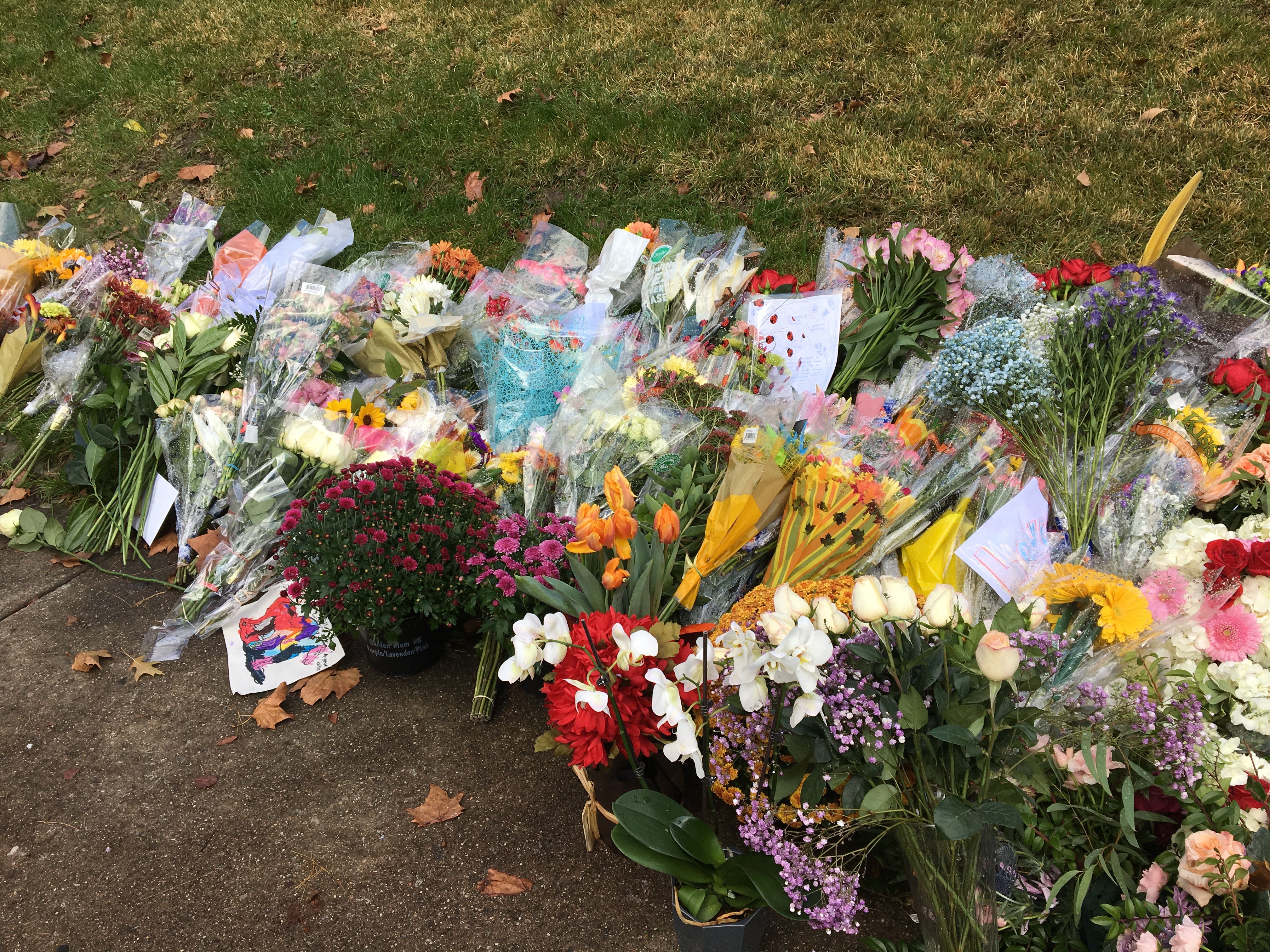
I got the chills when I heard about the shooting at the Tree of Life synagogue in Pittsburgh that left 11 Shabbat worshippers dead and many others injured, including four police officers.
For the rabid Jew-hater who entered the synagogue, it must have been a devil’s paradise: Look at all those Jews in one place!
I have had that dark thought for years, and have never shared it with anyone. The thought usually comes when I’m in synagogue. I look at all the Jews around me and think: My God, it’d be so easy for any Jew-hater with a gun to walk in and start mowing us down.
And then I think: There are thousands of similar “Jew houses” throughout our country that are such easy prey. In virtually any town in America, a Jew-hater with a gun and a GPS has the pick of the Jewish litter.
So, when I heard about the Pittsburgh massacre, a tiny voice inside me asked: What took the bastards so long?
We Jews in America are eons away from the days of pogroms and inquisitions when many of our ancestors had to take their Judaism underground. We live in a wide open country, with celebrity rabbis, beautiful synagogues, and, above all, freedom—the freedom to express ourselves and worship as we please.
But a free society doesn’t mean a society free of evil.
Evil can’t be legislated away. We can punish it, we can try to minimize it, but we can’t eradicate it. The same freedom that allows the greatness of a Martin Luther King allows the darkness of the Pittsburgh killer. We’re free to love, but we’re also free to hate. We’re free to choose happiness, but we’re also free to choose misery.
To be able to enter a house of prayer and murder innocent souls must be the height of misery and depravity. I think of all the Tree of Life families whose lives have been suddenly shattered, whose futures have been irreparably darkened.
We go to synagogue to connect with community, schmooze with friends, hear words of wisdom, pray with God. We don’t go to risk our lives; we go to elevate them.
“Our priority in this issue of the Journal was to honor the victims of the worst anti-Semitic attack in U.S. history.”
Tragedies like the one at the Tree of Life can shake our confidence and weaken our resolve. To gird ourselves, we need “explanations” and “calls to action.” They make us feel useful, resilient.
But there’s also the imperative to simply grieve—to reflect on the victims and comfort their families. Yes, there’s been too much politicization of the Pittsburgh tragedy, but there’s also been an enormous outpouring of grief and condolence calls from around the world.
Our priority in this issue of the Journal was to honor the victims of the worst anti-Semitic attack in U.S. history. Our Senior Writer Kelly Hartog flew to Pittsburgh to interview locals and report on how the community is coping. We have a spread devoted to the 11 victims. Our columnists all touch on Pittsburgh. We have reactions from the local community and, among other things, a poem and a prayer.
With all of the grieving, we must still try to look ahead. So, on our back page, we interview an expert who discusses the security challenge and what can de done to make our Jewish public places safer.
Maybe that’s how the Jews have survived for so long — we balance the stillness of grieving and prayer with the imperative of moving forward.
When I researched the Tree of Life synagogue on the internet, I came across a recent sermon by its spiritual leader, Rabbi Jeffrey Myers, that was titled, “Now What?”
“We have passed through the non-stop Fall holiday phase, hopefully feeling grateful for the life that God has blessed us with,” the rabbi said. “We have now entered a nearly two-month period without any holiday celebrations until Chanukah. Now what? What can fill the gap?”
“We may see an extra security guard or two at synagogue this Shabbat, but that’s only to remind us that the best things in life are worth protecting.”
He then makes several suggestions. Here are the first two:
1. “Commit to attending weekday morning minyan once per week. By doing so, you will ensure a minyan for those of us reciting Kaddish, be it as mourners or for a yahrtzeit. You will also have the opportunity to enjoy breakfast with a lovely community of fellow congregants.
2. “Attend either Friday evening services or Shabbat morning services once per month. Friday evening services are one hour, filled with singing and joy. Shabbat morning services are less than 2 ½ hours, complete with Torah discussion and a delicious Kiddush lunch.”
I can’t think of a better way to honor the victims of the Tree of Life than to follow their rabbi’s suggestions. We may see an extra security guard or two at synagogue this Shabbat, but that’s only to remind us that the best things in life are worth protecting.
































