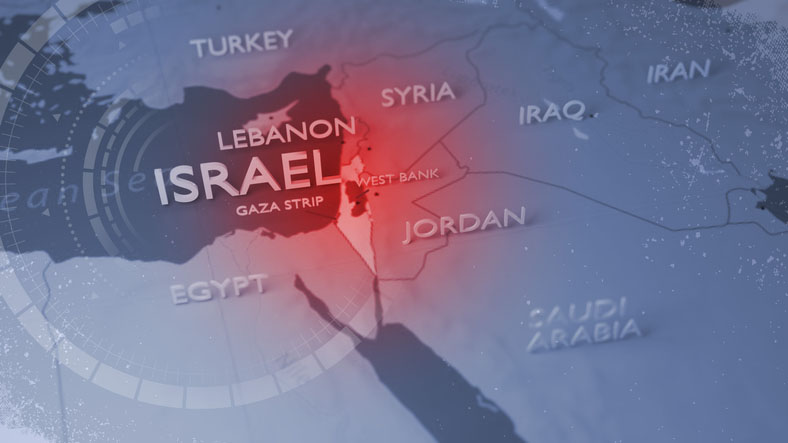
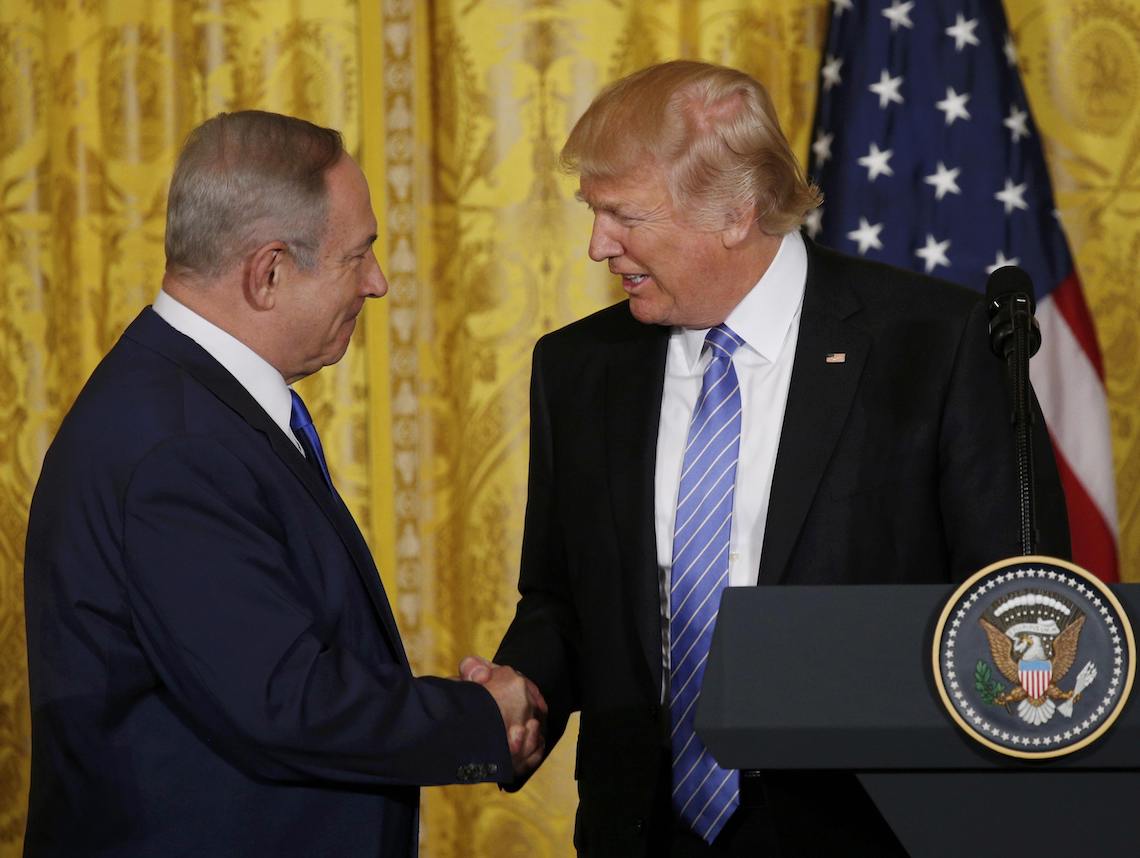
At his press conference with Prime Minister Benjamin Netanyahu, President Donald Trump uttered words that will live in Mideast infamy— “I’m looking at two-state and one-state. I like the one that both parties like.”
On the surface, those words appear innocuous—let the parties decide their future. But in truth, they represent a diplomatic earthquake. No Western leader has ever had the guts to challenge the conventional wisdom that the two-state solution is the only desirable outcome to the Israeli-Palestinian conflict. Ever since the signing of the Oslo Accords in 1993, this two-state idea, which really means the establishment of a Palestinian state, has been the shiny object worshipped by diplomats around the world and repeated like a mindless mantra at one failed peace conference after another.
By disrespecting this shiny object, Trump introduced the idea that the object may, in fact, not be worth all the worship. His ambassador to the United Nations, Nikki Haley, tried to soften Trump’s stance when she expressed U.S. support for the two-state solution, but she pointedly added, “we are thinking out of the box as well.”
Thinking out of the box is what Trump did when he refused to bow down to the two-state idol. What may have looked so beautiful twenty years ago—two states for two peoples living next to each other in perfect harmony—has become, in reality, a potential disaster for all sides. For one thing, the high likelihood that Hamas and ISIS would swoop in and turn the West Bank into another terror state is disastrous not just for Israel, but for the Palestinians and the United States. This is the kind of mud on the idol of a Palestinian state we rarely hear about.
One reason we rarely hear about it is that the notion of a Palestinian state is still as shiny as ever. On the Israeli side, it would mean separating from two million Palestinians and securing its future as a Jewish democracy. And on the Palestinian side, it would mean securing their national aspirations. Those ideals are still in play, but only in the abstract. In reality, even moderate commentators like Aaron David Miller have called the two-state solution “dead.”
It doesn’t matter who you blame for this death. The fact is, the more the world has pursued the two-state solution, the more distant it has become. No conflict in modern history has generated more frequent miles, fancy hotel rooms and media coverage than the Israeli-Palestinian conflict. Former Secretary of State John Kerry made over twenty trips to the region to try to jumpstart talks. He could barely manage to arrange “talks about talks.”
A fresh observer like Donald Trump, with his business background, probably looked at this dead corpse and figured he had little to lose by shaking things up. Since the obsession with the two-state solution seems to have killed the two-state solution itself, maybe he figured: Let’s see what happens if we lose that obsession. A good dealmaker, after all, never shows desperation and keeps his options open.
Ironically, putting an alternative on the table may well improve the odds of a two-state solution, if the parties end up seeing that the alternative is even worse. We’ve never had a serious debate about this, partly because, up until now, that alternative has come from the fringes. Trump has now put it front and center. The New York Times published a remarkable op-ed the other day by Jewish settler leader Yishai Fleisher, who calmly laid out five alternatives to the two-state solution. That sounds to me like a new chapter in a long debate.
A wild card that is sure to influence this debate is Trump’s desire to involve in the peace process Arab states that have grown closer to Israel. Maybe this is Trump’s way of shaking up the Palestinians and telling them they’re no longer the only game in town.
Let’s face it. A huge reason for the death of the two-state solution has been the chronic refusal of the Palestinian leadership to make any concessions or even to make any counter-offers to Israeli proposals– which is consistent with their continuous promotion of Jew-hatred and glorifying of terrorism. They’ve never paid a price for this. If anything, the world has rewarded them. My guess is, they’re now looking at Trump and saying, The party’s over. This guy’s not going to coddle us. He’s going to demand some real concessions, or else.
Will this Trumpian disruption lead to anything good? Will it empower the moderates on all sides and create a perfect storm of circumstances that can bring the two-state corpse back to life?
Who knows. The only thing we know for sure is that when you’re looking at certain death, any alternative is welcome.
David Suissa is president of TRIBE Media Corp./Jewish Journal and can be reached at davids@jewishjournal.com.