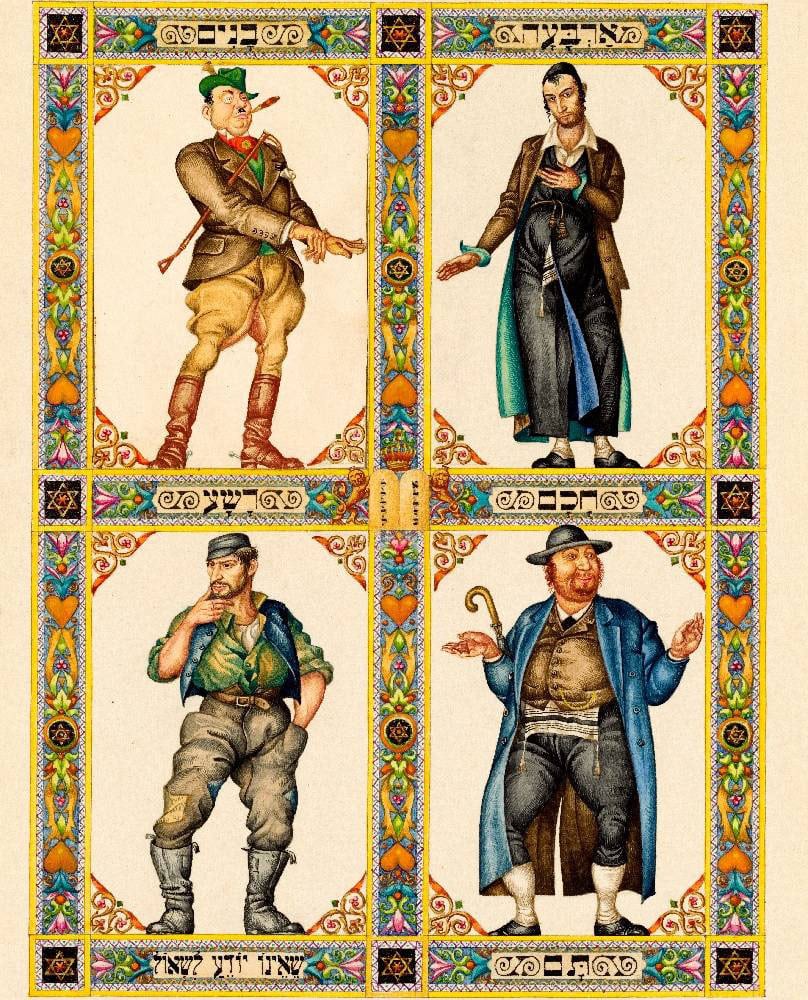
In theory we should engage
with four sons, whom I list below,
including, at the top, the sage,
at bottom he who doesn’t know
how questions should be asked, and in
the middle the outsider who
considers rituals a sin,
and he who’s simple, but heart true.
We teach Passover laws to those
who’re wise, and welcome to our table
the wicked sons who are our foes,
but do not make our lives unstable.
Though sons who’re simple fail in schools
to learn the facts of Jewish life,
we must not let them think they’re fools,
but tell them of God’s strength. Our wife
is suited best to teach our son
who does not yet know how to ask,
while we provide for him some fun,
with afikoman search his task.
The spice of life, variety,
is what on Passover we choose
to celebrate; society
does not allow us to refuse
a welcome to a left-out one,
so even those who have the label
of wicked we refuse to shun,
with wine and matzoh on our table,
and having poured non-PC wrath
on fatal foes, pour for Elijah
a glass on wine-stained tablecloth
for this great guest noblesse obliger
to drink, performing what we’re told
by Malachi he’ll do, join Jews
to one another, young and old,
divided no more by vile views.
Elijah: antidote of awesome
destruction on a doom-date day
for Jews, when for the seder’s foursome
he’ll Malachi’s last words unsay.
In the conclusion of the book of Malachi, Malachi 3:23-24 predicts that Elijah will come before an ‘awesome, fearful day’. He follows this with a comment that Elijah will nevertheless, just in time, unite and reconcile the generations, whose inter-enmity has presumably helped to bring about the dire situation, but he concludes his prophesy by repeating his warning, this time, however, tempered happily by his promise of reconciliation. This construct is imitated at the seder, when we too end on a happy note.
Malachi 3:23-24 states:
הִנֵּ֤ה אָנֹכִי֙ שֹׁלֵ֣חַ לָכֶ֔ם אֵ֖ת אֵלִיָּ֣ה הַנָּבִ֑יא לִפְנֵ֗י בּ֚וֹא י֣וֹם יְהֹוָ֔ה הַגָּד֖וֹל וְהַנּוֹרָֽא׃
Lo, I will send the prophet Elijah to you before the coming of the awesome, fearful day of GOD.
וְהֵשִׁ֤יב לֵב־אָבוֹת֙ עַל־בָּנִ֔ים וְלֵ֥ב בָּנִ֖ים עַל־אֲבוֹתָ֑ם פֶּן־אָב֕וֹא וְהִכֵּיתִ֥י אֶת־הָאָ֖רֶץ חֵֽרֶם׃
He shall reconcile parents with children and children with their parents, lest, when I come, I strike the whole land with utter destruction.
הִנֵּ֤ה אָנֹכִי֙ שֹׁלֵ֣חַ לָכֶ֔ם אֵ֖ת אֵלִיָּ֣ה הַנָּבִ֑יא לִפְנֵ֗י בּ֚וֹא י֣וֹם יְהֹוָ֔ה הַגָּד֖וֹל וְהַנּוֹרָֽא׃
Lo, I will send the prophet Elijah to you before the coming of the awesome, fearful day of GOD.
Gershon Hepner is a poet who has written over 25,000 poems on subjects ranging from music to literature, politics to Torah. He grew up in England and moved to Los Angeles in 1976. Using his varied interests and experiences, he has authored dozens of papers in medical and academic journals, and authored “Legal Friction: Law, Narrative, and Identity Politics in Biblical Israel.” He can be reached at gershonhepner@gmail.com.