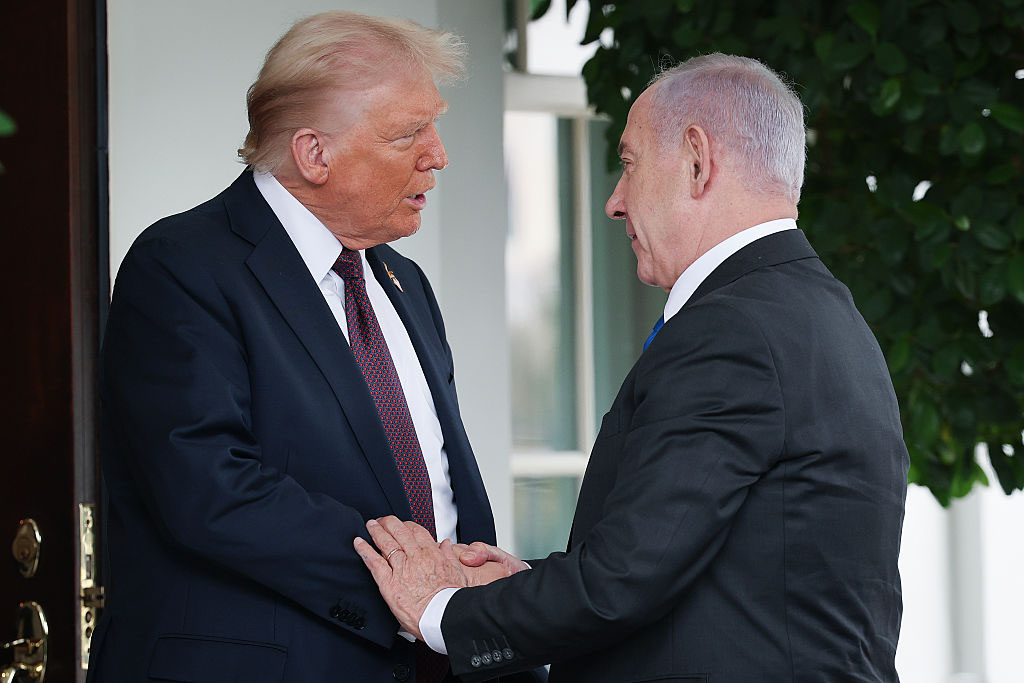
Prime Minister Benjamin Netanyahu said on Tuesday he hoped Arab states could press the Palestinians to return to talks to reach a two-state solution to the Israeli-Palestinian conflict.
Netanyahu, speaking to a strategic conference near Tel Aviv, blamed the Palestinians for the 14-month impasse in negotiations but said he felt there was a chance to renew them if the Palestinians could be persuaded.
“There might be an opening because some of the Arab states silently agree with (my position) … (and) they might be in a position to influence the Palestinians to adopt a more conciliatory and positive approach,” he told the annual Herzliya Conference.
U.S.-brokered peace talks broke off in April 2014, with disputes raging over Israeli settlement-building and Palestinian President Mahmoud Abbas's unity deal with Hamas Islamists, who do not recognize Israel's right to exist.
Like Israel, Gulf Arab states are worried about Iran's nuclear program, which they perceive as a threat to their security. Iran maintains that its nuclear goals are purely peaceful.
In an hour-long speech covering issues including Iran's nuclear ambitions, Netanyahu said Palestinian efforts to force a peace deal on Israel through proposals by world powers would be counter-productive.
France recently handed a working document to Arab League countries in preparation for a U.N. Security Council resolution that would set the exact parameters of new peace talks and a timeframe of 18 to 24 months to complete them.
“The idea of imposing peace from the outside doesn't work,” Netanyahu said.
Netanyahu repeated his commitment to a two-state solution, drawing applause.
Earlier, Defense Minister Moshe Yaalon said he did not believe a stable peace agreement could be reached with the Palestinians in his lifetime — one of the bleakest assessments from a top-level cabinet member since the talks collapsed.
Yaalon, 64, one of Netanyahu's closest allies, said: “I don't see a stable agreement during my lifetime, and I intend to live a bit longer.”