fbpx

November 2, 2026

‘Ali G: Who Is I?’: Two Decades Later, Sacha Baron Cohen Returns as Ali G

Sacha Baron Cohen is one of the comic geniuses of our time.

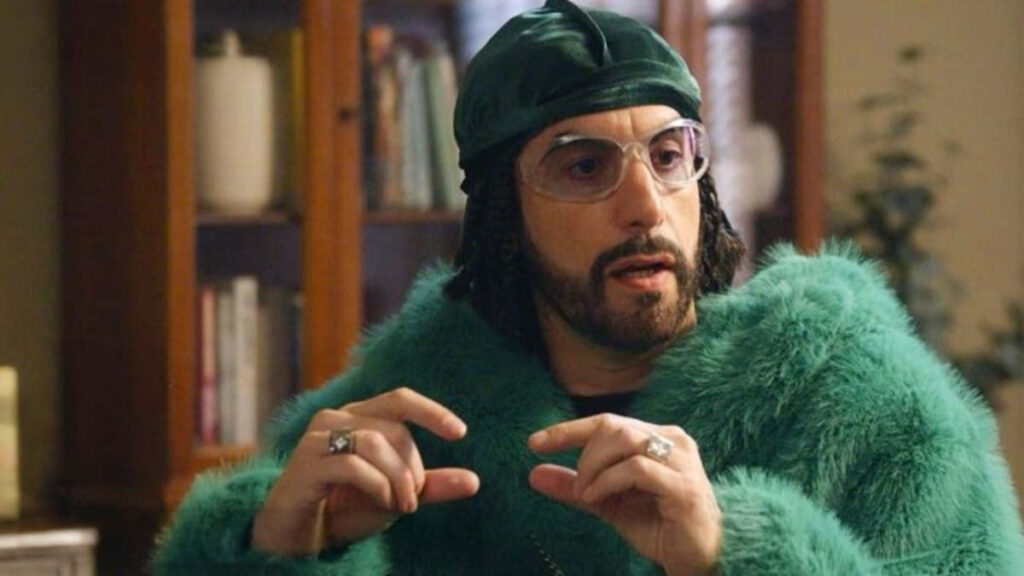
The British born comedian became known in America with HBO’s “Da Ali G Show.” Wearing a doo-rag, sunglasses, and pretending to be totally stupid, Ali G would he ask Donald Trump what he thought of an ice-cream glove, made Andy Rooney of “60 Minutes” end an interview in anger, and asked a rabbi and a priest why he saw nuns that were strippers. He’d mix in a legit question here and there. Cohen would get international fame, taking one of the characters from the show, a mustachioed man from Kazakhstan who hates Jews, claims his sister is a prostitute and says women and monkeys have similar driving skills. With a reported budget of $18 million, it had a worldwide gross of nearly $263 million, despite a controversial on-screen fight with his assistant Azamat, played by Ken Davitian. Disturbingly, he was able to get a crowd in an Arizona bar to sing along on a song with a chorus of “Throw the Jews down the well so my country can be free,”. He had anothersuccess with the film “Bruno,” a flamboyantly gay fashion critic who convinced Paula Abdul to sit on a man and use him as a chair.

How Crazy Can You Get?

Cohen showed himself to have serious acting chops, playing Mossad agent Eli Cohen in the Netflix series “The Spy,” but the first film Cohen made based on his characters, the scripted comedy “Ali G Indahouse,” was a critical and commercial failure. He triumphally returns to Ali G in his new Showtime movie “Ali G: Who Iz I?” But once you’ve done a naked fight,(“Borat”) and staged a gay kiss in a cage in a homophobic town (“Bruno”), what can you do you top it?

On the basis of this movie, his answer is to repeat what worked before. Ali G still wears a durag, big sunglassesand speaks in the same South London Rasta rapper patois. He arrives in America convinced that HBO has picked up season three of “Da Ali G Show,” only to find out – after splashing for a $1,200 lunch – that the offer is from 20 years ago, and no longer valid. His girlfriend, Julie, who is heavily pregnant (when they visit an OB/GYN he insists the doctor tell her it’s gas, or “a big poo”), is along for the ride.

The unborn child is the spark for the movie’s second half. Nira Cain-N’Degeocello, a liberal white professor from Berkeley (also played by Baron Cohen), accuses Ali G of cultural appropriation, notwithstanding his own clumsy attempts to look black. He manages to get Ali G cancelled, but Ali is offered a chance to host a libertarian-backed “Free Speech Show,” where audience members – including disgraced former U.S. House member George Santos – vie to see who can stuff the most dolls – representing immigrants, liberals and intellectuals – into showers and gas them with Zyklon-B and are led in Elon Musk styled Nazi salutes.

At the same time, Cain-N’Degeocello hires Erran Moran (also Baron Cohen), a fitness instructor who may (or may not) be a Mossad agent, to train three locals for a mission to kidnap Julie’s newborn baby and ferry it to Mexico. When Morad trains the men, he uses the Hebrew words for men’s sexual organs and equips them with a very bizarre weapon. It’s hilarious to those who know Hebrew and still funny to those who don’t.  The film starts out a bit slow but quickly gains steam. It is a wonder that during some of the gags, Cohen was not arrested by police.

Did the new comedy landscape limit what Cohen could do in this movie?

In 2026, there is hypersensitivity and pressure to be politically correct in a tradeoff, there is a preference to make a film that has fewer laughs, if it will get less criticism. The result is predictable and boring comedies. 2023’s ‘No Hard Feelings” with Jennifer Lawrence, and Jeremy Garelick’s excellent “Rolling Loud” with Owen Wilson, are successful efforts to bring back what is now considering somewhat risqué comedy. There is no way to know if there are things that Cohen wanted to do in this movie but couldn’t pull off. But what he did was not only very funny, but very daring. Remember, the actual country of Kazakhstan was angry at Cohen and its politicians felt obligated to release statements that the film/character were not real, perhaps because they are stupid, though it’s a testament to Cohen’s skill.

A Victim of His Own Greatness?

There will be those who see this film and say it’s not as funny as “Borat” or “Bruno.” That would be true, but one cannot expect a generational talent to repeat the same level of brilliance. One the cat’s out of the bag; you can’t expect the same cat to show up. There were critics who lamented that Michael Jackson’s “Dangerous” was not as good as “Thriller” and “Bad.”

Don’t Worry, Be Happy

Cohen has had an amazing career, and it’s a relief to see that he isn’t giving up and his love of comedy brought him to do another film. I’m sure there are some that want him to create new characters. But they should understand it’s one thing to be a character on “Saturday Night Live” for sketches. It’s quite another animal to have to be in the real world and convince people that you are real. As someone who fell in love with Cohen’s humor of Ali G when the show first aired on HBO in 2000, I won’t get tired of his humor. Anyone who loves comedy should go see the film. Anyone offended by microaggressions might not want to. Cohen is always clever and it’s hard to believe he convinced these morons to do insane things. It’s a credit to his determination and originality. I will be looking forward to his next film or TV show.

Cohen has had an amazing career, and it’s a relief to see that he isn’t giving up and his love of comedy brought him to do another film.

‘Ali G: Who Is I?’: Two Decades Later, Sacha Baron Cohen Returns as Ali G Read More »
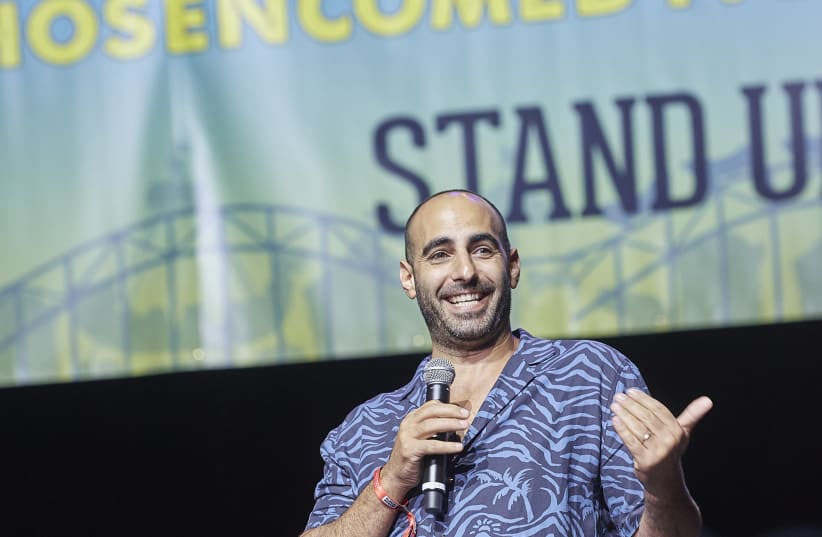
Israeli Comedian Yohay Sponder Shines at Historic NYC Theater

Could an Israeli comedian who wasn’t totally fluent English perform and be a hit in America?

This is a question Yohay Sponder pondered some years ago. Along with famed Israeli comedian Shahar Hason, they were both household names in Israel and Sponder’s “Funny Monday” shows were in English.

I was in the crowd of several thousand who watched Sponder five minute set at the Chosen Comedy Festival in Brooklyn in 2022. Modi (Rosenfeld) announced him only as Yohay and nobody knew who he was. He made some brash jokes, and it was clear his blunt style was needed. Several people in the audience I spoke to were not impressed. I was.

Dani Zoldan, owner of Stand UP NY, said the success couldn’t have happened to a better person.

“In four years, he’s had a great rise,” Zoldan told The Journal. “I never heard of him when I did the First Chosen Comedy Festival in Brooklyn, and I had to be convinced by a producer to put him on. It was kind of a favor. To see him now doing the Beacon Theater on multiple nights, it’s great to see, not only because of his talent, and how he is resonating with audiences, but because he is a real mensch.”

“To see him now doing (New York’s) Beacon Theater on multiple nights, it’s great to see, not only because of his talent, and how he is resonating with audiences, but because he is a real mensch.” – Dani Zoldan

Dan Singer, the cantor of the Stephen Wise Synagogue in Manhattan, was also impressed by Sponder.

“He has a magnetic, warm personality and is clearly someone everyone in the room would love to hang with,” Singer said.  “He speaks of positivity all the time, something we desperately need.”

When he headlined Stand Up NY, Sponder had a greater command of English and only a small bit of nerves. At the Beacon Theater, it was clear he had no nerves and a total command of the stage.

Sponder gave respect to Jerry Seinfeld, who continues his residency at the Beacon and told the crowd that he was in America on a tourist visa.

“Please, let’s keep it between us,” Sponder joked.

Sponder showed great confidence. Crowd work can feel like a highwire act with no net, but Sponder stopped to ask a man why he was walking out. The man, who said his name was David said he was going to the bathroom. He came back a few minutes later with M&M’s and he tried to give some to Sponder but only one came out of the packet.

Sponder realized how crazy Israelis are when they were upset that Iran threatened to wipe out the country in nine hours, but after the missile attack, it didn’t happen.

He has done shows in Israel when there were threats of Iranian attacks and only about 20 people came. His fear was there would be an attack and the media would report that only 20 people came to his show.

What is unique to Israel is they have “rescue flights” where people leave their margaritas by the pool and run from whatever country they are in to get to the war to defend the country.

He also joked that the exploding pager operation in Lebanon performed a bris on many Hezbollah operatives.

“They bought the pagers from us,” he said. “We made money that day … How did they not realize it was us when we told them ‘zero percent discount sir.’””

In a Q&A with audience members one patron asked Sponder what he thought of the terrorist attack on a flydubai flight.

“Don’t fly Dubai,” was his reply.

A person asked Sponder who would be his candidate to vote for in the Israeli election and Sponder would not say who he would vote for, but that it is important for people to vote.

He called French leader Emanuel Macron “the biggest useful idiot of all time” for his ineffective statements as France was burning with protests. It was unnecessary for Macron to say he did not participate in the war in against Iran, as this was already clear. He said France isn’t know to make war but to tell the other side it is surrendering.

“You’re named after the cookie, we’re going to call him for the dessert.”

He shot a special in 2025, “Self-Loving Jew,” in response to self-hating Jews. It was warmly received, but there were some threats.

Sponder’s rise in Jewish comedy and is not only a reflection of the hard work he put in to gain enough fluency in English to perform “Funny Monday” in English, but his understanding of the need for humor in tough times. He is a fearless comedian.

Sponder tells a story about a January 2025 show at the Boom Chicago comedy club that was cancelled; management told him there were threats and they would help him find a Jewish venue. He said that was discrimination.

New Yorker Nike Silberstein told The Journal that to her, Sponder is more than a comedian.

“He makes me feel stronger as a Jew,” she said. “His humor is great, but he also says serious things that would be useful in conversations, like his joke when a British person tells him Israelis are colonists and he explains how absurd a thing that is to say. He’s wonderful and I was an early fan who is not surprised at him getting all the love he deserves performing at big American venues.”

Sponder talked about having Polish and Moroccan lineage and is the grandson of Holocaust survivors. He also took a moment to speak seriously and said when Jews are forced out of a place, it is a sign of an imminent downfall of the society.

“Love is the most important part of the Jewish people,” he told the crowd.

He joked about his mother-in-law speaking in Russian, which he said is the worst language if you don’t understand it and requires you to twist your face to speak it.

Sponder’s gamble on himself as paid off and he continues his Genesis tour at Laugh Factory in Las Vegas on Oct. 28, before heading back to Isreal. He will perform with Elon Gold on December 28 in Jerusalem, for a “Homecoming “ tour that includes shows in Haifa and Tel Aviv.

And he’ll be performing at the Wiltern in Los Angeles on April 1.

In an interview well before his show, Sponder told The Journal: “We have always had enemies, and it should not come as surprise. We have to be strong and do the best we can and be positive. Being worried all the time doesn’t help. I try to make people laugh and I want people to take pride in being Jewish.”

Israeli Comedian Yohay Sponder Shines at Historic NYC Theater Read More »

JIVE Brings Jewish Music to Life in a Concert of Hope and Resilience

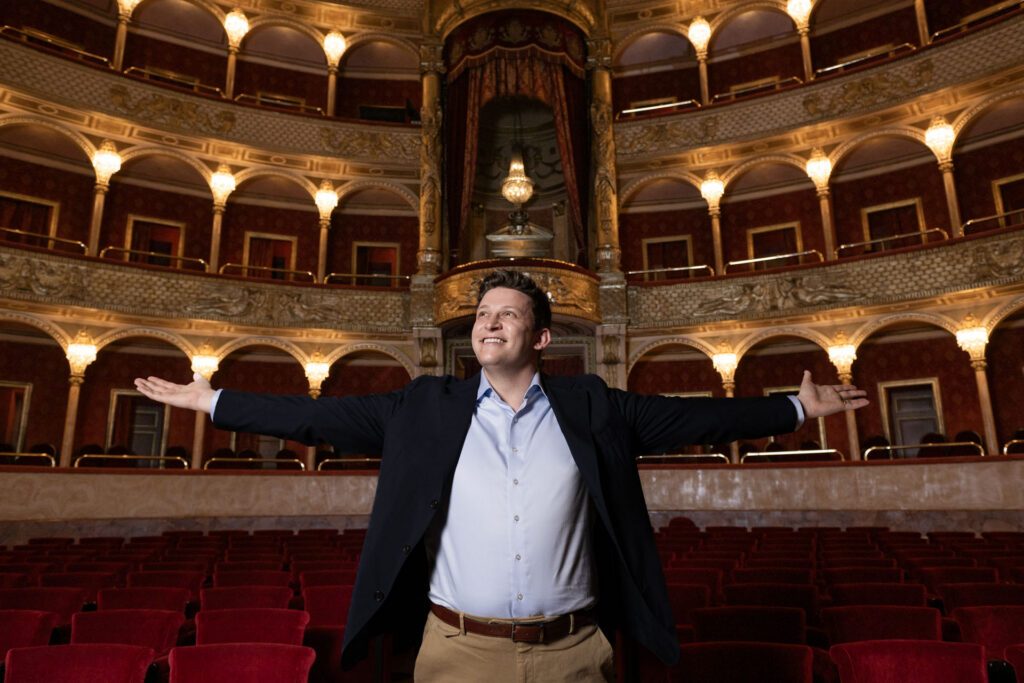
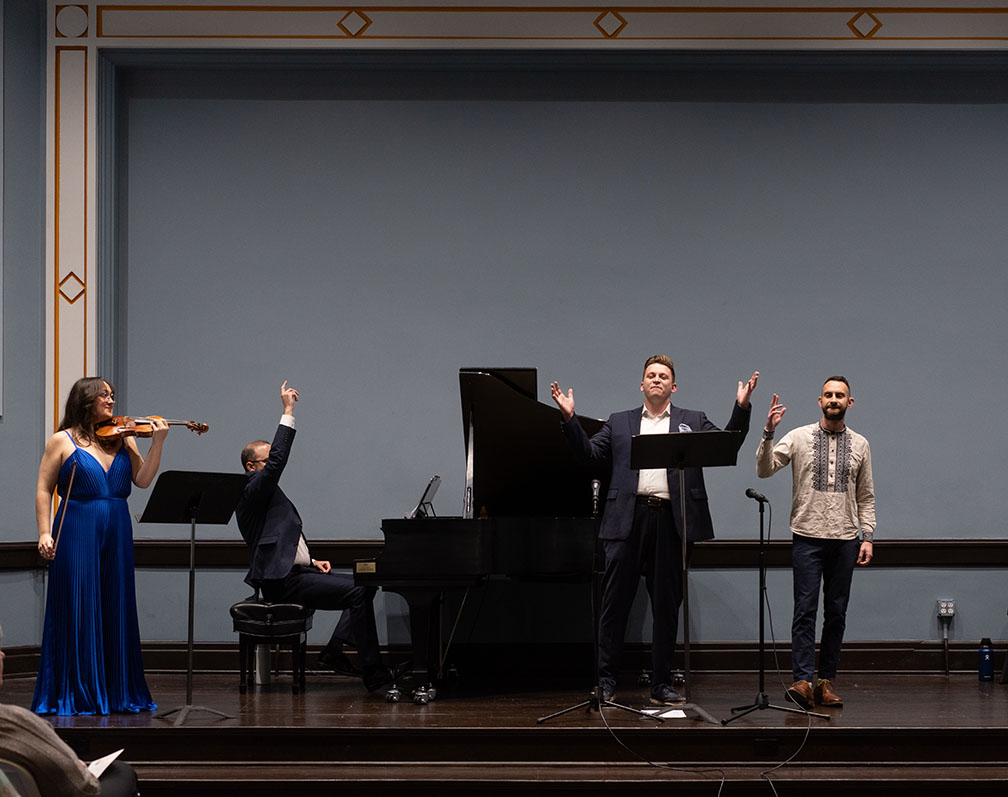
At the Goldrich Cultural Center at The Grove in Los Angeles, music will tell a story that spans generations, continents and some of the darkest chapters in Jewish history. On Nov. 4 and 5, countertenor Aryeh Nussbaum Cohen, baritone and cantorial soloist Simon Barrad, and pianist and music director Ronny Michael Greenberg will take the stage for “It’s Now or Never: Songs of Hope and Resilience,” a musical tribute to Holocaust survivor Renée Firestone. Firestone, 102, is a fashion designer and entrepreneur who for nearly half a century has dedicated herself to Holocaust education, becoming a longtime voice for remembrance. The program weaves together Yiddish songs, German lieder, jazz, musical theater and works by composers murdered during the Holocaust, alongside the world premiere of a new song cycle inspired by Firestone’s life.

But this ambitious production is also part of something larger. The three musicians are the driving force behind JIVE — Jewish Innovative Voices & Experiences — an initiative they founded to explore Jewish music beyond the familiar boundaries of synagogue music and traditional repertoire. Moving freely between classical opera, Yiddish and Ladino songs, Broadway, jazz and contemporary compositions, they are creating a musical space where different Jewish traditions and generations meet. Greenberg, who is also a creative producer, founded the nonprofit Taste of Talent, through which he develops musical projects that bring together music, culture and community. Their approach is both a celebration of Jewish musical heritage and an effort to give it new life, reaching audiences who might not otherwise encounter much of this repertoire.

The collaboration between Nussbaum Cohen and Barrad might never have happened had it not been for the pandemic. The two first met briefly at a dinner in Cincinnati in 2018, when both were performing there. A year later, when Barrad’s wife joined the Adler Fellowship program at San Francisco Opera, where Nussbaum Cohen was already a fellow, they got to know each other better.

Then came 2020. With their national and international performance contracts cancelled, the two found themselves in San Francisco with an unexpected amount of time on their hands. They began playing tennis once a week and spending time together, gradually discovering a friendship that would eventually turn into a musical partnership.

Their first opportunity to perform together came that November, at an outdoor venue. Barrad arranged a setting of Gerald Cohen’s well-known Psalm 23, familiar to many synagogue congregations, as a duet for their two voices.

“I’ve been writing music for Aryeh and me to sing since 2020,” Barrad said. “The first time we sang together was kind of magical, and we knew that we had to do more.”

The success of that first arrangement was no coincidence. Barrad was struck by the unusual musical possibilities of pairing his baritone with Nussbaum Cohen’s countertenor. “It’s rooted both in Aryeh’s extraordinary musicality and ears, listening for his collaborators, but also just in the tone of a really good countertenor that can blend so well that you almost can’t tell that two voices are singing. We become one voice.”

Nussbaum Cohen explained that their different vocal ranges allow them to play with harmonies in ways that create a distinctive sound.

Photo by Tina Gutierrez

 “Simon comes higher than a traditional baritone, and I come lower than a traditional countertenor,” he said. “There will be times where Simon and I sing incredible dissonances, these kinds of notes that are close together, and then resolve into singing in unison, in a way that you can’t tell that there are two of us. We just kind of become one, and it creates this beautiful, elevated sound.”

The arrangement of Psalm 23 remains a staple of their performances. “We perform it in basically every program we do,” Nussbaum Cohen said. “It’s just magical, the arrangement that Simon wrote and the way he crafted it for our voices to go together.” Looking back at how it all began, he added, “It really was bashert.”

A week before the interview, Nussbaum Cohen had returned from Beijing, where he performed Handel’s “Julius Caesar”in the Chinese premiere of the opera. Before that, he had appeared in a contemporary opera adaptation of “King Lear” in Berlin, with another production, Gluck’s “Orfeo ed Euridice,” awaiting him in Amsterdam. His career takes him to some of the world’s leading opera houses and concert halls, but there is one kind of performance that holds a particularly personal significance for him.

“I’m a grandson of survivors, and I got my start singing in synagogue as a cantor,” he said. “The thing that fulfills my musical ‘neshama’ the most is singing music like this and bringing life to a program and a story like this. It’s really the most meaningful thing of anything that I do.”

“I’m a grandson of survivors, and I got my start singing in synagogue as a cantor. … The thing that fulfills my musical ‘neshama’ the most is singing music like this and bringing life to a program and a story like this. It’s really the most meaningful thing of anything that I do.” – Aryeh Nussbaum Cohen

That connection to his Jewish heritage has accompanied him throughout his international career. Although his opera schedule often means spending the High Holy Days wherever his work takes him, he makes a point of including Jewish music in his recitals. Last year, for example, he toured eight American cities, including concerts at New York’s Carnegie Hall and Houston’s Menil Collection. Those performances gave him an opportunity to choose his own repertoire, and he made sure every program included Jewish music.

“I’m not necessarily able to be on the bimah anymore, but I bring some of that with me wherever I go,” he said. “I always bring some of that to the traditional classical world that I’m performing in.”

His appearances in Germany have carried an additional dimension. With his mother’s family originally from Germany and his father’s from Eastern Europe, Nussbaum Cohen is acutely aware of the history behind his presence on German stages. He has performed in Berlin in nearly every season of his career, and said that rather than feeling conflicted about returning to a country responsible for the murder of so many of his relatives, he sees it as an opportunity to reclaim a place that should never have been taken away.

When he first went to perform there, his sister questioned whether he felt uncomfortable singing in a country that had been so horrific to their family. His response was unequivocal.

“For me, it’s the opposite. It’s like the ultimate middle finger back at what was done to us,” he said. “Here I am with the most Jewish name you could have, and I am being hired to be Julius Caesar or to play these big heroic roles. It doesn’t matter that I’m Jewish. I’m the best person to do the job, and I’ll be given the applause like anyone else would. For me, it’s so gratifying to reclaim what should have never been taken from us and our place in that society.”

After his grandfather died, Nussbaum Cohen reclaimed his German citizenship, partly to make working in the country easier. “It’s the least they can do, to give me back the passport that was taken from my grandfather and his parents and everyone else.”

His most recent visit to Berlin, however, was different. For the first time, he brought his 18-month-old son with him.

“It was really emotional in a way that I hadn’t expected,” he said. “Seeing my beautiful little Jewish boy bringing smiles to people around the streets and just sharing his spirit, his soul, in this place was very emotional and very gratifying.”

“It’s Now or Never: Songs of Hope and Resilience,” will be performed Nov. 4 and 5 at 7:30 p.m. at the Goldrich Cultural Center, home of Holocaust Museum LA, at The Grove (100 The Grove Drive, Los Angeles). Tickets ($54 adults, $45 seniors and $27 museum members) are available through the museum’s website.

JIVE Brings Jewish Music to Life in a Concert of Hope and Resilience Read More »

An Abdul El-Sayed Victory Would Be a Defeat for Democrats

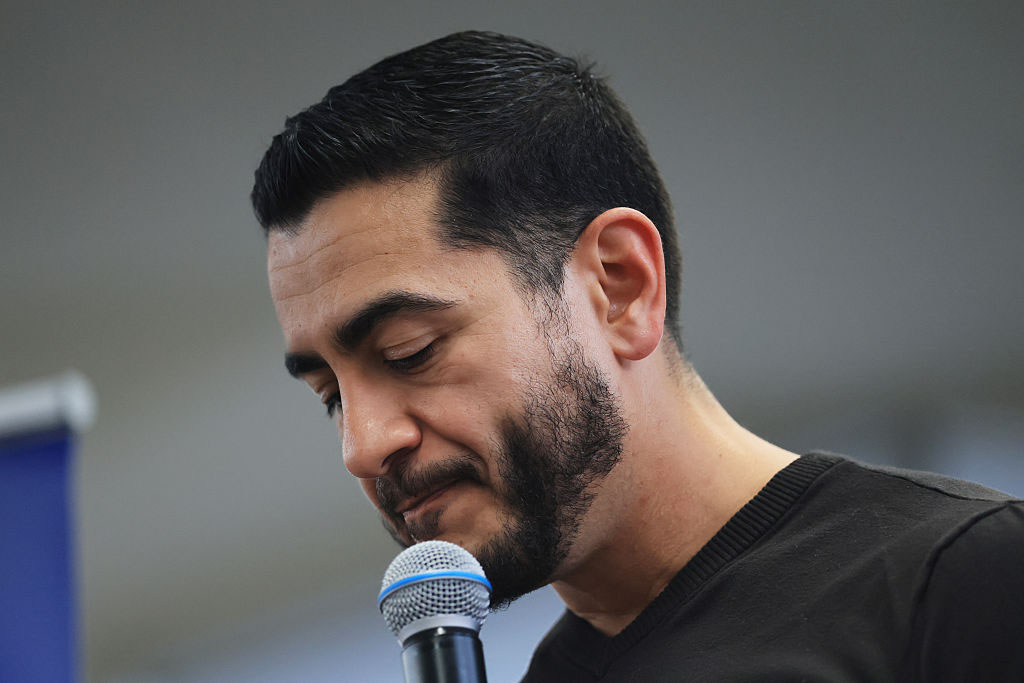
I have spent my adult life working to elect Democrats. I began as an intern in the Clinton White House, held senior-level campaign roles for Sen. Chuck Schumer, Gov. Andrew Cuomo and Gov. Wes Moore, President Biden’s super PAC, and served as a Biden delegate to the Democratic National Convention. The Democratic Party has been my political home. That is precisely why I believe it is so important to speak out against Abdul El-Sayed’s candidacy for the U.S. Senate. With a child at the University of Michigan, this election is personal. But its consequences extend far beyond Michigan.

An El-Sayed victory would send a dangerous message to Democrats across the country that inflammatory rhetoric, tolerance of antisemitism and alliances with extremists are not political liabilities but a viable path to national office. That lesson could shape the party for years.

Inflammatory accusations against Israel are not merely a feature of El-Sayed’s political identity. They ARE his political identity. In an April CNN interview, asked whether Israel’s government was as evil as Hamas, a U.S.-designated terrorist organization, he answered: “Yes.” When El-Sayed later declined to distinguish Israel from Iran as threats to America, fellow Democrat Pete Buttigieg clarified the distinction: “Iran is our enemy. Israel is not. They’re an ally, so that’s pretty clear to me.”

He has spoken of American tax dollars “killing other people’s children in Israel”. His sweeping accusations of genocide and apartheid against Israel are patently false, and his rhetoric about the killing of children to be a modern-day blood libel. Such rhetoric inflames antisemitism, normalizes hostility toward Jews and puts Jewish communities at risk.

His association with Hasan Piker is deeply disturbing. Piker campaigned with El-Sayed during the Democratic primary. At Cornell University, Piker joined a crowd chanting, “From the river to the sea, Palestine will be free.”

Just days before the election, Piker compared pro-Israel voters in West Bloomfield, a heavily Jewish Detroit suburb, to members of the Ku Klux Klan, accusing them of “Jewish supremacy.” In that community, Temple Israel was targeted in a Hezbollah-inspired terrorist attack earlier this year, with preschool children inside. El-Sayed condemned the attack but later used the phrase “hurt people hurt people,” for which he subsequently apologized.

Democratic Sen. Elissa Slotkin, who endorsed El-Sayed, condemned Piker’s remarks as antisemitic, divisive and deeply offensive.

The concern extends beyond Hasan Piker. On Thursday, El-Sayed appeared at a campaign event alongside Mayor Marcus Muhammad, whom the Washington Free Beacon identifies as a Nation of Islam student minister and supporter of Louis Farrakhan. Muhammad has promoted Farrakhan material advancing the antisemitic conspiracy theory that Jews controlled the transatlantic slave trade. That again raises questions about El-Sayed’s judgment.

Former Michigan Democratic Party chairman Lon Johnson has also criticized El-Sayed’s “reluctance to unequivocally condemn dangerous rhetoric” in the context of concerns about antisemitism.

El-Sayed denounces a political system in which “corporations and would-be oligarchs and billionaires” buy politicians. Yet his father-in-law, Tayeb Jukaku, contributed $300,000 to a super PAC supporting him, Jeffrey Soros hosted a fundraiser for him, and Rep. Alexandria Ocasio-Cortez transferred $1 million to a joint fundraising committee supporting his candidacy, according to The New York Times. The contradiction is striking.

Political parties learn from victories. Donors and aspiring candidates study which messages and coalitions succeed. Winning can make an entire campaign seem like a model.

Donald Trump carried Michigan in 2016 and 2024, underscoring its importance as a battleground. An El-Sayed victory could convince future Democrats that the very conduct their party should be rejecting is instead a winning political strategy.

Senate control matters. But a party’s health cannot be measured solely in seats. Its credibility depends on the principles it defends.

Democrats demand that Republicans confront extremism. We must apply the same standard to our own candidates.

Fellow Democrat Haley Stevens has faced fierce backlash from within her own party for endorsing Republican Mike Rogers. Her experience illustrates how quickly party loyalty can become a demand for conformity, even when Democrats believe principle requires a different choice.

I became a Democrat because I believe in tolerance, civil rights and the conviction that prejudice must be confronted rather than excused. Those commitments are precisely why I believe Abdul El-Sayed is entirely unworthy of support within the Democratic Party. And while I have spent my career electing Democrats, in this election, I would cast my vote for Republican Mike Rogers. Not because I have abandoned my party, but because I refuse to abandon the principles that brought me to it.

The Democratic Party cannot claim to stand against extremism while rewarding it at the ballot box. An El-Sayed victory might add a seat to the Democratic column, but it would send a dangerous message about what the party is willing to tolerate in pursuit of power.


Jennifer Bayer Michaels is a Democratic political advisor based in New York.

An Abdul El-Sayed Victory Would Be a Defeat for Democrats Read More »