Advancing up the Thames the Saracens
might well have circumcised the Brits,
quite helpless in their island garrisons,
defeated in this battle of the wits.
As Edward Gibbon wittily declared,
if that had happened Oxford would be teaching
Quran, not science, PPE and Greats,
and clerics in the mosques would all be preaching
about the virgins at the Pearly Gates
who welcome those who self-destruct on missions
that Allah and his Prophet see with favor,
establishing their fashions and traditions,
forbidding trimming of a beard with any shaver,
although perhaps allowing girls to use
this instrument for armpits and the legs.
If this had happened we would all refuse
today to order bacon with our eggs,
to Jews and Muslim pork forbidden,
Muslims being Abrahamic Sarah’s kin,
of Saracens a root long hidden,
although the calendars of both begin
with exodus commemoration, Israel’s first month recalling the Israelite
exodus from Egypt echoing the hegira
when Muhammad escaped from the might
of Mecca, Hagar’s hegira the inspirer
of the eras by Muslims who by recalling Hagar’s hegira are by her hegira as enthused
as Israelites whose eras commemorate their escape from Egypt. Hagar’s escape
from Sarah’s house in Canaan was a hegira that cannot be excused
by lack of evidence such as a videotape,
since many Torah verses link their ancestors’ oppression.
Hagar’s flight from Sarah foreshadows Israelites’ flight from Egypt. When Sarah oppressed her,
she did so not only by means of slavery, Hagar’s profession,
but sexual service, like performed for King Ahasuerus in his harem Esther.
Links of the term “hegira,” the term for Muslim eras, causes a connection
between the calendars of the Muslims to that used by Jews , both biblically based
on the release from an oppression of their founders, opposing the rejection
which founders of both faiths historically faced,
Islam when Hagar fled from Sarah, who would hate her,
after enabling her to give birth to the Muslims’ founder, Ishmael,
the son who’d Isaaced Isaac, having encouraged Abraham to mate her,
causing her to flee oppression in Hagar’s hegira which precedes Israel’s from Egypt in a later Bible tale.
Although the term “hegira” is commonly based on a flight to Mecca made by Mohammed from Medina,
this verse reflects the fact that on the way the term recalls Hagar’s flight from Sarah and Abraham keener.
Gen. 16:6 states:
וַיֹּ֨אמֶר אַבְרָ֜ם אֶל־שָׂרַ֗י הִנֵּ֤ה שִׁפְחָתֵךְ֙ בְּיָדֵ֔ךְ עֲשִׂי־לָ֖הּ הַטּ֣וֹב בְּעֵינָ֑יִךְ וַתְּעַנֶּ֣הָ שָׂרַ֔י וַתִּבְרַ֖ח מִפָּנֶֽיהָ׃
וַיֹּ֨אמֶר אַבְרָ֜ם אֶל־שָׂרַ֗י הִנֵּ֤ה שִׁפְחָתֵךְ֙ בְּיָדֵ֔ךְ עֲשִׂי־לָ֖הּ הַטּ֣וֹב בְּעֵינָ֑יִךְ וַתְּעַנֶּ֣הָ שָׂרַ֔י וַתִּבְרַ֖ח מִפָּנֶֽיהָ׃
And Abram said to Sarai, “Your maid is in your hands. Deal with her as you think right.” Then Sarai oppressed her, and she fled from her.
Sarah’s oppression of Hagar, which Abraham does not oppose, explains the oppression of the Israelites in Egypt which God predicts to Abraham in Gen. 15:13:
וַיֹּ֣אמֶר לְאַבְרָ֗ם יָדֹ֨עַ תֵּדַ֜ע כִּי־גֵ֣ר ׀ יִהְיֶ֣ה זַרְעֲךָ֗ בְּאֶ֙רֶץ֙ לֹ֣א לָהֶ֔ם וַעֲבָד֖וּם וְעִנּ֣וּ אֹתָ֑ם אַרְבַּ֥ע מֵא֖וֹת שָׁנָֽה׃
And [God] said to Abram, “Know well that your offspring shall be strangers in a land not theirs, and they shall be enslaved and oppressed four hundred years;
Gen. 21:9 states that Sarah saw Ishmael making fun of Isaac, describing this as a bad joke that alludes to the name of Isaac:
ט וַתֵּרֶא שָׂרָה אֶת-בֶּן-הָגָר הַמִּצְרִית, אֲשֶׁר-יָלְדָה לְאַבְרָהָם–מְצַחֵק. 9 And Sarah saw the son of
Hagar the Egyptian, whom she had borne unto Abraham, metsaheq, Isaacing, making fun of him.
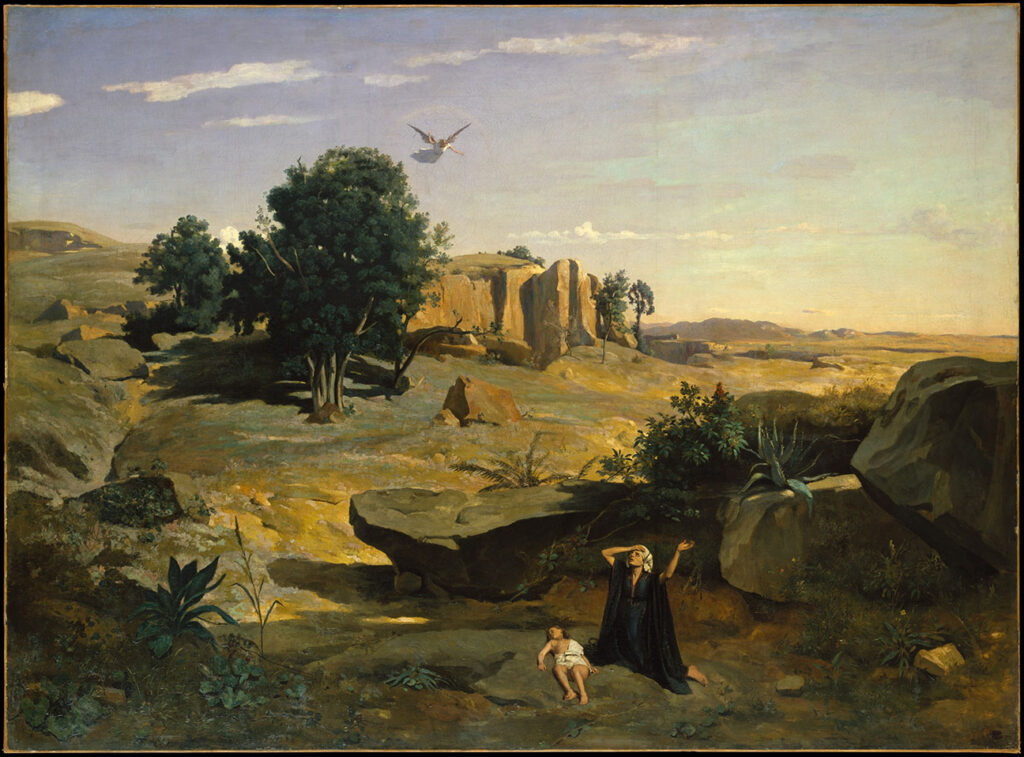
Gen. 21:15-26 describes how, in a narrative that describes what would become the origin of the Islamic calendar, the hegira, an Egyptian woman called Hagar abandons her son Ishmael, not trying to preserve his life in the way that Moses’ mother and sister tried to preserve the life of the baby whom an Egyptian princess would name Moses:
וַיִּכְל֥וּ הַמַּ֖יִם מִן־הַחֵ֑מֶת וַתַּשְׁלֵ֣ךְ אֶת־הַיֶּ֔לֶד תַּ֖חַת אַחַ֥ד הַשִּׂיחִֽם׃ And when the water was gone from the skin, she left the child under one of the bushes,
וַתֵּ֩לֶךְ֩ וַתֵּ֨שֶׁב לָ֜הּ מִנֶּ֗גֶד הַרְחֵק֙ כִּמְטַחֲוֵ֣י קֶ֔שֶׁת כִּ֣י אָֽמְרָ֔ה אַל־אֶרְאֶ֖ה בְּמ֣וֹת הַיָּ֑לֶד וַתֵּ֣שֶׁב מִנֶּ֔גֶד וַתִּשָּׂ֥א אֶת־קֹלָ֖הּ וַתֵּֽבְךְּ׃
and went and sat down at a distance, a bowshot away; for she thought, “Let me not look on as the child dies.” And sitting thus afar, she burst into tears.
Gershon Hepner is a poet who has written over 25,000 poems on subjects ranging from music to literature, politics to Torah. He grew up in England and moved to Los Angeles in 1976. Using his varied interests and experiences, he has authored dozens of papers in medical and academic journals, and authored “Legal Friction: Law, Narrative, and Identity Politics in Biblical Israel.” He can be reached at gershonhepner@gmail.com.