fbpx

June 22, 2026

There Would Be No America Without Jerusalem

Late last week, Vice President JD Vance expressed frustration with Israel, accusing Israeli cabinet ministers of “very personally attacking” President Trump instead of simply criticizing the memorandum of understanding he negotiated with Iran. Around the same time, President Trump asserted that without America there would be no Israel.

Within hours, Ambassador Mike Huckabee offered a different frame – one that moved beyond the immediate dispute and spoke in civilizational terms, pointing to something older and deeper than politics.

That contrast matters. It reveals fundamentally different ways of understanding not only the current disagreement, but the history beneath it.

Start with Vance’s claim. Which ministers? What statements? When were they made? No quotations were provided – because there were no “personal attacks.” What is really taking place is a policy dispute over whether the administration’s approach to Iran represents a significant – and potentially dangerous – departure from positions long associated with Donald Trump and many of his allies.

That debate may be right or wrong. But it is substantive, and it is being conducted openly.

Calling it “personal attacks” does something else entirely. It shifts the conversation away from the substance and into tone – replacing argument with insinuation.

A similar flattening of reality appears in the claim that without America there would be no Israel.

There is no question that the United States has played a central role in Israel’s security. American military assistance has strengthened Israel’s defensive capabilities. Diplomatic support has often blunted hostile moves at the United Nations. Intelligence cooperation flows both ways and remains deeply consequential.

Israelis understand this. They have never denied it.

But acknowledgment does not confer authorship, and gratitude is not the same as subordination.

The modern state of Israel’s history tells a different story. In the 1950s and 1960s, it was France – not the United States – that served as Israel’s primary arms supplier. More importantly, the wars that determined Israel’s survival were fought by Israelis themselves. In 1948, 1967, and 1973; in Lebanon; and in the war that began on October 7, Israeli soldiers carried the burden of combat, and Israeli society absorbed its costs. Families buried their dead. Reservists left their lives behind.

The risks were borne first and foremost by Israelis.

Compare that to other American alliances. U.S. forces helped liberate France in World War II, stood at the front lines in Western Europe during the Cold War, restored Kuwait’s sovereignty in 1991, and fought in Korea and the Philippines.

No comparable chapter exists in Israel’s story.

That absence does not weaken the alliance – it defines it. Israel has never been an American protectorate sustained by U.S. troops. It is a sovereign ally whose survival has depended primarily on its own resilience and sacrifice.

And the relationship has never been one-sided.

For decades, Washington encouraged deep integration between Israel’s defense sector and the American military-industrial base. When Israel’s domestic capabilities expanded – most notably with the Lavi fighter project – the United States intervened to steer development toward alignment with American systems. The reasoning was straightforward: Israel’s innovation and battlefield experience were assets the United States wanted integrated into its strategic orbit.

That dynamic has only intensified over time.

Israeli missile defense innovation helped produce systems like Arrow and David’s Sling. Israeli intelligence is widely utilized across the American national security community. Advances in cyber defense, unmanned systems, counterterrorism, and battlefield medicine often emerge in Israel before being adapted in the United States. In civilian life – from water technology and agriculture to artificial intelligence – the same pattern holds.

Even the frequently cited $3.8 billion in annual U.S. military assistance largely returns to the American economy, supporting domestic manufacturers and supply chains. Congress has sustained that arrangement across administrations because it serves American interests as well as Israel’s.

So, the language of dependency doesn’t just miss the mark — it misunderstands the relationship entirely.

This is where Huckabee’s framing becomes more instructive. If the U.S.-Israel bond cannot be explained by aid, weapons, or diplomacy alone, what accounts for its durability?

Part of the answer is shared interests.

But part of it runs deeper.

The American founding drew from many sources – classical antiquity, English constitutional history, Enlightenment thought. Yet woven into the fabric of revolutionary America was another influence: the Hebrew Bible.

For many of the Founders and their contemporaries, it was not only a religious text, but a political one. Revolutionary sermons invoked the Exodus as a model of liberation. Hebrew was studied at Harvard, Yale, and Princeton. John Adams spoke admiringly of Jewish history and governance, and Benjamin Franklin drew on biblical imagery when reflecting on national identity.

The influence went beyond symbolism. The idea that law stands above rulers, that political authority is constrained by moral obligation, and that rights derive from a higher source all entered American political culture through multiple channels – including the Jewish biblical tradition. The Jewish covenantal idea – that both leaders and citizens are bound by obligations they cannot simply rewrite – left a particularly deep imprint.

None of this means that the Constitution emerged directly from the Hebrew Bible. It did not. Its structure owes far more to Montesquieu, English precedent, and Enlightenment thinkers. The American system was a synthesis.

But Jerusalem was part of that synthesis. It helped shape the moral vocabulary that made the American experiment conceivable.

That history does not resolve today’s disagreements over Iran – and it shouldn’t. Democracies argue. Allies argue. Serious governments debate questions of war and peace openly.

What they should not do is replace argument with caricature.

When unnamed Israeli officials are accused of “personal attacks” without evidence, serious debate is replaced with insinuation. When Israel’s existence is casually attributed to the United States, history is reduced to a slogan.

The U.S.-Israel alliance has endured not because one nation owns the other, but because both benefit – and because both, at some level, recognize its deeper roots.

The United States has contributed enormously to Israel’s security, and Israelis know it. But recognizing an alliance is not the same as surrendering ownership of history.

Israel was not created by America. The Jewish state was established before the United States became its principal ally, and it survived its most precarious decades largely through the sacrifices of its own people and the support of Jews worldwide.

More fundamentally, the entire framing runs in the wrong direction.

The United States did not create the civilization that produced America. The Founders inherited ideas from Athens and Rome, from London and the Enlightenment. But they also inherited ideas articulated at Sinai and carried forward through Jerusalem – ideas about law, morality, covenant, accountability, and limits on power.

Those ideas helped shape the foundation of the American experiment.

Which is why the language of ownership is so misplaced. America is not modern Israel’s creator, and Israel is not America’s dependent. The two nations have influenced one another and benefited from one another, but the deepest roots of that relationship predate them both.

There will be disagreements – over Iran, over strategy, over policy. That is inevitable.

But rewriting history to win those arguments is not.

Because the truth is not that America gave birth to Jerusalem.

It is that without Jerusalem, America itself would be almost unrecognizable.


Micha Danzig served in the Israeli Army and is a former police officer with the NYPD. He is currently an attorney and is very active with numerous Jewish and pro-Israel organizations, including Stand With Us and the FIDF, and is a national board member of Herut North America.

There Would Be No America Without Jerusalem Read More »
Vance Wants the Jews to Keep Quiet

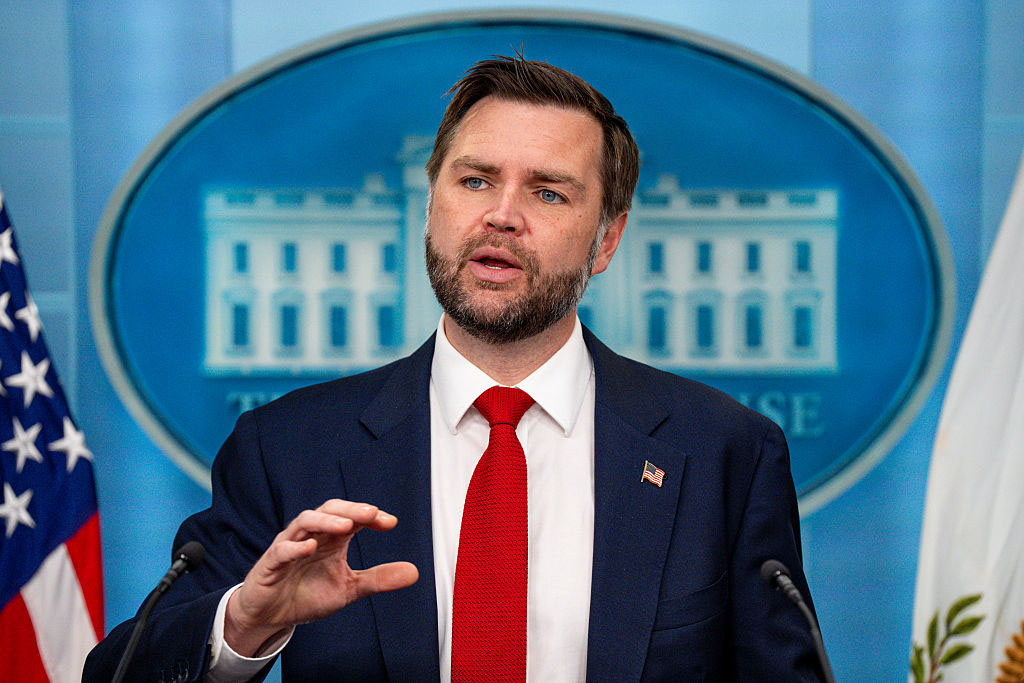
Vice President J.D. Vance wants the Jews to keep quiet.

At his June 18 press conference, Vance was asked whether Israeli Prime Minister Benjamin Netanyahu has criticized the Trump administration’s agreement with Iran.

The vice president could have simply said “No.” Instead, he seized the opportunity to blast several Israeli cabinet ministers who have expressed concern about America’s surprising concessions to Iran.

“Anybody in Israel” who doubts President Trump’s support for the Jewish state “needs to wake up,” the vice president said. He warned the cabinet ministers that they “should not be attacking” the Iran deal, since the U.S. is “the only powerful ally” that Israel has “anywhere left in the entire world.”

Vance is not the first political leader to lose his temper because somebody, somewhere, criticized a policy of his. And it’s not the first time the vice president has tried to bully an American ally through the tactic of public shaming.

Recall how he tried to humiliate Ukrainian president Volodymyr Zelensky last year by haranguing him in front of the news media, falsely accusing the Ukrainians of “not being grateful” for the assistance America has given them.

Israeli leaders have been the targets of such diplomatic ambushes on more than one occasion. In 1975, Secretary of State Henry Kissinger tried to pressure Israeli Prime Minister Yitzhak Rabin to make risky concessions to Egypt, by telling reporters (as “a senior American official”) that Rabin was being “intransigent” and therefore the U.S. had no choice but to “reassess” its relationship with Israel. That included suspending American arms shipments to Israel for several months.

In 1990, Secretary of State James Baker—acting on a suggestion made by New York Times columnist Thomas Friedman—sarcastically recited the White House telephone number in front of the news media and declared that Israeli Prime Minister Yitzhak Shamir should call “when he is serious about peace.”

In 1991, President George H.W. Bush tried to intimidate American Jews who were seeking U.S. loan guarantees for Israel. He complained to reporters that he was “one lonely little guy” who was surrounded by “something like a thousand lobbyists.”

In 2010, President Barack Obama abruptly left a meeting with Prime Minister Netanyahu and kept him waiting for hours while he went to dine with the First Lady and their children. Obama’s aides then leaked the snub to reporters to show how the president had put the Israeli leader in his place.

Seven years ago, I wrote a book called The Jews Should Keep Quiet (published by the Jewish Publication Society and University of Nebraska Press). The title was a close paraphrase of something that President Franklin D. Roosevelt said to the era’s foremost American Jewish leader, Rabbi Stephen S. Wise, on multiple occasions when he wanted to prevent the Jewish community from criticizing his policies regarding Jewish refugees or Zionism.

In one instance, President Roosevelt spoke to Wise about “the necessity of Jews lying low.” On another occasion, FDR warned Wise that if Jewish leaders were too vocal, it would “enable Americans to say that the fellows who wrote The Protocols of the Elders of Zion had some justification.”

Roosevelt’s strategy of intimidation was successful. Rabbi Wise refrained from publicly challenging the administration’s abandonment of European Jewry, and even declined to support several pro-Jewish and pro-Zionist congressional resolutions because FDR opposed them.

It sounds as if Vice President Vance is hoping for a similar outcome today. If so, he’s likely to be disappointed. Today’s American Jewish community is not the same as that of the 1930s and 1940s. The U.S. Jewish protest movements for Israel and Soviet Jewry demonstrated that this is a generation committed to not repeating the mistakes of earlier times.

Israeli cabinet ministers and American friends of Israel alike understand that speaking their minds is part and parcel of a democratic society. Given the dire threats facing Israel and world Jewry today, keeping quiet is not an option.


Dr. Medoff is founding director of The David S. Wyman Institute for Holocaust Studies and author of more than 20 books about Jewish history and the Holocaust. Follow him on Facebook to read his daily commentaries on the news.

Vance Wants the Jews to Keep Quiet Read More »

Trump’s Tehran Ball and Chain

Love him or hate him (an opinion that includes everyone, since no one is neutral on the man), it must be said of Donald Trump that when compared to prior occupants of the Oval Office, he is no candy ass. His threats are not idle. When staying the reckless course, he never appears to be scanning for an off-ramp.

He doesn’t usually make promises he has no intention of keeping. His aversion to diplomatic language usually results in gasp-producing clarity uncommon for career politicians.

Trump’s MAGA base has largely adored his refreshing presidential unorthodoxy. American Jews benefitted enormously from it, too, even though far too many remain ignorant of its virtues, while others begrudge him with ingratitude.

So, when Trump called for a ceasefire with Iran after turning the country into a defenseless, penniless wasteland of mumbling mullahs reciting Koranic verses about Jews, infidels, and luscious virgins, everyone—all except Iran’s theocrats themselves—assumed he was setting the terms for their long-awaited surrender.

If horny mullahs wanted to fall on their own swords to hasten their rendezvous with celestial virgins, that was their choice. (The virgins, however, have already cringed at the Tinder profiles of these Islamist eyesores.)

Trump possessed all the leverage if this was to be a negotiation. But why was it called a negotiation in the first instance? America finishes wars with decisive battleground victories at Yorktown, Tripoli, Appomattox, Hiroshima, Nagasaki, Manila, Midway, Iwo Jima, Dresden and Bagdad. Negotiation is not our strong suit; obliteration is more our style.

Iran, however, excels at negotiation because it favors the side that declares victory simply by achieving a delay. Live to fight another day. Then call in sick. Reschedule. Make demands. Feign moral outrage. Falsify a breach. Manufacture a shiny distraction. Depend on the apathy and ignorance of public opinion.

Iran excels at negotiation because it favors the side that declares victory simply by achieving a delay. Live to fight another day. Then call in sick. Reschedule. Make demands. Feign moral outrage. Depend on the apathy and ignorance of public opinion.

For Iran, being invited as one of the principal parties to a negotiating table is its own reward—and an opportunity for more meaningless claptrap and Islamist gamesmanship.

And when you send your vice president to lead your team—as we did with J.D. Vance—you have just showered Iran with more respect than these barbarians deserve.

Separately, J.D. Vance is the altogether wrong messenger. He’s suitable for a symposium on the opioid crisis in the Appalachians. But Iran’s warlords treated him like an American tourist at his first Middle East bazaar. The mullah’s negotiators smiled and pelted him with magic carpet rides and captivating tales of “Arabian Nights” (where a different kind of execution was postponed), sending the hillbilly packing with a new elegy to consider.

Was the president’s son-in-law, Jared Kushner, and Special Envoy to the Middle East, Steven Witkoff, truly off that week? Doesn’t Trump realize that the only person in his inner circle qualified to speak for him is his Secretary of State, Marco Rubio—and not a rube like Vance? And especially in such a delicate and monumental matter such as this!

Trump promised that Iran would never be able to possess nuclear weapons. He said that unlike President Obama, he would never allow a wealth transfer of unfrozen assets and lifted sanctions that would empower the Ayatollahs to oppress their people and finance terrorism around the world.

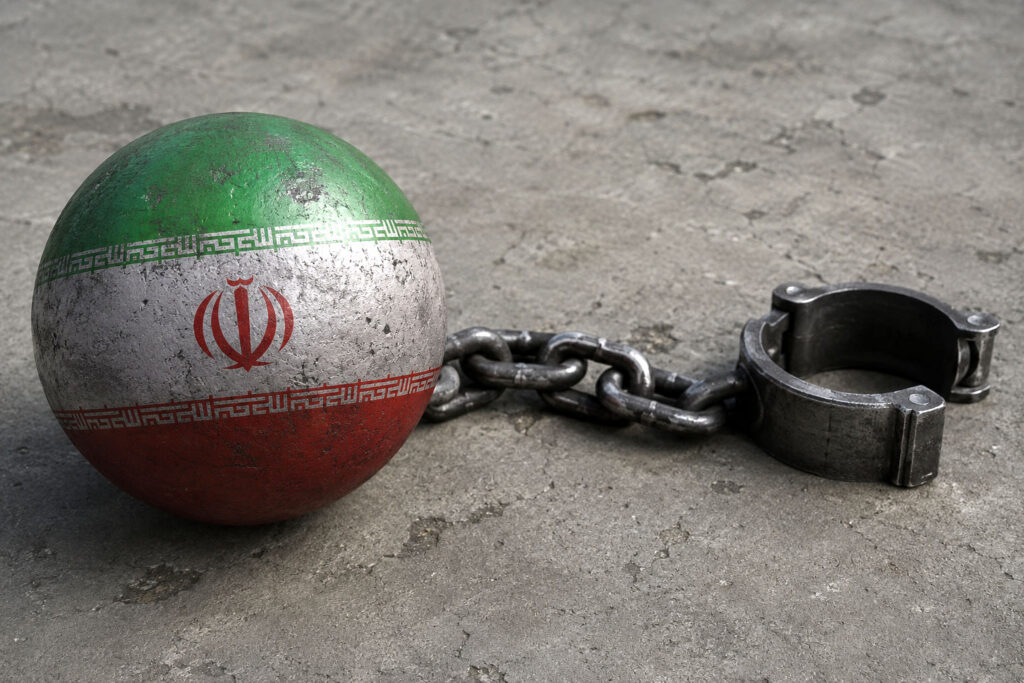
We had Iran on its knees, ready for lock-up, and now Trump has managed to turn Tehran into his very own ball and chain.

It looks like Trump showed his cards and revealed that re-opening the Strait of Hormuz was the only thing that truly mattered to him. Not the nuclear “dust” or ballistic missiles. Not the sponsorship of terrorist proxies. Not the oppression of the Iranian people. Not the security of Israel from Hezbollah’s ongoing terrorist attacks.

Just the opening of chokepoints for oil out of the Persian Gulf. Once that was accomplished, everything else could either wait or be completely forgotten. Nothing else is supposed to happen for the next 60-days—hooray, for another delay!

Laugh at Obama all you wish, President Trump, but his pallets of hard foreign currency only amounted to $50 billion. You have now agreed to unfreezing $100 billion in monies formerly under sanction, another $300 billion on a reconstruction plan for Iran, and billions more in recaptured oil revenue.

Who has the Iranian Midas touch now?

The Memorandum of Understanding (MOU), obligates Iran to “never produce” nuclear weapons. But it says nothing about them developing, acquiring, buying, or testing them.

Meanwhile, just as this renewed 60-day ceasefire was purportedly in effect, the Islamic Revolutionary Guard Corps has already shut down the Strait of Hormuz, yet again. Why? Because Israel—which is not a party to the MOU—insists on defending itself against Hezbollah terrorist strikes.

Is this the way President Trump shows how his America First agenda works in practice: siding with terrorists over an American ally that has been fighting our enemies longer than we have?

The Islamic Revolution started in 1977 by putting the United States first—taking 52 American Embassy officials hostage for 444 days. That was followed by 47 years of chanting “Death to America!” as an Islamic pledge of allegiance. Remember, we were the “Great Satan”; Israel merely the “Little Satan.” The Ayatollah’s henchmen burned as many effigies of Uncle Sam as they did Israeli flags.

The Islamic Revolution started in 1977 by putting the United States first—taking 52 American Embassy officials hostage for 444 days. That was followed by 47 years of chanting “Death to America!” as an Islamic pledge of allegiance.

Is Trump now seriously saying that Israel is not allowed to defend itself because it will upset the mullahs? I’m sure Vance was fine with that deal point. But given the vice president’s hostility to the Jewish state, that’s not saying very much.

At the G7 Summitt in France, Trump offered this shocker when it came to Iran’s possession of ballistic missiles: “If other countries have them, it’s a little bit unfair for them (Iran) not to have some.”

Is it possible we have reached that moment when it’s time to invoke the 25th Amendment? Mr. President, thank you for your inestimable support of Israel and the Jewish people, but we now have reason to believe that you are losing your marbles right in front of mullahs who have already tried to assassinate you.

Trump has done himself no favors with this MOU. His “art of the deal” is now defrocked as a fairy tale. The art a mirage; the deal claimed by the side that refuses to fade. Apparently, Trump has no patience for those who are willing to wait him out. He gets bored, and bolts. A cheaper gallon of gas at the pump is more valuable to him than standing on principle and alongside friends.

This could end up squandering his legacy. In hindsight, if he is capable of such introspection, he may one day ask himself whether boots on the ground in Iran was a far better option than turning the Strait of Hormuz into a rabbit’s foot for murderous mullahs?


Thane Rosenbaum is a novelist, essayist, law professor and Distinguished University Professor at Touro University, where he directs the Forum on Life, Culture & Society. He is a contributing writer for White Rose magazine. His most recent book is titled, “Beyond Proportionality: Israel’s Just War in Gaza.

Trump’s Tehran Ball and Chain Read More »