fbpx

April 29, 2026

In The Big Inning

As a Jewish baseball fan, I never tire of finding signs in the Torah that speak to America’s pastime. There is Abraham preparing to sacrifice Isaac, David striking out Goliath, and, my favorite, the opening words of Genesis, which with the proper inflection, read “In the big inning.”  The next time Bereshit appears, I am sure to reflect on the ninth inning home run by Miguel Rojas and the catch by Andy Pages in the seventh game of last year’s World Series.

My passion for sports extends well beyond baseball, and I cringe when I hear someone say that being a fan is a frivolous activity.

Sports bring us together in a remarkable way, while creating lifelong memories.  Wherever I may be, I know that I can connect with pretty much anyone by talking sports – from cricket in India to F1 in Italy.

I think often of all those times at Shea Stadium when my dad and I cheered on our hapless Jets and our even more hapless Mets.  What joy we shared when magic struck in 1969, first with the Jets winning the Super Bowl and then the Mets winning the World Series.  Talk about miracles.  That is up there with the parted sea!

I have passed along that devotion to my children, as they root with my wife and me for the Patriots, Bulls, Dodgers, Lakers, White Sox and yes, alas, the Mets.  (Fortunately, we have long ago renounced the Jets.)  And then there are college sports, where I follow dozens of Northwestern and Williams teams, and my beloved USC Trojan football.

People used to tell me that they understood supporting college teams, but not professional ones.  As Jerry Seinfeld put it, rooting for a professional team is like “cheering for laundry.”  The players regularly change jerseys, moving from team to team at their convenience.  College athletes in high profile sports such as football and basketball, to the contrary, are students, living in the dorms and studying in the library.

Yeah, right.

Now that college athletes can be paid (often making more than they could earn in the pros) and transfer from school to school chasing dollars and playing time, they don’t exactly have the full collegiate experience.  Good for the UCLA women, who won the national championship in basketball with five seniors in their starting lineup.  Quite the contrast with the starters at Michigan, the men’s national champion, all of whom were transfers.  After the final buzzer, one of the Michigan stars pointed out that while some labeled them “mercenaries,” they played hard and succeeded at the highest level.  All true.

It isn’t just viewing college and professional sports that bonds a family, it’s watching your kids play as well.  My wife and I spent countless hours sitting in folding lawn chairs as our children played tennis.  And nothing I have ever done has exceeded the joy I felt coaching my son in Little League. 

Even a number of prominent rabbis have extolled the virtues of sports participation and fandom.

Rabbi Harold Kushner wrote that sports, like Judaism, teaches you to accept imperfection while striving for improvement.  The best team in modern baseball history lost almost one of every three games.  According to Rabbi Kushner, “The goal is not to win every game but to win more than you lose, and if you do that often enough, in the end you may find you have won it all.”  Resiliency has been a mainstay of the Jewish people.  Maybe that is one reason why so many of us love sports.

Jonathan Sacks used to tell the story about how shortly after he was elected Chief Rabbi of England, he and the newly selected Archbishop of Canterbury discovered that they were both passionate Arsenal fans.  They attended a game together against their hated rival, Manchester United, and witnessed Arsenal’s worst home defeat in over 60 years.  A national newspaper reported that if the Archbishop and Chief Rabbi couldn’t deliver an Arsenal victory, perhaps God did not exist.  To the contrary, replied Rabbi Sacks, it just proves that God is a Man U fan.

Pope Leo and I both love the White Sox.  I hope to see him at a game one day.  The peanuts are on me.


Morton Schapiro served for more than 22 years as President of Northwestern University and Williams College. He taught almost 7,000 undergraduates over his more than 40 years as an economics professor.


In The Big Inning Read More »

Two Jews in Saudi Arabia and Bahrain

“You’re going where??” That was the most frequently asked question regarding this year’s itinerary for our annual spring trip. What followed was disbelief, then why, and finally questioning our safety.

When this trip concludes, my husband (a CPA; hence the annual timing to travel) and I will have been to 98 countries. Had it not been for recent events, the number would have been 99. Alas, Kuwait was cancelled first by the airlines and then our visa application was terminated. Message received.

As much as we keep one of those obnoxious country counts (a sort of bloodsport), there’s zero interest in going to a country where kidnapping is a common occurrence. Likewise, if Jews are unwelcome and/or the country has an obvious bias against Israel, it’s out.

Even before the area became a hotbed for attacks of varying degrees, we were still questioned as to why we are going. The reasons are simple – we haven’t been and are keen to learn about the culture and daily life and not simply rely on what is reported in the media. Saudi Arabia has been on a modernization trend – particularly since 2018 when women were officially permitted to drive. Traditional garb is more of a personal choice as opposed to it being a mandate; thus, we saw women completely covered up yet others now choosing to wear business suits for their Riyadh jobs.

Under normal circumstances, Saudi Arabia would have been enormously busy with the annual Hajj when Muslims worldwide (aka pilgrims) make their way to Mecca for the holiest time of the year. There are travel packages offered for varying degrees of housing depending upon their circumstances. Much like traveling during COVID (we went to an absolutely empty Serengeti), the public spaces in Madinah (Medina) were practically empty as compared to prior years.

The irony is how safe it is in Jeddah (our main city), some 600 miles south of Riyadh.  Not a single attack was launched against this bustling and modern metropolis along the Red Sea. We took the high-speed train – incredibly modern, swift, and safe – for a guided tour of Madinah. Our guide for the day, a woman who received her Ph.D. in nutrition by studying at Cal State Northridge of all places, drove us around in her SUV. That is likely not the picture many have when thinking about Saudi Arabia.

It was then time to move on to Bahrain, perched on the Arabian Sea with some very unfriendly nearby neighbors. By the time we left the U.S., the country’s airspace had reopened but we still had to fly to the nearest airport in Saudi Arabia, Damman. Once there, we were driven across the King Fahd Causeway. The immigration kiosks look more like fast-food drive-thrus than government offices with bright lights and modern architecture.

Bahrain immediately felt much more “open” than Saudi Arabia, meaning women dining in restaurants with other women and not in the company of men. We could wear shorts and sleeveless tops and there’s alcohol available in restaurants.

But clearly the highpoint of this short stay prior to our Africa safari departure was the visit to the Bahrain Synagogue, aka House of Ten Commandments. Had we not learned of it from dear friend Rabbi David Woznica, who had visited some years before, we might have missed it altogether.

It is situated in the middle of a vast souk.  The synagogue was founded in the 1930s, when there were approximately 800-900 Jews in Bahrain (that’s individuals; not families!). Today there are roughly 36. Over the years, the synagogue has been renovated multiple times, most recently in 2021, when it was opened to the public for the first time in 74 years. It was then that an Ashkenazi Torah was given to the synagogue and is housed in a velvet-covered ark. It is inscribed: “In honor of His Majesty King Hamad bin Isa Al Khalifa for his vision, courage, and leadership in bringing peace, respect, and religious tolerance to the Middle East. June 25, 2019, Jared Kushner.”

Both countries are safe and have much to offer westerners. Thus, there’s little reason to exclude them from your travel “to-do” lists. 


Teri Bialosky is a Los Angeles native and avid traveler/writer/blogger/planner.

Two Jews in Saudi Arabia and Bahrain Read More »

Alone Again Naturally

To be a stand-up comedian, besides being funny, you must hate spending too much time with people.

I like people, but I have a one, two, or at most, three-hour time limit before I start thinking, “I’ve got to get going.”  It’s not that I have anywhere specific to go.  My parents called it “ants in the pants.”

I have been like this my whole life. I spent my entire childhood pulling on the hem of my mother’s dress, asking her if we could move on. It’s not people; it’s me. I enjoy dinner, movies, board games and walks, all for short spurts. I find joy in family events that are under two hours and 28 minutes. Anything longer, I need to shut it down with a nap. Twenty minutes on the husband’s bench at Macy’s while my wife tries on clothes is lovely. Twice while traveling with friends, I ditched them after a short three days.

I remember in fifth grade walking into class, my thought was, “Oh, God, these people again.” I annoyed the teachers, so I’d be sent down to the principal’s office. Sitting by my lonesome for half an hour, waiting to be called in, was nirvana. The principal once said, “You’re here so much I almost think you like sitting outside my office by yourself.” If he only knew.

Working with others has never been my thing. If you’ve ever seen a gorilla in a cage, swinging from ropes, all agitated, that’s me in an office situation. I don’t do well locked in an office with the same people day after day. After an unspecified amount of time, I start to hate the job and my coworkers. I’ve had a boss once say to me, “We have to let you go because you look so miserable and you make other people miserable by the way you look.”

I knew very early on that working with others for more than two hours a day would deteriorate my soul.  At 18, I worked in boys’ wear at E.J. Korvette department store. By the end of my second week, I was drained and wondering what I was doing with my life. I quit. That’s not a normal reaction.

These days, you can get fired, canceled or sued for one wrong word. If I had a 9-5 job, I’d not last a week. Water cooler talk is now about who they took down, not the latest TV episode. Ask anybody about the people they must work with, and they will agree with me.

I hate the morning work questions. “How are you, Mark? Have a good night?” “No. Because I knew I had to come back here.” When you are first being interviewed. “Why do you want to work at Smith Barney?” “I don’t.” “Is there anything we should know about you?” “Yes. I steal office supplies.”

So, I had no choice, I became a stand-up comedian, where I spend most of my time alone. Not everyone can spend that much time by themselves, especially if you don’t like yourself. It is an acquired taste. Stand-ups are like the Unabomber; we spend all day by ourselves, except instead of making bombs, we write jokes.

I have an office outside my house, just me in it, where I write by myself. I eat lunch by myself. I’m on stage by myself. I travel by myself. I roll into a town and check into a hotel, where I spend the day alone. Before my show, I’m taken into a dressing room where I ask to be left alone to think. Then, that night, I try to get as many laughs as possible on stage alone, and then it’s back to the hotel or airport and on to the next town by myself. As Jackie Gleason said, “How sweet it is!”

Like the taste of carp, working alone is not for everyone, but neither is working with others.  I’ve been asked if you don’t like being with people for long periods of time, how have you stayed married for 36 years? I was lucky to find the one person in the world I could spend time with, but I also try to sleep as much as possible.


Mark Schiff is a comedian, actor and writer and hosts, along with Danny Lobell, the “We Think It’s Funny” podcast. His new book is “Why Not? Lessons on Comedy, Courage and Chutzpah.”

Alone Again Naturally Read More »

Tough Choices for Republicans

Last week, I wrote about my hopes for the Democrats moving forward. This week, it’s the Republicans’ turn. If the Democrats need to shore up their support for Israel – in Congress, in California and in the 2026 and 2028 elections – Republicans need to make a more fundamental decision about who they are and what they want to be.

Before becoming a Republican in 2012, Donald Trump had previously registered as both a Democrat and an Independent. He identified a Republican Party that was still heavily reliant on an agenda that Ronald Reagan had outlined almost 40 years earlier. More conventional GOP candidates had tinkered around the edges of Reagan’s priorities but no one had comprehensively updated those concepts for a new era with different types of challenges. (Imagine if Reagan had run on Robert Taft’s isolationist platform: both parties need to preserve but rejuvenate their core ideological principles to remain relevant to new generations of voters.)

Either intentionally or intuitively, Trump recognized that the Republican Party had drifted away from many of their loyal constituencies over the years on issues like trade, government spending, immigration and America’s role in the world. So he commandeered the party structure, MAGA-ified it and has led a party in his own image for the last decade. He is less of a traditional conservative than he is a takeover specialist.

Traditional Bush-Romney Republicans have not gone away. Some have enthusiastically embraced Trump’s brand of conservatism. Some have left the party, replaced by new working-class members. But most have tolerated Trump’s excesses because of either his economic policy goals or what they view as a lack of a credible alternative from the Democrats. But as a post-Trump era draws closer, Republicans are faced with a definitional choice. Will they continue on the populist, blue-collar path onto which Trump has led them? Will they return to the approach that they had embodied through most of the modern era? Or will they define a new brand of conservatism that confronts the unique challenges of the soon-to-be-mid 21st century more effectively than the two 19th-century parties that define our current politics.

The third option is possible, but almost certainly much longer-term. Neither Republicans nor Democrats are prepared for a basic reinvention of themselves: there are too many entrenched interests in both parties who will resist. So the decision for Republicans is between pro-Trump and pre-Trump factions, representing dramatically different constituencies and focused on equally dramatically different policy goals.

Many American Jews will find both possibilities to be unacceptable. But just as the Democrats’ embattled establishment leaders represent a more reliable source of support for Israel than many movement progressives, the pre-Trump Republicans still reflect a more assertive role for the U.S. on the world stage. While Trump himself veers between his isolationist instincts and ultra-aggressive international goals at a fairly startling rate, most of his America First adherents seem to be uncomfortable with their leader’s military adventurism and would prefer a stay-at-home approach that keeps the rest of the world at arm’s length for the time being. The current trajectory of the Iran War is likely to strengthen those feelings.

A hyper-nationalistic country that retreats from our global obligations would obviously be a very bad thing for Israel. As a former Republican who left the party several years before Trump, my hope is that an internationalist GOP can reemerge. But as is the case with Democrats, the energy and purpose in the party is strongest among the most ideologically extreme factions occupying the party’s base. Populist passions from the far left and far right are ascendant, which bodes poorly for those of us in both parties (or neither) who recognize the benefits for both the U.S. and the rest of the world when our country re-embraces our role on the global stage.

For more than a century, the United States has turned inward after prolonged world wars and severe economic difficulties. Finding our way out of this isolationism should be an urgent priority for both parties. But it may be a long way back.


Dan Schnur is the U.S. Politics Editor for the Jewish Journal. He teaches courses in politics, communications, and leadership at UC Berkeley, USC and Pepperdine. He hosts the monthly webinar “The Dan Schnur Political Report” for the Los Angeles World Affairs Council & Town Hall. Follow Dan’s work at www.danschnurpolitics.com.

Tough Choices for Republicans Read More »

The Final Curtain: Confessions of an Old Man

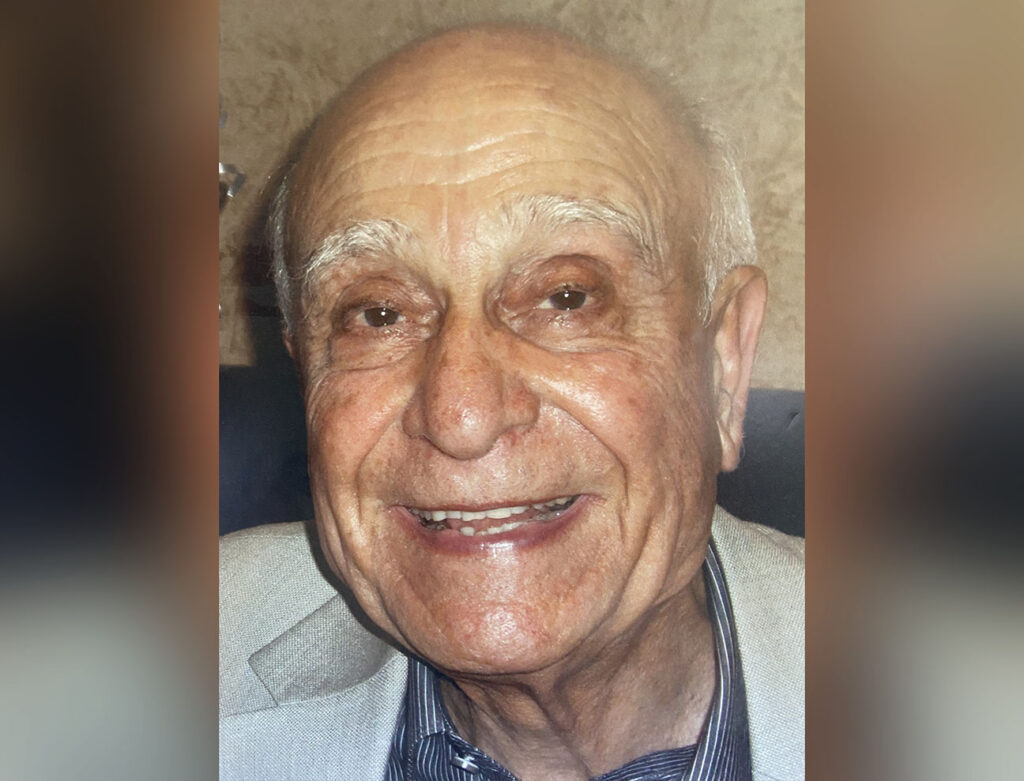
An old Chinese proverb teaches “The best place to find wisdom is at the feet of an old man.” I don’t proclaim to have wisdom, but at the age of 95, I have surely earned the title of “old man.” When I was younger, like any other young person, I thought life was never-ending. And if something went wrong, it would be to other people, not me. In the second half of 2025, I realized how wrong I was. I was hospitalized seven times and survived three major surgeries. My gratitude is to God, great doctors, the age of technology, the love and care of my wife, children, grandchildren and many true friends. I am still able to sit down and share my story of what my life has been all about.

Like every human being, I couldn’t choose my parents, my genes and the environment I grew up in. But what was in my power would be how I react to the circumstances that I would face. I was born in Taht Al Takia, a fairly poor Jewish neighborhood in the old city of Baghdad, in December of 1930. Sanitary conditions were poor to nonexistent, drinking water was tainted. Blessed with strong genes, I survived dysentery, stomach worms and trachoma, a blinding disease transmitted by flies, while four of my siblings did not survive. I had a happy childhood and was oblivious to the world around me in the 1930s. I believed Baghdad was my home and Iraq was my country.

On April 1, 1941, a pro-Nazi coup deposed the government of Iraq. A key advisor to the coup leaders, Haj Amin Al Husseini, a well-known antisemite, created an alliance with Nazi Germany and fostered an antisemitic extremist environment. Daily antisemitic articles appeared in the newspapers and Radio Baghdad, which greatly influenced the man on the street.

Two months later, as the British forces arrived at the outskirts of Baghdad, the coup leaders fled. Mobs, inspired by the pro-Nazi propaganda, led a violent pogrom, known as the Farhud. They entered Jewish homes and businesses, looting, murdering and gang-raping women and girls. There was no place to hide or escape. Fortunately, two days later, the British forces entered the city of Baghdad, shot at the mob, and stopped the mayhem. I was 10 years old and my world turned upside down.

All I wanted was to study hard and go to America for higher education. This dream collapsed in 1948 when I graduated from high school. After failing to destroy the new state of Israel, the Iraqi government turned against its Jewish population and refused to give me an exit visa to leave Iraq. There were arrests, torture and public hangings. A year and a half later, I found myself being smuggled out of Iraq to Iran and then to Israel, where I became a homeless, penniless refugee.

Six years later, I traveled to Montreal, Canada, hoping to continue my higher education. Because of harsh conditions and lack of funds, I dropped out of college due to the necessity to survive and support myself. My focus became a new dream. I would get married and have children who could become highly educated. I entered the world of real estate and started to sell single family homes. I suffered for nearly a year and a half, with only one meal a day, surviving on a $50 a week advance from the boss. Three years later I started my own real estate brokerage firm and the rest is history.

We moved to Santa Monica, California in 1978, where we still reside after 48 years. My dream was fulfilled. Two of my three children are Ph.D.s and one is an M.D.

You may wonder what keeps me going after all I have faced? At the age of 95, what still gives me meaning and purpose in life is to share my personal story, my broken dreams, my disappointments, my failures and how I faced unpredictable and uncontrollable events.  I cherish the opportunity to inspire others to keep their goals and dreams alive, to persist and to work hard, as I did, and most importantly to never give up.  At this point in my journey, my commitment and focus are on sharing the Holocaust events that not only took place in Europe, but also extended to the Arab lands, a story that needs to be more widely told.

Now that I face the final curtain, time is short, and there’s still a lot to do. After many years of writing, at the age of 90, I completed my memoir “Beyond the Rivers of Babylon,” and with the help of an Iraqi translator, published my book in Arabic in 2024. Working hard, and with the help of the younger generation, we created a PowerPoint presentation with photos, which I have presented to numerous high schools, colleges, the Holocaust Museum of Los Angeles, the Museum of Tolerance, and other organizations across the country.

The stories of the Jewish suffering in Arab lands during World War II and beyond needs to be kept alive. If I can change one young person’s mind, I feel I’ll have accomplished my mission. I am truly grateful for every day in my remaining life to share our rarely told, rarely known story.


Joseph Samuels is a survivor of the 1941 Farhud pogrom in Baghdad and author of the memoir, “Beyond the Rivers of Babylon: My Journey of Optimism and Resilience in a Turbulent Century.”

The Final Curtain: Confessions of an Old Man Read More »