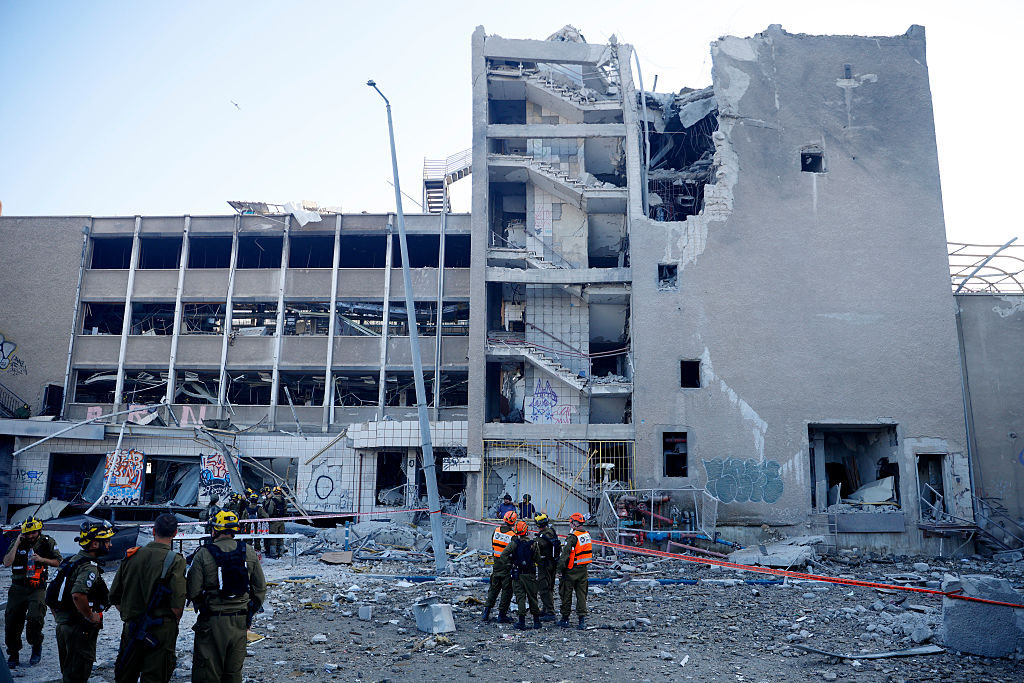
I Came to Treat Trauma: Then the Missiles Fell
The first siren caught me barefoot in Jerusalem, standing in a rented apartment from which I didn’t yet know how to flee.
As a trauma psychologist, I arrived in Israel in late May, treating survivors of the brutal Oct. 7, 2023, Nova Music Festival attacks by Hamas, as they came to a retreat center in the city of Petach Tikva, outside Tel Aviv. After the Oct. 7 attacks, I created a nonprofit, the Israel Healing Initiative, to bring cutting-edge trauma treatment to survivors.
In Jerusalem for a new round of treatments. I quickly learned that the first thing you’re supposed to ask isn’t about the wi-fi or thermostat. It’s where the bomb shelter is.
During the first round of sirens, as Iranian missiles rained upon Israel, I was alone, standing in a nearly abandoned neighborhood of empty apartments built by foreigners as a kind of insurance policy, waiting in case antisemitism becomes unbearable elsewhere.
Since then, I’ve found the shelter. I’ve also cut my response time from four minutes to under ninety seconds — even when bleary-eyed from multiple sirens in a single night.
Being in the war zone with the survivors means trauma isn’t just something I treat. It’s something I breathe. It lives in the air here. It pulses through the sirens, the silence afterward, and the haunted words of the people I have treated .
One Nova survivor told me, “I don’t sleep anymore — my dreams are haunted with the last time I saw my friend taken hostage.” Often, there is no boundary between their pain and mine. It passes through us both.
A few nights ago, I was lying in bed between missile attacks, speaking with a friend on the phone. She asked me how I felt. I checked in and answered honestly: I felt calm. But then I looked down. My hands were clenched tightly around the keys to the gate of the bomb shelter. I could have left them on the nightstand. It would have taken only a second to grab them. But my body wouldn’t let the keys go.
In that moment, I wasn’t just a psychologist trained to understand trauma. I was in a state that psychologists call “functional freeze” — a hybrid state where you’re composed and capable of action, but still physiologically gripped. It’s common among soldiers, medics and survivors who have learned to perform under threat. Not paralyzed—just coiled.
The Israelis around me — whose resilience humbles me daily — began to relate to me not as a visitor, but as one of them. Their gratitude was quiet, but it ran deep. Being here in these terrifying, raw, utterly human moments has made me part of the fabric — not just a psychologist with a good heart, but a participant.
Now, like so many others, I try to bring lightness into the shelter. I crack jokes. I make people laugh. Even that becomes a form of resilience.
Our senses have all become alert, tuned like instruments to threat. I had to refine mine — not by choice, but by necessity. In the beginning, it was the whistle of the washing machine that alerted me. My brain misinterpreted: Is that a missile? It was the reflex of someone new to this, still unsure of what real danger sounded like.
But quickly, I calibrated. I learned the pitch of the siren — the way it starts low and climbs, mechanical and urgent, unlike anything else. Now, I briefly react only when I hear that specific frequency — sometimes not even from the sky, but from a phone replaying a video. It’s strange what becomes familiar. The surreal turns routine. You adapt. You keep going. And you begin to live with the clear, embodied knowledge that life can change — or end — in an instant.
As the fictional shaman Don Juan said in Journey to Ixtlan, “Death is the only wise advisor we have.” Keeping it close isn’t morbid. It’s clarifying. It sharpens what matters and opens a door to healing that traditional trauma treatment often doesn’t reach.
The Stoics called it memento mori: remember death, so you can live more fully. When mortality isn’t abstract but real, even the smallest moments hum with meaning. You begin to choose with greater care.
There are moments I feel small against the enormity of the tragedy. I came to help others reclaim safety, but somewhere along the way, I started needing it too. And I’ve come to believe that truly showing up is its own kind of salve. Not just bearing witness, not just holding space, but sharing a stressful experience in strength and presence. These are quiet acts of resonance in a world that too often forgets how to care.
And maybe that’s a big part of what healing really is, not just lessening the pain, but refusing to let it have the last word.
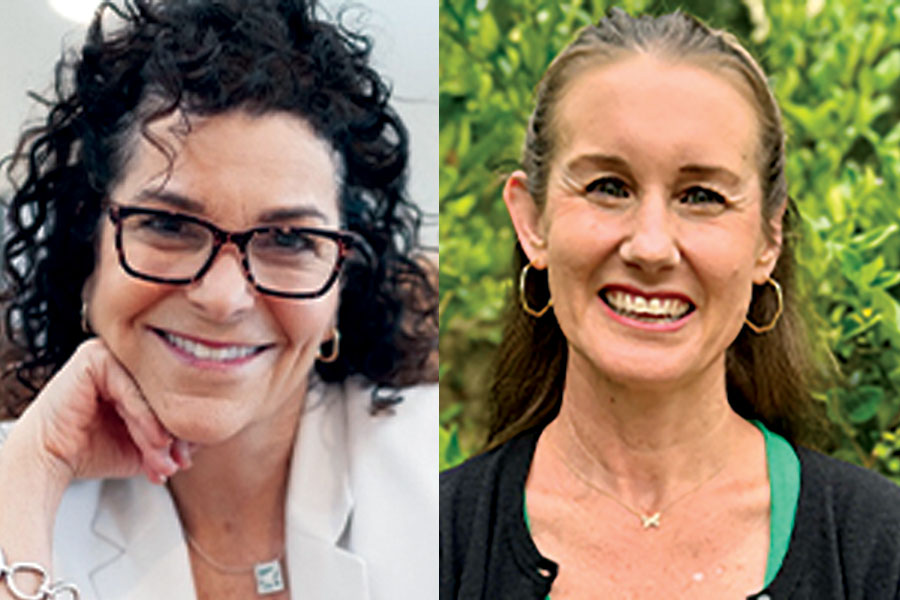
Orli Peter is a neuropsychologist and founder of the Israel Healing Initiative, bringing cutting-edge treatment to survivors of war and terror. She can be reached at opeter@israelhealinginitiative.org.
I Came to Treat Trauma: Then the Missiles Fell Read More »