There’s more than one way to erase the hostages held by Hamas and other terror groups in the Gaza Strip.
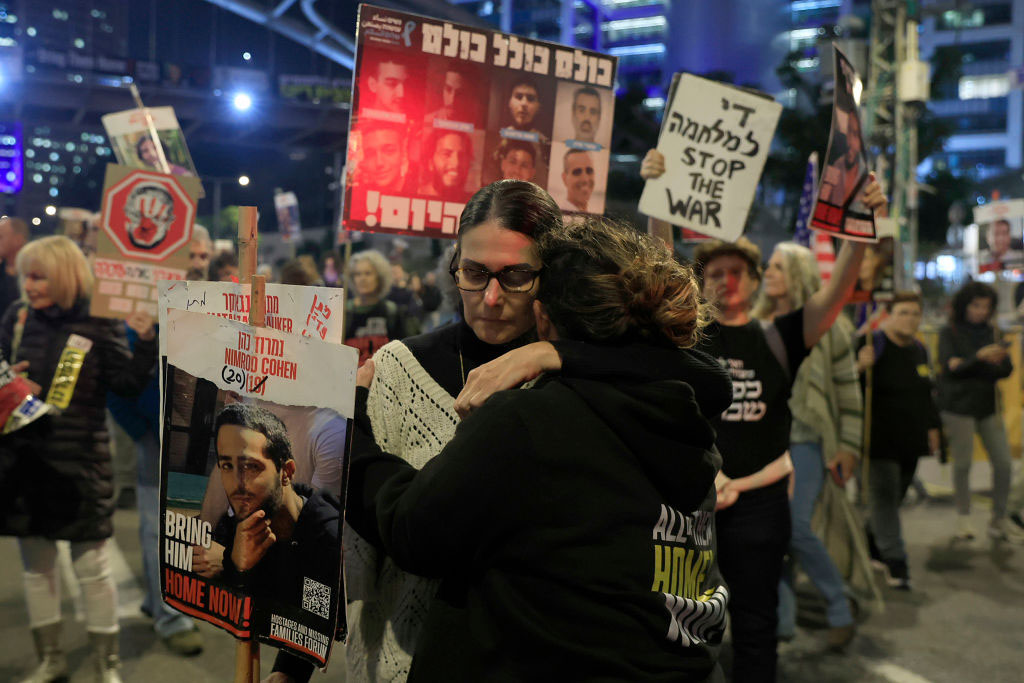
There are the angry self-righteous mobs across the United States, Europe and beyond who ripped down posters of the 251 kidnapped children, elderly, women and men. (As of this writing, 94 of the Oct. 7 hostages are still in Gaza, and the Israeli military has confirmed 34 of them are dead.)
Then there are the more genteel journalistic erasures which exact far greater and lasting damage than the bombastic street displays.
The more genteel journalistic erasures exact far greater and lasting damage than the bombastic street displays.
In October 2023, The Los Angeles Times erased half of those then known to be hostages, underreporting: “Hamas militants attacked southern Israel on Oct. 7, killing more than 1,400 Israelis and taking at least 100 hostages into Gaza.” By that time, Israel had already contacted the loved ones of 203 individuals to notify them that their kin were being held by terrorists in the Gaza Strip. (The paper later issued a stealth correction due to the intervention of media watch organization CAMERA.)
Last month, after the 251 figure was already known for many long months, a Canton Repository (Ohio) article republished in some two dozen USA Today Network newspapers across North America conjured up an even lower figure than The Los Angeles Times. It misreported that Hamas members “attacked and killed more than 1,100 Israelis, and kidnapped dozens of others including Americans, who still are missing.”
In recent weeks, Variety devoted two flattering reviews to Michael Moore’s anti-Israel propaganda film “From Ground Zero” about the Gaza Strip, without sparing one word for the Oct. 7 massacre or the nearly 100 hostages still held by Hamas and other terror groups after 15 months.
The New York Times had a different approach to erasing hostages. Editors stood by reporters who falsely insisted that an Israeli soccer player’s Jan. 14, 2024 wrist bandage bearing a Star of David and the writing “100 days, 7/10” was “a reference to the start of the war between Israel and Hamas on Oct. 7.” Though the athlete’s accessory was part of a global awareness campaign designed to call attention to the hostages’ first 100 days of horror, The Times dropped the hostages completely from the story.
And then there is the diminishment of the brutal circumstances under which the hostages fight just to survive one more day.
“[P]eople like to keep it quiet and say it didn’t happen. It happened,” former hostage Aviva Siegel told the Associated Press Dec. 29, 2024, commenting on an Israeli Health Ministry report which cited routine sexual assault as part of the inhumane treatment which the hostages endure.
The news agency briefly summarized the Israeli report: “It said the captives – including children – had been subjected to severe abuse such as ‘beatings, isolation, deprivation of food and water, branding, hair-pulling and sexual assault.”
Just days after Aviva Siegel decried the denial of Hamas’ abuse of hostages, AP itself grossly whitewashed Hamas’ depraved treatment of the hostages.
Obscuring the tortuous conditions which Hamas reserves for the hostages, AP’s Tia Goldenberg prevaricated (“Hostages in Gaza endure another winter as their families plead for a ceasefire,” Jan. 8):
“The hostages often experience the same dire circumstances as hundreds of thousands of Palestinians in Gaza, whether it be food scarcity, the dangers from Israeli bombardments or the winter. The war in Gaza, sparked by Hamas’ attack, has displaced most of Gaza’s 2.3 million population, many of whom are weathering winter in tents that are barely holding up against the wind, rain and temperature that can drop below 10 degrees Celsius (50 degrees Fahrenheit) at night.” )
While residents of the Gaza Strip are undoubtedly living in extremely difficult circumstances, their conditions in no way match those of the hostages, who are held in total isolation at gunpoint by terrorists who have murdered, raped and mutilated their family members. The hostages are deprived of medical attention and Red Cross visits, along with any communication or visits from their families. They face rape and sexual assault and the constant risk of being murdered by their captors. They are being held in tunnels with no air and are not free to leave or go anywhere. Their captors subject them to torture and psychological abuse, forcing them to watch videos of Oct. 7 atrocities.
A displaced family in Rafah with nothing but a tent and a few personal salvaged items can still enjoy daylight, the stars at night and a hug from a loved one, relative luxuries withheld from the hostages.
In falsely depicting the hostages’ circumstances as indistinguishable from those of hundreds of thousands of Palestinians residing in the Gaza Strip, AP forces their disappearance into the broader desolate Gaza landscape.
Hamas has buried the hostages deep in its terror tunnels. And biased journalism further entrenches their erasure.
Tamar Sternthal is director of the Israel office of Committee for Accuracy in Middle East Reporting and Analysis.
When I wrote my article saying goodbye to the Palisades, where I grew up, I had meant it as a metaphor. I had hoped that someday, far in the future, I would bring my kids back to my old neighborhood, show them around, tell them about my life. I’d be able to marvel at how much it’s changed since I last saw it. Maybe they’d end up going to the same school as I did. Maybe we’d sit on the bluffs and watch the sunset together.
It wasn’t supposed to be goodbye forever.
The fire was, frankly, too fast to even process. I mean, I woke up, got a call from my dad saying they were evacuating, went to my classes, got a call from my dad that the fire was still spreading, went to sleep, and woke up to a call from my mother that our house was gone. No, not just that— our whole town was gone.
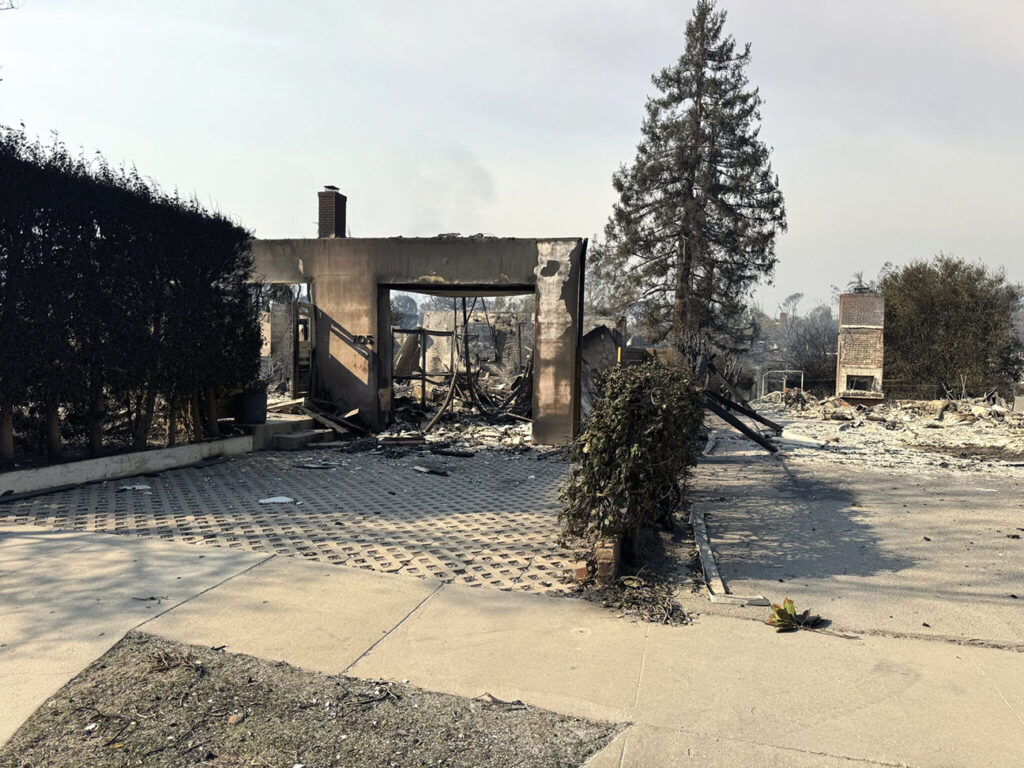
Less than 24 hours, and that’s it. I watch videos of people touring the hollowed out, ashy ruins, pictures of Palisades High School burnt out, the street I lived on being nothing but rubble, and none of it feels real. How do I process this? How do I grieve?
Less than 24 hours, and that’s it. I watch videos of people touring the hollowed out, ashy ruins, pictures of Palisades High School burnt out, the street I lived on being nothing but rubble, and none of it feels real. How do I process this? How do I grieve?
I guess you have to start from the beginning.
The Palisades starts as you turn up Temescal Canyon. Once you get past that obscenely long red light, you drive up a long road surrounded by canyon walls.
You’ll see people walking their dogs, beachgoers taking surfboards off their cars, construction workers on break by the food trucks, nestled between the wildlife.
As you reach the part where uphill ends, you’ll reach PaliHi; we’re imagining that this isn’t a weekday, otherwise you’d be so swamped in traffic the aforementioned process would take maybe thirty minutes.
You see kids milling about; maybe they’re the football team taking a break between drills, the marching band moving in lockstep to a metronome, or the swim team doing 100-meter sprints. I have many words to say on Pali, far too many to put into an article like this without derailing it, but when I gather all my memories and look through them like an overstuffed scrapbook, I think that the destruction of something so pivotal to the person I am today feels something like a denial of everything I went through to reach today. Frankly, it terrifies me.
Pressing on gets you to an intersection. If you go left, and drive along sleepy residential streets, you’ll reach popular after-school hangout spot Ronnie’s, which is just beyond Marquez Elementary, alma mater to many a Pali resident.
Continuing straight are the Temescal Canyon hiking trails, where you can enjoy beautiful walks with nature. Maybe you’ll take a short trip to the waterfall, or perhaps make a whole day of it to get to Skull Rock and back.
On the left is the meadow in which the YMCA hosts holiday events, but it’s a bit too late to have Christmas trees, and too early to have Halloween pumpkins.
Going right takes you closer to the heart of the Palisades, at another intersection. On either side of you are the Shell and Chevron gas stations, glaring across at one another, uselessly competing for business as everyone knows the car wash at Ralph’s has the cheapest prices, like the Chevron by Patrick’s Roadhouse on PCH.
Going left at this intersection will take you to the sprawling Alphabet Streets, where I stuffed my bag full of Halloween candy many a time, and biked through them to see friends even more times.
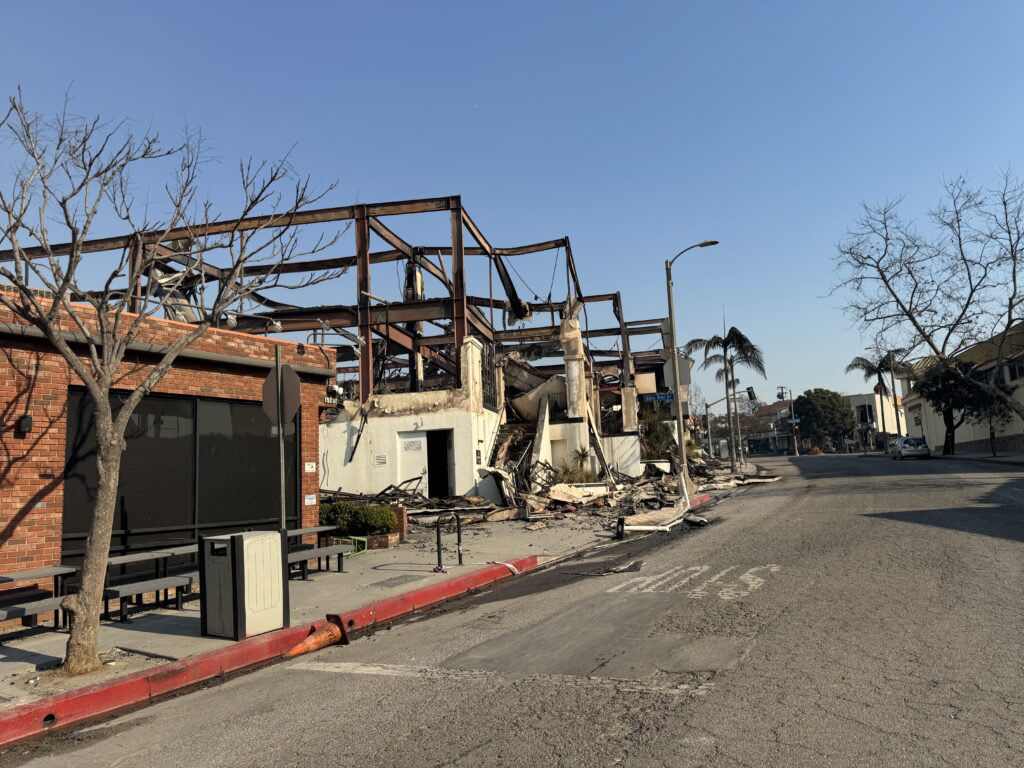
Houses on the Alphabet Streets, with the exception of a few along Chautauqua, are decimated.
Go right, and you’ll be at Gelson’s, that overpriced store I couldn’t stop going to because their Salmon Soba Pack and poke bowls were just too good. We must have spent thousands of dollars at Viktor Benes’ bakery for their challah before Dad learned to make his own — and even then, we still loved their cookies.
Gelson’s grocery store
Further along is the dry cleaners. I’d often take my dad’s clothes there when I was out on errands for him. I remember being annoyed that I had to pick them up; considering he was the only one who used the cleaners, he should have to picked them up on his own. Then I remembered I was driving his car, and I felt stupid for being annoyed.
Across from the dry cleaners is Toppings. I’ve been going to Toppings since they still had that iPad in the corner of the store you could use to take photos, which is to say 13 whole years. The atmosphere was just as good as its yogurt.
Zigzagging back to the other side of the street, next to several shops I sadly never had a reason to enter, is the Pali YMCA. The summer before I went to college, I spent nearly every day working out, watching anime on my phone and getting funny looks from other gymgoers, and running into acquaintances with a one-sided remembrance of our relationship. Pierce, Sasha, Evan and Val, who were always willing to greet me with a smile, come to mind as well.
Next to the YMCA is the Methodist Church, which I never had a reason to enter (I’m Jewish), but always left a strong impression in my mind, as its spire could be seen on my way home in the evening, shining because it was lit from below, looking so much like a castle.
The steeple, cross and sanctuary of the Methodist Church collapsed.
Then across from the church would be Pali Elementary. To see that the place that raised me with such care and sincerity is now gone fills me with a sadness I find difficult to describe. I see fragments of memories in my mind: Tottering down the hallway with my mission project, getting absolutely juked out of my socks by Evan in basketball, reading quietly in the library when no one was around to chastise me for not socializing enough and planting in the garden. These images fill me with a sense of warmth, but also a heavy weight in my chest.
If you went straight down Sunset instead of turning onto Via de la Paz, at the next intersection you would see Rick Caruso’s Palisades Village (which I remember before it was Caruso’s). Younger me would often end up wandering around Puzzle Zoo while the adults shopped, staring at toys I couldn’t dream of owning unless I waited until my next birthday or Hanukkah. I missed Mayberry’s restaurant.
And, in the present, I miss McConnell’s Ice Cream and Blue Ribbon Sushi. I can only hope somewhere else in the world has crispy tuna rolls that good.
On the right of Rick Caruso’s is a small center with Bank of America, Starbucks, Cafe Vida, and Casa Nostra. Those four establishments seemed to be invincible; as long as I knew the revolving door of business in the Palisades, those four would remain.
I remember my mom being so excited to work at Bank of America, now that it was within walking distance AND right next to a Starbucks. Her enthusiasm diminished when she had to actually start working at the bank.
Turning right, you catch a glimpse of Kay and Dave’s out of your eye — no, it’s something else now, isn’t it? Its name eludes me, but I did not like that place anywhere near as much as Kay and Dave’s, no sir. My stomach gets tight at the thought of how many chips of theirs I ate before our meals came.
You drive onwards and you see Beech Street, a luxury Italian restaurant where I had many a celebration, always ordering the linguini with clams. And the Yogurt Shoppe, where I did not eat often but enjoyed when they catered parties I attended. And CVS — I don’t want to think about how many Arizona teas I bought from there.
You turn left and head down the hill. The Palisades Post Office passes by. I sent several packages from there to eccentrics who wanted to purchase my anime merchandise, making a cool cent along the way. I had planned to send some more packages from there when I returned in the spring, selling off more merchandise. Sadly, that merchandise no longer exists, as it has all gone to ash. It stings, to be honest— I had about $8,000 worth of rare collectibles I was planning to sell off to pay for my first apartment lease, or something similar.
It was, admittedly, a bit funny to see the reactions of some of my potential buyers. “Hey, I can’t send you this anymore, my house burned down and it was inside. Sorry.” Can you imagine receiving a message like that? I certainly can’t.
Almost rubbing shoulders with the post office is the Garden Cafe. Speaking of places I’ve sunk money into, at the Garden Cafe I spent thousands on chicken sandwiches and boba after middle school. I raced off the bus to be the first in line before the mean high schoolers got in and kicked us all out. I mean, in my head, they were kicking us out. In reality, the line was just too long and they wanted us lining up outside the door, which took me far too long to realize.
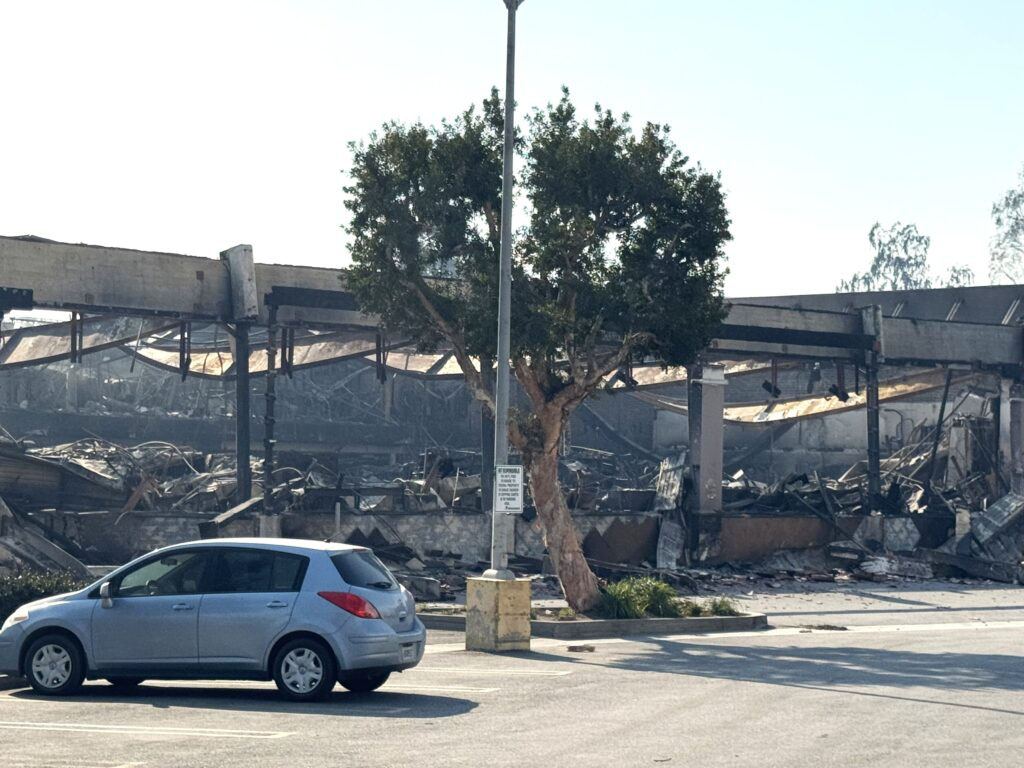
Garden Cafe, the Post Office, Legion and CVS are still standing. The building that housed Taj Palace and Chase Bank is destroyed.
Food trucks Gracias Senor and Sunset Smashburger were where I started putting my money into after I got into high school. A silver lining is that these two trucks, being trucks, will continue to operate. I still crave my Truffle Smashburger and Carnitas Fries, and hope I’ll see them operating near me one day. Maybe when they’ve expanded into statewide chains?
You turn right, passing by Ralph’s, which was where we went when my brother really, really wanted his 10-piece fried chicken for $5. I swear, it was just about all he ate for a period.
This is what is left of Ralph’s supermarket.
Formerly Norton’s, now Anawalt, stands as the one stop shop for all the Palisadians’ hardware needs; for my mom, that was looking at tile colors and rugs, imagining how it’d fit into our house. My dad already had too many tools, so he didn’t need to have much of an interest in the store. And I was about as handy as a fish. I mostly came in to talk to friends working there part-time.
Then there is the library. As far as Palisades’ buildings go, I am, personally, most devastated by this loss. I was a troubled kid, who never seemed to understand how other people worked. But books? Books I could understand. And I loved, loved books. Too many days I would spend in a sunbeam, a massive stack of books next to me, just reading and reading. Now the sun does not come through a window; instead it shines down on an ashen slurry of countless worlds put to paper. I will never read that copy of Percy Jackson again.
The Palisades LIbrary has collapsed inward after burning.
Beyond the library is the park. There isn’t an inch of the park I haven’t traveled, if I do say so myself. The swings, the Rec center, the strange dip next to the parking lot, the top of the shipping container, the swings, the baseball field, the area beyond the park (before and after it was reconstructed), and the tennis courts.
That is my childhood, my Sunday recreation, my objective for a dog walk, my elementary extracurriculars. Where I would go to think, to observe, to write, to kill time. My muse, in a sense. It, too, is gone.
That is my childhood, my Sunday recreation, my objective for a dog walk, my elementary extracurriculars. Where I would go to think, to observe, to write, to kill time. My muse, in a sense. It, too, is gone.
You drive past the park, in as straight of a line as you can, into the Huntington Palisades, where I took my driving lessons. I did well for my first time driving, but not perfectly. I’d rather not remember that part, to be honest.
You keep driving. You wind and wind onto Chautauqua. You descend the sharp slope. You wait, patiently, at the stoplight. You go right, and reach the beginning of Temescal Canyon. You’ve completed the loop, but this time, you take a right just before the first cross intersection, past Theater Palisades, where I spent much of my youth.
You keep going straight. There is my house, on the right, with the great redwood, hundreds of years old, peeking out just behind it. In my house are photos, plates, food, bikes, books, beds, games, showers, memories. All I have left are the memories.
You keep going straight. You go right, up a steep hill.
On your right is a perfect, unobstructed stretch of land that oversees what almost looks like the whole of California, staring down at the ocean bordered by PCH which zigzags and curves out of sight. The cars look just like ladybugs running across a stone-grey plant.
You keep going straight.
Here, there is a sign that forbids further driving, and you get out. You walk to the edge, where only a run-down white fence is the border between you and a sheer drop. Here, what must be the whole world spreads out before you. The sun is setting to the west, casting everything in an orange glow, burning the blue sky pink.
The Santa Monica Pier’s Ferris wheel is lit and spins, pulsing with the rainbow. An infinite line of red and white lights soar down the highway. A parasailer is flying down into the ocean.
If you are lucky, and there is not too much wind, someone may be flying their model airplane next to you, watching it dip and soar beneath the cliff face, little children squealing as it twists and turns.
I am five years old. My parents are talking to other adults about complicated topics I can’t understand, drinking something I can’t drink. I climb to the top of a nearby tree and stare out at the ocean. This must be all I will ever see, I think to myself. I cannot comprehend a world larger than this.
I am 12 years old. I am walking my new dog to the bluffs. His first reaction to this new, unfamiliar place is to rub his face in the dirt, creating a storm of filth that spreads to me as well. I am upset but cannot stop a smile from coming to my face. He grins back at me guilelessly.
I am 16 years old. My friends and I are leaning against the rails, staring out at the horizon. They are smoking. I do not smoke. I crane my head away from them so what flows from the ends of their cigarettes won’t get in the way of the view. They laugh at me.
I am 18 years old. I am looking out at the sunset just a few days before I leave for college. My dog is on my lap. He is old enough now to know not to make a mess. He sits, impatiently, while I watch the world turn orange. I do not know that it is the last sunset I will ever see from these bluffs. Of course, neither does he, but I find it hard to imagine he was thinking about anything at all. I stay until the last sliver of orange fades into the black sea.
I am 19 years old. The Palisades are gone.
“And then one day you find
Ten years have got behind you
No one told you when to run
You missed the starting gun.”
I loved the Palisades. I loved my home.
I am still struggling to process that it is gone, that one hundred miles away from me, what was once my whole world is gone. Perhaps I will be able to understand when I walk onto my street to find my vision of the ocean unobscured, those once-towering houses reduced to a few inches of ash and ember.
Now, there is just a canvas, and we hold the paints. I look forward to seeing what is painted atop the rubble that my children will see.
Chaz Plager was born and raised in Pacific Palisades and penned a farewell to his town as he started college in September. After the fires, he looked back on that farewell.
During the first six days of the wildfires, over 30 arrests were made in wildfire zones across Los Angeles County. Arrests include charges for burglary, looting, curfew violations, possession of narcotics, and firearms.
“The LAPD presence at the different burn sites is going to remain in effect until further notice,” Captain Mike Lorenz of the Los Angeles Police Department (LAPD), who serves as the incident commander for the evening hours, said.
Lorenz said that LAPD had about 400 personnel at any given time at the Palisades fire. That fire alone has a footprint of destruction that is already one-and-a-half times the entire New York borough of Manhattan.
LOOTING
Los Angeles County District Attorney Nathan Hochman announced on Jan. 13 that 10 people are facing felony charges in connection with crimes committed during the devastating wildfires. “Let me be clear: If you exploit this tragedy to prey on victims of these deadly fires, we will find you and we will prosecute you to the fullest extent of the law,” Hochman said.
“Let me be clear: If you exploit this tragedy to prey on victims of these deadly fires, we will find you and we will prosecute you to the fullest extent of the law.” – Nathan Hochman
Nine of the charges are related to burglaries, and one defendant has been charged with arson for intentionally starting a fire. Among the charges filed in alleged crimes in the vicinity of the Palisades fire area, “Martrell Peoples, 22, and Damari Bell, 21, face charges of first-degree residential burglary and looting during an emergency, with allegations of grand theft exceeding $200,000. Peoples, who was on parole from state prison, and Bell, who is on felony probation, are also charged with firearms violations. If convicted, Peoples could face life in prison, while Bell faces 22 years and 8 months. Travon Coleman, 27, attempted to evade police and crashed into another vehicle in downtown Los Angeles, injuring the driver. Coleman fled on foot but was later detained. He faces felony hit-and-run charges and could also receive a life sentence if convicted.
Hochman warned looters that they are guilty of various degrees of burglary, grand theft and conspiracy — all of which are felonies. Two people were arrested for posing as firefighters to gain access to homes in the Palisades fire evacuation zone. LAPD said that they are paying close attention to everybody that’s coming through to the arena — including vetting private security personnel hired by homeowners to monitor their properties. This has hampered efforts by law enforcement to escort some homeowners to return to evacuated areas for their pets and medications.
Los Angeles County Sheriff Robert Luna warned residents about the dangers of entering evacuation zones prematurely since many areas still pose hazards and could potentially become crime scenes. “Every day, we’re running across the remains of individuals,” Luna said. In addition to valuables being stolen from evacuated (but standing) homes, some looters also target the burned-out remains of cars, to salvage and sell scrap metals from the scene.
DRONES
Less than a week after the fires started, three arrests were tied to civilians flying drones. One drone is confirmed to have collided with a Canadian firefighting plane on Jan. 9. The plane had to be grounded for at least four days for repairs. “Since the start of this incident, we’ve had 48 total drone incursions into the airspace,” said Robert Harris, Deputy Fire Chief of the Los Angeles County Fire Department. “When those privately owned drones are detected, we have to pause aerial firefighting activities.”
California State Assemblymember Jesse Gabriel (D-Encino), co-chair of the California Legislative Jewish Caucus at the State Capitol, had a stern warning to people flying their drones around the area. “There are FBI agents on the ground right now in Southern California,” Gabriel said during the Palisades town hall. “If you fly a drone, they will find you. You will be prosecuted to the fullest extent of the law.”
The Federal Aviation Administration (FAA) says that interfering with firefighting efforts on public lands is a federal crime, punishable by up to 12 months in prison. The FAA said that drone pilots can be fined up to $20,000 if they interfere with “wildfire suppression, law enforcement or emergency response operations. Your photos and video footage of the wildfires are not worth the lives and crucial operations they jeopardize,” the FAA said.
PRICE GOUGING
Hochman and California Attorney General Rob Bonta (D) are warning the public about price gouging. Under California law, businesses cannot increase prices by more than 10% during an emergency. “There are still people in our community who rather than saying ‘thank you,’ look at this as an opportunity to commit crime and to take illegal profit and advantage over the situation,” Hochman said at the Jan. 13 press conference. The DA’s office said that there have already been reports of price gouging by hotels and medical supply businesses.
Bonta warned that following devastating wildfires in the past, there have been “businesses and landlords that use increased demand during emergencies to jack up the price of essential supplies and services of gas and water batteries, first aid supplies, construction materials and housing, including hotels and including short-term rentals.” Bonta warned that price gouging is punishable by up to one year in jail and carries substantial fines.
Bonta also warned the public to be vigilant about relief scams. “We’ve seen scams that have gone after elderly individuals, immigrants, others, including those who don’t speak English as their first language,” he said. “Some even create fraudulent organizations with names that sound eerily legitimate and are easy to fall for. Like ‘American Red Cross of California.’ Sounds good, sounds legitimate, sounds official. It’s not. It sounds like the Red Cross we all know and trust, but that was actually the name of a now defunct organization that the DOJ ordered to cease and desist back in 2019 for misleading donors. It tried to use the good branding and goodwill that the real Red Cross had to create this scam. Scams come in many forms. They’re often creative …. They can come by text, they can come by phone calls, emails, social media and crowdfunding sites or in person.”
ARSON
Authorities are not ruling out arson as a possible cause of any of the wildfires. As a result, 15 investigators from the Bureau of Alcohol, Tobacco, Firearms and Explosives’ (ATF) National Response Team (NRT) were deployed on Jan. 10 to investigate the origin of the Pacific Palisades fire. They include special agents, chemists, engineers, and investigative researchers. “ATF is fully dedicated to providing answers to the Pacific Palisades community,” said Jose Medina, Acting Special Agent in Charge of ATF Los Angeles Field Division. “These wildfires have caused immeasurable heartbreak and losses. ATF is determined to leverage every available resource to deliver a thorough and transparent investigation.”
Los Angeles Jewish community leaders quickly responded to the wildfires raging across Los Angeles County by pledging support for those most in need.
“As leader of the largest Jewish philanthropic organization in Los Angeles, it is my sacred duty to ensure the safety of our community,” Rabbi Noah Farkas, CEO of Jewish Federation Los Angeles, said in a phone interview. “We are working diligently with our partners to provide resources and are utilizing cutting-edge communication methods to directly reach people in crisis. Every member of our community impacted by this tragedy will receive the help they need.”
On Jan. 9, Jewish Federation Los Angeles organized a virtual briefing, featuring community leaders providing updates related to the fires blazing across Los Angeles County. Approximately 500 listeners tuned in.
Among the speakers was Los Angeles City Councilwoman Traci Park. The L.A. elected official offered a sobering assessment of the on-the-ground reality in Pacific Palisades, where a fire had burned through more than 20,000 acres and was just eight percent contained as of Jan. 10, hours before Shabbat began.
“The scenes on the ground are absolutely apocalyptic,” Park, who represents the city’s 11th district, which includes Pacific Palisades, said. “It’s a miracle anything is still standing, and even for the folks that may have a home to return to, the scope and the scale of the damage is so significant that it’s going to take many, many, many months just to get the rubble out and to bring some basic structure and order back.”
Park said she anticipated a “yearslong recovery ahead.”
The L.A. City Councilmember was speaking two days after an unprecedented fire broke out in Pacific Palisades and scorched the affluent Westside neighborhood. Fires also raged in Eaton Canyon, Hollywood Hills and Sylmar, among other areas.
Among the structures that were destroyed is the Pasadena Jewish Temple and Center, which “has burned entirely to the ground,” according to a statement on the synagogue’s website. The synagogue also housed the B’nai Jewish Community Preschool.
Additionally, multiple synagogues reported having congregants who had lost their homes.
The Jan. 9 Zoom call organized by Jewish Federation Los Angeles was the latest action the organization has taken since the outbreak of the fires. The L.A. Federation has launched a Wildfire Crisis Relief Fund and compiled resources on its website for those in need, at jewishla.org/fire.
The L.A. Federation is also rolling out an emergency text response service, which the organization describes as an “innovative text-based alert system that provides a new level of connection and comfort to Jewish Los Angeles during a time of uncertainty and crisis.”
Distinguishing this system from others is the real-life Federation staff people who are responding to text messages, Farkas told the Journal.
“The feedback has been absolutely tremendous as a way of feeling you’re a part of something, part of a community that cares about you,” the L.A. Federation CEO said.
Leaders of multiple Jewish organizations, including Bet Tzedek, Jewish Family Service LA and Jewish Free Loan Association, have offered various forms of assistance and support for those affected by the fires. JFLA, a nonprofit, interest-free loan organization, is offering emergency loans of up to $15,000 to cover evacuation expenses, such as hotel or motel rooms, short-term rentals and travel outside of the area. There are also a limited number of loans of up to $2,000 for applicants without access to guarantors, available on a first-come, first-served basis, JFLA Executive Director Rachel Grose said.
Jason Moss, executive director of Jewish Federation of the Greater San Gabriel and Pomona Valleys, struck a realistic yet hopeful tone as he addressed the damage that’s been done.
“Our community has forever been changed since Wednesday night,” Moss said. “But through change comes opportunities and growth, and even in this devastation, people know that there is support coming from our local Jewish community and nationally, and it is greatly appreciated.”
Likewise, Jewish Federation Los Angeles Board Chair Orna Wolens acknowledged the unprecedented devastation that has taken place but was confident the community would step up and help.
“The needs are immense and only growing,” she said.
Chai Lifeline, which serves families with children suffering from life-threatening illnesses, has been assisting those dealing with trauma from the current wildfires. In a phone interview, Dr. Dovid Fox, a forensic and clinical psychologist and director of crisis intervention at Chai Lifeline International, said he was urging those in need to consider their “mental hygiene” as the days unfolded and the true damage from the fires became clearer.
Chai Lifeline’s hotline—855-3-CRISIS—was a useful tool for the community, Fox said.
He advised those who are struggling to “be self-aware of their own reactions. Self-awareness is part of self-care. For those whom spirituality is an important part of their lives, [ask yourself] ‘How is this affecting me spiritually?’”
Danielle Goldblatt, founder of Holy Smokes Kosher Barbecue, a Tarzana-based caterer that offers weekly takeout kosher Shabbat meals, is among the many who’ve sprung into action. Since the outbreak of the fires, Goldblatt, her staff and volunteers have prepared kosher meals for first responders and displaced families. While she acknowledged most L.A. firefighters probably don’t keep kosher, “It’s about great food, that happens to be kosher,” Goldblatt told the Journal in a phone interview.
Many of those meals— including sweet-and-sour meat balls, rice and sautéed cabbage—are being delivered to Chabad of Pasadena, which has been offering daily daycare for kids whose schools burned down, distributing meals to the displaced and providing gift cards for essentials, among other services.
Goldblatt has collaborated with Chabad at Pierce in raising funds to support the effort—but donating isn’t the only way to help.
“If people can’t fiscally help, continue to share donation links,” Goldblatt said. “Spreading the word and seeing how we can support people is really the number one thing.”
Farkas said he’s been heartened by the response from the wider Jewish community, including from Israeli governmental organizations that have reached out to the L.A. Federation and asked how they can assist.
“It reinforces for me that we are a global, united Jewish community,” he told the Journal.
An ordained rabbi, Farkas said it’s natural for people to be asking existential and theological questions at a time like this, such as “Is God in the fire?” “Did God punish these people who’ve lost their homes?” or “What did I do wrong?”
But the former rabbi at Valley Beth Shalom, where he served from 2008-2021 before taking the top job at Jewish Federation Los Angeles, said he was letting wisdom from the late Rabbi Harold Schulweis guide him.
In moments of crisis, Schulweis taught ” ‘that God is not in the tragedy, but God is in the response to the tragedy,’” Farkas said. “ ‘And it’s in our eyes, our hearts, our hands. And that our capacity to love and care for each other, that’s where we find God.’”
Jewish groups issued various reactions to the reported ceasefire agreement between Israel and Hamasannounced on Jan. 15. As part of the 42-day ceasefire, which will come into effect on Sun. Jan 19, 2025, Hamas will release Israeli hostages taken on Oct. 7, 2023 with Israel releasing hundreds of Palestinian detainees.
The reported agreement would be implemented over three phases, with the first phase involving Hamas releasing 33 Israeli hostages and Israel releasing hundreds of Palestinian prisoners over the next six weeks. On the 16th day of the implemented agreement, negotiations would begin over the second phase in which younger male hostages would be released in exchange for 1,000 Palestinian prisoners; negotiations could also bring a permanent end to the war in the second phase.
Jewish Insider senior political correspondent Lahav Harkov shared two statements from hostage family forums on X; the Hostages and Missing Families Forums Headquarters thanked the Biden administration and incoming Trump administration for making the deal possible. “Now, after over 460 days of our family members being held in Hamas tunnels, we are closer than ever to reuniting with our loved ones,” the Hostages and Missing Families Forums Headquarters said. “This is a significant step forward that brings us closer to seeing all hostages return … However, deep anxiety and concerns accompany us regarding the possibility that the agreement might not be fully implemented, leaving hostages behind. We urgently call for swift arrangements to ensure all phases of the deal are carried out.”
The Tikva Forum of Hostages’ Families, however, said they are “deeply concerned” about the deal, as it “leaves dozens of hostages behind in Gaza. It also sets the stage for the next massacre and future kidnappings of Israelis. Like all Jews and Israelis, we all felt excitement and relief at the release or rescue of each hostage after a long and cruel period in captivityby an evil enemy. However, this deal endangers the hostages left behind and Israel a whole.” The forum urged Israeli cabinet members to “not be a part of a government that betrays dozens of hostages, leaving them in captivity” and to work toward “a responsible deal that secures the release of all our loved ones TOGETHER!”
The two hostage families forums' statements – one positive, one negative, both very concerned. pic.twitter.com/SKVeceW9PG
“I’m elated to see a deal that frees 33 of the innocent men, women and children held in captivity in Gaza by the barbarians from Hamas and their accomplices,” Anti-Defamation League CEO Jonathan Greenblatt posted on X. “And yet all should remember — Hamas started this war with the horrific Oct. 7 attacks, the most violent act of antisemitism since the Holocaust. Their apologists in the West excused and encouraged this barbarity. This war could have ended at any point, saving countless lives, if Hamas simply had released the hostages.”
I'm elated to see a deal that frees 33 of the innocent men, women and children held in captivity in Gaza by the barbarians from Hamas and their accomplices. And yet all should remember — Hamas started this war with the horrific October 7 attacks, the most violent act of… pic.twitter.com/V9hG8gzLgo
American Jewish Committee CEO Ted Deutch said in a statement, ““AJC is grateful to the Biden Administration, the incoming Trump Administration, and other global partners for working together to secure the first stage of the agreement. We cannot wait to see the first hostages come home to their families, but the critical work to free every hostage – regardless of age, gender, or nationality – must continue. The international community must persist in its efforts to ensure that every hostage is reunited with their loved ones.”
StandWithUs CEO and Co-Founder Roz Rothstein said in a statement, “This is a moment we’ve all being praying and working for. This is a time that could ease the pain of suffering inflicted by Hamas on Oct. 7, 2023 and that has continued for more than a year and a half. However, given Hamas’ history of violating agreements and undermining past ceasefires, we remain vigilant in following the developments and hopeful that Hamas will adhere to the agreement.”
The Republican Jewish Coalition (RJC) issued a statement that it “cautiously welcomes” the agreement. “It has been 466 days of hell for the hostages and their families and 466 days of a terrible war,” the RJC said. “We hope Hamas will release all of the hostages swiftly and without delay. The excruciatingly difficult calculations for Israel around getting the hostages back, releasing terrorist prisoners, and other potential details of a ceasefire agreement are matters best left to the Israeli government. We trust that the Government of Israel has done everything possible to ensure the safety and security of the Jewish state and its people, in keeping with its values.” The organization proceeded to “thank President-elect Donald Trump and his team for helping to move this process forward and for their unwavering support for Israel’s security. President Trump’s pronouncement that there would be ‘hell to pay’ if a deal was not reached for a release of the hostages before he took office on Jan. 20 clearly had a significant impact on closing the gaps to reach this deal.”
Jewish Democratic Council of America CEO Halie Soifer and Chair Susie Stern said in statement, “We are relieved and hopeful that the hostages will soon be reunited with their loved ones, and we are praying for their health given the incredibly difficult conditions they’ve endured in Hamas captivity. We also stand with the families whose loved ones are still being held in Gaza, mourn those lost at the hands of Hamas, and will not rest until every hostage is returned.” Soifer and Stern credited “the tireless efforts of the Biden administration. For over fifteen months, President Biden and key members of his administration, including Secretary of State Antony Blinken, National Security Advisor Jake Sullivan, and White House Coordinator for the Middle East and North Africa Brett McGurk have insisted that any conversation about bringing an end to the war must include the release of the hostages, and today, we are finally seeing the result of those painstaking negotiations.
“We thank President Biden, Vice President Harris, and their team for their determined and enduring leadership and support of Israel and for their commitment to ensuring the hostages’ release. We strongly urge the incoming Trump administration to follow through on the measurable progress made by President Biden to end the war in Gaza and ensure that all parties honor their commitments.”
Combat Antisemitism Movement CEO Sacha Roytman Dratwa said in a statement, “We are relieved that an agreement has been reached to free the Israeli hostages and look forward to seeing them reunited with their loved ones back home. For nearly 470 days, the hostages have endured unimaginable cruelty, with their fundamental human rights brutally denied to them by their Hamas captors. Hamas’ barbaric tactics, reducing innocent lives to macabre bargaining chips, stand in stark contrast to Israel’s unwavering commitment to humane values. While we are grateful to both the outgoing Biden and incoming Trump administrations for their efforts to broker this deal, we must note our deep concern over the imbalance of an equation where dozens of terrorists are exchanged for a single civilian or soldier. This agreement highlights Israel’s dedication to its citizens while exposing Hamas’ gross disregard for human decency and international law. The suffering of these hostages must serve as a call for the world to hold Hamas accountable for its crimes.”
Human rights lawyer Arsen Ostrovsky, who heads the International Legal Forum, posted on X that “Israel essentially had to make a deal with the devil, that will come with considerable risk. But the no.1 prerogative is getting as many hostages out – alive – as possible. The IDF is also far stronger today. Lessons have been learnt from Oct. 6. While Hamas is virtually decimated.” He added that there will soon “be a new President in the United States, who if needed, will give Israel absolute leeway to operate as required, without restrictions. We also need to maintain focus on Iran, and the threat it presents. There were no easy choices here. Only painful decisions. But the number one prerogative has always been to get our loved ones back. I understand not everyone will support this decision, but the decision having been made, now is the time for unity, for healing and to shore up support behind Israel, our hostage families and heroic IDF soldiers.”
“Israel essentially had to make a deal with the devil, that will come with considerable risk. But the no.1 prerogative is getting as many hostages out – alive – as possible. The IDF is also far stronger today. Lessons have been learnt from Oct. 6. While Hamas is virtually decimated.” –Arsen Ostrovsky, International Legal Forum
Yes, Israel essentially had to make a deal with the devil, that will come with considerable risk.
But the no.1 prerogative is getting as many hostages out – alive – as possible.
The IDF is also far stronger today. Lessons have been learnt from Oct 6th. While Hamas is virtually…
J Street posted to X that “words can’t express the epic, overwhelming relief we feel – tempered only by the risks the deal still faces …The families who we hope will soon be embracing their loved ones once again,” J Street wrote. “The gratitude that this horrific war may soon be over – that food can reach those who don’t have enough. Help can reach those injured. The displaced may now find shelter.” The Jewish group added that “it’s critical that all parties remain committed to the difficult negotiations ahead to implement the next phases of the agreement so that all the remaining hostages are released and a permanent ceasefire deal is reached, signed and enforced.”
We finally have a ceasefire and hostage deal. Words can’t express the epic, overwhelming relief we feel – tempered only by the risks the deal still faces 🧵
The families who we hope will soon be embracing their loved ones once again. The gratitude that this horrific war may soon be over – that food can reach those who don’t have enough. Help can reach those injured. The displaced may now find shelter.
It’s critical that all parties remain committed to the difficult negotiations ahead to implement the next phases of the agreement so that all the remaining hostages are released and a permanent ceasefire deal is reached, signed and enforced.
On Jan. 13, Zionist Organization of America National President Morton A. Klein issued a statement opposing the reported terms of the deal, calling it “a huge mistake.” “It would mean that many more innocent Jews will be murdered and kidnapped by these released terrorists. It would mean more Oct. 7s,” Klein said. “It would be an Israeli surrender, and a victory for the Hamas and Palestinian Authority terrorists – after hundreds of precious Israeli soldiers fell in battle, and thousands were wounded and crippled, to try to prevent future Oct. 7s. No responsible Israeli government should agree to such a dangerous surrender deal.” Klein pointed out that “some hostage families have spoken out against” the deal; he also said that the ZOA agrees with Israeli Finance Minister Bezalel Smotrich, who called it a “surrender deal,” and Minister of Settlement Affairs Orit Strock, who called the deal “a victory for Hamas.”
Yes, Israel essentially had to make a deal with the devil, that will come with considerable risk.
But the no.1 prerogative is getting as many hostages out – alive – as possible.
The IDF is also far stronger today. Lessons have been learnt from Oct 6th. While Hamas is virtually…
Jewish Voice for Peace, an organization that supports the anti-Israel Boycott, Divestment and Sanctions movement, said in a statement, “Today, after 15 months of the Israeli government’s genocide of Palestinians in Gaza, supported and enabled by the U.S. government, a 42-day ceasefire agreement was reported. We hold tightly to the hope of a halt to the Israeli military’s bombardments, an end to the starvation of Palestinians by the Israeli government, a beginning of rebuilding in Gaza, and the return of hostages held in Israel and in Gaza to their families. The coming days and weeks during this fragile ceasefire will be critical for the Palestine solidarity movement to turn this temporary agreement into a full halt of the genocide, including the unrestricted flow of humanitarian aid and an end to the Israeli military occupation and siege of Gaza.” The group added: “As Jews, we know that the trauma of this campaign of annihilation will unfold for generations. As Americans, we understand that the Israeli genocide has been carried out with U.S. bombs, U.S. funds, and U.S.-facilitated impunity — we continue to demand a full weapons embargo now. We also demand an end to the complicity of corporations that profit from genocide. Left in the hands of the U.S. and Israeli governments, weapons manufacturers, and warmongering institutions, this fragile respite will not mean an end to Israeli genocide or to the violent status quo of Israeli apartheid. It is up to all of us to ensure that this temporary agreement is only a beginning.”
Rabbi Mendel Kalmenson is the bestselling author of seven books that provide invaluable advice for how to create a life of meaning and joy. His newest book, On Purpose, teaches readers to see the Divine providence in every moment, encounter and relationship in their lives, in good times and bad. Spiritual leader of Chabad of Belgravia UK, Rabbi Kalmenson is an emissary of the Lubavitcher Rebbe who is passionate about transmitting the wisdom of the Rebbe to help people improve themselves, their relationships, and the world around them.
Suzy Sapir, the founder of the Hippie Pilgrim Helpline, makes it easy to get your food and cooking questions answered. Every night, between 4 pm and 6pm PT, Sapir, who also owns the Hippy Pilgrim gourmet seasoning company, takes calls on her private cell: 781-291-0264. People anywhere in the world can ask questions or just call to chat.
“When I started this helpline in October, I had no idea the types of requests that would come in or what people were looking for information,” Sapir told the Journal. “They’ve been so diverse “
For instance, people will call and say, ‘I don’t have a grandparent anymore or that go-to person in my family.’
“One woman said, ‘I was raised in the foster care system and I never had anyone in this department,’ so it fills this unique void,” Sapir said.
For those in Los Angeles, who have been displaced due to the fires and still want – or need – to cook, you have options, even if you did not pack your favorite tools and appliances.
“When you have to dart out of the house, you grab your prize possessions,” she said. “No one’s thinking of grabbing a crock pot or a cooler or a can opener.”
While various organizations and restaurants in the Los Angeles community have been great about offering meals to those displaced by the fires, sometimes people want that normal feeling of cooking for their family, whether you are at a hotel, an AirBNB or sharing a small space with friends.
“Food actually slows us down,” she said. “Nothing tastes so good as that first meal that you make in that crisis or in that moment; it fosters true appreciation for the family meal … breaking bread together.”
Basic kitchen necessities include a can opener and a strainer, along with compact, countertop electronic devices, since you can really do anything in them. This includes a crock pot, air fryer, rice cooker and teapot.
“Having that ability to be able to heat water is a luxury and a privilege in a [crisis] situation like that,” she said. “Even if you’re staying with a family of six that has a small kitchen; they’re already using the oven [and] you don’t want to get into each other’s space too much.”
She added, “Plugging in a crock pot and throwing a few ingredients into it to make a meal for many is a perfect solution … [or you] can actually roast a whole chicken in an air fryer [in 90 minutes].”
When Sapir first started working in television, she flew out to Los Angeles to audition for a food expert position.
“I actually traveled with a plug-in skillet [and] a strainer,” she said. “I made a [gourmet] meal in a hotel room that I then took to the meeting with the executives at Warner Brothers and then finished it off right in front of them.”
She prepared a chicken dish with tomatoes, spinach and pasta that served four. And she got the job.
“These appliances and tools are easy and likely not too terribly expensive, if you need to start rebuilding your kitchen,” Sapir said. “”In that triage moment, [you can] feed [your family] and feed them well.”
The next step is to be strategic about the food you choose.
Sapir said to think in small quantities that are portable, since you may not have tupperware or ways to store leftovers, as well as shelf stable foods that do not require any or much refrigeration. This includes freeze dried powdered milk, canned protein (meats, tuna) and vegetables, dried fruit and little pouches of rice, noodles and instant mashed potatoes. If you want fresh produce, get whole foods, such as potatoes, carrots, apples, bananas and/or oranges. Anything with a peel or coating will stay fresh for an extended period of time.
“You’re going to curate a time-efficient, space-efficient pantry in whatever space that you’re in,” she said. “If you have the luxury of a cooler or a small mini fridge in the hotel that you’re staying at … shop for versatile ingredients that will go across the board with some of these starches.
To compose a meal, start with the starch and decide what protein to put with it. (“You’d be looking at proteins [beyond canned] that could be cooked quickly and easily, if you have a plug-in skillet,” Sapir said.)
Then ask yourself, ‘What would pull this all together?’
“Sometimes it comes in the form of a ready-made sauce; all you have to do is heat it in the microwave of your hotel space or wherever you’re staying,” Sapir said. You can go the marinara route or look at the pre-jarred sauces or salsas at your grocery to find something different to try.
Be sure to add vegetables and fruit to the meal, whether it’s from your canned supply or pre-cut zucchini noodles, if you have the refrigerator space.
Crisis cooking will require some creativity. However, the basics are relatively easy. You can even make things like chicken soup with matzo balls or brisket in the crockpot. Saprir’s brisket recipe is below.
In moments of trauma, it comes down to self care. “And the best way to take care of yourself is to eat,” Sapir said.
Stay safe everyone and do your best to eat well.
Learn more about Suzy Sapir at HippyPilgrim.com and follow @HippyPilgrim on Facebook and @hippypilgrimgarlicsalt on Instagram. For personalized answers to any kitchen or food related questions, the Hippy Pilgrim Helpline is open daily from 4 to 6 pm PT: 781-291-0264
Nothing brings people closer together than a slow cooked brisket. Minimal prep, delicious, feeds a crowd and can be repurposed into other meals later in the week easily. This can be made in a crock pot or in a large Dutch Oven placed in the oven. I prefer the “low and slow” method. Low temperature for a long time. It always yields a very tender brisket. Kosher beer, butter and onions makes for an easy yet complex sauce to serve with the brisket.
5-8 pound beef brisket
3 oz Hippy Pilgrim Coffee Rub
2 oz Hippy Pilgrim Pumpkin Spice Vanilla Sugar
1 oz Hippy Pilgrim Garlic Salt any variety
OR any seasonings/rubs/sugars available to you
2 large sliced sweet onions
1 stick of butter cubed
4-5 bottles or cans of kosher beer
Combine seasonings and coat brisket generously on both sides. Wrap very tightly in aluminum foil several times. In the crock pot or Dutch Oven add the beer, onions and cubed butter. Place the wrapped brisket on top of the onions and broth. Cover and cook on low in the crockpot or at 225 degrees in the oven for 5-6 hours.
Turn off the heat and allow to rest covered for an additional hour before removing the brisket from the liquid. Remove the aluminum foil and slice very thin using a serrated bread knife. Add back to the sauce to keep the brisket warm and tender for serving and storing.
Debra Eckerling is a writer for the Jewish Journal and the host of “Taste Buds with Deb.” Subscribe on YouTube or your favorite podcast platform.Email Debra: tastebuds@jewishjournal.com.
We knew that this past Shabbat was not going to be an ordinary day of rest, but we didn’t know how harrowing it would be. I got my first request to host guests for Shabbat lunch, even as the fires had already been burning for a few hours. A day and a half later, three of our six guests had canceled as thousands fled their homes, stayed inside due to harsh air quality, or just plain left town. “This Shabbat is teaching us to be flexible,” I told my husband, as we continued to prepare for the guests who were still coming. We were surprised at how much more flexibility was needed to make it through those 25 hours.
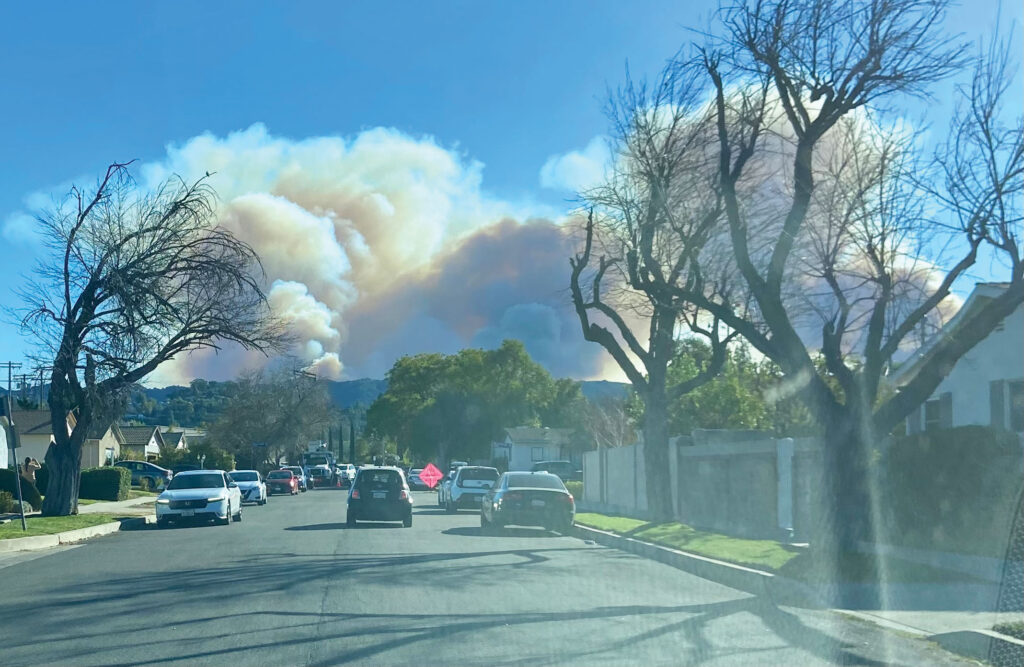
As Friday afternoon approached, the Palisades Fire had already burned 15,000 acres, including my aunt and uncle’s long-time home. We learned that we would need to be prepared for the possibility of evacuating over Shabbat. The giant bruise-like clouds of smoke looming over the mountains confirmed this possibility. The Northern edge of the fire was only a few miles away from our neighborhood. Our rabbi sent us detailed instructions for how to navigate the fire under the guidelines of Jewish Law, including packing essentials before sunset, leaving our normally silent phones on loud to receive alerts, and how to drive our cars to safety on Shabbat. He also made arrangements with a hotel willing to host our entire congregation in case of evacuation. As driving is an activity that observant Jews only do in case of life-threatening emergencies, there were some specific rules to follow if this needed to happen. We restlessly awaited any news as we made final preparations for the day of rest.
When packing took longer than I realized, I lost track of time. My son warned me that sunset was quickly coming and I raced to light candles in time. When the match broke in my hand, I realized that if I tried again, it would be past sunset. I made the decision not to light, one of very few times in my almost 19-year history of consistently lighting Shabbat candles that I was too late to do so. Despite the guilt I felt that I missed out on the mitzvah, I was glad to be in the comfort of Shabbat. I tried to find solace in Shabbat’s start, even without the comforting glow of its candles. Although the fire of this Shabbat wasn’t typical, I tried to actively connect to the blessings that I had in that moment. Thank God, I was safe for the moment and so was my family.
As night fell, the glow of the smoke clouds burned red in the low sky and was visible outside our front door. There was a constant reminder of fire looming over the evening. During the meal, we went outside multiple times, along with several of our neighbors, watching the smoke clouds grow in height and in brightness. Was it our imagination that they seemed to be closer than before? We got a Watch Duty alert on my phone that much of the neighborhood next to us was now under evacuation orders. An EMT neighbor from the volunteer organization Hatzolah informed us that he heard over the radio that crews from North Hollywood would be driving around with lights, sirens, and loudspeakers to make sure that residents evacuated. It was a small solace to see the tiny glittering lights of a line of fire engines along Mulholland, working to keep the fire at bay. We continued our meal and then joined many more neighbors congregated outside. A secular man whom I had never met before said to me, “You know, if lives are in danger, you’re allowed to drive on Shabbat.” I thanked him and reassured him that we were ready to drive if we were told to leave.
The fires soon flared up and we could see actual flames along Mulholland, reaching higher than even the sparkle of the fire engines. With further gusts, the flames soon died down and we told our neighbors to stay safe as we went back in and tried to rest. With much anxiety, I got little sleep that night. Emergency alerts and safety apps pinged disturbances throughout the night.
This was accompanied by sirens of emergency vehicles speeding by and the whirring of helicopter blades overhead. I awoke to each alert with a start, checking to see if it was our turn to leave. Fortunately, we made it through the night without an order.
The next morning, we saw two areas of heavy smoke on the mountain and learned that it was now about two miles from us. It didn’t look like much progress had been made overnight, though we hoped and prayed that it had. I set the table for the lunch meal and prepared to walk to shul. On the way there, I heard nonstop helicopters and planes. I turned to see a large air tanker which swooped low and flew less than 500 feet above, making its way to the Mulholland edge of the fire. At shul, our three remaining guests told us that they had to cancel on coming to us for lunch. As a family, we walked home while trying to evoke a sense of normalcy in the chaos of the day. We spoke at the meal about the new information we learned and looked again for updates in the street. Shabbat came to a close with Havdalah. The large flame of the three-wick candle, which had always fascinated me, was ironically soothing to witness. After finishing a Shabbat with no lit candles in our home and a fire on the horizon, this controlled flame was somehow a beacon of hope. The night progressed with few new updates or containment news. I checked on friends in the new evacuation zones, who were now safe in new temporary lodgings.
Sunday morning, I woke up determined to help instead of feeling helpless. My family and I made our way to Holy Smokes Kosher Barbecue’s kitchen, where along with Chef Bae (Brooke Baevsky), Pittmaster Dani Goldblatt was overseeing an operation of nearly 30 volunteers, all assembling, wrapping, and packing food for firefighters across the area, as well as displaced families in both the Palisades and Pasadena. After assembling a veritable army of giant deli sandwiches, trail mix, tangerines, and mini cupcakes, we headed out for the Lake Balboa station, where although most firefighters were out on duty, they were excited to receive meals of appreciation. Other volunteers delivered over 500 lunch sandwiches to the front lines, along with 40 quarts of stew and rolls for dinner. Their efforts were covered by Fox News, Entertainment Tonight, and more. When I told friends about my experience, they immediately asked me how they too could get involved. Chef Bae and Dani have no intention of stopping so long as the need remains. As the huge groups of volunteers at sites around the city can attest, I am far from alone in feeling that being of service is the best thing we can do for ourselves and others.
As of this writing, we are in the midst of another wind event and are not out of danger yet. But the fire and smoke is no longer visible on the horizon. It is my hope and prayer that the good news continues, that the fires will be contained, that the evacuated can get back to their homes, and those who have lost everything can find the strength to rebuild. May the next day of rest be truly restful for Jews across Los Angeles, and around the world.
Israel and Hamas have agreed to a ceasefire and hostage release deal, according to U.S. President-elect Donald Trump.
“This epic ceasefire agreement could have only happened as a result of our historic victory in November, as it signaled to the entire world that my administration would seek peace and negotiate deals to ensure the safety of all Americans and our allies,” Trump stated on Wednesday.
“I am thrilled American and Israeli hostages will be returning home to be reunited with their families and loved ones,” he added, noting that his national security team, through the efforts of Steve Witkoff, his nominee for special Middle East envoy, “will continue to work closely with Israel and our allies to make sure Gaza never again becomes a terrorist safe haven.”
“We will continue promoting peace through strength throughout the region, as we build upon the momentum of this ceasefire to further expand the historic Abraham Accords,” Trump stated. “This is only the beginning of great things to come for America, and indeed, the world.”
An Israeli source told the country’s Channel 12 News that the Palestinian terrorist group committed to the deal in writing, and Al Jazeera reported that a Hamas delegation, led by senior official Khalil al-Hayya, delivered the formal approval to mediators in Doha and Cairo.
Hamas stated that it “acted with responsibility and a positive attitude” in its response to the latest proposals in Doha.
The Israel Defense Forces confirmed that it had started preparations for the return of the hostages, dubbing the operation “Wings of Freedom.”
“President Trump hasn’t even been sworn in yet and he’s already scoring massive wins,” stated Rep. Eli Crane (R-Ariz.).
“Earlier this month, Donald Trump warned, ‘If those hostages aren’t back by the time I get into office, all hell will break out in the Middle East,’” stated Rep. Cory Mills (R-Fla.). “Now, hostages are being released. That’s peace through strength, and he’s not even in office yet.”
“I’m encouraged by reports that Hamas has agreed to release hostages,” wrote Sen. Ted Budd (R-N.C.). “We must keep up the pressure until all hostages are released and returned to their families.”
Qatari Prime Minister Sheikh Mohammed bin Al Thani confirmed the deal in a press conference in Doha. He said it would go into effect on Sunday and expressed hope that it would lead to a permanent truce.
Qatar’s foreign ministry said in a statement that “the mediators will remain in constant and continuous contact with the two parties to the conflict to exchange lists of prisoners and detainees, and to ensure that the exchange process is carried out in a safe and smooth manner.”
Preparations are reportedly underway in Jerusalem to convene the Security Cabinet, which consists of senior ministers, and the full government to approve the agreement on Thursday at 11 a.m.
Israeli Foreign Minister Gideon Sa’ar stated that he is cutting his diplomatic visit to Europe short and will return to Jerusalem on Wednesday night “to participate in the expected discussions and votes in the Security Cabinet and government.”
Israeli coalition whip Miki Zohar, a member of Prime Minister Benjamin Netanyahu’s Likud Party who also serves as sports minister, urged fellow ministers to vote in favor of the agreement on Wednesday night.
“There is no greater commandment than redeeming captives and there is nothing greater than saving lives,” Zohar wrote on X. “Now that Israel has secured the conditions for the security of IDF soldiers and Israeli citizens, it is a duty for each government minister to vote in favor.”
As the news of the deal unfolded, Israeli President Isaac Herzog’s office announced that the head of state held a meeting with International Committee of the Red Cross President Mirjana Spoljaric Egger.
The NGO previously helped provide transportation services during the November 2023 ceasefire, during which Hamas released 105 hostages.
“The Red Cross team briefed the President on the preparations for the transfer of the hostages and the various challenges they face,” Herzog’s office stated, adding that the president “emphasized the utmost importance and sensitivity of this mission.”
The Wall Street Journal reported that mediators ironed out the deal terms on Tuesday night but awaited Hamas’s approval. The Journalreported, citing Arab sources, that Mohammed Sinwar, the de facto leader of Hamas in Gaza, gave his “in principle” approval to the terms of the deal.
Sinwar’s agreement reportedly came mere hours after Hamas publicly announced for the first time that negotiations were in their “final stages.”
The parties agreed to a six-week initial ceasefire phase that includes the gradual withdrawal of Israeli troops from the Gaza Strip and the release of the hostages in exchange for Palestinian terrorists held in Israeli prisons, an official briefed on the talks told Reuters.
The first stage will reportedly see the release of 33 hostages, including all women, children and men over 50. Talks on the second phase will begin 16 days after the implementation. This phase is reportedly expected to conclude with the release of all remaining living hostages, a permanent ceasefire and the complete withdrawal of Israeli troops from Gaza.
The third and last phase is expected to address the return of the bodies and the start of reconstruction efforts in the Gaza Strip under the auspices of Egypt, Qatar and the United Nations.
Hamas is holding 98 hostages, 94 of whom were taken during the Oct. 7, 2023, massacre and four of whom were captured in 2014, according to the Israeli Prime Minister’s Office. Thirty-six are deceased, including two from 2014 (Israeli Defense Forces Hadar Goldin and Oron Shaul).
An estimated 2.2 billion people – almost half of the world’s adult population (46 %)—hates Jews. Or, as the people at ADL phrase it, “harbor deeply entrenched antisemitic attitudes.”
It gets worse. The estimated 2.2 billion Jew-haters are more than double what they were 10 years ago. Indeed since the group started tracking these global trends, the latest figures are the highest on record.
Well done, haters!
In announcing this sobering news, the ADL noted that the survey revealed areas “where governments must take action to tackle antisemitic hate.”
That’s nothing new. Activists must say pretty much the same thing year after year, press release after press release, fundraiser after fundraiser: We must take action to tackle the hate!
The word tackle is interesting. It comes from football, when a burly linebacker will tackle an opposing player. For ardent fans, a tackle is very satisfying to watch. It’s finite. It’s closure.
So I can see why it’d be a handy word for those who fight against hate: Let’s tackle this nasty virus and put it down for good.
Of course, there’s one inconvenient detail: we’ve been “tackling” haters for years and no one’s going down. In fact, based on this latest survey, it seems as if the more haters we tackle and the more millions we pour into the fight, the more haters pop up.
Either we’re terrible tacklers or there are just too many haters. For all we know, if it weren’t for all those calls to tackle Jew haters, there might be, God forbid, 3 billion of them today instead of 2.2 billion.
Maybe that’s why the fundraising calls never stop. Activists, evidently, need more money to slow down the growth of Jew haters. Better to have double the haters, I guess, than triple the haters.
But are we fighting a losing battle?
Like many Jews, I get regular emails from activists telling me that more and more people hate Jews. I get it. We have a reporter at the Journal whose only beat is to cover antisemitism. We’re not denying the bad news. We cover it.
And, as much as I hate to admit it, our readers lap it up. The more bad news about the Jews, the more they inhale it. Maybe it’s a Jewish survival thing. When you’re the world’s favorite scapegoat for centuries, you tend to develop a radar for trouble. One graffiti of a swastika in LA and the Whatsapp alarmist groups are off to the races.
For many Jews, alarmism and even paranoia are prudent choices. After all, with 2.2 billion Jew haters out there, and with our long history with the world’s oldest hatred, we can never be too vigilant.
All that said, I leave you with a cautionary note. When we focus so relentlessly on the 46% who hate Jews rather than the 54% who don’t, which number are we helping? Which number are we growing?
In trumpeting so broadly and widely the hatred of Jews, how do we know that it doesn’t encourage more and more people to follow along and jump on the hatewagon? Are we reminding people that there are things about Jews worth hating– rather than worth loving?
Based on this new survey, there’s only one thing we know for sure: Over the past 10 years, no matter how much “tackling” we’ve done and money we’ve spent, the haters have doubled.